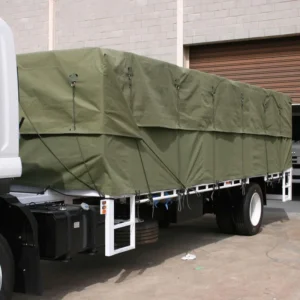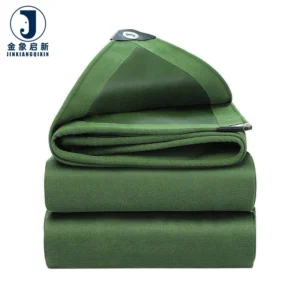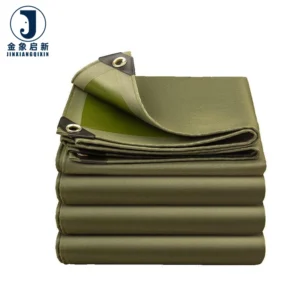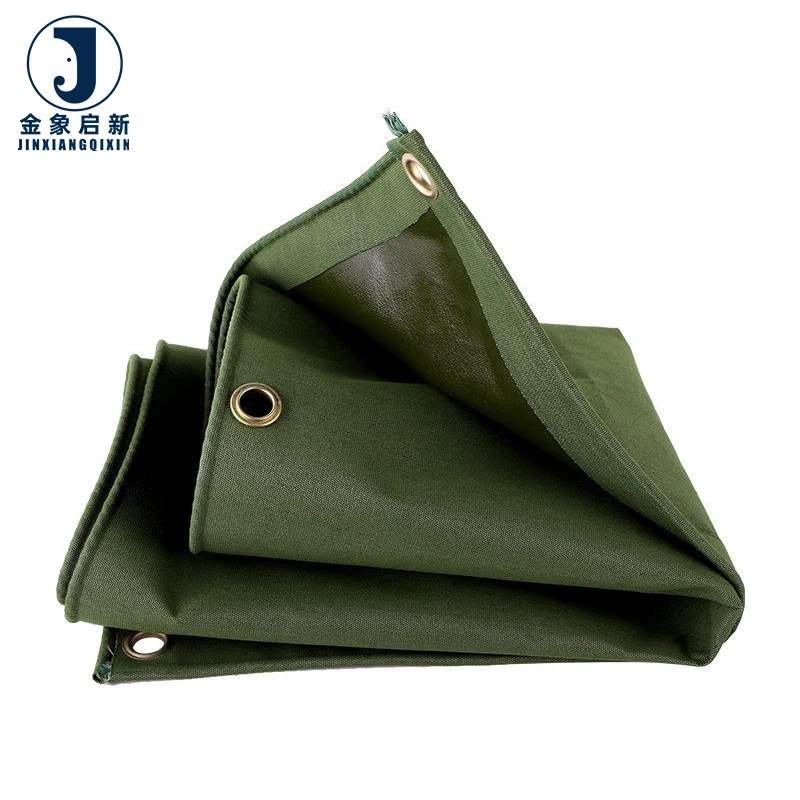
Trailer Fitment Precision — covers engineered around specific truck and trailer model dimensions rather than generic cut sizes, reducing edge stress and tie-down failure in daily fleet operations.
Technical Specifications
| Parameter | Value |
|---|---|
| Product Type | Canvas Tarpaulin |
| Weight | 600 GSM |
| Base Fabric | Woven Plain Canvas |
| Coating | PVC Laminated |
| Waterproof | Fully waterproof coated construction |
| Edge Reinforcement | Reinforced edges at hem and eyelet zones |
| UV Treatment | Available in UV resistant grades — confirm the standard required for your market |
| Flame Retardant | Available in flame retardant grades — confirm the grade required for your market |
Application Suitability
| Application | Exposure & Requirement |
|---|---|
| Flatbed truck and trailer load covers | Sustained wind flap, load shift abrasion, tie-down strap tension at hem zones |
| Side curtain fabric for curtain-sider trailers | Constant flexing at curtain folds, road spray, UV exposure on open highways |
| Construction equipment and machinery transport | Road debris impact, weather exposure during inter-site transfers, heavy equipment contact abrasion |
Why Reinforced Edges Determine Whether a Truck Cover Survives Its First Season
Most tarpaulin failures on transport covers begin at the hem line and eyelet zones, not the fabric field.
Fleet operators frequently see covers tear at the exact point where tie-down straps pass through grommets or where the fabric folds over a sharp load edge. The field of the fabric remains intact while the perimeter fails — because the mechanical stress concentrates at these reinforcement boundaries rather than distributing across the canvas. A Heavy Duty Canvas Tarpaulin for Truck and Transport without proper edge treatment will develop propagating tears within weeks of regular use, regardless of how strong the main fabric body is. Reinforced edges at hem and eyelet zones address this specific failure mode directly. [NEED_CITE: tensile and tear test methods for coated fabrics per ISO 1421]
Tie-Down Load Distribution and Hem Integrity
When a flatbed cover is strapped down for highway transit, the edge reinforcement zone absorbs concentrated loads from ratchet straps and bungees. The woven plain canvas base fabric at 600 GSM provides a dimensionally stable substrate that resists stretching under this tension, but the laminated PVC coating must also maintain adhesion at the fold line where the hem is turned. If the laminate bond fails at the hem, water enters the base fabric and delamination accelerates from the edge inward. This Heavy Duty Canvas Tarpaulin for Truck and Transport is constructed with reinforced edges to maintain laminate integrity through repeated strap tension cycles.
Side Curtain Flex Fatigue and Abrasion Resistance
Curtain-sider trailers subject fabric to thousands of flex cycles per journey as the curtain opens, closes, and billows under aerodynamic load. The laminated construction of this 600 GSM canvas tarpaulin provides stiffness that reduces uncontrolled wind flap, which is a primary cause of abrasion wear against load edges and trailer hardware. The PVC laminate surface also resists road grime accumulation that would otherwise grind into the fabric weave at flex points over time. Fleet operators specifying side curtain material must balance fabric weight against operating stiffness — too light and the curtain flaps excessively; too heavy and manual operation becomes difficult. [NEED_CITE: flex fatigue testing protocols for transport side curtain fabrics]
Reading the Specification Sheet for Transport Applications
The 600 GSM weight of this canvas tarpaulin reflects the combined mass of the woven plain canvas base fabric and the laminated PVC coating. In transport covering, weight class correlates with wind flap resistance and abrasion mass — a heavier cover has more material to wear through before the base fabric is exposed. The woven plain canvas weave structure provides multidimensional stability, meaning the fabric resists distortion when pulled at diagonal angles by corner tie-downs. PVC lamination, as opposed to coating by knife or calender, bonds a pre-formed film to the base fabric, producing a consistent coating weight across the roll and reliable heat-welding characteristics at seam joints. The reinforced edges add localized material density at the highest-stress zones without increasing overall cover weight unnecessarily.
What Happens When Edge Reinforcement Is Underspecified
Transport covers that fail prematurely almost never wear through in the middle of the fabric. The failure sequence typically starts with a small tear at an eyelet or hem corner, which then propagates along the edge under continued strap tension until the entire perimeter is compromised. Fleet operators who specify covers based only on field fabric weight — without verifying edge reinforcement construction — face repeated replacement cycles. The laminated PVC surface may also crack at an unreinforced fold line in cold conditions, creating a water entry point that wicks into the canvas base fabric and causes rot from the inside. Confirming hem folding method, stitch or weld pattern, and eyelet spacing on the pre-shipment inspection record prevents these failures from reaching the fleet. [NEED_CITE: common failure modes in heavy-duty transport tarpaulins]
Why Source This Canvas Tarpaulin Here
Three full production lines and 36 sets of professional equipment support consistent output of this 600 GSM laminated canvas tarpaulin at volumes required for fleet-wide deployment. A 10-person R&D team handles custom sizing matched to specific truck and trailer models, with sample development completed within days for fitment verification before bulk production. Dedicated QA/QC at every production stage includes 100% pre-shipment inspection — critical for verifying reinforced edge construction and eyelet spacing on transport covers. Nearly 30 years of process control over coating weight and adhesion means laminate bond strength at hem zones is managed, not left to chance. Roll-to-roll colour consistency is maintained through controlled coating formulation, preventing visible shade variation when multiple covers are deployed side by side across a fleet.
Documentation & Verification
- Material specification sheet stating exact 600 GSM with woven plain canvas base and PVC laminate breakdown
- Pre-shipment inspection record confirming hem reinforcement construction and eyelet spacing per order
- UV and flame retardant test reports provided where applicable grades are specified for your market
- Roll packing list with individual roll weights for GSM arrival verification against quotation
Fabrication, Handling & Storage
- Heat weld at recommended temperature for PVC laminate to ensure seam strength matches 600 GSM field fabric
- Reinforce eyelet zones with additional PVC laminate patches before punching to prevent tear propagation under strap load
- Store rolls upright on end cores to prevent flat-spot creasing in the woven plain canvas base fabric
- Allow cold-stored rolls to reach ambient temperature before unrolling to avoid laminate cracking at the fold line
Requesting a Fitment-Matched Quotation
To receive a specification and sample matched to your fleet, provide the truck or trailer model designation, the required cover dimensions, and the tie-down configuration including eyelet spacing and strap type. Indicate whether your market requires specific UV or flame retardant certification, and confirm whether you need finished covers with welded hems and eyelets or roll stock for in-house fabrication. Sample approval before production ensures the reinforced edge construction meets your fleet’s strap load requirements.
Frequently Asked Questions
Q: How is the 600 GSM weight verified on arrival and what tolerance applies?
A: Each roll is listed on the pre-shipment inspection record with individual weight data. On arrival, conduct a scale check on a known-area sample cut from the roll end to calculate actual GSM. Request the material specification sheet with your shipment, which states the target 600 GSM along with the base fabric and PVC laminate breakdown, so you have a documented baseline for comparison.
Q: What eyelet spacing and hem reinforcement options are available for tie-down strap loads?
A: Eyelet spacing is configured to match your trailer’s tie-down rail or strap pattern. Hem reinforcement on this 600 GSM canvas tarpaulin can include folded and welded edges with additional PVC laminate patches at each eyelet position. Confirm your strap type and load rating during inquiry so the reinforcement specification matches the actual mechanical stress your fleet covers will experience.
Q: Can this canvas tarpaulin be cut and fitted to specific trailer model dimensions?
A: Yes. Provide the trailer model designation and required cover dimensions for a fitment-matched sample before bulk production. Custom sizing eliminates the excess material and poor edge alignment that occur when generic cut sizes are forced onto a specific trailer shape, reducing both wind flap and edge stress during highway transit.
Q: What UV and flame retardant test reports are supplied with shipment?
A: Where UV resistant or flame retardant grades are specified for your order, the corresponding test reports are included with the shipping documentation. Confirm the specific standard or grade required by your market or fleet insurance provider during inquiry, as requirements vary by region and application. Reports are issued against the actual production batch.
Q: How does laminated canvas perform against abrasion at flex points compared to standard PVC tarpaulin?
A: The woven plain canvas base fabric at 600 GSM provides a stiffer, more dimensionally stable substrate than lighter PVC-coated polyester fabrics, reducing uncontrolled flexing that causes abrasion wear at load contact points. The laminated PVC surface adds a consistent wear layer that protects the canvas weave from road grime and direct friction. This construction suits side curtain and flatbed applications where repeated flex cycles are expected.