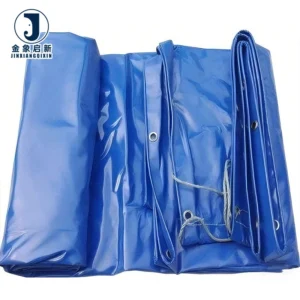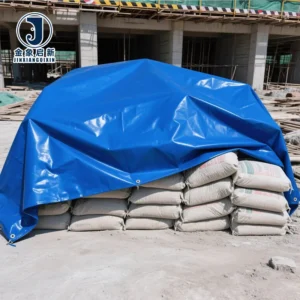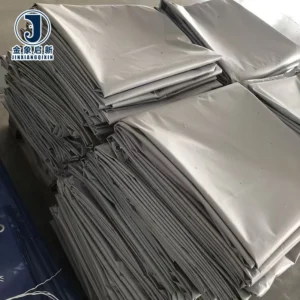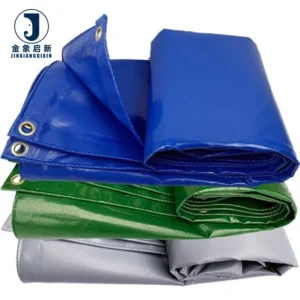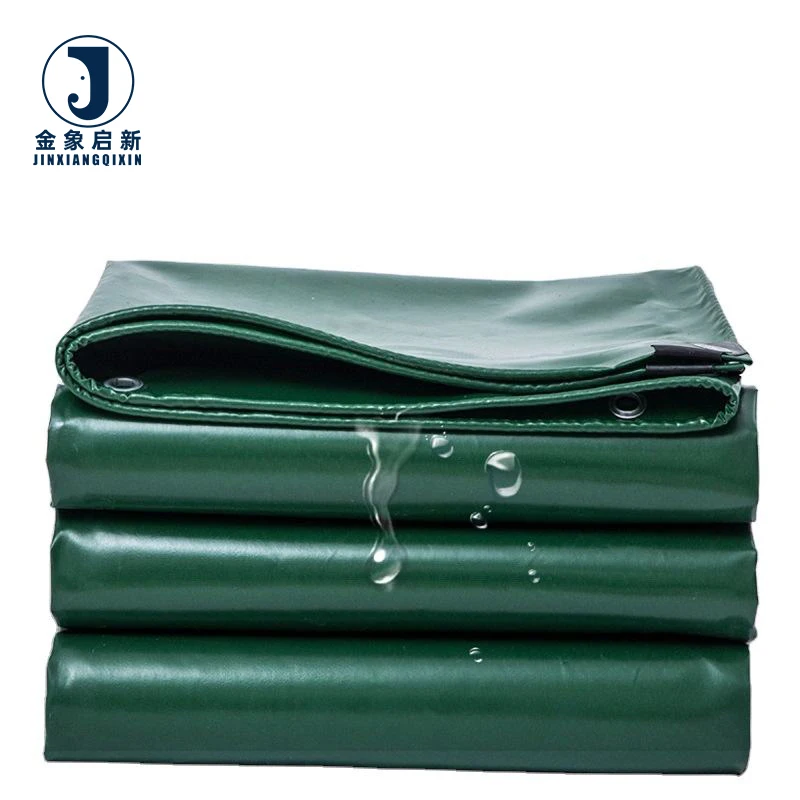
Precision-Coated Fabric — Nearly 30 years of coating process control ensures uniform adhesion and verified weight across every flatbed truck tarpaulin roll, with QA at every stage preventing underweight or underperforming delivery.
Technical Specifications
| Parameter | Value |
|---|---|
| Product Type | PVC Coated Tarpaulin |
| Coating Material | PVC |
| Construction | Double-Faced |
| Water Resistant | Yes |
| Anti-UV Treatment | Yes (grade to be confirmed per order) |
| Flame Retardant | Yes (grade to be confirmed per order) |
| Color Options | Multiple Colors Available |
| Certifications | ISO, CE |
Application Suitability
| Application | Exposure & Requirement |
|---|---|
| Flatbed trailer cargo covering | Wind-driven rain, road debris impact, constant UV exposure at highway speeds |
| Lumber transport protection | Sap and moisture contact, heavy tie-down strap abrasion, repeated folding at load edges |
| Heavy machinery freight | Sharp-edge puncture risk, grease and hydraulic fluid contact, long-haul vibration fatigue |
| Steel and pipe load wrapping | Metallic surface abrasion, condensation trapping, crane hook contact during loading |
Why Your Flatbed Truck Tarpaulin Fails Before the Fabric Does
Most flatbed truck tarpaulin failures originate at the welded seams and reinforcement points, not in the body of the coated fabric itself.
When a flatbed cover is cut to a generic size rather than matched to the specific trailer model, the excess material flaps under highway wind loads. That flapping concentrates stress at the eyelet line and the hem weld. Over hundreds of miles, the flexing works the seam apart while the PVC coated fabric in between remains intact. Fleet operators replacing covers every few months often blame the material when the real issue is dimensional mismatch and reinforcement design [NEED_CITE: tensile and tear test methods for coated fabrics per ISO 1421].
Cut to the Trailer, Not to a Template
A PVC coated tarpaulin aftermarket supplier cutting by standard dimensions will leave excess fabric on shorter trailers and insufficient overlap on longer ones. This flatbed truck tarpaulin for transport is sized to the specific make and model of your flatbed trailer, accounting for the deck length, side rail height, and the overhang needed for secure tie-down. The result is a cover that sits flat under tension rather than billowing and chafing against the cargo surface.
Reinforcement Where the Load Flexes Most
The stress distribution across a flatbed trailer cover is not uniform. The center of the tarpaulin experiences relatively static loading, while the edges and tie-down points endure repeated pulling, releasing, and road vibration. This flatbed truck tarpaulin for transport receives reinforced hems and eyelet spacing calibrated to the actual tie-down pattern of your trailer, concentrating material strength exactly where the cover meets the strap [NEED_CITE: welded seam peel strength testing for PVC coated tarpaulin per ISO standards].
Reading the Specs That Actually Matter for Transport Covers
Double-faced PVC coating means both sides of the base fabric receive a full coating layer rather than one side coated and one side merely laminated. For flatbed trailer work, this matters because the underside of the tarpaulin contacts the cargo directly — lumber edges, steel pipe welds, machinery protrusions. A single-faced construction would expose the uncoated base fabric to abrasion from below, leading to fiber breakdown and eventual moisture penetration through the weave.
The anti-UV and flame retardant treatments are available in grades suited to different market requirements. Confirm the specific grade required for your operating region before placing a production order, as fire classification standards vary between jurisdictions and UV stabilizer loading determines performance under prolonged sun exposure.
The double-faced construction also affects how the material handles during fabrication. Both surfaces accept heat welding equally, which means fabricators can join panels from either side without concern for which face is up, simplifying production of oversized covers that exceed single-panel width limits.
The Cost of a Specification That Looks Right on Paper
A quotation stating the correct GSM but delivering material that is lighter than agreed is one of the most common disputes in coated fabric procurement. When the actual coating weight falls short, the tarpaulin loses tensile capacity and tear resistance proportionally. For a flatbed truck tarpaulin for transport, that shortfall surfaces as premature edge fraying, weld-line splitting under tie-down tension, and UV degradation appearing months earlier than expected [NEED_CITE: GSM verification and weight tolerance in coated tarpaulin manufacturing].
Batch colour inconsistency across multiple truck covers in a single fleet order creates a visible mismatch once the covers are deployed side by side at a loading yard. This is a coating formulation and process control issue, not a material quality issue — and it reflects directly on the fleet operator’s professional image.
Why Source Flatbed Truck Tarpaulins Through This Supply Chain
Three full production lines with 36 sets of professional equipment support consistent roll output, so a fleet order for multiple trailer models ships together rather than staggered across weeks.
The 10-person R&D team handles trailer-specific pattern development, producing a cut-and-reinforce template for your trailer model before bulk production begins.
Dedicated QA and QC runs at every production stage with full pre-shipment inspection, meaning the GSM on the roll matches the GSM on the quotation before the material leaves the facility.
Custom width, colour, and print orders carry reasonable minimums and lead times, so a mid-sized fleet can standardise its cover specification without committing to container-scale volume on day one.
Sample development runs in days rather than weeks, allowing fleet managers to test fit and tie-down compatibility before approving full production.
Documentation & Verification
- Material specification sheet confirming GSM, base fabric, coating type, and colour reference per roll
- UV and flame retardant test reports supplied where applicable to stated treatment grades
- Pre-shipment inspection record verifying weight and dimensions against purchase order
- Roll packing list with individual roll identification for batch traceability
- Certificate of origin and customs documentation included for cross-border shipment
Fabrication, Handling & Storage
- Heat weld both faces of the double-faced PVC coating at manufacturer-recommended temperature to ensure full seam adhesion
- Space eyelets to match trailer tie-down points rather than using generic spacing, reducing point-load stress on the hem
- Store PVC coated tarpaulin rolls upright on end cores to prevent flat-spotting and permanent crease marks
- Avoid folding the flatbed truck tarpaulin for transport at the same line repeatedly; rotate fold positions to distribute flex fatigue
- Use mild detergent and soft brush for cleaning; solvent-based cleaners may degrade the PVC coating surface over time
What We Need to Quote Your Flatbed Cover Accurately
Provide the trailer make, model, and deck dimensions so the tarpaulin is cut to fit rather than supplied in a generic size. Specify whether anti-UV or flame retardant treatment is required and which grade your local regulations mandate. Confirm the number of covers needed per trailer type and whether you require finished, hemmed, and eyeleted units or roll stock for in-house fabrication.
Frequently Asked Questions
Q: How do I verify the GSM matches what was quoted?
A: Every roll undergoes weight verification during pre-shipment inspection. The inspection record confirms actual GSM against the quotation specification, and this documentation ships with your order. If you require independent third-party testing, we can arrange sampling before dispatch.
Q: Can you provide test certificates for UV and flame retardant claims?
A: Test reports are supplied with the shipment for the specific grade ordered. Because UV and flame retardant standards vary by market, confirm which classification your region requires so we apply and document the correct treatment level.
Q: Do you cut tarps to fit specific trailer dimensions?
A: Yes. Provide your trailer make, model, and exact deck measurements. The R&D team develops a cutting pattern matched to those dimensions, including overhang allowance for tie-down and reinforcement placement at the actual strap contact points.
Q: What reinforcement options are available for high-stress areas?
A: Reinforced hems, additional webbing layers at tie-down zones, and adjusted eyelet spacing are all configurable. The reinforcement design is based on your trailer’s specific tie-down pattern so that load stress distributes across the strengthened sections.
Q: How do you ensure color consistency across multiple rolls?
A: All rolls in a single fleet order are produced in one coating run using the same batch formulation. Pre-shipment inspection includes visual colour matching across rolls to prevent visible variation when covers are deployed side by side.