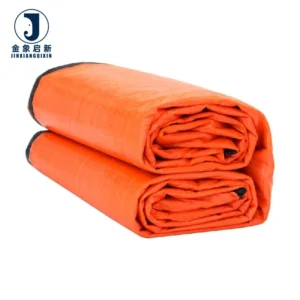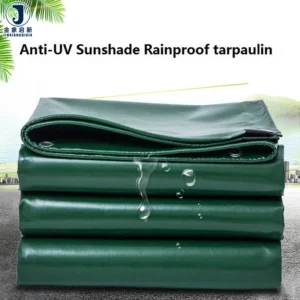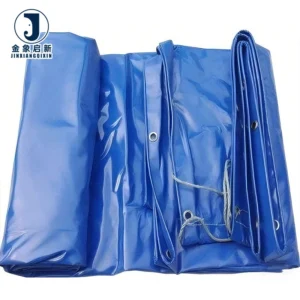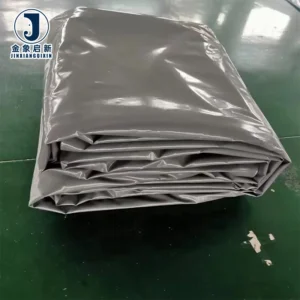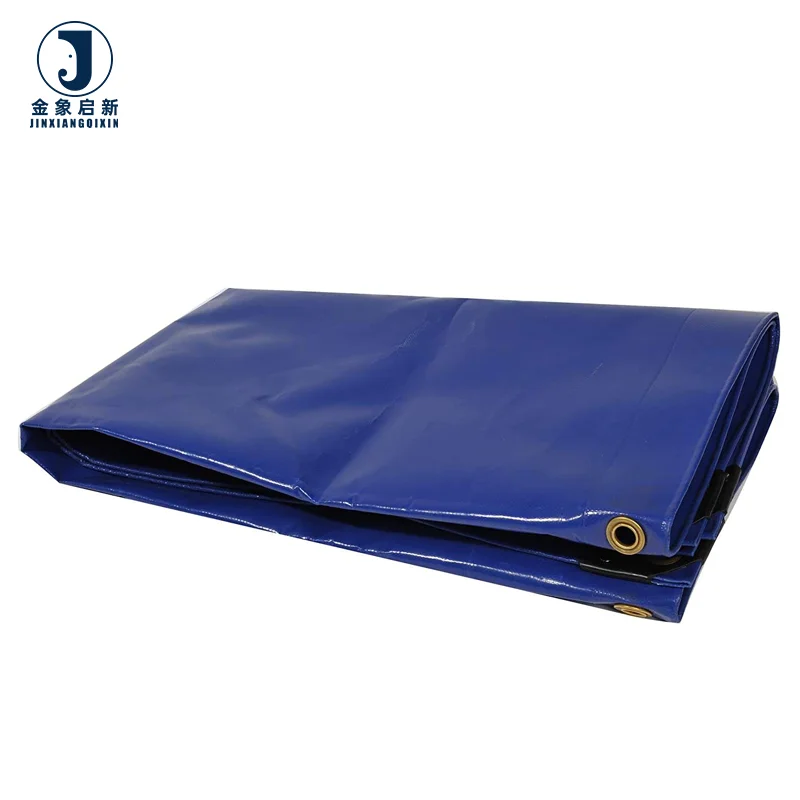
Trailer-Grade Coating Expertise — Every PVC coated tarpaulin for truck and trailer curtain is templated to the exact vehicle profile, not cut from a generic pattern, with 100% pre-shipment inspection on dimensions and weld integrity.
Technical Specifications
| Parameter | Value |
|---|---|
| Product Type | Trailer Curtain |
| Weight (GSM) | 900GSM (product family range: 250gsm–1500gsm) |
| Base Fabric Denier Options | 200D×300D, 500D×500D, 840D×840D, 1000D×1000D |
| Coating Material | PVC |
| Surface Finish | Glossy or matte |
| UV Treatment | Customized (test basis not stated — confirm grade for your market) |
| Flame Retardant | FR treated (grade not stated — available in flame retardant grades, confirm the grade required for your market) |
| Anti-Fungal | Anti-fungal treated |
| Temperature Range | -15°C to 70°C |
| Waterproof | Yes |
| Colour Options | Blue, Yellow, Black, Green, White |
| Size Options | 3×4m, 6×8m, 8×10m, 10×12m, or custom made |
| Printing | Custom branding accepted |
| Certifications | ISO, CE |
Application Suitability
| Application | Exposure & Requirement |
|---|---|
| Curtain-side trailer fleet replacement | Constant flexing at roller and tie-down points, road debris abrasion, UV and rain exposure year-round |
| OEM trailer builds | Exact vehicle model fitment, consistent colour across curtain sets, weld seam integrity at high-stress zones |
| Mixed fleet standardisation | Colour and finish uniformity across multiple vehicle types, brand logo clarity on glossy or matte surface |
| Refrigerated and dry van curtains | Repeated temperature cycling, condensation contact, anti-fungal performance in humid conditions |
Why Generic-Size Tarps Fail on the Road
A truck cover cut to a generic size that does not fit the specific trailer model creates gaps at the top rail, drag on the road surface, and premature wear at the buckles. Fleet operators receive rolls or pre-cut curtains that look correct on paper but leave exposed gaps once installed, allowing wind and moisture to reach the cargo. We template every PVC coated tarpaulin for truck and trailer to the exact vehicle profile before cutting, so the curtain seats correctly in the rail and the tie-down strips align with the chassis anchors. [NEED_CITE: tensile and tear test methods for coated fabrics per ISO 1421]
Template-first cutting eliminates the gap between quoted size and installed performance.
When a curtain is too short, operators stretch it to reach the buckles, placing continuous tension on the welded seams at the hem. That tension accelerates seam failure precisely where the load flexes most during transit. When a curtain is too long, the excess fabric drags against the trailer bed or road surface, abrading the coating and exposing the base fabric to water ingress. Both outcomes lead to early replacement and unplanned fleet downtime. [NEED_CITE: DIN 4102 fire classification for building materials]
Curtain Fitment That Matches Your Fleet, Not a Catalogue
Every lorry and trailer model has a distinct profile — the curtain rail height, roller spacing, and tie-down anchor positions vary between manufacturers and even between production years of the same model. We build a dimensional template for each vehicle in your fleet before the PVC coated tarpaulin for truck and trailer enters production. The template drives the cutting pattern, eyelet placement, and reinforcement strip positions, so the finished curtain installs without field modification.
Welded Seam Integrity at the Flex Zones
The highest stress on a side curtain is not in the centre panel but at the tie-down straps and the top rail attachment where the fabric bends and releases with every corner and stop. Our production process includes dedicated inspection of welded seams at these high-flex zones, checking peel strength and adhesion continuity. The 900GSM fabric weight provides the coating thickness needed for a strong weld bond between panels and reinforcement strips, reducing the risk that the seam fails before the fabric itself. [NEED_CITE: seam peel strength testing methods for PVC coated textiles]
Reading the Specification Beyond GSM
The 900GSM weight tells you the total mass per square metre of fabric and coating combined, but the base fabric denier determines how that weight distributes between structural yarns and surface coating. A 1000D×1000D base at 900GSM produces a fabric with higher tensile and tear resistance than a 500D×500D base at the same weight, because the heavier yarns carry more load while the coating fills the interstices. For curtain-side trailers that flex constantly during transit, the denier choice directly affects how long the curtain resists tear propagation at buckle and strap points. The glossy or matte surface finish influences more than appearance — a glossy finish sheds road grime and allows faster wash-down between loads, while a matte finish reduces glare and provides better ink adhesion for fleet branding. The temperature range of -15°C to 70°C sets the operating envelope; below that lower boundary, PVC stiffens and becomes more susceptible to cracking when folded or impacted. [NEED_CITE: relationship between base fabric denier and tear propagation resistance in coated fabrics]
What Happens When Colour Drifts Across a Fleet Order
A logistics company ordering side curtains for twenty trailers expects every curtain to present the same colour under sunlight. When rolls from different production batches vary in pigment density, the difference becomes visible once installed side by side on adjacent vehicles in a depot yard. This forces the fleet operator to reject partial shipments, delay vehicle release, and absorb the cost of re-cutting from a single verified batch. Colour consistency across a fleet order requires pigment dosing control at the coating stage and a comparison check against the approved reference before dispatch. [NEED_CITE: colour measurement standards for coated textile surfaces]
Why Transport Operators Source Their Curtains Here
The 10-person R&D team develops curtain templates and samples within days for custom vehicle profiles, not weeks. Three full production lines with 36 sets of professional equipment support bulk curtain orders with consistent output, so a fleet renewal programme stays on schedule. Dedicated QA/QC runs at every stage from coating weight verification to final hem inspection, with 100% pre-shipment checks on curtain dimensions against the vehicle template. Nearly 30 years of coated fabric process control means the coating adhesion and weld parameters are set from experience, not trial and error. Custom width, colour, and branding runs are handled on the same lines as standard grades, so lead times remain realistic for fleet-specific specifications.
Documentation & Verification
- Material specification sheet stating GSM, base fabric denier, and coating type for each curtain batch
- Test report for UV and flame-retardant grades where applicable to your market requirements
- Pre-shipment inspection record confirming curtain dimensions against the vehicle template
- Colour consistency check report across all curtains within the same fleet order
- Roll packing list with certificate of origin and customs documentation
Fabrication, Handling & Storage
- Heat-weld seams at manufacturer-recommended temperature to maintain peel strength on 900GSM coated panels
- Reinforce eyelet zones with additional PVC patches to distribute tie-down loads across the base fabric
- Store rolls or folded curtains flat in a dry area to prevent permanent creasing in the PVC coating layer
- Avoid dragging curtains across abrasive surfaces during installation to protect the glossy or matte finish
- Clean with mild detergent and water; solvents may degrade the anti-fungal treatment and surface coating
- Field-repair minor tears with compatible PVC repair tape applied to a clean, dry surface
What to Include With Your Curtain Enquiry
Provide the trailer manufacturer, model designation, and production year so we can build the correct dimensional template. Specify your preferred colour reference and whether you need glossy or matte finish for the fleet livery. Indicate whether your market requires a specific flame retardant grade or UV treatment level so we can include the matching test documentation. Let us know if you need finished curtains with eyelets and hems, or roll stock for your own fabrication workshop.
Frequently Asked Questions
Q: How do you template the curtain to my specific trailer model?
A: We request the trailer manufacturer, model, and year, then build a dimensional template covering rail height, roller spacing, and anchor positions. This template drives the cutting pattern and reinforcement placement so the PVC coated tarpaulin for truck and trailer fits without field adjustment.
Q: How is GSM verified on arrival — do you include a weight test swatch?
A: Our pre-shipment inspection includes GSM measurement on finished curtains, and we can include a test swatch with documented weight. This confirms the 900GSM specification is met in practice, not just on the quotation sheet.
Q: What reinforcement options are available at eyelet and tie-down points?
A: We apply additional PVC patches and reinforcement strips at eyelet rows and tie-down zones to distribute load across the base fabric. The reinforcement layout is defined during the templating stage based on your trailer’s anchor positions.
Q: Can you match our fleet colour across multiple curtain orders?
A: Yes. We use your approved colour reference for pigment dosing and run a consistency check against the reference before dispatch. Curtains from the same fleet order are produced in a single verified batch to prevent visible variation.
Q: What is the lead time for custom-sized curtains and minimum order per vehicle model?
A: Lead time depends on order volume and customisation scope, including colour, printing, and treatment requirements. Samples are developed within days for approval. Contact us with your fleet size and vehicle models for a project-specific schedule.