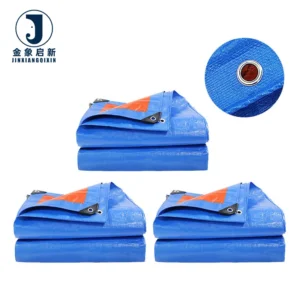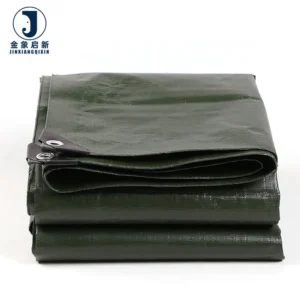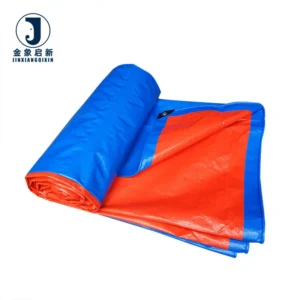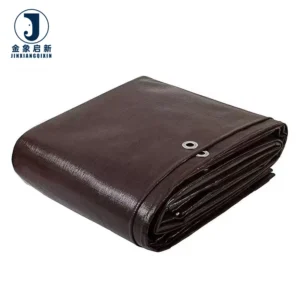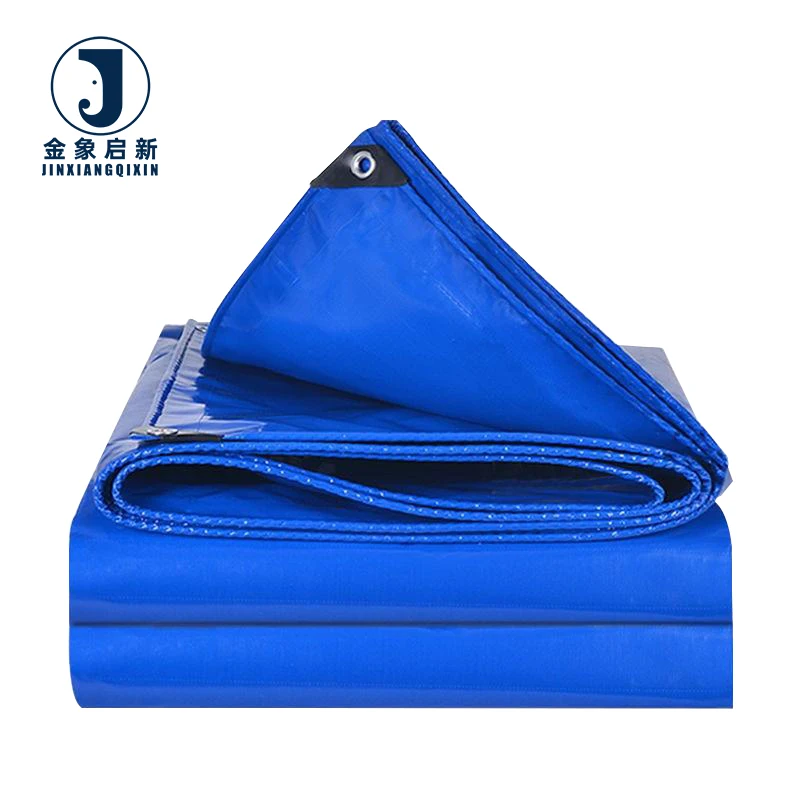
Truck-Grade Fabric Consistency — batch colour and GSM verified per roll against the stated specification before dispatch, supporting fleet-wide cover standardisation.
Technical Specifications
| Parameter | Value |
|---|---|
| Product Type | PVC Coated Tarpaulin |
| Coating Material | PVC |
| Base Fabric | High-strength polyester mesh fabric |
| Coating Method | Laminated technology & Hot-melt coating technology |
| Weight (GSM) | 350gsm / 420gsm / 500gsm / 550gsm / 600gsm / 750gsm |
| Total Thickness | 0.32mm / 0.35mm / 0.4mm / 0.45mm / 0.5mm / 0.65mm |
| Roll Size | 2m width × 75m length / 2.1m width × 50m length |
| Finish Product Size | Custom items as per customer’s needs, or sold by inventory |
| Color | Blue / Red / Yellow / Light blue / Grey (Customized) |
| Flame Retardant | Available in flame retardant grades — confirm the grade required for your market |
| UV Treatment | UV stable (test basis not stated in source) |
| Anti-Static | Anti-static treatment available (standard not stated in source) |
| Anti-Mildew | Yes |
| Cold Crack Resistance | Yes |
| Waterproof | Yes |
| Printing Option | Special printed paint — long print life |
| Welding Repair | Easy to repair by welding |
| Service Life | 3-7 years under normal circumstances |
| Colorfastness | Best color fastness |
| Standards | ISO 14001, ISO 45001, CE, RoHS |
Application Suitability
| Application | Exposure & Requirement |
|---|---|
| Truck side curtain | Constant flexing at load shift points, road debris abrasion, sustained UV exposure, wind-driven rain ingress |
| Flatbed trailer cover | Full weather envelope, tie-down strap friction at edges, mechanical stress during cargo loading and unloading |
| Fleet-branded cover | Colour consistency across multiple vehicles, print adhesion under flex and weather exposure, corporate identity maintenance |
| Equipment transport cover | Puncture risk from sharp cargo edges, moisture protection for sensitive machinery, repeated installation and removal cycles |
| Cargo ship deck cover | Salt spray exposure, heavy wind loads, UV degradation in maritime environments, extended outdoor storage periods |
Why Generic Sizing Costs More Than the Cover Itself
A PVC coated tarpaulin for truck and transport cut to a generic size leaves gaps at the tailgate, exposes cargo to water ingress, and concentrates stress at mismatched tie-down points where the fabric tears before the seams do.
The cover must match the trailer model, not a catalogue dimension.
When fleet operators order truck covers based on approximate measurements, the result is predictable: edges flap in transit, eyelets pull away from hems under load, and the cover is replaced long before the material itself has reached end of life. The cost of one cargo claim from water damage typically exceeds the cost of a properly sized, reinforced cover by a wide margin. I have seen transport companies cycle through generic covers multiple times per year, each replacement adding downtime and labour. [NEED_CITE: cargo damage claims related to inadequate cover fitment in road transport]
Side Curtain Fabric Engineered for the Trailer It Fits
The starting point for any PVC coated tarpaulin for truck and transport application is the exact trailer model and its load-securing hardware layout. Side curtain fabric must align with buckle rails, tensioning systems, and sliding post mechanisms specific to the vehicle. When the curtain is cut and welded to those dimensions, the stress loads distribute evenly across the welded seams rather than concentrating at mismatched eyelet positions. This is where hot-melt coating technology matters: the bond between the PVC layer and the polyester mesh holds under the repeated flex cycles that a side curtain experiences every time the load shifts during braking or cornering.
Weld Seam Behaviour at Flex Points
Every truck cover has zones where the fabric folds, stretches, and compresses hundreds of times per journey. The welded seams in these zones carry more load than the body of the fabric itself. Laminated and hot-melt coating methods produce different peel strengths at the weld line — a factor that directly determines whether the seam holds or delaminates under sustained road vibration. Fleet operators replacing covers frequently should examine where the failure occurred: if the weld parted before the fabric tore, the coating method or welding parameters need review, not the GSM rating. [NEED_CITE: weld seam peel strength testing for PVC coated polyester fabrics]
Reading GSM, Coating Weight, and Base Fabric Together
A PVC coated tarpaulin for truck and transport performs based on the combined effect of base fabric denier, weave density, and coating weight — not GSM alone. A 550gsm fabric with a dense polyester mesh and thin coating will behave differently under tear load than a 550gsm fabric with a loose weave and thick coating. The coating method — laminated versus hot-melt — determines how much of the total weight is structural polyester versus surface PVC. Thicker coating adds abrasion resistance and waterproofing but increases stiffness, which affects how the cover folds and handles during daily installation. For side curtains on articulated trailers, the balance between flexibility and tear strength typically favours a denser base fabric with moderate coating weight. Thickness values from 0.32mm to 0.65mm across the available GSM range reflect these trade-offs: lighter grades suit regional transport with frequent cover handling, while heavier grades suit long-haul and heavy equipment transport where mechanical abuse is higher.
The Hidden Cost of Batch Colour Drift Across a Fleet
When covers for a multi-vehicle fleet are produced across different batches without colour control, the variation becomes visible the moment two trucks park side by side at a depot or customer site. This is not a cosmetic issue for companies that use their fleet as a branding asset — it signals inconsistent quality control to the very clients the fleet is meant to impress. The same applies to gloss or matte finish variation between rolls: a glossy panel next to a matte panel on the same trailer looks like a repair, not a specification. Colour and finish must be locked to a reference standard before production begins, and verified against that standard at pre-shipment inspection. [NEED_CITE: colour consistency standards for fleet vehicle livery and cover materials]
Why Procurement Verification Starts Before the Roll Arrives
The specification sheet states a GSM value, a coating method, and a set of performance treatments. What arrives at the dock must match all three, not just the visible colour and roll count. A dedicated QA/QC process at every production stage catches deviations before they ship — coating weight drift, colour shift between rolls, or a flame retardant treatment applied at insufficient concentration. Every order leaves with a pre-shipment inspection record that documents roll-by-roll weight verification and visual consistency checks, giving the receiving warehouse a basis for acceptance or rejection without needing to send samples to an independent lab.
What Makes This Source Different for Transport Covers
Three full production lines and 36 sets of professional equipment support bulk capacity with reliable on-time delivery, meaning fleet orders covering dozens of vehicles can be fulfilled within a single production run rather than staggered across months. A 10-person R&D team handles material selection, custom sizing per trailer model, pattern printing, and sample development — producing samples within days for custom requirements so that fitment can be verified before the full order enters production. Nearly 30 years of focus on coated fabric provides deep process control over coating weight and adhesion, which is the difference between a weld seam that holds for the life of the cover and one that fails at the first heavy load shift. Dedicated QA/QC at every production stage with 100% inspection before shipment eliminates the scenario where a fleet operator discovers colour variation or GSM shortfall only after the covers are installed on vehicles. ISO and CE certification, combined with export experience to over 20 countries, means documentation is prepared correctly for customs and compliance without delays at the port of entry.
Documentation & Verification
- Material specification sheet stating exact GSM, base fabric construction, coating method, and colour reference per roll
- Pre-shipment inspection record with weight verification and visual batch consistency check for every order
- Test report for UV stable and flame retardant grades where applicable — no unverified performance claims
- ISO 14001, ISO 45001, CE, and RoHS certificates included with shipment documentation
- Roll packing list with batch traceability linking each roll to its production run
- Certificate of origin and customs documentation prepared for destination country requirements
Fabrication, Handling & Storage
- Hot-melt coated rolls weld cleanly at seams — adjust temperature and dwell time to the specific GSM grade selected
- Reinforce hem edges at tie-down eyelet positions to distribute strap load across the polyester mesh base fabric
- Store rolls horizontally on pallets to prevent permanent creasing in the PVC coating layer
- Allow cold-stored rolls to reach ambient temperature before unrolling to avoid coating crack at flex points
- Clean printed surfaces with mild detergent only — solvent-based cleaners degrade the special printed paint
- Repair field damage by hot-air welding compatible PVC patches to the coated surface
What to Include in Your Enquiry
Provide the specific truck and trailer models in your fleet, including side curtain rail type and tie-down hardware layout, so that cover dimensions and eyelet placement can be matched to your load-securing system. Confirm whether flame retardant or anti-static treatment is required by your operating jurisdiction or customer contract, and specify the applicable standard if known. State the quantity per vehicle model, preferred GSM range, and whether corporate branding print is required across the fleet.
Frequently Asked Questions
Q: How is the truck cover sized to fit a specific trailer model rather than a generic cut?
A: We take the exact dimensions of your trailer including rail positions, buckle locations, and tie-down points, then cut and weld the PVC coated tarpaulin to match. This eliminates gaps at edges and ensures eyelets align with your existing load-securing hardware, reducing stress concentration at flex points.
Q: How do you verify GSM on arrival matches what was quoted?
A: Every order ships with a pre-shipment inspection record documenting roll-by-roll weight verification. The material specification sheet states the quoted GSM, base fabric, and coating method. Your receiving team can cross-reference the inspection record against the physical rolls before acceptance.
Q: What eyelet spacing and hem reinforcement options are available for tie-down systems?
A: Eyelet spacing and hem reinforcement are specified to match your trailer’s tie-down pattern. We reinforce hem edges at high-load positions to prevent eyelet pull-through under strap tension, using the same high-strength polyester mesh base fabric that forms the body of the cover.
Q: How does batch colour consistency work when ordering covers for an entire fleet?
A: All covers for a fleet order are produced within a single batch run against a locked colour reference. The pre-shipment inspection includes visual consistency checks across all rolls, ensuring no visible colour variation when covers are installed on adjacent vehicles at the same site.
Q: What flame retardant or anti-static certifications are available for transport compliance?
A: Flame retardant and anti-static treatments are available in multiple grades. Specify the standard required by your market or customer contract — such as a specific national fire classification or transport safety regulation — and we will supply the corresponding test report with your shipment documentation.