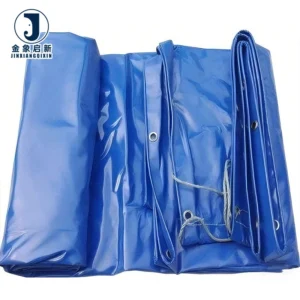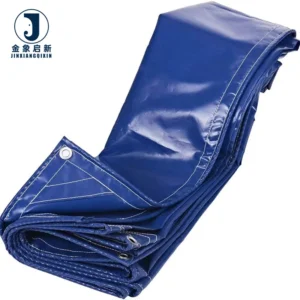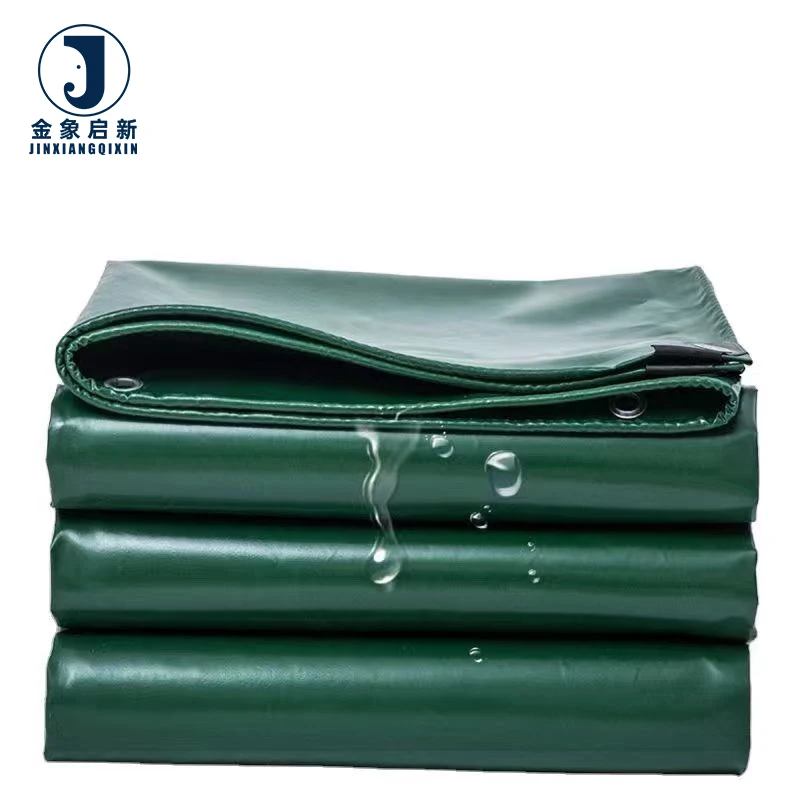
Process-Controlled Coating — 3 production lines and 36 equipment sets maintain adhesion and weight consistency across every roll of PVC coated tarpaulin for transport covers.
Technical Specifications
| Parameter | Value |
|---|---|
| Product Type | PVC Coated Tarpaulin |
| Weight | 250gsm–1500gsm (range covers product family — confirm the grade for this item) |
| Base Fabric Denier | 200DX300D, 500DX500D, 840DX840D, 1000DX1000D |
| Coating Material | PVC |
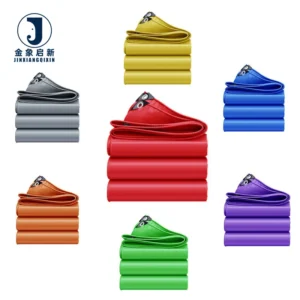
| Color | Blue, Yellow, Black, Green, White, etc. |
| Size | 3x4m, 6x8m, 8x10m, 10x12m or custom made |
| Finish | Glossy or matte |
| Temperature Range | -15ºC to 70ºC |
| UV Treatment | Customized (test basis not stated in source) |
| Flame Retardant | Stated (grade not stated in source) |
| Anti-Fungal | Treated (standard not stated in source) |
| Waterproof | Stated |
| Working Life | 3–10 years depend on different usage environment (source value — verify against manufacturer catalog) |
| Standards | ISO, CE |
Application Suitability
| Application | Exposure & Requirement |
|---|---|
| Truck and trailer load covers | Road vibration, constant flexing at tie-down points, weather and UV exposure during long-haul transit |
| Lumber and building material covers | Abrasion from rough timber edges, moisture ingress risk, repeated deployment and folding |
| Tent roofs and temporary structures | Prolonged sun exposure, rain pooling, wind uplift stress on seams and hems |
| Construction site equipment protection | Dust, chemical splash, mechanical impact, outdoor storage across seasons |
Why a Generic-Size Truck Tarp Fails Before the Fabric Does
A truck cover must match the trailer model, not a catalogue dimension.
PVC coated tarpaulin for truck and transport applications faces its highest stress where the load flexes and where tie-down straps compress the fabric. When a cover is cut to a generic size, the excess material bunches at corners, creating wear points that fail within months. Eyelet spacing that does not align with the trailer’s anchor system forces operators to add improvised attachment points, concentrating load on unreinforced zones. Fleet managers replacing covers twice a year often blame the fabric grade when the root cause is a sizing mismatch. [NEED_CITE: weld seam failure modes in PVC coated transport covers]
Matching Denier to the Load Profile
The base fabric denier — available in 200DX300D through 1000DX1000D — determines how the PVC coated tarpaulin handles abrasion and puncture in transport use. Lower denier grades suit lighter cargo and short-haul routes where weight savings matter. Higher denier options resist the repeated scraping and edge contact that lumber and steel loads impose on trailer covers. Selecting the correct denier prevents both over-specification cost and under-performance failure.
Seam and Hem Construction for Road Stress
Welded seams on transport covers carry load at every flex cycle. The coating adhesion and weld temperature must be controlled so the seam reaches the tear strength of the base fabric itself. Reinforced hems distribute tie-down strap pressure across a wider area, reducing the point-load concentration that causes eyelet pull-through. For fleet operators, specifying hem width and eyelet spacing to match the trailer’s tie-down layout extends service intervals substantially. [NEED_CITE: tensile and tear test methods for coated fabrics per ISO 1421]
Reading GSM Alongside Base Fabric Construction
GSM alone does not predict how a PVC coated tarpaulin performs under transport loads. A 650gsm fabric woven from 500DX500D yarns will behave differently from a 650gsm fabric using 1000DX1000D yarns with a thinner coating. The base fabric provides tensile and tear strength; the coating contributes waterproofing, UV shielding and weld integrity. Evaluating both parameters together — rather than quoting on weight alone — ensures the cover handles the specific abrasion and flex demands of the intended route and cargo type.
Surface Finish and Temperature Behaviour
Glossy finishes shed water and dirt more readily, which matters for covers that remain deployed through extended wet periods. Matte finishes reduce glare and may improve handling during manual deployment in bright conditions. The stated temperature range of -15ºC to 70ºC defines the operational envelope: below the lower limit, PVC stiffens and becomes prone to cracking when folded; above the upper limit, the coating softens and may mark under strap compression. Specifying finish and confirming the temperature envelope against the operating region prevents field complaints.
The Cost of Skipping Pre-Shipment Verification
When GSM on arrival does not match the quotation, the cover is lighter and thinner than designed for the stated load class. When a flame retardant grade is claimed without a test report, the cover may fail a site safety audit or a port inspection. Batch colour variation across a multi-cover fleet order becomes visible the moment the tarps are installed side by side on adjacent trailers. These failures surface after the container has cleared customs, making returns impractical and forcing operators to source emergency replacements at premium cost. [NEED_CITE: batch colour consistency standards for PVC coated fabric rolls]
Why Source This PVC Coated Tarpaulin Here
Three full production lines and 36 sets of professional equipment provide the capacity to fulfil multi-container fleet orders within predictable lead times. A 10-person R&D team handles model-specific sizing, pattern printing and sample development, delivering prototypes within days rather than weeks. Dedicated QA/QC at every production stage with 100% pre-shipment inspection catches GSM deviation, colour drift and weld defects before dispatch. Nearly 30 years of focused coated fabric production means coating weight and adhesion are controlled through process parameters, not trial and error. ISO and CE certification supports documentation requirements across North American, European and Asian markets.
Documentation & Verification
- Material specification sheet stating GSM, base fabric denier and coating type per roll
- Test report for UV and flame retardant grades supplied where applicable to the order
- Pre-shipment inspection record confirming weight and dimension against the quotation
- Roll packing list with net and gross figures for customs clearance
- Certificate of origin and customs documentation for the destination market
Fabrication, Handling & Storage
- Heat-weld seams at temperatures matched to the PVC coating formulation to preserve adhesion strength
- Space eyelets according to the trailer tie-down layout, reinforcing each with a PVC patch
- Store rolls upright on pallets to prevent flat-spot deformation of the coating surface
- Allow cold-stored rolls to reach ambient temperature before unrolling to avoid coating crack
- Clean glossy-finish covers with mild detergent; avoid solvents that attack the PVC plasticiser layer
- Trim and re-hem cut edges with a hot knife to seal the base fabric and prevent fraying
What to Include in Your Enquiry
Provide the trailer make and model or the exact cover dimensions required, along with the typical cargo type and route climate. Specify the denier and GSM range under consideration, and note whether the destination market requires a particular flame retardant or UV test standard. Indicate the finish preference, colour reference and whether you need finished covers with eyelets and hems or roll stock for in-house fabrication. Request a sample if batch colour matching across a fleet order is critical.
Frequently Asked Questions
Q: How do I specify the right denier and GSM for a truck cover versus a lumber cover?
A: Truck side curtains flex continuously and need a denier that balances tear strength with flexibility, typically in the mid-range options. Lumber covers face edge abrasion and puncture from timber, calling for a heavier denier with a thicker coating. Provide your cargo type and route conditions so the correct grade can be recommended from the available range.
Q: Can you supply a test report for UV and flame retardant treatment?
A: UV and flame retardant treatments are available in customised grades. When these are specified at the enquiry stage, test reports corresponding to the grade produced are included with the shipment documentation. Confirm the standard required by your destination market so the appropriate grade is applied and tested.
Q: Do you cut truck covers to specific trailer models?
A: Yes. Provide the trailer make, model and year, or submit a dimension drawing. The cover is cut to match the trailer profile with hem and eyelet placement aligned to the tie-down system, avoiding the bunching and stress points that generic-size covers create.
Q: How is colour consistency maintained across a fleet order?
A: Rolls destined for the same order are produced in a single batch run with colour matched against the agreed reference. The pre-shipment inspection checks colour across rolls before packing. For fleet deployments where covers are visible side by side, a physical sample approval step is recommended before full production.
Q: What is the typical lead time for custom width or printed branding?
A: Custom widths and printed branding require additional setup on the production line. Lead times depend on the order volume and the complexity of the print or width specification. Confirm the required dimensions and artwork at the enquiry stage so an accurate schedule can be provided with the quotation.