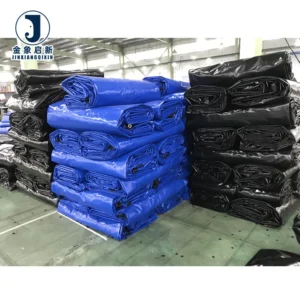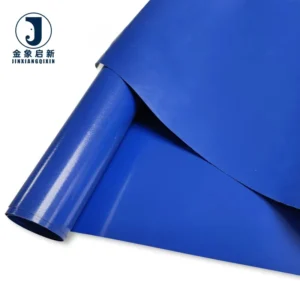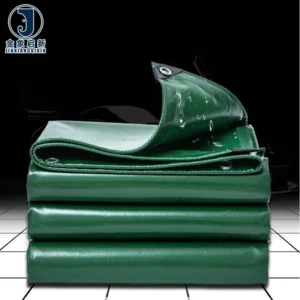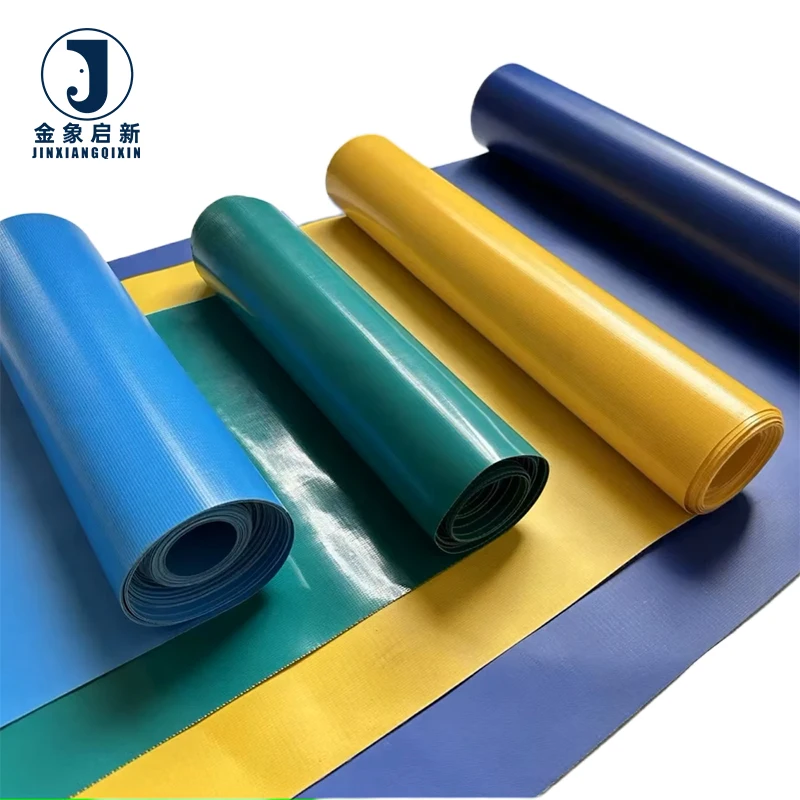
Proven Coating Control — Nearly 30 years of focused PVC coating expertise ensures consistent weight adhesion and fabric integrity across every roll produced for transport and outdoor cover applications.
Technical Specifications
| Parameter | Value |
|---|---|
| Product Type | PVC Coated Tarpaulin Roll |
| Base Fabric Denier | 200D×300D / 500D×500D / 840D×840D / 1000D×1000D |
| Weight (GSM) | 250gsm–1500gsm |
| Coating Material | PVC |
| Surface Finish | Glossy or Matte |
| Treatment | Waterproof, UV, FR and anti fungal treated (confirm specific grades required for your market) |
| Operating Temperature | -15°C to 70°C |
| Standard Sizes | 3×4m / 6×8m / 8×10m / 10×12m (custom sizes available) |
| Colors | Blue, Yellow, Black, Green, White (custom colors supported) |
| Working Life | 3–10 years depending on usage environment |
| Customization | OEM/ODM accepted, custom printing and branding available |
Application Suitability
| Application | Exposure & Requirement |
|---|---|
| Truck side curtains and load covers | Constant flexing at tie-down points, highway wind load, road debris abrasion, UV exposure |
| Flatbed and trailer rolling tarps | Repeated rolling and unrolling tension, cargo shifting friction, weather sealing requirement |
| Heavy-duty outdoor tents and awnings | Wind uplift stress, prolonged sun exposure, rain pooling, frequent assembly and disassembly |
| Construction site equipment covers | UV degradation, mechanical abrasion from site activity, moisture ingress protection |
Why Generic Cut Sizes Fail on Specific Trailer Models
Custom-fit PVC coated tarpaulin for truck cover applications eliminates flapping, seam stress, and cargo exposure caused by ill-fitting generic panels.
Fleet operators frequently receive covers cut to standard dimensions that do not account for the specific contours, rail heights, and tie-down placements of their trailer models. The result is fabric that flaps at speed, concentrates stress at mismatched eyelet positions, and exposes cargo at the edges. [NEED_CITE: fitment tolerances for side curtain and rolling tarp systems on commercial trailers]
Fitment Precision for Moving Loads
Specifying the correct PVC coated tarpaulin for truck cover use requires matching the fabric dimensions to the exact trailer model, including rail profile and buckle spacing. This range supports custom sizing developed against vehicle-specific measurements, ensuring the cover sits flush under highway wind load without excess material that invites flapping or insufficient coverage that leaves cargo exposed.
Denier Selection and Route Severity
Base fabric denier options from 200D×300D to 1000D×1000D allow fleet operators to match fabric weight to route conditions and load types. Regional delivery vehicles operating on paved routes may specify lighter deniers, while long-haul trailers exposed to gravel roads and heavy cargo shifting require higher denier grades to resist tear propagation at stress points. [NEED_CITE: tear propagation behavior in PVC coated polyester fabrics under cyclic loading per ISO 1421]
Understanding How GSM and Denier Work Together
GSM alone does not determine how a PVC coated tarpaulin performs under load. The base fabric denier and weave density establish the tensile and tear resistance, while the PVC coating weight contributes waterproofing, UV protection, and surface durability. A 650gsm fabric with a 1000D×1000D base will resist tearing at tie-down points far better than a 650gsm fabric with a 200D×300D base, even though both carry the same weight specification. Coating adhesion to the base fabric determines whether the PVC layer delaminates under repeated flexing — a failure mode common at weld seams and eyelet reinforcement zones where the material bends sharply. Surface finish also plays a functional role: glossy finishes shed dirt and water more readily, while matte finishes reduce glare for fleet visibility and accept printed branding with strong ink adhesion. The operating temperature range of -15°C to 70°C defines the boundaries within which the PVC maintains flexibility without embrittlement or excessive softening.
The Cost of Wrong Specifications
Selecting a denier too light for the route exposure leads to tear initiation at flex points, often within the first season of service. Flame retardant treatment specified without confirming the grade required by local transport regulations results in failed compliance inspections and rejected shipments. [NEED_CITE: fire classification standards for transport cover materials in European and North American markets]
Colour variation between rolls in the same order becomes visible only after installation, when panels mounted side by side reveal mismatched tones across the fleet. Weld seams that fail before the fabric itself tears indicate incorrect heat-sealing parameters for the specific coating weight, concentrating replacement costs on labour rather than material.
Why Source This PVC Tarpaulin Here
Three full production lines and 36 sets of professional equipment support bulk roll output with consistent coating weight across the production run, eliminating the batch-to-batch GSM drift that causes problems at the fabrication stage.
A 10-person R&D team develops samples within days for custom widths, colours, and printed branding, allowing fleet operators to confirm fitment and appearance before committing to full production volumes.
Dedicated QA/QC at every production stage with 100% pre-shipment inspection ensures each roll meets the stated denier, GSM, and coating weight before dispatch, backed by inspection records included in the documentation package.
Full customization capability covers pattern printing, custom sizing tailored to specific trailer models, and OEM branding — critical for fleet operators who need covers that fit precisely and carry consistent corporate identity across the vehicle fleet.
Material specification sheets and test reports accompany every shipment, providing the traceability that logistics companies and transport equipment builders require for their own compliance and warranty documentation.
Documentation & Verification
- Material specification sheet stating GSM, base fabric denier, coating type, and colour reference per roll
- Test report for UV and flame retardant grades where applicable, matched to batch numbers
- Pre-shipment inspection record confirming weight and dimensional accuracy against order specification
- Roll packing list with roll count, individual roll weights, and container loading details
- Certificate of origin and customs documentation for international dispatch
Fabrication, Handling & Storage
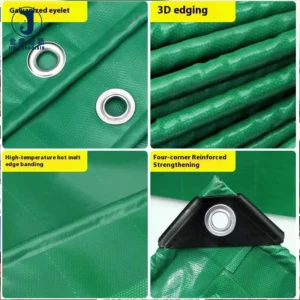
- Heat-seal parameters must match the specific PVC coating weight to prevent seam delamination at flex zones
- Eyelet reinforcement zones require additional fabric layers to distribute tie-down load across the base fabric denier
- Store rolls upright on pallets to prevent flat-spot deformation that transfers to the installed cover surface
- Allow rolls to acclimatise before unrolling in cold conditions to avoid cracking the PVC coating below -15°C
- Use mild detergent cleaners compatible with PVC surfaces to maintain glossy or matte finish integrity
- Plan cutting layouts to minimise cross-grain seams where tear resistance is lower than warp direction
What to Include in Your Enquiry
Provide the specific trailer model numbers and cover type — side curtain, rolling tarp, or flatbed cover — along with the route conditions and cargo types your fleet handles. Specify any flame retardant grade required by your operating markets and the annual roll volume to confirm production scheduling. Indicate whether you require finished panels with eyelets and reinforcement or roll stock for in-house fabrication, and whether sample development is needed before bulk commitment.
Frequently Asked Questions
Q: How do I specify the right GSM and denier for my truck cover application?
A: Match denier to the mechanical stress your covers face — higher denier grades resist tear propagation at tie-down and flex points on long-haul routes. GSM determines overall weight and coating thickness. Our team reviews your trailer models, cargo types, and route conditions to recommend the combination that balances durability with handling weight for your operators.
Q: Can the fabric be supplied in custom widths and colours to match my fleet branding?
A: Yes. Custom widths, colours, and printed branding are available through our OEM/ODM capability. We develop samples within days so you can verify colour accuracy and print quality before full production. Roll-to-roll colour consistency is verified during pre-shipment inspection to prevent visible mismatch when panels are installed side by side across your fleet.
Q: What test documentation comes with flame retardant or UV treated grades?
A: Where flame retardant or UV treatment is specified, test reports confirming the applicable grade are included with the shipment documentation, matched to batch numbers on delivered rolls. Confirm the specific grade and standard required by your market regulations at enquiry stage so the correct treatment is applied and documented.
Q: How do you ensure colour consistency across multiple rolls in one order?
A: Every production run undergoes dedicated QA/QC at each stage, with 100% pre-shipment inspection comparing colour across all rolls in the order. Rolls that fall outside the approved colour reference are held before dispatch. This prevents the situation where panels installed side by side on a single trailer show visible tone differences.