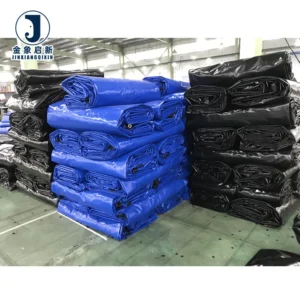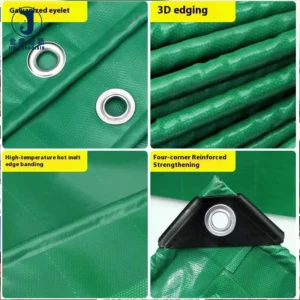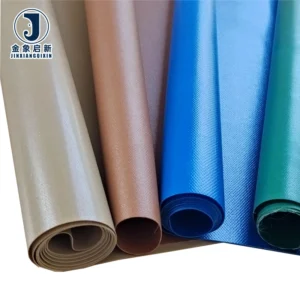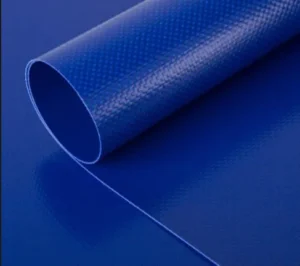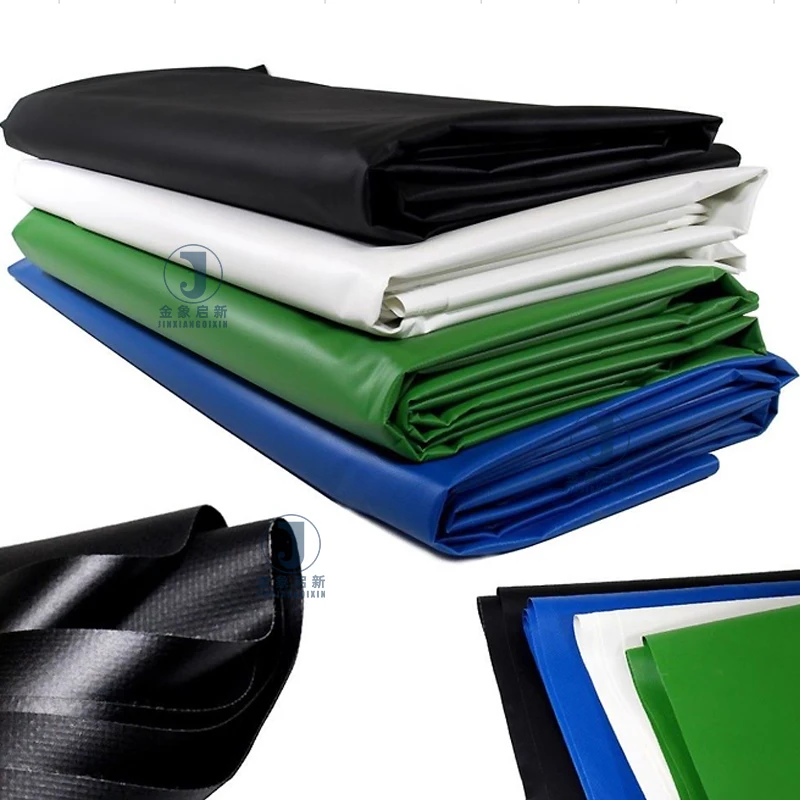
[Deep Coating Control] — Nearly three decades of focused production on coated fabrics ensures consistent PVC adhesion and verified weight across every roll of 650gsm PVC coated tarpaulin for truck cover applications.
Technical Specifications
| Parameter | Value |
|---|---|
| Product Type | PVC Coated Tarpaulin Roll |
| Weight (GSM) | 650gsm |
| Base Fabric | 100% high tenacity polyester yarns |
| Coating Material | PVC |
| Coating Method | Laminated technology & Hot-melt Coating technology |
| Waterproof | Yes |
| Cold Crack Resistance | Yes |
| Anti-Mildew | Yes |
| Anti-Static | Treatment available (grade not stated in source) |
| Flame Retardant | Treatment available (grade not stated in source) |
| Color Fastness | Best color fastness (test basis not stated in source) |
| Outdoor Life | 3-5 years (source value — verify against manufacturer catalog) |
| Special Treatments Available | Flame Retardant, Anti-Static, Anti-cold, Anti-mildew, 3P |
| Printing Option | Digital printing compatible |
Application Suitability
| Application | Exposure & Requirement |
|---|---|
| Truck bed tarp cover | Constant road vibration, load flex at tie-down points, weather and UV exposure during transit |
| Side curtain fabric for transport fleets | Repeated manual or mechanical rolling, wind flap stress, abrasion against cargo edges |
| Pick-up truck bed cover | Frequent installation and removal, sunlight exposure, rain and road spray ingress |
| Caravan awning | Seasonal deployment, wind loading, prolonged sun exposure when extended |
| Digital printing for fleet livery | Ink adhesion on PVC surface, outdoor color retention, wide-format print compatibility |
Why Weld Seams Fail Before the Fabric Does on Truck Covers
The seam is only as strong as the adhesion between the PVC coating and the polyester base fabric.
Fleet operators regularly see truck covers tear at the weld line long before the field of the fabric shows wear. This is not a fabric failure — it is a coating adhesion failure. When a 650gsm PVC coated tarpaulin for truck cover is welded at high frequency or hot air, the heat must penetrate the coating layer evenly to fuse two panels into a single bonded joint. If the coating bond to the base yarn is weak, the weld creates a stress concentration that peels apart under the cyclic flexing every trailer experiences on the road [NEED_CITE: tensile and tear test methods for coated fabrics per ISO 1421]. The hot-melt coating and laminated technology used on this grade is designed to produce the adhesion strength necessary for welded seams to survive repeated load movement.
Hot-Melt Lamination and What It Means for Welded Truck Covers
The 650gsm PVC coated tarpaulin for truck cover is produced using laminated and hot-melt coating technology, which bonds the PVC layer to the high tenacity polyester base under heat and pressure rather than through simple adhesive application. This process creates a coating-to-yarn bond that directly influences how well the material responds to high-frequency or hot-air welding. For fleet operators fitting side curtains or truck bed tarps, this matters because every welded seam on a moving trailer is subjected to continuous flex cycles from road vibration and cargo shift.
Tearing Strength at the Weld Line During Transit
Outstanding tearing strength for welding is a defining characteristic of this 650gsm grade. On a truck cover, the highest stress is never at the center of a panel — it is always at the seam, the eyelet line, or where the fabric meets a buckle or tie-down. The combination of 100% high tenacity polyester yarns and the hot-melt lamination process produces a material where the weld zone resists tear propagation under load flex [NEED_CITE: weld seam peel strength testing for PVC coated polyester fabrics]. This means the cover is less likely to develop the small tears at seam corners that grow into full panel failures over a transport season.
Understanding the Base Fabric and Coating Relationship
The base fabric of 100% high tenacity polyester yarns provides the structural backbone, while the PVC coating applied via hot-melt lamination delivers waterproofing, surface durability, and weldability. Weight alone at 650gsm tells you the combined mass of yarn and coating per square meter, but it does not tell you how that mass is distributed. A fabric with a heavy coating over a light base yarn will have good surface properties but poor tear resistance. Conversely, a dense base fabric with a thin coating will tear well but may fail at the weld. The laminated technology balances these two contributions so the material performs at the flex points where truck covers fail most often. Cold crack resistance ensures the coating remains flexible at low ambient temperatures, preventing brittle cracking when covers are deployed in winter conditions. Anti-mildew treatment protects against biological growth in humid transport environments where tarps are rolled up while still damp [NEED_CITE: cold crack and mildew resistance standards for transport tarpaulins].
What Happens When Specification Mismatches Reach the Truck
Ordering a truck cover that arrives lighter than the quoted GSM is a common procurement failure. The material looks correct on the roll, but once fitted to the trailer and exposed to highway-speed wind loading, it flexes beyond its structural capacity and tears at the seams. Similarly, flame retardant or anti-static treatments are sometimes claimed on the quotation without a test result to back them up — and the compliance issue only surfaces when a site inspector asks for documentation. Color variation between rolls in the same order becomes visible the moment two adjacent vehicles in a fleet are parked side by side, undermining the professional appearance of the fleet livery [NEED_CITE: batch color consistency standards for PVC coated fabrics]. These are not material defects — they are specification verification failures that a disciplined pre-shipment inspection process is designed to prevent.
Why Fleet Operators Source This Grade Here
Three full production lines and 36 sets of professional equipment support the bulk roll volumes that fleet procurement demands, with delivery schedules aligned to vehicle build timelines rather than material availability. The 10-person R&D team handles custom width, pattern printing, and cut-to-model sizing so that a truck cover arrives ready to fit a specific trailer rather than requiring on-site modification. Dedicated QA and QC at every production stage, with 100% inspection before shipment, means GSM is verified per roll and color consistency is confirmed across the full order. This process control has been refined over nearly 30 years of focused coated fabric production, giving fleet operators a supply source where the specification on the quotation matches the material on the loading dock.
Documentation & Verification
- Weight verification per roll against the stated 650gsm before dispatch
- Material specification sheet stating base fabric, coating method, and color reference
- Test report for flame retardant and anti-static grades where applicable
- Pre-shipment inspection record covering visual and dimensional checks
- Roll packing list with batch identification for traceability
- Certificate of origin and customs documentation included
Fabrication, Handling & Storage
- Hot-air weld temperature settings must account for the hot-melt lamination coating method on this 650gsm grade
- Reinforced hem areas at tie-down points should use double-layer folds to distribute load across the polyester base
- Store rolls upright on pallets to prevent permanent creasing in the PVC coating layer
- Allow cold-stored rolls to reach ambient temperature before unrolling to avoid cold crack damage
- Use only PVC-compatible cleaners on the coated surface to preserve color fastness and anti-mildew treatment
Specifying the Right Cover for Your Fleet
Provide the trailer make, model, and year so that cut sizes match the actual vehicle dimensions rather than generic templates. Confirm whether flame retardant or anti-static certification is required at your operating sites, and specify the test standard your compliance team needs. Indicate the annual roll or unit volume and whether you require digital printing for fleet branding, so the production team can plan batch runs that maintain color consistency across your entire order.
Frequently Asked Questions
Q: How is the 650gsm weight verified on arrival to match the quotation?
A: Every roll undergoes weight verification as part of the 100% pre-shipment inspection process. The inspection record documents the measured GSM per roll against the quoted 650gsm specification, and this documentation ships with the order so you can cross-check on receipt.
Q: What trailer models can this tarpaulin be cut and fitted to?
A: The material can be cut to any specific trailer model when you provide the make, model, and year. Custom sizing is handled by the R&D team to ensure the cover fits the actual vehicle dimensions, avoiding the generic-size problem that causes poor tension and premature seam failure.
Q: How do welded seams perform under load flex during transit?
A: The hot-melt lamination and high tenacity polyester base produce outstanding tearing strength for welding, meaning the fused seam zone resists tear propagation under cyclic road vibration. Weld parameters should be adjusted to the 650gsm coating thickness for optimal bond integrity.
Q: What flame retardant and anti-static grades are available for transport compliance?
A: Both treatments are available, but the specific grade depends on your market requirements. Confirm the test standard your compliance team needs — such as a particular fire classification — so the correct grade can be applied and documented with a test report.
Q: How is batch-to-batch color consistency controlled across multiple truck cover orders?
A: Color consistency is verified during pre-shipment inspection across all rolls in an order. For repeat fleet orders, color references from the original batch are used to match subsequent production runs, preventing visible variation when adjacent vehicles are parked side by side.