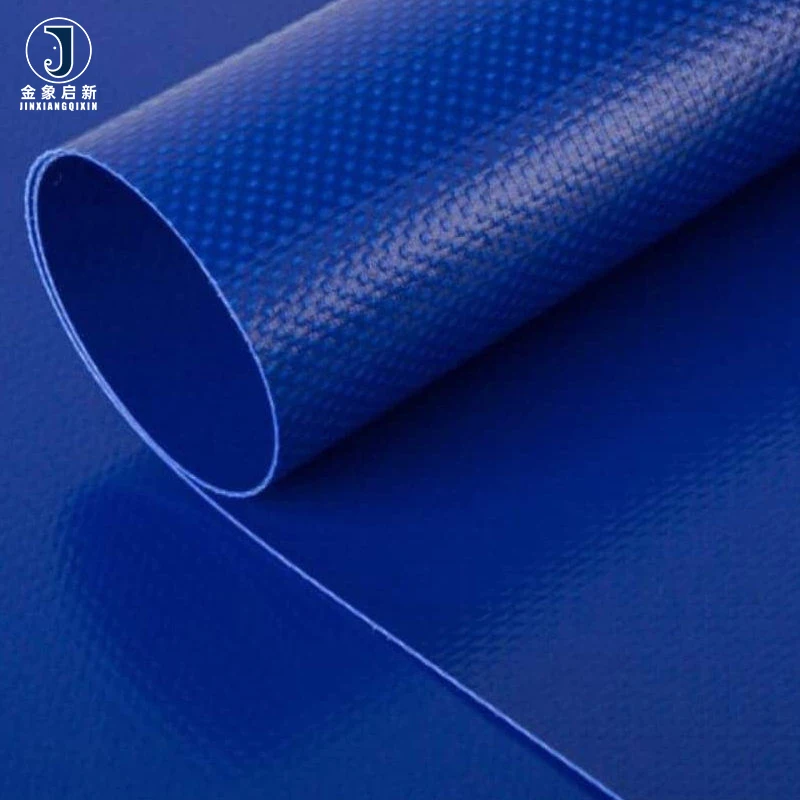
Precision-Engineered Transport Fabric — Double-sided PVC coating on polyester base fabric delivers waterproof sealing and structural integrity for truck and trailer covers subjected to constant road vibration and load flex.
Technical Specifications
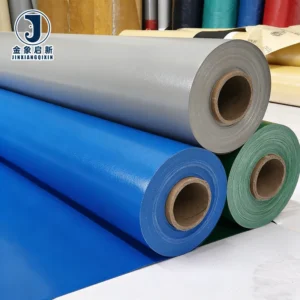
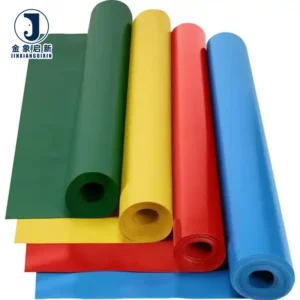
Product Type | PVC Coated Tarpaulin Roll
| Parameter | Value |
|---|---|
| Weight Range | 500gsm-1000gsm |
| Base Fabric | Polyester |
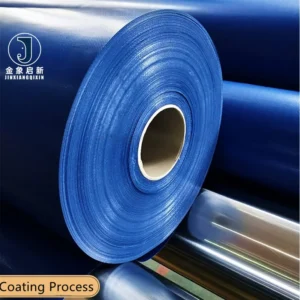
| Coating Method | Double-sided PVC coating |
| Density | 1.15-2.00g/cm³ |
| Tensile Strength | 50-80MPa (test basis not stated) |
| Brittle Temperature | ≤ -50~-60°C |
| Softening Temperature | ≥ 80°C |
| Melting Point | 212°C |
| Flame Retardant | Available in flame retardant grades (grade not stated) |
| UV Treatment | Anti-UV treatment available (test basis not stated) |
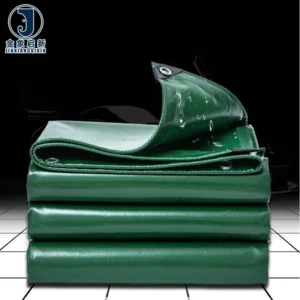
| Eyelet Options | Brass eyelets every 1 meter, reinforced edges on all four sides |
| Printing | Printable, customized |
| Key Features | Waterproof, anti-mildew, heavy metal free, self-clean, flexible, repairable by hot air welding |
Application Suitability
| Application | Exposure & Requirement |
|---|---|
| Truck side curtains | Constant flexing, road abrasion, UV exposure, tie-down stress at eyelets |
| Trailer top roof covers | Weather sealing, ponding water resistance, thermal expansion cycles |
| Flatbed cargo protection | Puncture risk from sharp loads, wind lift during transit |
| Container roof liners | Condensation exposure, thermal cycling, abrasion from loading equipment |
| Transport equipment OEM builds | Repeat fabrication, weld consistency across production runs |
Why Generic Truck Covers Fail at the Flex Points
Seam failure precedes fabric failure when welded joints cannot withstand repeated load movement.
Transport operators frequently report that PVC Tarpaulin Roll aftermarket supplier materials split at welded seams long before the base fabric shows wear. The stress concentrates at tie-down points and curtain fold lines where the load shifts during braking and cornering. Hot air and high-frequency hot melt welding methods address this vulnerability by creating bonds that flex with the polyester base fabric rather than cracking under cyclic loading [NEED_CITE: weld integrity testing methods for flexible coated fabrics].
Tie-Down Reinforcement at High-Stress Zones
Brass eyelets positioned at one-meter intervals distribute tie-down loads across the reinforced perimeter rather than concentrating force on isolated points. The four-sided edge reinforcement prevents tear propagation when straps are tensioned during transit. Fleet operators replacing worn side curtain fabric on trucks and trailers require this reinforcement pattern to match existing mounting hardware without modification.
Welded Seam Performance Under Road Vibration
Hot air welding creates continuous bonds along seam lines that withstand the torsional stress of uneven road surfaces. Unlike sewn seams that create needle holes vulnerable to water ingress, welded joints maintain waterproof integrity while allowing the fabric to flex. Transport equipment builders specifying OEM curtain material rely on consistent weld parameters to ensure every production roll performs identically under field conditions [NEED_CITE: ISO 1421 tensile and tear test methods for coated fabrics].
Understanding Weight Grades and Structural Performance
The 500gsm-1000gsm range covers distinct application requirements. Lighter grades suit temporary cargo protection where weight reduction matters for fuel efficiency, while heavier grades provide extended service life for permanent fleet installations. The polyester base fabric denier and weave density work with the PVC coating thickness to determine tear resistance — GSM alone does not predict how the material will perform when punctured or abraded. Double-sided coating ensures both faces resist moisture penetration and UV degradation equally.
The coating method affects weldability and long-term flexibility. High-frequency hot melt bonding creates molecular-level adhesion between coating and base fabric, while hot air welding allows field repairs without specialized equipment. Flame retardant and anti-UV treatments are available in specific grades — confirm the grade required for your market’s compliance standards before specifying [NEED_CITE: DIN 4102 fire classification for building materials].
The Hidden Cost of Incorrect Specification
Selecting a weight grade based solely on price rather than exposure conditions leads to premature replacement cycles. Side curtains subjected to daily highway speeds and UV exposure require heavier grades with verified anti-UV treatment, while warehouse covers may perform adequately with lighter specifications. Color variation between rolls in the same order becomes visible once installed side by side, forcing fleet operators to replace entire curtain sets rather than individual panels. Pre-shipment inspection confirming GSM, color consistency, and eyelet placement prevents these field failures [NEED_CITE: batch consistency verification protocols for coated fabric production].
Why Source from Jinxiang Tarpaulin
Three full production lines with 36 sets of professional equipment support bulk capacity with reliable delivery schedules for fleet operators requiring multiple trailer covers simultaneously. The 10-person R&D team develops samples within days for custom sizing trials on specific vehicle models before full production runs begin. Dedicated QA/QC at every production stage with 100% inspection before shipment ensures each roll meets the specified GSM and treatment requirements. Material specification sheets state base fabric, coating weight, and test reports for UV and flame-retardant grades where applicable, providing documentation for compliance verification.
Documentation & Verification
- Material specification sheet stating GSM, base fabric and coating composition
- Test reports for UV and flame-retardant grades where applicable
- Pre-shipment inspection record confirming weight and color consistency
- Roll packing list with individual roll identification
- ISO and CE certificates for quality management compliance
- Certificate of origin and customs support documentation
Fabrication, Handling & Storage
- Hot air welding parameters must match the 500gsm-1000gsm coating thickness for proper bond formation
- Brass eyelets require reinforcement patches on both fabric faces to prevent pull-through under load
- Store rolls upright on pallets to prevent flat spots that cause creasing during unrolling
- Allow fabric to acclimate to ambient temperature before installation in cold weather conditions
- Clean with mild detergent only — abrasive cleaners damage the PVC coating surface
- Field repairs use hot air welding equipment compatible with the double-sided PVC coating
Specification Inquiry for Transport Applications
Provide your truck or trailer model dimensions, the specific exposure conditions including highway speeds and UV intensity, and any flame retardant or anti-UV compliance requirements for your operating region. Indicate whether you require finished covers with brass eyelets and reinforced edges or bulk rolls for in-house fabrication. Sample development confirms fitment on your specific vehicles before full production begins.
Frequently Asked Questions
Q: How do you ensure the truck cover fits my specific trailer model rather than a generic size?
A: Custom sizing requires your trailer’s exact dimensions including length, width, and height measurements. The 10-person R&D team develops samples within days for fitment trials on your specific vehicle before full production. Brass eyelets are positioned to match your existing tie-down hardware, and reinforced edges are cut to your curtain fold patterns.
Q: What UV and flame-retardant test reports can you provide for road-exposure compliance?
A: Test reports are available for UV and flame-retardant grades where applicable. The material specification sheet states the specific treatment level and test standard used. Confirm the grade required for your market’s compliance standards during the inquiry stage, as different regions require different certification levels.
Q: How do welded seams hold up at the flex points where the load moves most?
A: Hot air and high-frequency hot melt welding methods create bonds that flex with the polyester base fabric rather than cracking under cyclic loading. The welded joints maintain waterproof integrity while allowing the material to move with load shifts during braking and cornering. Transport equipment builders specify these welding methods for OEM curtain production.
Q: What eyelet spacing and edge reinforcement options are available for tie-down straps?
A: Brass eyelets are positioned every 1 meter as standard, with reinforced edges on all four sides to distribute tie-down loads. Custom spacing is available to match your existing mounting hardware patterns. The reinforcement prevents tear propagation when straps are tensioned during transit.
Q: Can I order custom widths and lengths to match my fleet’s trailer dimensions?
A: Custom widths and lengths are available within the 500gsm-1000gsm range. Provide your fleet’s trailer dimensions and annual volume requirements during the inquiry stage. Typical multi-week lead times apply for custom specifications, with sample approval required before full production begins.