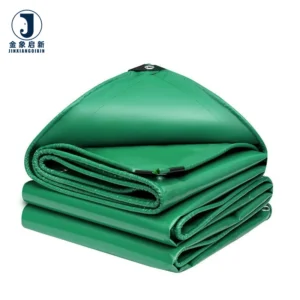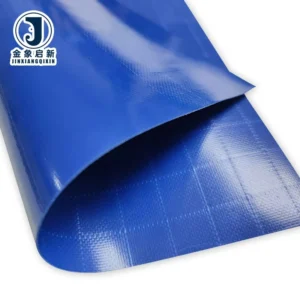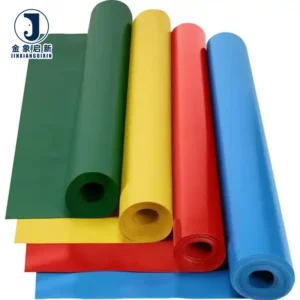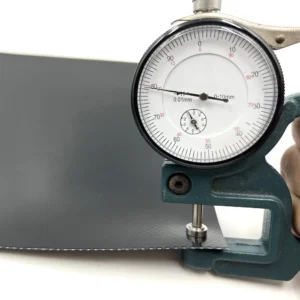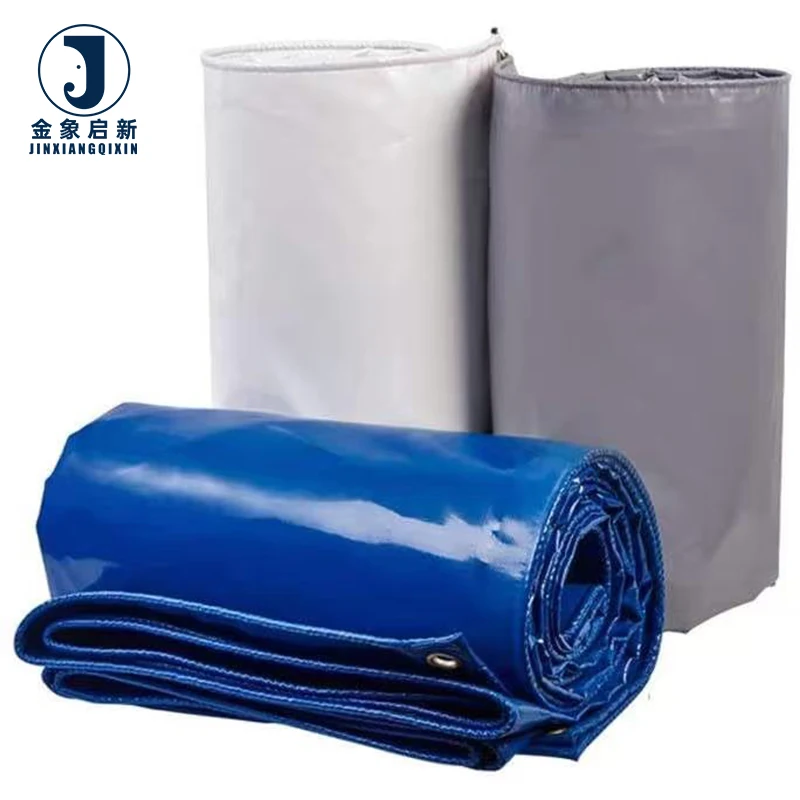
Engineered for Fleet Fitment — custom cut sizes and reinforced flex zones developed from specific trailer model measurements before bulk production begins.
Technical Specifications
Product Type | PVC Coated Tarpaulin Roll
Coating Material | PVC
Waterproof | Yes
Anti-Shrink | Yes
Flame Retardant Grade | Available in flame retardant grades — confirm the grade required for your market
UV Treatment | UV-resistant options available — test basis not stated
Application Grade | Industrial / Heavy Duty
Weight (GSM) | Different Weights
Key Features | Waterproof, anti-shrink, UV-resistant and flame-retardant options
Application Suitability
| Application | Exposure & Requirement |
|---|---|
| Truck side curtains | Constant flexing at fold lines, road abrasion from debris, prolonged UV exposure during daytime haulage |
| Lorry and flatbed covers | Rain and road moisture contact, tie-down tension cycles, temperature swings between loading docks and open highway |
| Transport tent and shelter fabric | Repeated erection and dismantling, wind load on tensioned panels, condensation on inner surface |
Why a Generic Cut Size Costs More Than the Fabric Itself
A truck side curtain cut to a generic width will stress every tie-down point and weld seam within the first hundred kilometres. [NEED_CITE: field failure analysis on transport covers]
Fleet operators replacing side curtains often find that off-the-shelf rolls are trimmed to a standard width that ignores the specific trailer model’s rail spacing, buckle alignment and flex geometry. The result is not just a poor fit — it is accelerated seam splitting at the point the load flexes most, fabric pooling that catches wind, and tie-down eyelets pulling through because the reinforcement zone was placed for a different chassis. When colour varies between rolls in the same order, the visual inconsistency is compounded by uneven wear patterns across the fleet.
Matching Curtain Fabric to Trailer Model Geometry
PVC coated tarpaulin for truck side curtains must account for the exact rail-to-rail distance, the number and position of tie-down buckles, and the radius at which the curtain folds when retracted. Each of these variables determines where stress concentrates and where reinforcement must be placed. Rolls supplied in custom widths eliminate the need for on-site拼接 seams that become weak points under repeated flexing.
Flex-Point Reinforcement and Seam Integrity
The weld line on a side curtain is subjected to thousands of articulation cycles per month. Base fabric denier, coating adhesion and welding temperature must all align so that the seam outlasts the fabric panel rather than failing first. [NEED_CITE: weld integrity testing methods for coated transport fabrics] Production lines running dedicated QA at every stage verify coating weight and adhesion before the roll reaches the welding bench.
Reading the Specification Beyond GSM
GSM alone does not determine whether a side curtain will survive a season of long-haul exposure. The base fabric denier and weave density define tensile and tear resistance; the coating method — knife-over-roll, calendering or lamination — governs peel strength and heat-seal behaviour. A heavier GSM with low-denier base fabric may feel substantial but will stretch and deform under tie-down tension, while a lighter GSM on a high-denier scrim can deliver superior dimensional stability. UV-resistant treatment preserves colour and tensile retention under prolonged sunlight, though the specific test standard should be confirmed against your market’s requirements. Flame retardant options are available, but the applicable grade — whether DIN 4102 B1, NFPA 701 or a regional transport standard — must be specified before production.
The Hidden Cost of Unverified Claims
When flame retardant treatment is claimed without a test report, or UV resistance is stated without a documented basis, the curtain may pass visual inspection at delivery but fail compliance at the first roadside check or site audit. [NEED_CITE: transport safety compliance documentation requirements] Similarly, colour inconsistency between rolls becomes visible once installed side by side on a fleet, triggering customer complaints and partial re-fitting costs that exceed the original material savings. Rolls arriving with a lower GSM than quoted reduce waterproof integrity and accelerate coating degradation at flex points.
Why Fleet Operators Specify from This Range
Custom sizing capability means each roll can be developed against a specific trailer model’s dimensional drawing, with reinforcement zones positioned at verified flex and tie-down locations. A dedicated R&D team handles material selection, sample development and pattern printing, delivering samples within days for approval before bulk production runs. Three full production lines with dedicated equipment support consistent roll-to-roll colour and coating weight across fleet-scale orders. Every roll undergoes 100% pre-shipment inspection with documented records confirming GSM, colour reference and cut-size accuracy before dispatch.
Documentation & Verification
- Material specification sheet stating GSM, base fabric denier and coating weight per roll
- UV resistance and flame retardant test reports provided where applicable to the specified grade
- Pre-shipment inspection record with 100% roll check confirming colour consistency and dimensional accuracy
- Roll packing list with custom cut-size verification against trailer model drawing
- ISO and CE certificates available for compliance documentation
Fabrication, Handling & Storage
- Welding temperature and pressure must be calibrated to the specific PVC coating weight to ensure peel strength exceeds base fabric tear strength
- Reinforced hem and tie-down zones should be positioned per trailer model drawing before heat-sealing to avoid stress concentration on raw fabric edges
- Store rolls upright on pallets in a shaded, ventilated area to prevent compression marks and coating adhesion transfer between layers
- Allow rolls to acclimatise to ambient temperature for a minimum of 24 hours before unfolding in cold conditions to prevent coating micro-cracking
- Clean with pH-neutral detergent only; solvent-based cleaners will degrade the PVC coating surface and reduce UV treatment effectiveness
Specifying the Right Roll for Your Fleet
Provide the trailer model, rail spacing and tie-down configuration so that each curtain can be sized and reinforced to match. Confirm the flame retardant grade and UV test standard required for your operating region. Specify the annual roll volume and colour requirement to ensure batch consistency across the fleet order. Sample approval is available before bulk production begins.
Frequently Asked Questions
Q: How do I verify that the GSM on arrival matches the quoted specification?
A: Each roll is accompanied by a material specification sheet stating the GSM, base fabric denier and coating weight. A pre-shipment inspection record is provided confirming that every roll has been weighed and measured against the stated specification before dispatch. If any roll falls outside the documented tolerance, it is flagged during the 100% inspection stage and held back.
Q: Which flame retardant grade should I specify for transport side curtains?
A: The required grade depends on your operating region and the regulatory framework governing your fleet. Flame retardant options are available, but the specific standard — whether DIN 4102, NFPA 701 or a national transport classification — must be confirmed before production. Test reports for the specified grade are provided with the shipment documentation.
Q: How is colour consistency maintained across multiple rolls in a single fleet order?
A: Colour is controlled through batch-matched pigment formulation and verified at every production stage. Each roll undergoes 100% pre-shipment inspection with colour reference comparison. Rolls within the same order are produced from a single pigment batch wherever possible, and the packing list documents the batch reference for traceability.
Q: Can the roll width be customised to match my trailer model without on-site seams?
A: Yes. Custom widths are available to match the exact rail-to-rail distance of your trailer model, eliminating the need for on-site拼接 seams that become weak points under repeated flexing. Sample approval is available before bulk production to confirm dimensional accuracy and reinforcement zone placement.