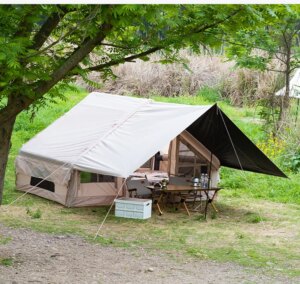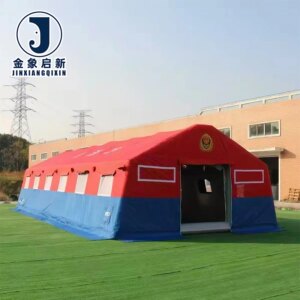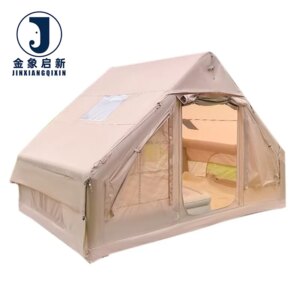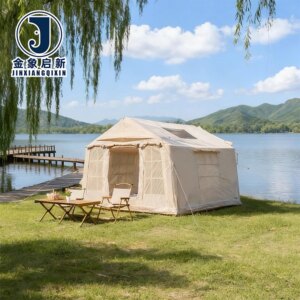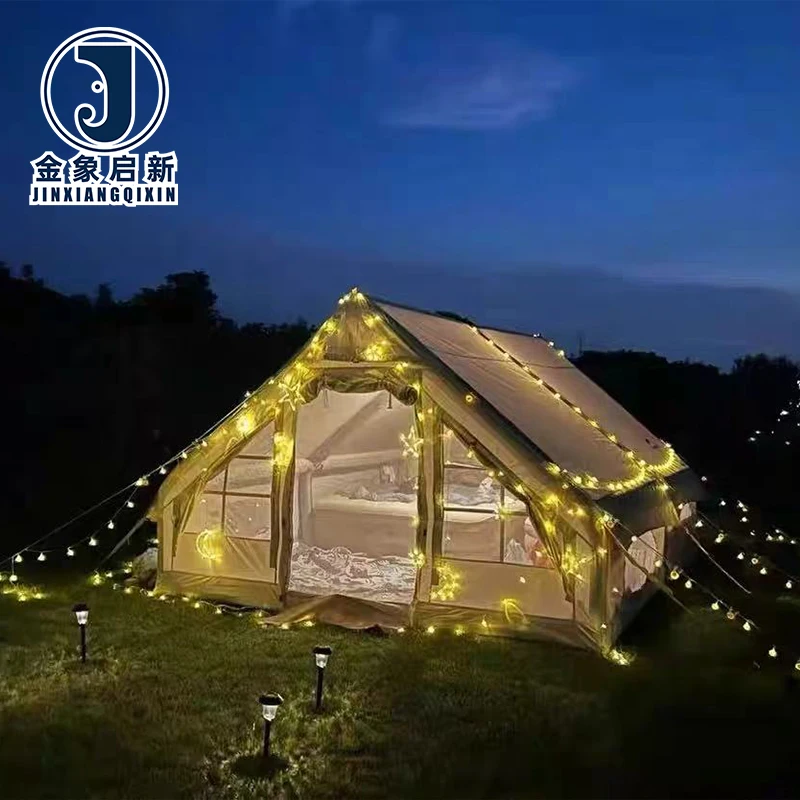
Rapid Deployment Structures — Built on nearly three decades of PVC coated fabric engineering, our inflatable tent systems provide fleet operators and site contractors with reliable temporary shelters that deploy in minutes, not hours, for transport logistics and construction staging.
Technical Specifications
| Parameter | Value |
|---|---|
| Product Type | Inflatable Tent |
| Core Material | PVC coated fabric |
| Key Performance | Waterproof (grade not stated in source), UV-resistant (test basis not stated in source), tear-resistant (test basis not stated in source), fire-retardant (grade not stated in source), anti-static (standard not confirmed) |
| Capacity | 4-6 Person |
| Opening Mechanism | Quick automatic opening |
| Season Rating | Four-season |
| Customization Service | OEM & ODM, sample customization, pattern printing |
| Production Standards | ISO 9001, ISO 14001, ISO 45001, CE |
Application Suitability
| Application | Exposure & Requirement |
|---|---|
| Logistics & Transport Fleets | Roadside emergency shelter, equipment staging during loading, constant setup/teardown cycles |
| Construction Site Contractors | Temporary equipment storage, personnel protection, variable weather exposure across climate zones |
| Emergency Response Operations | Rapid deployment shelters for non-life-saving scenarios, repeated inflation cycles, transport portability |
| Commercial Outdoor Events | Fast installation for temporary structures, high visibility branding requirements, public safety compliance |
Why Weld Seams Fail First in Inflatable Tent Applications
When inflatable tent fabric is subjected to the repeated stress of pressurization and folding, the heat-welded seams bear the highest localized load—and this is where most field failures originate.
For transport fleets and construction crews, a seam failure during deployment means operational downtime and potential safety risks at the site [NEED_CITE: heat weld peel strength testing per ISO 2411]. The junction between the fabric panel and the inflatable beam undergoes cyclic loading every time the structure is inflated, making adhesion quality critical. Coated fabrics with poor weld compatibility may show strong initial peel strength but degrade rapidly after several inflation cycles, especially when exposed to UV and temperature fluctuations. Fleet operators need inflatable tent fabric for transport and site deployment that maintains weld integrity through dozens of setup cycles without delamination.
Pressurization Loads and Coating Adhesion
The Inflatable Tent Fabric for transport and site deployment must handle internal air pressure that pushes outward against every welded joint. PVC coated fabrics engineered for inflatable structures require coating formulations that melt and fuse cleanly during high-frequency or hot-air welding, creating a monolithic bond rather than a surface adhesion. When coating chemistry is not optimized for thermal welding, the seam becomes the weakest link in the structure, failing before the base fabric reaches its tensile limit.
Repeated Fold Stress at Beam Junctions
Every deployment cycle introduces creasing and compression at the points where inflatable beams connect to the tent floor and sidewalls. These fold zones accumulate micro-damage over time, particularly if the coating lacks adequate flexibility at the operating temperature range. Site contractors working across seasons need fabric that resists crack propagation at these stress concentrations, maintaining structural airtightness through repeated use in both cold morning setups and hot afternoon conditions [NEED_CITE: low temperature flex testing for coated fabrics per ISO 4674-1].
Specification Reading for Inflatable Structure Buyers
The relationship between base fabric denier, weave density, and coating weight determines how the material performs under inflation pressure. A higher denier yarn provides the backbone for tear resistance, but without sufficient weft density, the coating can bridge between yarns and create weak points at beam intersections. Coating weight influences both the air retention capability and the thermal weldability—too light a coating results in poor seam formation, while excessive coating thickness can cause brittle failure at fold points. Fire-retardant and anti-static treatments are available for inflatable tent applications, but the specific grade must be confirmed against your local site safety regulations before procurement. Surface finish selection between glossy and matte affects how the material handles during fabrication and how well printed graphics adhere for branded event structures.
The Cost of Underspecified Weld Parameters
Purchasing inflatable tent fabric based solely on stated GSM ignores the thermal welding behavior that determines real-world durability. When heat seal temperature and dwell time are not matched to the specific coating formulation, seams may appear bonded during factory inspection but fail in the field after exposure to inflation pressure cycles [NEED_CITE: seam strength testing methods for coated fabrics per ISO 2411]. Site contractors have reported structures deflating during operation because weld zones could not sustain the internal pressure, requiring emergency patches and causing project delays. Consistent coating thickness across the roll width is essential to maintain uniform weld quality during fabrication.
Why Source Inflatable Structure Fabric Here
Process control over coating weight and adhesion is maintained across three full production lines, ensuring that inflatable tent fabric performs consistently when welded by your fabrication team. A dedicated research group handles material selection and sample development, allowing you to test weld parameters and confirm seam strength before committing to production volume. Every roll undergoes inspection at multiple production stages, with particular attention to coating uniformity at the edges where weld seams are typically located. Custom sizing and pattern printing capabilities allow fleet operators to specify tent dimensions that match their vehicle configurations, rather than adapting generic structures to specific transport requirements. Documentation includes material specification sheets and pre-shipment inspection records, providing traceability for compliance audits on construction and emergency response sites.
Documentation & Verification
- Material specification sheet stating coating type, base fabric construction, and treatment options applied
- Test reports for fire-retardant and anti-static grades where specified, aligned to your local compliance standard
- Pre-shipment inspection record confirming coating weight verification and visual defect check per roll
- Certificate of origin and customs support documentation for international fleet procurement
Fabrication, Handling & Storage
- High-frequency welding recommended for PVC coated inflatable structures to ensure consistent seam adhesion
- Store rolls horizontally in climate-controlled conditions to prevent coating compression marks before fabrication
- Allow material to reach ambient temperature before unfolding to avoid cold-crack damage at fold points
- Use compatible PVC-based repair patches with solvent welding for field repairs on inflatable beams
Request a Specification Consultation
To specify the correct inflatable tent fabric for your application, share your deployment environment, expected setup frequency, and any fire safety or anti-static requirements mandated by your site operator. Provide target dimensions and whether you require roll stock for your own fabrication or finished structures with specific beam configurations. Sample rolls are available to validate weld parameters and confirm material handling characteristics on your production equipment before bulk commitment.
Frequently Asked Questions
Q: What safety certifications does the tent fabric carry for industrial sites?
A: Fire-retardant and anti-static treatments are available as options for inflatable tent fabric, but the specific grade must be matched to your local jurisdiction’s requirements. We provide test reports for the grade specified at order placement. Confirm your site’s compliance standard before procurement so the correct formulation can be applied and documented.
Q: Can the tent withstand repeated setup and teardown cycles?
A: The PVC coated fabric is engineered for inflatable structures that undergo regular inflation and deflation. Weld seam durability depends on proper fabrication parameters matching the coating formulation. Request sample material to test your welding setup and confirm seam peel strength holds through multiple pressurization cycles representative of your actual deployment frequency.
Q: What customization options are available for branding and sizing?
A: OEM and ODM services include custom dimensions tailored to specific vehicle configurations or site layouts, along with pattern printing for fleet branding or event graphics. Provide your dimensional requirements and artwork specifications so samples can be developed to confirm print adhesion and color consistency before production.
Q: How do I verify the waterproof and fire-retardant performance claims?
A: Each order is accompanied by a material specification sheet detailing the coating construction and any treatments applied. Fire-retardant grades are supported by test reports referencing the applicable standard. Request this documentation with your quotation to confirm the specification matches your site compliance requirements before placing the production order.