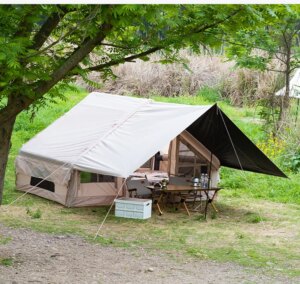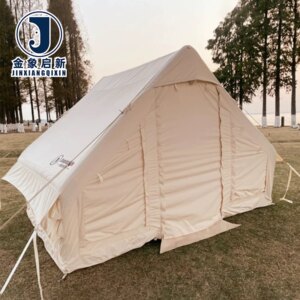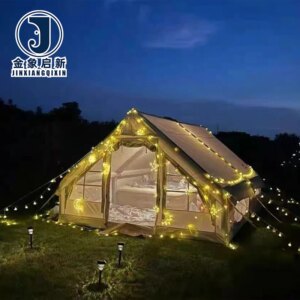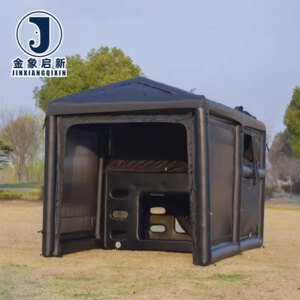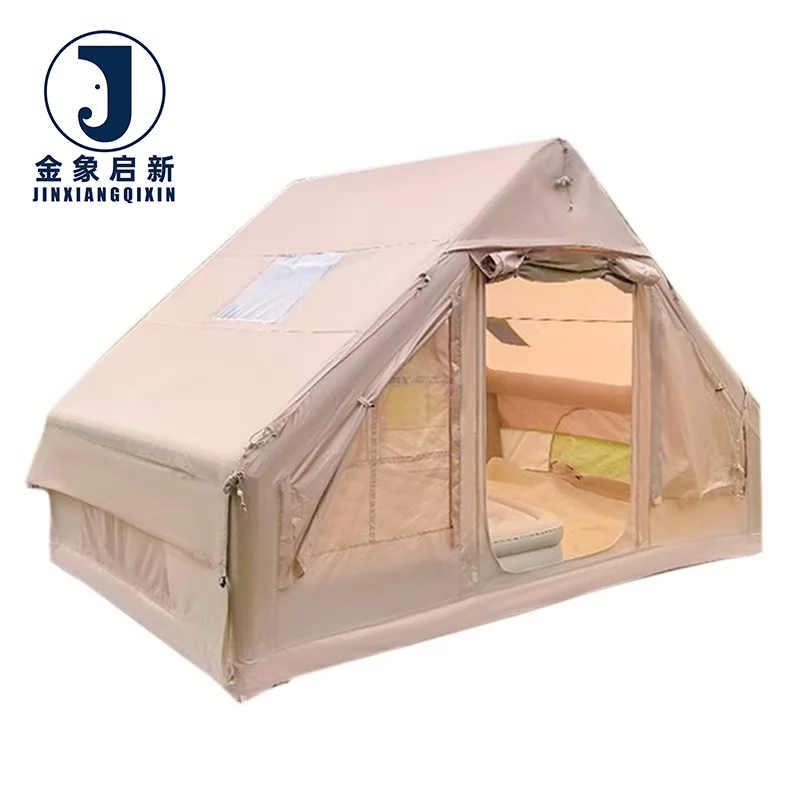
[Deep Process Control] — Coating weight and adhesion are managed at every stage across three full production lines, ensuring inflatable tent fabric for truck and transport applications meets the exact structural and weather performance required by fleet and site operators.
Technical Specifications
| Parameter | Value |
|---|---|
| Product Type | Inflatable Tent |
| Core Material | PVC tarpaulin |
| Key Performance | Waterproof, UV-resistant (test basis not stated), tear-resistant, lightweight |
| Product Forms | Inflatable structure with quick automatic opening |
| Customization Service | OEM & ODM (sample customization, pattern printing) |
| Production Lines | 3 full production lines |
| Processing Equipment | 36 sets of professional processing equipment |
| Production Facility Area | 9,180 square meters |
| Standards | ISO 9001, ISO 14001, ISO 45001, CE |
Application Suitability
| Application | Exposure & Requirement |
|---|---|
| Temporary site offices at construction projects | Wind loading, dust ingress, repeated relocation, daily thermal cycling |
| Mobile storage units for outdoor events | Sudden rainfall, UV exposure, frequent inflation and deflation cycles |
| Emergency response shelters for disaster relief | Rapid deployment under time pressure, rough ground contact, variable weather |
| Auxiliary facilities for outdoor logistics hubs | Forklift proximity abrasion, prolonged sun exposure, wind-driven rain |
Why Quick Deployment Fails When the Fabric Specification Is Wrong
The inflatable tent for camping with quick automatic opening must balance low pack weight with sufficient tear strength at the seam — a trade-off that generic specifications routinely get wrong.
When a transport operator specifies an inflatable shelter based on a single metric like total weight, the result is often a structure that deploys fast but fails at the welded seams during the third or fourth setup cycle. The fabric itself survives, but the bond between the PVC coating and the base yarn breaks down at the points where the structure flexes most during inflation [NEED_CITE: tensile and tear test methods for coated fabrics per ISO 1421]. Fleet buyers and logistics contractors who need reliable temporary cover at staging areas cannot afford this kind of field failure, especially when weather windows are narrow and crews are working against tight schedules.
Engineering the Air-Holding Envelope for Transport Shelter Use
The inflatable tent for camping with quick automatic opening relies on a sealed air-beam architecture that places continuous hoop stress on every welded joint. Our PVC tarpaulin core material is processed to maintain coating adhesion under this sustained internal pressure, preventing the micro-delamination that leads to slow air leaks during multi-day deployments at logistics staging areas or construction sites.
Matching Fabric Weight to Inflation Pressure and Wind Load
Selecting the correct PVC tarpaulin grade depends on the maximum inflation pressure the beam design requires and the wind loads the shelter will face when deployed in open transport yards. Lightweight grades reduce pack size and deployment effort, while heavier grades provide the tear resistance needed when the structure is sited near active loading docks or exposed to gust corridors between parked trailers [NEED_CITE: DIN 4102 fire classification for building materials].
Reading the Specification Sheet Beyond the Headline GSM
Total fabric weight alone does not predict how the material will behave during repeated inflation cycles. The base fabric denier and weave density determine tear propagation resistance, while the coating method — whether knife-over-roll, lamination, or calendering — governs peel strength at the weld line. A lighter fabric with a tight base weave and strong coating bond can outperform a heavier alternative with a loose weave and weak adhesion, making it essential to review the full material specification sheet rather than comparing GSM figures in isolation. Surface finish also plays a role: a glossy face sheds dirt and water more readily during outdoor event use, while a matte finish may offer better printing adhesion for branded transport shelters.
What Happens When Batch Consistency Breaks Down
A fleet operator ordering multiple inflatable shelters for a national logistics network expects every unit to deploy identically and present a uniform appearance across sites. When GSM varies between production batches without verification, some shelters inflate to full rigidity while others remain soft and sag under wind load. Colour shifts between rolls in the same order become visible once the units are deployed side by side at an outdoor hub [NEED_CITE: roll-to-roll GSM and colour consistency in coated fabric production]. These inconsistencies do not appear in pre-shipment samples, which is why a documented 100% inspection record before dispatch is the only reliable safeguard.
Why Procurement Teams Choose This Production Facility
Coating weight and adhesion are controlled through dedicated QA/QC checkpoints at every production stage, not just at final inspection, which means the PVC tarpaulin used in each inflatable tent for camping with quick automatic opening carries verified performance from the first meter to the last.
A 10-person R&D team handles material selection, pattern printing, and custom sizing, developing samples within days so that transport equipment builders can validate fit and inflation behaviour before committing to bulk production.
Three full production lines and 36 sets of professional processing equipment provide the capacity to fulfil large commercial orders with reliable on-time delivery, even when custom widths or printed branding are required across multiple shelter configurations.
ISO and CE certified processes ensure that every batch of inflatable tent fabric is backed by traceable documentation suitable for commercial tender compliance.
Documentation & Verification
- Material specification sheet stating base fabric type, coating method, and confirmed GSM for each roll
- Pre-shipment inspection record confirming 100% quality check before dispatch of every inflatable unit
- ISO and CE certification documents supporting commercial tender and compliance submissions
- UV test report available upon request — confirm the grade required for your market and exposure duration
- Roll packing list with batch traceability for each inflatable tent fabric shipment
Fabrication, Handling & Storage
- Heat-weld seams using temperature and dwell settings matched to the specific PVC tarpaulin coating weight to prevent bond failure at flex points
- Reinforce inflation valve attachment zones with additional coating layers to resist peel stress during repeated pressurisation cycles
- Store rolled inflatable tent fabric vertically in a dry, shaded area to prevent permanent creasing that weakens the coating bond
- Use mild detergent and soft brush for cleaning — abrasive solvents can degrade the waterproof PVC coating surface
- Inflate to recommended pressure only; over-inflation stretches the base fabric beyond its tear resistance threshold
Requesting a Quotation for Your Transport Shelter Project
To move forward, provide the required shelter dimensions, target deployment environment, and any branding or colour requirements so we can recommend the appropriate PVC tarpaulin grade and confirm sample availability. If your project has specific UV exposure expectations or compliance documentation needs, include those details early to avoid specification gaps. Specify whether you need finished inflatable units or roll stock for your own fabrication line.
Frequently Asked Questions
Q: Can the inflatable tent fabric be custom-sized and printed to match specific vehicle or shelter models?
A: Yes. OEM and ODM services cover sample customization and pattern printing. The R&D team develops samples within days, allowing you to confirm dimensions, inflation behaviour, and printed branding before bulk production begins across our three full production lines.
Q: How is fabric GSM verified on arrival and what documentation supports batch consistency?
A: Every roll undergoes 100% pre-shipment inspection with a documented record. The material specification sheet states the confirmed GSM, base fabric type, and coating details for traceability, ensuring the inflatable tent fabric for truck and transport applications matches the agreed specification on arrival.
Q: What UV treatment test basis is available for prolonged outdoor exposure applications?
A: UV-resistant treatment is applied during production; however, the specific test basis and grade should be confirmed against your market requirements. Request the UV test report when placing your inquiry so the correct grade is selected for your deployment environment and expected exposure duration.
Q: What seam and weld reinforcement options are available at high-stress flex points?
A: Welded seams at inflation beam junctions and valve zones can receive additional coating layers or reinforcing strips. The 36 sets of professional processing equipment allow precise heat-weld parameter control, ensuring bond strength matches the tear resistance of the base PVC tarpaulin fabric.
Q: How are batch-to-batch colour differences controlled across large commercial orders?
A: Colour consistency is maintained through in-process QA checks at every production stage. A pre-shipment inspection record documents the visual and measured colour match for each roll, preventing visible variation when multiple inflatable shelters are deployed side by side at logistics hubs or event sites.