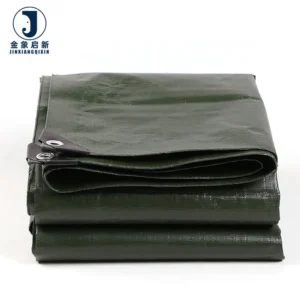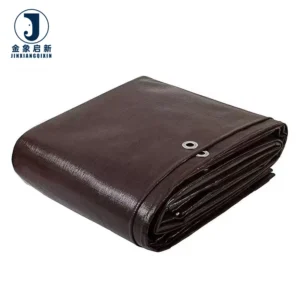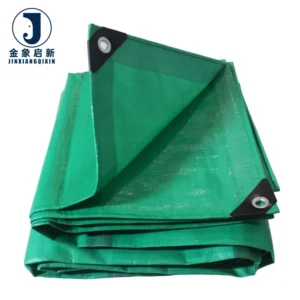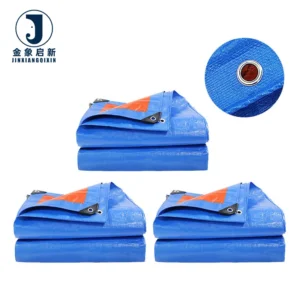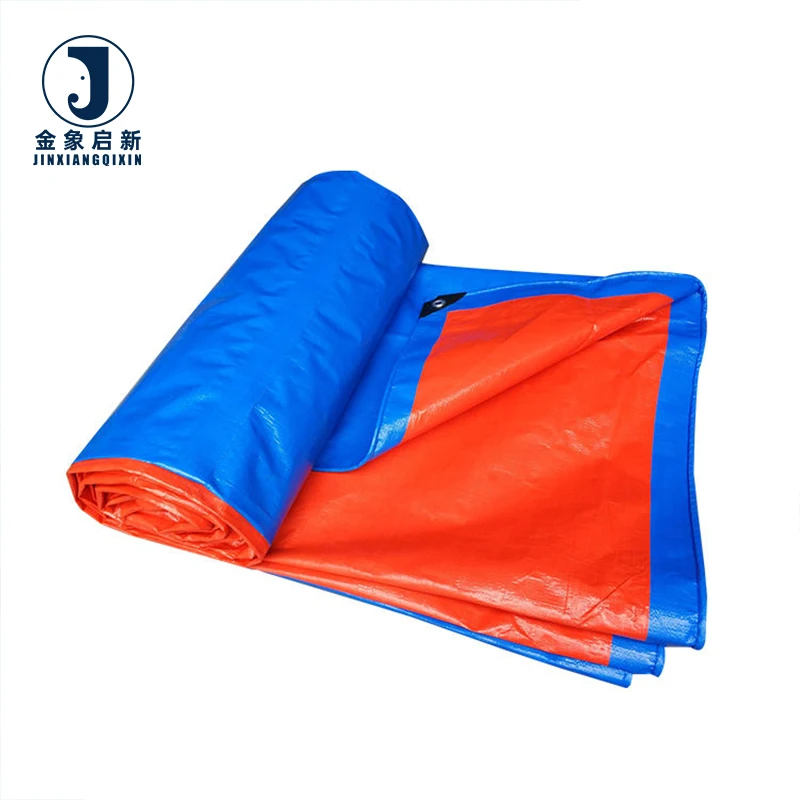
Specification Integrity — HDPE woven PE tarpaulin sheets verified to quoted GSM with pre-shipment dimensional checks, cut to specific truck and trailer model sizes rather than generic dimensions.
Technical Specifications
| Parameter | Value |
|---|---|
| Product Type | PE Tarpaulin |
| Material | HDPE woven fabric with LDPE coat on both sides |
| Density | 6X6 to 16X16 mesh |
| Weight | 50 g/m² to 300 g/m² (confirm the grade for this item) |
| Sheet Size | 2X3, 3X4, 3X5, 4X5, 5X6, 6X8, 10X10, 10X12, 12X14, or custom |
| Roll Size | 100m per roll or custom |
| Color Options | Blue, Orange, White, Black, Grey, Yellow, Green, Red, or custom |
| Edge & Hem | All edges with PP ropes in hem |
| Corner Reinforcement | Black plastic triangle at all corners |
| Eyelets | Rustproof aluminum eyelet every 1m or 1.5m or as required |
| Printing | Logos or company information, reinforced strip can be added |
| Special Treatment | Fire resistant / UV protection available (grade not stated — confirm requirement) |
| Container Loading (Rolls) | 20GP 17 tons, 40HQ 28 tons |
| Container Loading (Bales) | 20GP 11 tons, 40HQ 28 tons |
| Container Loading (Cartons) | 20GP 8 tons, 40HQ 22 tons |
| Standards | ISO, CE |
Application Suitability
| Application | Exposure & Requirement |
|---|---|
| Flatbed truck load cover | Road vibration, wind flap, tie-down stress at eyelets, UV and rain exposure |
| Trailer side curtain | Constant flexing at load points, abrasion against cargo, repeated roll-up cycles |
| Container top cover | Stacking abrasion, prolonged sun and weather exposure during transit |
| Construction equipment cover on site | Dust, UV, wind-driven rain, handling abrasion from frequent removal |
| Agricultural stockpile cover | Moisture ingress prevention, UV degradation over extended storage |
Why Generic-Size PE Tarpaulin Sheets Fail on Moving Loads
A cover cut to the wrong dimension is not a cover — it is an exposed load with false security.
Truck and trailer operators frequently receive PE tarpaulin sheets cut to generic dimensions that do not match the actual bed or curtain frame of their vehicle. The result is insufficient overlap at the edges, excessive tension across the eyelets during tie-down, and wind getting underneath the fabric at highway speed [NEED_CITE: wind uplift forces on flatbed covers at transport speed]. When the material cannot drape properly, tie-down straps cut into the fabric at stress points instead of distributing load evenly across the hem. Over time, the eyelets pull through, the PP rope hem stretches unevenly, and the cover tears at the corners — usually on the road, not in the yard. The cost is not the sheet itself but the damaged cargo, the roadside delay, and the replacement logistics.
Fitted Dimensions Eliminate the Most Common Failure Point
A PE Tarpaulin for Truck and Transport that is cut to the exact trailer model dimensions removes the guesswork from load covering. The sheet drapes with sufficient overhang on all sides, the eyelets align with the vehicle’s tie-down rails, and the PP rope hem sits flat against the load edge without bunching. Corner reinforcement with black plastic triangles addresses the specific point where strap tension concentrates — the area where most generic covers fail first. This is not about custom sizing as a premium option; it is about matching the cover to the vehicle so that the fastening system works as intended.
Tie-Down Reinforcement Engineered for Road Vibration
The rustproof aluminum eyelets are spaced at configurable intervals — every 1m or 1.5m — to match the tie-down point layout on standard trailers. Combined with PP rope threaded through the hem, the load distribution along the edge prevents individual eyelets from bearing disproportionate force during highway vibration and wind gusts [NEED_CITE: tie-down load distribution on PE tarpaulin hems under dynamic transport conditions]. For fleet operators running fixed routes, specifying the eyelet spacing to match their existing strap configuration means faster covering at the loading bay and fewer strap adjustments en route.
Specification Reading for Transport Buyers
The HDPE woven base fabric density, expressed as mesh count from 6X6 to 16X16, determines how much load the base structure can carry before the LDPE coating is the only barrier between cargo and weather. A higher mesh count means more yarns per unit area sharing the tensile load, which directly affects how the sheet behaves when a strap pulls against an eyelet. The dual-side LDPE coating provides waterproof integrity but relies on the woven base for tear propagation resistance — when a puncture occurs, the weave density controls whether the tear stays local or runs across the sheet. Weight in GSM reflects the combined mass of base fabric and coating, so two sheets at the same GSM can have very different strength profiles if one uses a denser weave with lighter coating and the other uses an open weave with heavier coating.
The Hidden Cost of Specifying on Price Per Sheet Alone
When PE tarpaulin is purchased on a per-sheet basis without verifying the GSM on arrival, the material may be lighter than the agreed specification. A sheet that arrives at a lower weight than quoted has less base fabric or thinner coating — both of which reduce the working life under road conditions. The eyelets may be present, but the hem cannot hold them under sustained tension if the fabric is thinner than designed for. Colour variation between sheets in the same delivery becomes visible once they are installed side by side on adjacent trailers, which matters for fleet appearance and brand consistency [NEED_CITE: batch colour consistency standards for PE tarpaulin in fleet operations]. These are not cosmetic complaints — they signal inconsistent production control that may also affect UV treatment distribution and weld strength.
Why Transport Operators Source From This Facility
The production process includes dedicated QA/QC at every stage with full inspection before dispatch, so the PE tarpaulin sheets arriving at your loading dock match the quoted GSM, dimensions, and eyelet specification. Three full production lines and 36 sets of professional equipment support bulk orders with consistent lead times for fleet-scale deliveries. The 10-person R&D team handles custom sizing to specific trailer models, logo printing, and reinforced strip placement — developed as samples within days before bulk commitment. In-process quality checks verify coating adhesion and hem construction at each production stage, not just at final inspection. Nearly 30 years of focused experience in coated fabric production provides process control over lamination weight and base fabric tension that directly affects how the sheet performs under transport conditions.
Documentation & Verification
- GSM verification per sheet against the stated weight before dispatch
- Eyelet count and spacing confirmed on pre-shipment inspection record
- Sheet dimensions measured and logged against the purchase order specification
- UV and fire resistant test reports provided where treatment is specified
- Roll packing list with batch reference for traceability across the delivery
Fabrication, Handling & Storage
- Heat-seal parameters must match the LDPE coating grade to avoid weak weld seams on joined sheets
- Eyelet setting force calibrated to the specific GSM so the aluminum eyelet grips without cutting through the fabric
- Store rolls flat or upright on core — avoid stacking heavy items on baled PE tarpaulin to prevent permanent crease marks
- Unfold sheets fully before tie-down in cold conditions to allow the LDPE coating to relax and drape properly
- Clean with mild detergent only — solvent-based cleaners degrade the LDPE surface coating over repeated use
What to Include in Your Enquiry
Provide the exact truck or trailer model dimensions, including bed length, width, and the required overhang on each side. Specify the eyelet spacing preference and whether your tie-down system uses straps, bungee cords, or rope. Confirm the colour requirement and whether logo printing or reinforced strip placement is needed. If UV protection or fire resistant treatment is required, state the test standard your market or site demands so the correct grade is sourced. Indicate whether you need finished cut sheets or roll stock for your own fabrication.
Frequently Asked Questions
Q: How do I specify a PE tarpaulin size that fits my exact trailer model?
A: Provide the trailer bed length, width, side depth, and the overhang you need on each edge for proper tie-down. Include the position of existing tie-down rails so eyelet spacing can be aligned. We develop a sample cut to these dimensions for fitment verification before bulk production, eliminating the risk of generic-size covers that leave load edges exposed.
Q: What eyelet spacing and hem reinforcement work best for highway transport?
A: Eyelets at 1m spacing suit most standard trailer tie-down rail configurations, while 1.5m spacing is common*m distributes strap force along the edge, and black plastic corner triangles reinforce the highest-stress points. We match the spacing to your vehicle hardware so straps connect directly without extra tension.
Q: Can you provide test reports for UV and fire resistant claims?
A: UV protection and fire resistant treatments are available in different grades depending on the market requirement. Specify the test standard applicable to your region or site — such as a particular UV exposure class or fire classification — and we supply the corresponding test documentation with the shipment. Confirm the required grade before ordering to ensure compliance.
Q: How do you ensure colour consistency across multiple sheets in one order?
A: Colour is controlled through masterbatch dosing during the LDPE coating stage, with batch reference tracking across all sheets in a single order. A pre-shipment inspection record confirms visual consistency before dispatch. If sheets will be installed side by side on adjacent vehicles, we recommend requesting a colour approval sample before bulk production begins.
Q: What is the lead time for custom-sized PE tarpaulin sheets?
A: Lead time depends on the quantity, colour availability, and whether printing or special treatment is included. Sample development for custom dimensions takes a matter of days for fitment approval. Once the sample is confirmed, bulk production proceeds with in-process quality checks at each stage. Submit your quantity and specification for a confirmed timeline.