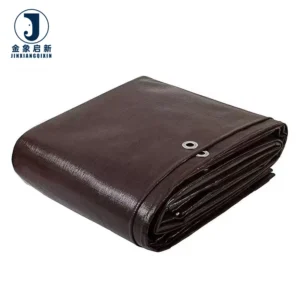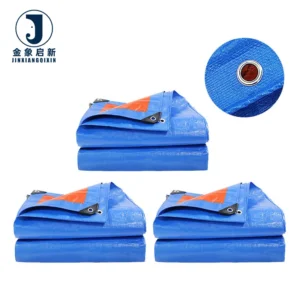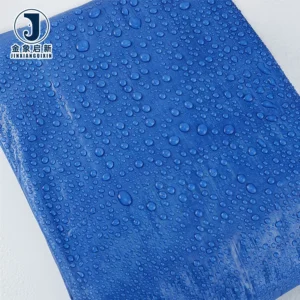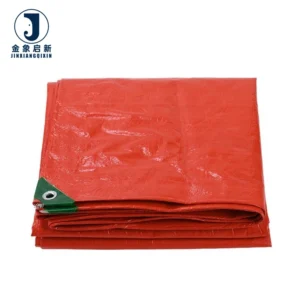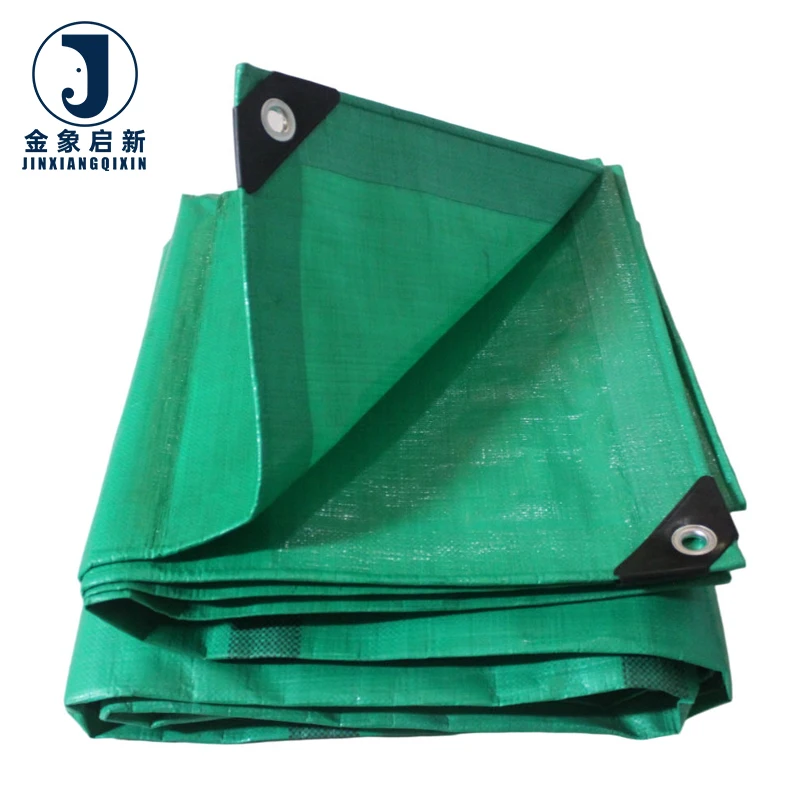
Three-Line Production Control — Every PE tarpaulin roll runs through a dedicated QA checkpoint at coating, weaving, and final inspection, ensuring the GSM on your quotation matches the fabric on your dock.
Technical Specifications
| Parameter | Value |
|---|---|
| Product Type | PE Tarpaulin |
| Base Fabric | HDPE weaving |
| Coating Material | LDPE lamination on both sides |
| Weight Range | 50gr/m2 ~ 220gr/m2 available (confirm the grade for your application) |
| Total Thickness | 0.2–0.4mm / 8 mil–16 mil / Custom |
| Roll Width Options | 6ft, 8ft, 10ft, 12ft or 2m, 4m, 6m |
| Roll Length Options | 100 yards, 100 meters, or as per buyer’s wish |
| Finished Sizes | 2x2m, 3x3m, 3x5m, 4x4m, 4x5m, 4x6m, 4x8m, 4x10m, 5x5m, 5x6m, 5x8m, 5x10m, 6x6m, 6x8m, 6x10m, 8x10m, etc. |
| Edge Reinforcement | PP rope in hem, all four edges |
| Eyelet Spacing | Galvanized eyelets every 3ft or 1 meter interval |
| Corner Reinforcement | Reinforced plastic corners |
| Waterproof | Yes |
| Tear Resistance | High density weaving material |
| UV Treatment | Available (test basis not stated — confirm the standard required for your market) |
| Anti-Aging | Anti-oxidants added |
| Corrosion Resistance | Acid and alkali resistance |
| Mildew Proof | Yes |
| Washable | Yes |
| Color Options | Blue, Blue/Orange, Green, Grey, Black, Clear, Grey/Green, Orange, or custom color |
| Custom Printing | Accepted |
| Certifications | ISO, CE |
Application Suitability
| Application | Exposure & Requirement |
|---|---|
| Flatbed truck and trailer load covering | Constant road vibration, wind flap, UV exposure, tie-down tension at eyelet points |
| Fleet side curtain fabric replacement | Repeated flexing at load articulation points, abrasion against cargo edges, weather sealing |
| Transport equipment top covers | Prolonged sun exposure, rain and road spray, thermal expansion and contraction |
| Construction material protection on site | Abrasion from aggregate and steel, standing water, dust ingress prevention |
Why a Generic-Size Cover Costs Your Fleet More Than a Custom-Cut PE Tarpaulin for Truck and Transport
A cover that does not match your trailer dimensions fails first at the seams, not the fabric.
Fleet operators who order off-the-shelf sizes often find excess fabric flapping in crosswinds on the motorway. That flap creates cyclical stress at the hem, and the PP rope reinforcement begins to pull through the weave within weeks. Meanwhile, undersized covers leave cargo edges exposed to rain and road spray, defeating the purpose of the tarpaulin entirely. Specifying a PE Tarpaulin for Truck and Transport cut to your exact vehicle model eliminates both failure modes. [NEED_CITE: tarpaulin failure analysis methods for transport covers]
Reinforcement Layout Designed for Tie-Down Systems
The galvanized eyelets spaced at 3ft or 1-meter intervals align with standard cargo strap anchor points on most flatbed and curtain-side trailers. Each eyelet sits within the PP rope-reinforced hem, distributing tie-down tension across the woven base rather than concentrating it at a single puncture point. Reinforced plastic corners add extra material at the four stress-concentrated zones where diagonal straps pull hardest. This layout means the PE Tarpaulin for Truck and Transport holds tension evenly without localized tearing around the grommets.
Lamination Integrity Under Road Conditions
The LDPE lamination on both sides of the HDPE woven base creates a fully waterproof barrier that resists delamination under the thermal cycling a truck cover experiences — from cold night stops to hot daytime running. Anti-oxidant additives in the LDPE formulation slow embrittlement from prolonged UV exposure, though the specific UV test standard should be confirmed for your operating region. The double-side coating also prevents water absorption into the base weave, which would otherwise add weight and promote mildew during extended wet-weather hauls. [NEED_CITE: coated fabric delamination test methods for transport applications]
Reading the Specification Sheet Beyond GSM
GSM alone does not define how a PE tarpaulin performs under tie-down load. The HDPE base fabric denier and weave density determine how force distributes across the yarn structure before individual strands begin to break. A lighter fabric with a tighter weave can outperform a heavier one with a looser construction in tear propagation resistance. The LDPE coating weight relative to the base fabric affects flexibility at cold temperatures — a thick coating on a light base can stiffen and crack in winter conditions, while a balanced ratio maintains pliability. Thickness values from 0.2mm to 0.4mm reflect different lamination builds suited to varying levels of mechanical exposure.
What Happens When Colour Consistency Is Not Verified Before Dispatch
When a fleet orders twenty replacement covers and the blue shade varies between rolls, the difference becomes obvious once installed side by side on parked trailers. The fleet looks inconsistent to customers, and the operator faces the choice of accepting the mismatch or filing a claim. This problem traces back to pigment batch variation during the LDPE compounding stage, and it is entirely preventable with side-by-side colour verification against a reference standard before the rolls leave the factory. [NEED_CITE: colour consistency verification protocols for coated fabric batches]
Why Fleet Operators Source PE Tarpaulin for Truck and Transport Here
The 10-person R&D team develops cut-to-model samples within days, allowing you to verify fitment on your specific trailer before committing to a production run. Three full production lines and 36 sets of professional equipment support bulk fleet orders with consistent lead times. Dedicated QA inspection checks every finished cover against the agreed GSM, dimensions, and eyelet spacing before packing. Custom width, colour, and printing requirements move through sampling and approval without the extended minimums that delay smaller fleet orders. Pre-shipment inspection records accompany every dispatch so you have documented proof of what was verified.
Documentation & Verification
- Material specification sheet stating confirmed GSM, base fabric construction, and LDPE coating weight per roll
- Pre-shipment inspection record with measured weight and dimensional check for every finished tarpaulin
- Colour reference sample retained on file for batch-to-batch matching on repeat fleet orders
- UV treatment test report available upon request — confirm the standard applicable to your market
- Certificate of origin and customs documentation prepared per destination country requirements
Fabrication, Handling & Storage
- Heat-seal LDPE laminated panels at temperatures matched to the 0.2–0.4mm thickness range to avoid burning through the coating
- Space galvanized eyelets at 1-meter intervals minimum to distribute tie-down loads across the PP rope hem
- Store rolls horizontally on pallets to prevent permanent creasing in the HDPE woven base fabric
- Unfold finished covers at ambient temperature to avoid cracking the LDPE lamination in cold conditions
- Clean with mild detergent only — solvent-based cleaners degrade the LDPE surface and reduce waterproofing
Specifying Your Next Fleet Cover Order
Provide your trailer make, model, and year along with the tie-down system layout so the eyelet spacing can be matched to your strap anchor points. Indicate whether you need finished cut-to-size covers or roll stock for your own fabrication, and specify the colour reference or Pantone code for fleet consistency. If your operating region mandates UV or fire performance standards, share the applicable test method so the correct grade can be confirmed before sampling.
Frequently Asked Questions
Q: How do I specify the correct tarp size for my specific truck or trailer model?
A: Share the trailer make, model, year, and body type — flatbed, curtain-side, or tipper. We develop a cut-to-fit sample based on those dimensions, including allowance for hem fold and eyelet placement. This avoids the excess fabric or short-fall problems that generic sizes create on the road.
Q: What test reports can you provide to verify UV treatment claims?
A: UV treatment is available as an option on this PE tarpaulin range. We supply a test report when a specific standard is requested during the inquiry stage. Confirm the UV test method required by your market or fleet insurance policy so we match the correct grade.
Q: Can you match our fleet colour standard across multiple covers?
A: Yes. We retain a colour reference sample from your approved batch and verify every subsequent production run side by side against it. Custom Pantone or RAL codes are accepted. This ensures all covers in a fleet order display consistent colour when installed next to each other.
Q: Can eyelet spacing be customized to match my tie-down system?
A: Standard spacing is every 3ft or 1 meter, but we adjust the interval to align with your specific cargo strap anchor points. Share the tie-down layout drawing and we position the galvanized eyelets accordingly, reinforced within the PP rope hem for load distribution.
Q: How do you ensure the GSM on the quotation matches the material delivered?
A: Every roll and finished cover undergoes weight verification during the 100% pre-shipment inspection. The measured GSM is recorded on the inspection report that ships with your order. Any deviation outside the agreed tolerance is flagged and resolved before dispatch.