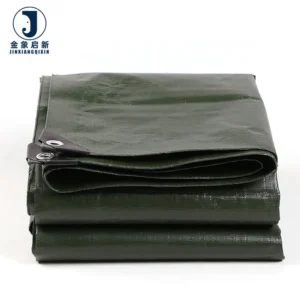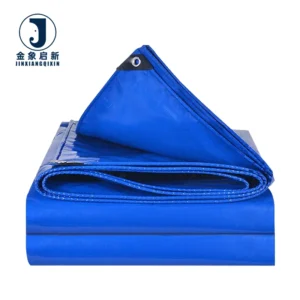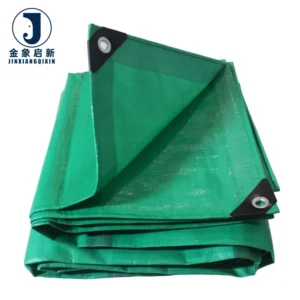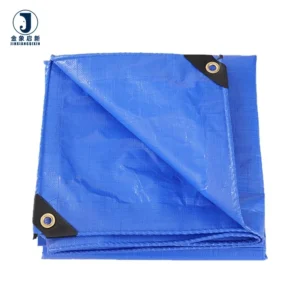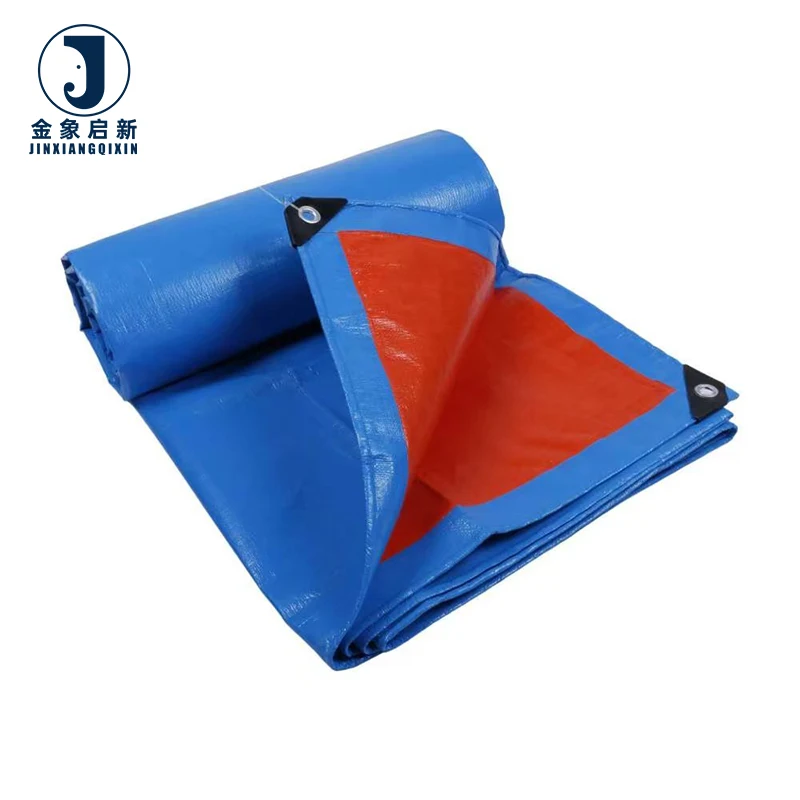
Woven Fabric Control — Coating weight and base fabric adhesion verified at every production stage for reliable truck and trailer cover performance.
Technical Specifications
| Parameter | Value |
|---|---|
| Product Type | PE Tarpaulin |
| Material | HDPE woven base with LDPE coating |
| Weave Construction | Woven HDPE |
| Coating Method | PE coated, both sides |
| Finish | Plain |
| Treatment | Anti-UV (test basis not stated in source — confirm grade required), Waterproof, Mildew-Proof |
| Customization | Available in various sizes and colors |
| Eyelet & Hem Options | Eyelets available for tie-down reinforcement |
| Applications | Truck covers, trailer covers, outdoor tents, awnings, car covers, industrial equipment covers, outdoor event shelters |
Application Suitability
| Application | Exposure & Requirement |
|---|---|
| Truck and trailer flatbed covers | Constant road vibration, UV exposure, wind flap, tie-down abrasion at eyelet points |
| Side curtain fabric for transport | Repeated flexing at load points, friction against cargo, weather exposure at speed |
| Construction and agricultural machinery covers | Prolonged sun exposure, dust ingress, rain pooling on flat surfaces |
| Outdoor event and temporary shelters | Wind loading, rain protection, frequent assembly and teardown handling |
What Happens When the Cover Does Not Fit the Trailer
A generic-size PE tarpaulin for truck and transport cover leaves gaps at corners and flaps in crosswind — the exact points where load exposure causes the most damage.
Fleet operators ordering covers cut to a standard dimension often discover the fabric is too short to wrap over the rear load edge or too wide, creating loose folds that catch wind at highway speed. The material itself may be adequate, but the fitment failure accelerates wear at stress points and compromises weather sealing where it matters most. A cover cut to the specific trailer model eliminates these failure points and extends service intervals across the fleet. [NEED_CITE: transport cover fitment standards for commercial vehicle load protection]
Fitting the Cover to Moving Loads
Road transport exposes cover fabric to conditions that static storage applications never encounter. Crosswinds create sustained lateral loading across the entire surface, while braking and cornering shift the cargo load against the fabric at flex points. The woven HDPE base of this PE tarpaulin for truck and transport cover provides a stable grid structure that distributes these dynamic loads across multiple yarn intersections rather than concentrating stress at a single point.
Sealing Against Weather at Speed
At highway speeds, rain does not fall vertically — it drives horizontally into the cover surface and searches for entry at every seam, hem and tie-down point. The LDPE coating on both sides of the woven base creates a continuous waterproof barrier that holds under sustained rain exposure. Mildew-proof treatment addresses the secondary problem of moisture trapped between the cover and the load surface during long-haul journeys where the fabric cannot be removed for drying.
Understanding the Woven Coated Construction
The performance of woven coated PE fabric depends on the relationship between the base fabric denier, weave density and coating weight. The HDPE woven base provides tensile strength in both warp and weft directions, while the LDPE coating seals the weave intersections to block water and UV penetration. A heavier base fabric with more yarn crossings per square inch resists tear propagation better than a lighter base, even if the overall weight appears similar. The plain weave construction allows the fabric to be heat-welded along seams, which is the preferred joining method for transport covers because welded seams flex with the fabric rather than creating rigid stitch lines that concentrate stress. UV-resistant treatment is available for extended road and outdoor exposure — request the specific UV test report to confirm suitability for your operating climate and expected exposure duration. [NEED_CITE: UV degradation test methods for polyethylene coated fabrics]
The Cost of Ordering the Wrong Weight or Fitment
When the PE tarpaulin arrives lighter than the quoted weight, the fabric may handle light-duty storage adequately but fails prematurely under road conditions where flex abrasion and wind loading demand more material substance. Buyers who specify a cover size without confirming the tie-down system compatibility find that standard eyelet spacing does not align with their trailer’s rope rail or ratchet strap points, forcing field modifications that weaken the hem. Colour variation between rolls in the same fleet order becomes visible once installed side by side, creating an inconsistent brand appearance that reflects poorly on the operator. [NEED_CITE: GSM verification methods for coated fabric pre-shipment inspection]
Why Source This PE Tarpaulin Here
Three full production lines and dedicated equipment sets maintain capacity for bulk roll orders without sacrificing on-time delivery schedules that fleet operators depend on.
A ten-person R&D team handles custom sizing, eyelet placement and colour matching from initial sample development through production, eliminating the need to coordinate between separate design and manufacturing suppliers.
Every production stage includes QA checkpoints with full pre-shipment inspection, catching weight deviations and coating defects before rolls are packed for dispatch.
Custom width and cut-size orders carry production minimums and lead times established during quotation, avoiding surprises after the order is placed.
Pre-shipment inspection records and material specification sheets accompany each order, giving buyers documented evidence that the fabric received matches the agreed specification.
Documentation & Verification
- Material specification sheet stating GSM, base fabric weave and LDPE coating weight per roll
- UV test report confirming anti-UV treatment level for the target operating climate
- Pre-shipment inspection record verifying actual weight against the quoted GSM
- Roll packing list detailing roll dimensions, weight and colour reference for batch traceability
- Certificate of origin and customs documentation supporting international transport logistics
Fabrication, Handling & Storage
- Heat-weld seams using temperature settings matched to LDPE coating to avoid base fabric damage
- Confirm eyelet spacing against the specific trailer rope rail or strap anchor layout before cutting
- Store rolls upright on pallets to prevent flat spots that create permanent creases in the HDPE weave
- Avoid dragging cut panels across abrasive surfaces during installation to protect the LDPE coating layer
- Clean with mild detergent and soft brush; solvent-based cleaners may degrade the PE coating surface
- Allow adequate slack when fitting over irregular loads to prevent sustained tension at hem corners
What We Need to Quote Accurately
Provide the truck or trailer model, the cover type required (flatbed wrap, side curtain or equipment cover), and the tie-down system in use so we can match eyelet placement and hem reinforcement to your hardware. Confirm the operating climate and expected UV exposure duration so we can recommend the appropriate treatment level and supply the corresponding test documentation. State whether you need rolls in a specific width for your own fabrication, or finished cut sizes ready for immediate fitment.
Frequently Asked Questions
Q: How do I verify the PE tarpaulin weight on delivery matches what was quoted?
A: Request the pre-shipment inspection record before dispatch, which documents the actual weight measured per roll. On arrival, conduct a spot check by cutting a measured sample from the roll and weighing it. Compare the result against the GSM stated on your material specification sheet and raise any discrepancy with the supplier immediately before cutting or fabricating.
Q: What UV test evidence supports the anti-UV claim for transport cover applications?
A: Ask the supplier for a UV test report specific to the PE tarpaulin grade being quoted, showing exposure duration and retained strength or colour values. Transport covers face continuous sun exposure on roads and in yards, so the test conditions should reflect your operating climate. Confirm the grade before committing to a bulk order.
Q: How should eyelet spacing and hem reinforcement be specified for a particular trailer?
A: Provide the trailer model and the exact tie-down hardware layout — rope rail slot positions or ratchet strap anchor points. The supplier matches eyelet spacing to these points and reinforces the hem at each location to handle the tie-down load. Generic spacing often misaligns with specific trailer hardware, requiring field modifications that weaken the cover.
Q: Can PE tarpaulin rolls be supplied in custom widths for our specific trailer model?
A: Custom widths are available, subject to production minimums and lead times confirmed during quotation. Specify the exact width needed for your trailer or fabrication process, and the supplier will confirm feasibility and dispatch schedule. Custom widths reduce waste and eliminate the need to weld multiple panels together on the shop floor.
Q: How is colour consistency controlled across multiple rolls in a fleet cover order?
A: Request a colour reference swatch before production and specify that all rolls for the order must match that reference. The supplier conducts in-process colour checks and includes a colour verification record with the shipment. Inspect rolls side by side upon arrival before cutting, as variation becomes most visible once covers are installed on adjacent vehicles in the fleet.