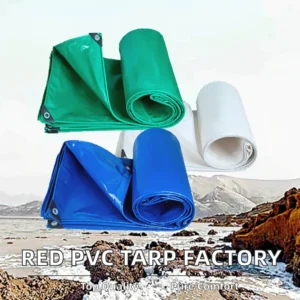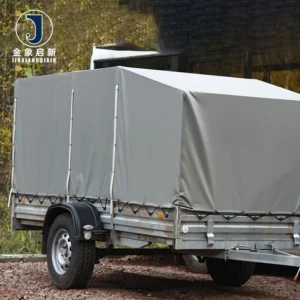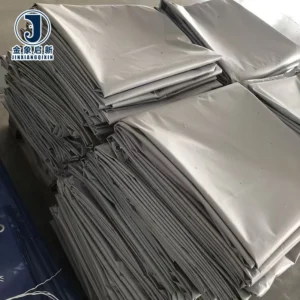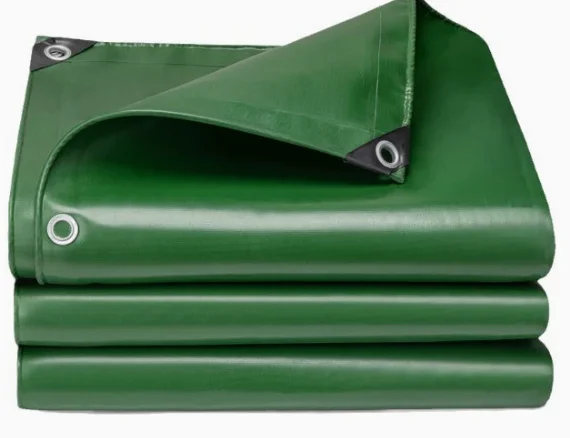
Woven Fabric Strength — PVC coated tarpaulin fabric built on a woven base construction, engineered for transport cover applications where flex fatigue and tie-down stress are constant.
Technical Specifications
| Parameter | Value |
|---|---|
| Product Type | PVC Coated Tarpaulin Fabric |
| Material | PVC Vinyl Coated Woven Fabric |
| Weight | At least 450 GSM |
| Base Fabric | Woven Construction |
| Water Resistance | Waterproof |
| Key Features | High-strength, resistant to wear and tear, waterproof vinyl surface |
Application Suitability
| Application | Exposure & Requirement |
|---|---|
| Truck and trailer load covers | Constant road vibration, wind flap fatigue, tie-down point stress |
| Side curtain fabric for transport bodies | Repeated lateral flexing, abrasion against cargo edges, weather exposure |
| Vehicle and equipment transport covers | Rain and road spray, UV exposure during transit, handling wear |
When Generic Sizing Fails the Fleet on the Road
A truck cover must match the trailer, not the catalogue.
Fleet operators frequently receive tarpaulins cut to a generic rectangle that rides up at the corners or sags across the load bed, leaving cargo exposed to road spray and weather. The PVC coated tarpaulin fabric arrives rolled, but once deployed on a moving trailer, the fitment gaps create wind catch and accelerated edge wear [NEED_CITE: fitment tolerance standards for transport covers]. This is not a material defect — it is a specification mismatch that surfaces only after the cover is in use.
Fitment Starts With the Trailer Model, Not the Roll Width
Every trailer manufacturer builds to slightly different body dimensions, and side curtain tension systems vary between equipment builders. Sourcing PVC coated tarpaulin fabric for fleet fitment requires specifying the exact body length, height, and rail profile before cutting begins. Off-the-shelf widths may suit flatbed covers, but side curtains demand fabric cut and finished to maintain tension across the curtain track without billowing at speed.
Reinforced Zones Where the Load Flexes Most
The highest stress on any transport cover occurs at tie-down points, corner hems, and anywhere the fabric wraps around a structural edge. These zones experience cyclic loading every time the vehicle brakes, corners, or hits uneven road surface. Reinforcing hems and specifying eyelet placement at measured intervals distributes this load into the woven base fabric rather than concentrating it at a single point [NEED_CITE: cyclic loading effects on coated fabric tie-down zones].
Reading the Specification Sheet Beyond the GSM Number
Weight alone tells you how much coating is applied, but the woven base fabric construction determines how the material behaves under tension. A PVC coated tarpaulin fabric at this weight class relies on the weave density and yarn denier to resist tear propagation when a corner catches on cargo hardware. The coating provides waterproofing and surface durability, while the base fabric carries the structural load during tie-down and wind flap cycles. Understanding this division of function helps buyers specify for the actual stress profile of their transport application rather than chasing a single number.
The Cost of Underspecifying for Road Conditions
When PVC coated tarpaulin fabric is selected solely on price per square metre without verifying the base fabric weight, the result is a cover that tears at stress points long before the coating itself fails. Seam welds pull apart at the edges, eyelets tear through under ratchet strap tension, and the fabric develops fatigue cracks along fold lines after repeated deployment. These failures occur mid-transit, exposing cargo and creating liability for the fleet operator [NEED_CITE: common failure modes in transport tarpaulin applications]. The replacement cost and downtime far exceed the saving from choosing a lighter specification.
Why Sourcing Matters for Fleet-Grade Fabric
Production control over coating weight ensures every roll delivers the stated GSM without variation across the batch, which matters when outfitting multiple vehicles in the same fleet. Three full production lines support consistent output volume for repeat orders across transport seasons. A dedicated R&D team develops samples cut to your specific trailer dimensions, allowing fitment trials before committing to bulk supply. In-process quality checks at each production stage catch coating inconsistencies before they reach the finishing line. Pre-shipment inspection covers every roll against the order specification, so what arrives matches what was quoted.
Documentation & Verification
- Material specification sheet confirming PVC coating weight and woven base fabric for each roll
- Pre-shipment inspection record verifying GSM matches the quoted value before dispatch
- Custom sizing confirmation against exact trailer body dimensions, not standard size templates
- Roll packing list with colour reference matching across the entire order batch
- UV and flame-retardant test reports provided where treatment grades are specified
Fabrication, Handling & Storage
- Weld temperature must match the PVC vinyl coating thickness to achieve full bond at seams
- Eyelet spacing should account for the woven base fabric tear resistance under ratchet tension
- Store rolls on their cores upright to prevent permanent creasing through the coated surface
- Deploy at ambient temperature to avoid cracking the vinyl coating during cold-weather unfolding
- Clean with mild detergent only, as solvents can degrade the PVC coating surface bond
- Allow adequate overlap at welded joints to distribute load across the woven construction
Before You Request a Quote
Provide the trailer make, model, and body dimensions along with the type of tensioning or tie-down system in use. Specify whether you require roll stock for your own finishing operation or cut-to-size covers with hem and eyelet options completed at source. Confirm any colour requirements and whether the order covers a single vehicle or an entire fleet rollout.
Frequently Asked Questions
Q: How do I confirm the right weight for my truck cover application?
A: The appropriate GSM depends on your trailer type and exposure conditions. Side curtains on highway trailers face different stress than flatbed covers used for local delivery. Request a material specification sheet showing the base fabric construction and coating weight, then trial a sample under your actual operating conditions before committing to fleet volume.
Q: Can you supply fabric cut to fit a specific trailer model?
A: Yes. Provide the exact body dimensions, curtain track profile, and tie-down point locations for your trailer model. Samples are developed within days for fitment verification. This avoids the common problem of generic-sized covers that leave gaps at corners or create wind catch during transit.
Q: What test reports support treatment claims like anti-UV or flame retardant?
A: Where flame-retardant or anti-UV grades are specified, test reports confirming the grade are supplied with the shipment. Always confirm the specific grade required for your market and application before ordering, as requirements vary between regions and transport sectors.
Q: Is colour consistent across multiple rolls in the same order?
A: Roll-to-roll colour consistency is controlled through batch production with in-process checks. A pre-shipment inspection record confirms colour reference matching across all rolls in your order, preventing visible mismatch when covers are installed side by side across a fleet.