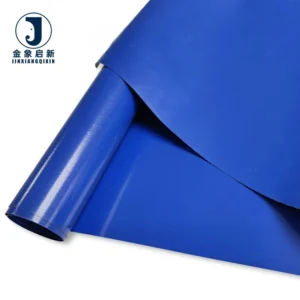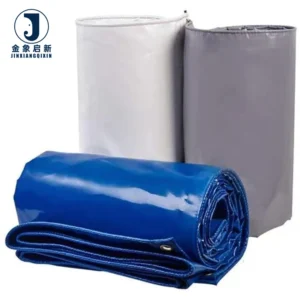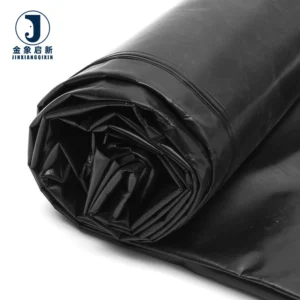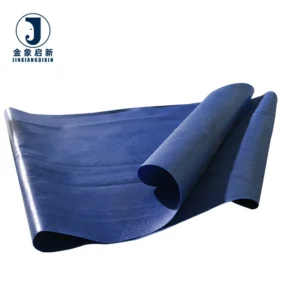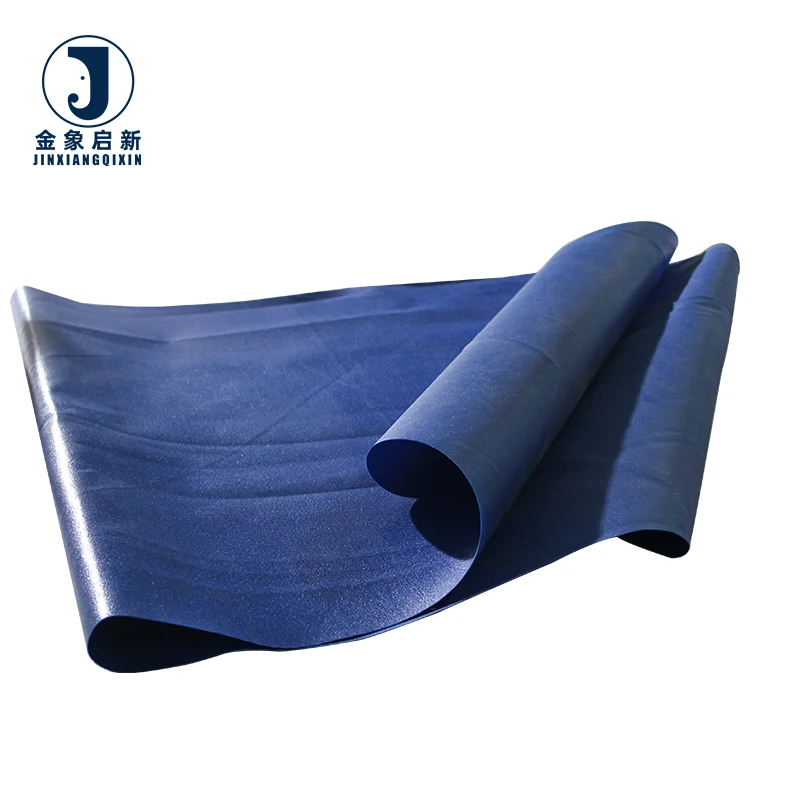
Deep Coating Process Control — We maintain consistent PVC coating weight and adhesion across every roll of PVC tarpaulin for truck cover applications, verified through in-process QA before dispatch.
Technical Specifications
| Parameter | Value |
|---|---|
| Product Type | PVC Coated Tarpaulin Roll |
| Material | PVC coated polyester base fabric |
| Weight (GSM) | 550g / 600g / 650g / 900 GSM (confirm the grade for your application) |
| Waterproof | Yes, fully coated construction |
| UV Treatment | Available — confirm test basis required for your market |
| Flame Retardant Grade | Available in flame retardant grades — confirm the grade required for your market |
| Key Features | Waterproof, tear resistant, mildew proof, anti-aging |
| Certification | ISO, CE |
| Customization | Color, printing, branding, size |
Application Suitability
| Application | Exposure & Requirement |
|---|---|
| Flatbed truck cover | Continuous road vibration, flex-point stress at load edges, weather exposure across long-haul routes |
| Curtain-side trailer fabric | Repeated lateral flexing during loading, abrasion against cargo and frame, UV from sustained outdoor parking |
| Tipper trailer cover | Heavy particulate abrasion from aggregate loads, dynamic load shifting, frequent unhooking and re-hooking |
| Roof tent outer shell | Prolonged UV exposure, wind-driven rain, repeated folding and unfolding at crease lines |
| Transport equipment OEM fitment | Model-specific dimensional accuracy, batch colour consistency across production runs, weld seam integrity |
Why Generic Sizing Causes PVC Tarpaulin for Truck Cover Failures Before the Fabric Wears Out
A truck cover that does not match the exact trailer dimensions will abrade and tear at the stress points long before the material itself reaches end of life.
Fleet operators routinely replace covers not because the fabric failed, but because the loose sections flapped in transit, wearing through at the eyelets and hem lines within months. Generic cut sizes leave excess fabric that billows under highway speeds, concentrating stress at tie-down points and welded seams. The result is a cover that looks worn out while the bulk of the material remains intact. [NEED_CITE: tensile and tear test methods for coated fabrics per ISO 1421]
Fitting the Cover to the Vehicle, Not the Other Way Around
Every trailer model has distinct dimensional profiles around the headboard, side rails, and rear frame. A PVC tarpaulin for truck cover applications must account for these profiles at the pattern stage, not through on-site trimming. When the cover is cut to the specific vehicle geometry, the fabric lies flat under tension without pooling water or catching wind, which directly extends service intervals between replacements.
Welded Seams at the Points Where Loads Flex Most
The highest stress on a truck cover occurs where the load shifts during braking and cornering. Welded seams in these zones must match or exceed the tear strength of the base fabric. Our process control over coating weight and adhesion ensures that heat-welded joints maintain integrity through repeated flex cycles, addressing one of the most common failure modes in transport covers. [NEED_CITE: weld peel strength testing for PVC coated fabrics]
Reading the GSM Beyond the Quotation Number
GSM tells you the mass per square metre but does not, on its own, predict how the fabric will handle a forklift puncture or a sustained highway crosswind. The base fabric denier, the weave density, and the coating method together determine whether a 650 GSM roll behaves like a heavy-duty transport cover or merely feels heavy in the hand. Knife-coated PVC typically delivers higher peel strength than laminated constructions, which matters when welded seams carry dynamic loads. The relationship between base yarn count and coating penetration also governs how well the material resists tear propagation once a cut starts at an eyelet or hem line. Selecting the right GSM grade means matching the total construction — not just the weight — to the severity of your route conditions and load type.
What Happens When the Wrong Grade Goes on the Road
Specifying a lighter GSM for a route that demands heavy-duty performance leads to premature wear at abrasion points, forcing unplanned cover replacements that disrupt fleet scheduling. Conversely, ordering flame retardant fabric without verifying the grade against your destination market’s fire code results in rejected loads at site entry. Colour variation between rolls in a single fleet order becomes visible once covers are installed on adjacent vehicles, undermining the professional appearance operators expect. [NEED_CITE: colour fastness and batch consistency standards for coated textiles]
Why Transport Operators Source Their PVC Tarpaulin for Truck Cover Here
Our three full production lines and dedicated equipment sets support bulk roll output with reliable scheduling for fleet-scale orders. The 10-person R&D team handles model-specific pattern development, custom sizing, and colour matching from initial sample through production. Every roll undergoes in-process QA with 100% pre-shipment inspection, so GSM, colour, and weld integrity are verified before the material leaves the facility. Custom widths and colours are produced with defined lead times, avoiding the extended delays common with made-to-order transport fabrics. Samples for fitment trials are developed within days, allowing operators to confirm dimensions and material behaviour before committing to full production.
Documentation & Verification
- Material specification sheet stating exact GSM, base fabric construction, and coating type for each roll
- Pre-shipment inspection record confirming weight verification per roll against stated GSM
- Colour reference sample retained per batch for future reorder consistency checks
- UV and flame retardant test reports supplied where applicable to the specified grade
- Roll packing list with individual roll dimensions and net weight for receiving verification
- Certificate of origin and customs documentation for cross-border shipment
Fabrication, Handling & Storage
- Heat-weld at temperature settings matched to the specific PVC coating thickness to avoid delamination
- Reinforce eyelet zones with additional PVC patches on heavy-grade rolls to distribute tie-down loads
- Store rolls upright on pallets to prevent flat-spot deformation of the coated surface
- Allow rolls to acclimate to ambient temperature before unrolling in cold conditions to prevent cracking
- Use mild detergent for cleaning; avoid solvent-based products that degrade the PVC coating layer
- Plan cutting layouts to maximise yield from the roll width and minimise cross-grain waste
Preparing Your PVC Tarpaulin for Truck Cover Inquiry
To specify the right material for your fleet or transport equipment build, provide the exact trailer model dimensions, the type of load carried, and the typical route conditions. If your market requires fire classification or specific UV test standards, state the regulation so we can match the grade. Confirm whether you need rolls for your own fabrication or finished cut-to-size covers with eyelets and hems. Colour requirements, printed branding, and annual volume estimates help us define realistic lead times and production minimums.
Frequently Asked Questions
Q: How do you ensure the truck cover fits my specific trailer model?
A: We develop the cover pattern from your vehicle dimensions rather than cutting from a generic template. Samples are produced within days for fitment trials, allowing you to verify clearances around headboards, side rails, and rear frames before full production begins.
Q: What GSM grade is right for my route conditions and load type?
A: Grade selection depends on load weight, flex frequency, and road exposure severity. We review your application details and recommend from the available 550g through 900 GSM range, then supply a material specification sheet confirming the exact weight on delivery.
Q: How are welded seams reinforced at high-stress flex points?
A: Seams in zones subject to load shifting and braking stress are welded with process parameters matched to the coating weight. In-process QA checks peel strength at these points, and additional reinforcement patches are applied where tie-down loads concentrate.
Q: What eyelet spacing and hem reinforcement options are available?
A: Eyelet spacing and hem construction are configured to your tie-down system requirements. We reinforce the hem zone with folded PVC layers and position eyelets to distribute rope or strap tension evenly, preventing pull-through on heavy-grade rolls.
Q: How is colour consistency maintained across multiple covers in a fleet order?
A: All rolls in a single order are produced from matched coating batches. A colour reference sample is retained for each production run, and pre-shipment inspection verifies that adjacent panels show no visible variation once installed side by side.