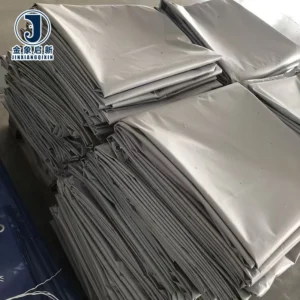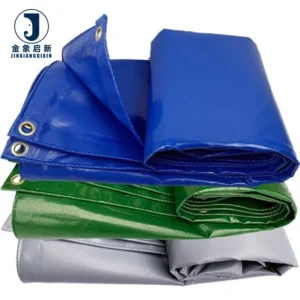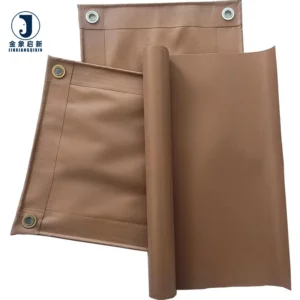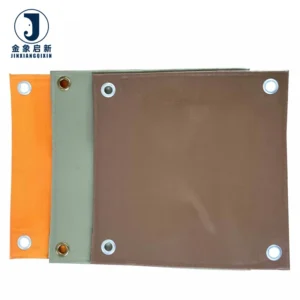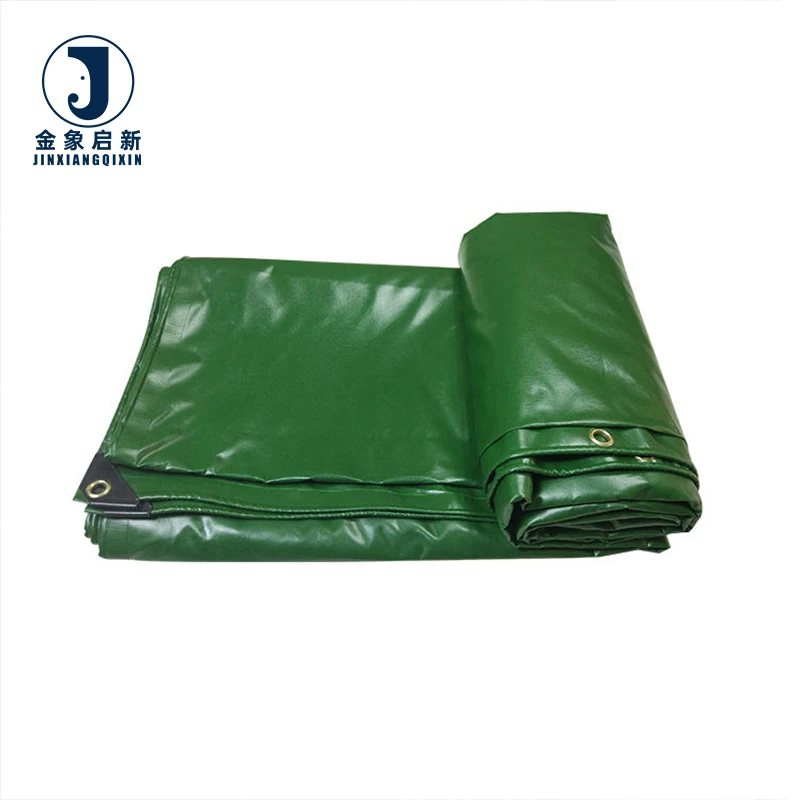
Coating Process Control — Laminated and hot-melt coating technology applied across three full production lines ensures consistent adhesion between PVC layers and the high-strength polyester mesh base fabric for every roll of PVC coated tarpaulin produced.
Technical Specifications
| Parameter | Value |
|---|---|
| Product Type | PVC Coated Tarpaulin |
| Base Fabric | High-strength polyester mesh fabric |
| Coating Material | PVC |
| Coating Method | Laminated technology & Hot-melt Coating technology |
| Weight (GSM) Options | 350gsm / 420gsm / 500gsm / 550gsm / 600gsm / 750gsm |
| Thickness Options | 0.32mm / 0.35mm / 0.4mm / 0.45mm / 0.5mm / 0.65mm |
| Roll Width | 2m / 2.1m |
| Roll Length | 75m (for 2m width) / 50m (for 2.1m width) |
| Colour Options | Blue / Red / Yellow / Light blue / Grey / Green (Customized) |
| Flame Retardant | Available upon request (grade not stated — confirm grade required for your market) |
| Anti-Static | Anti-static treatment available (standard not stated — confirm standard for your application) |
| UV Stability | UV stable (test basis not stated — request test report for your destination market) |
| Key Features | Cold crack resistance, anti-mildew, waterproof, outstanding tearing strength for welding |
| Standards | ISO 14001, ISO 45001, CE, RoHS |
Application Suitability
| Application | Exposure & Requirement |
|---|---|
| Side curtain on articulated trailers | Continuous flexing at load-bearing points, road debris abrasion, high-speed wind load, UV exposure |
| Dump truck tarpaulin | Heavy aggregate abrasion at contact zones, repeated deployment and retraction, weather extremes |
| Flatbed truck cover | Tie-down strap pressure, water pooling, thermal cycling across seasons |
| Trailer curtain for refrigerated transport | Temperature fluctuation, condensation resistance, cold crack prevention at sub-zero transit |
| Cargo ship deck cover | Salt spray exposure, sustained UV radiation, mechanical handling stress from crane operations |
Why Welded Seams Fail Before the PVC Coated Tarpaulin Fabric Does
Weld failure originates where the load flexes most, not where the fabric is weakest.
A PVC coated truck tarpaulin installed on a moving trailer endures thousands of flex cycles per journey. When the coating adhesion to the base fabric is insufficient, the heat-welded seam separates at the bond line long before the fabric body shows abrasion wear. Fleet operators typically see this failure within the first season of service, and it almost always occurs at the same high-stress zone where the trailer bed articulates. [NEED_CITE: tensile and peel strength test methods for coated fabrics per ISO 1421]
Specifying the correct GSM and coating method at the inquiry stage — rather than selecting on price per roll alone — determines whether the welded seams hold through the expected service life of the cover.
Coating Adhesion and Its Role in Trailer Curtain Durability
The laminated and hot-melt coating process bonds PVC to both sides of the high-strength polyester mesh under controlled heat and pressure. This method produces a mechanical interlock that resists delamination when the fabric is folded, welded and subjected to road vibration. For PVC coated tarpaulin used as side curtain fabric, this bond strength directly dictates how well heat-welded seams perform at flex points under a loaded trailer.
Matching GSM and Thickness to Payload Demands
Selecting between 350gsm and 750gsm is not simply a matter of choosing heavier material. A dump truck hauling aggregate requires a heavier grade to resist abrasion at contact points, while a curtain-side trailer carrying palletised goods benefits from a mid-range GSM that balances weight with flexibility for daily retraction. The corresponding thickness range from 0.32mm to 0.65mm tracks with these GSM grades to maintain consistent coating-to-base-fabric ratios.
Understanding the Base Fabric Construction
The high-strength polyester mesh provides the structural skeleton of this PVC coated tarpaulin. Yarn denier and weave density determine how far a tear propagates once initiated — a critical factor when a loaded truck cover is punctured by shifting cargo or tie-down hardware. The mesh construction also governs the fabric’s behaviour during heat welding, as a stable weave prevents distortion at the weld zone. [NEED_CITE: relationship between base fabric weave density and tear propagation in coated textiles]
Spec Interpretation: What the Numbers Mean for Your Fleet
The GSM range offered here spans lightweight covers for enclosed trailer curtains to heavy-duty grades for open-bed dump trucks. Each GSM corresponds to a specific thickness, and together they define the material’s puncture resistance and handling weight. Laminated and hot-melt coating methods produce higher peel strength than simple knife-over-roll applications, which matters when the fabric is heat-welded into finished covers with reinforced seams. The available cold crack resistance ensures the PVC compound remains flexible during winter transit, preventing brittle fractures at fold lines. UV stable formulation addresses the sustained solar exposure that truck covers face on open roads and in parking yards between journeys. Colour options support fleet branding consistency, and custom printing is available for corporate identity applications.
The Hidden Cost of Ordering Generic-Sized Truck Covers
A truck cover cut to a standard rectangle rarely aligns with the specific tie-down points, tailgate clearance and roof bow profile of a given trailer model. The result is excess fabric that flaps at speed — accelerating abrasion at the contact edges — or insufficient coverage that leaves cargo exposed. Operators who specify model-tailored dimensions eliminate both problems, and the PVC coated tarpaulin performs as engineered without premature edge wear. Batch colour variation across rolls in the same fleet order creates a visible mismatch when covers are installed side by side, prompting rework and delay. [NEED_CITE: fleet colour consistency standards for transport branding and vehicle livery]
Why Procurement Teams Source PVC Coated Tarpaulin Here
Three full production lines and 36 sets of professional equipment support bulk roll orders with consistent lead times across all GSM grades. The 10-person R&D team handles model-specific sizing, custom colour matching and sample development within days of inquiry. Dedicated quality control at every coating stage ensures GSM is verified on the production line, not only stated on the quotation. Laminated and hot-melt coating technology is applied under controlled parameters that maintain adhesion strength roll after roll. Pre-shipment inspection covers 100% of finished rolls before dispatch, with documented records provided to the buyer. Nearly 30 years of focused coated fabric production informs the process decisions that affect your truck cover performance.
Documentation & Verification
- Material specification sheet confirming exact GSM, base fabric denier and coating weight per roll
- UV stability and flame retardant test reports matched to destination market regulatory requirements
- Pre-shipment inspection record documenting GSM verification and visual quality checks
- Roll packing list with individual roll dimensions, net weight and colour batch reference
- Certificate of origin and customs documentation for cross-border transport compliance
- Colour consistency record confirming batch uniformity across all rolls in the order
Fabrication, Handling & Storage
- Heat welding parameters must be adjusted to the specific GSM and thickness grade selected for the truck cover
- Reinforced hem folding should account for the 2m or 2.1m roll width to minimise offcut waste during fabrication
- Eyelet spacing on dump truck covers must align with high-stress zones identified by the laminated coating’s peel strength
- Rolls should be stored upright on pallets to prevent permanent creasing across the 0.32mm to 0.65mm thickness range
- Cold crack resistant formulation allows winter transport of rolls without risk of coating fracture during handling
- UV stable surface tolerates standard PVC-compatible cleaners without degrading colour fastness over repeated washes
Before You Request a Quote
Provide your trailer model designation, payload type and the specific exposure conditions your fleet encounters — including any flame retardant or anti-static standards required at your destination. Confirm whether you need finished covers cut to model dimensions or roll stock for in-house fabrication, along with your annual volume and colour or printing requirements. Sample approval is available before bulk production to verify fitment, weld performance and colour match.
Frequently Asked Questions
Q: How do I specify the right GSM and thickness for my truck or trailer model?
A: Start with the payload type and exposure conditions. Aggregate and construction materials demand heavier GSM grades for abrasion resistance at contact zones, while palletised goods on curtain-side trailers work well with mid-range options. Provide your trailer model and typical cargo so the correct weight-to-flexibility balance can be recommended before sampling.
Q: How is colour consistency maintained across multiple rolls in a single fleet order?
A: All rolls in one order are produced from the same coating batch with documented colour reference. Pre-shipment inspection checks each roll against the approved sample, and a batch consistency record is provided with the shipping documentation to confirm uniformity across the entire order.
Q: What reinforcement options are available for eyelets, hems and high-flex seam areas?
A: The PVC coated tarpaulin supports heat-welded reinforcement patches at eyelet zones and hem folds. The outstanding tearing strength for welding allows durable seam construction at stress points. Specify your tie-down layout and reinforcement requirements during the sample stage so placement can be verified before bulk production.
Q: Can the truck tarpaulin be printed with fleet branding, and what is the sample process?
A: Custom printing is available for corporate logos, fleet numbering and safety markings. A printed sample is produced for approval before the full order runs, confirming colour accuracy, print registration and adhesion to the selected GSM grade. This ensures branding consistency across every cover in the fleet.
Q: What documentation verifies GSM, UV treatment and flame retardant claims on arrival?
A: Each shipment includes a material specification sheet with verified GSM and coating weight, pre-shipment inspection records, and test reports for UV stability and flame retardant grades where applicable. These documents accompany the roll packing list and certificate of origin for full traceability at destination.