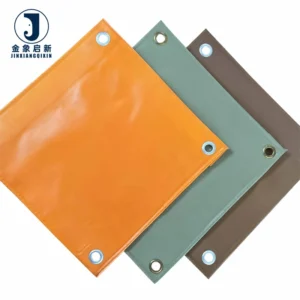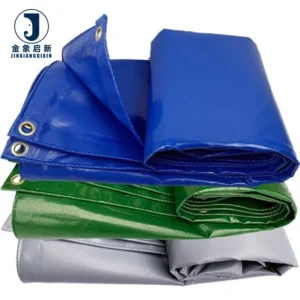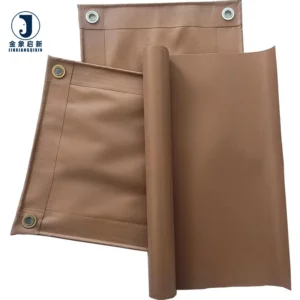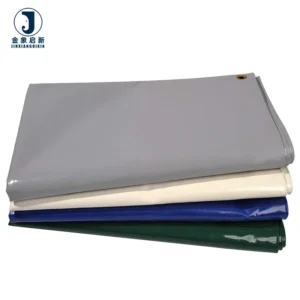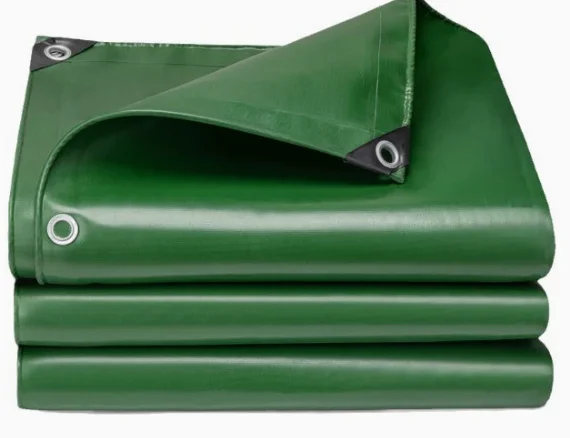
Custom Cut-to-Model Fitment — covers fabricated to exact trailer dimensions eliminate exposed edges and material waste that generic sizing causes.
Technical Specifications
| Parameter | Value |
|---|---|
| Product Type | PVC Coated Fabric |
| Coating Material | PVC Vinyl |
| Base Fabric Construction | Woven Fabric |
| Weight | At least 450 GSM |
| Waterproofing | Fully waterproof coated construction |
| Tear Resistance | High (grade not stated in source) |
| Flame Retardant Grade | Available in flame retardant grades — confirm the grade required for your market |
| UV Treatment | Available with anti-UV treatment — confirm test basis for your application |
| Anti-Static | Not confirmed — verify requirement with supplier |
| Application Use | Truck covers, side curtains, transport load protection, outdoor equipment covers |
Application Suitability
| Application | Exposure & Requirement |
|---|---|
| Side curtain and truck cover | Constant flexing at load points, road abrasion, rain and splash exposure |
| Flatbed load protection | Tie-down strap tension, UV and weather exposure, wind flap stress |
| Transport equipment cover | Repeated folding and unfolding, contact with cargo edges |
| Trailer replacement panel | Match to existing cover dimensions, colour consistency across panels |
| Outdoor structure cover | Prolonged weather exposure, wind load tension on eyelet and hem points |
Why a Generic Truck Cover Costs More Than the Fabric Itself
A cover that does not match your trailer model exposes cargo and forces premature replacement.
When a fleet operator orders PVC coated fabric for truck and transport use based on standard dimensions rather than specific trailer measurements, the resulting cover either hangs loose — flapping in road wind and abrading at tie-down points — or pulls tight at the corners, stressing welded seams beyond their working load. [NEED_CITE: tension distribution at hem and eyelet points on moving vehicle covers] I have watched transport companies cycle through replacement panels because the original specification did not account for the flex zone where a load shifts during braking. The fabric itself was adequate. The fit was not.
Matching Fabric to the Flex Points of a Moving Load
The critical failure zone on any truck cover is not the field of the fabric — it is where the material bends around a load edge, meets a tie-down strap, or attaches to a curtain runner. PVC coated fabric for truck and transport applications must maintain tear resistance at these stress concentrations. A woven base fabric construction provides the structural backbone for this, distributing point loads across multiple yarn intersections rather than allowing a single puncture to propagate into a full tear.
Welded Seams and Tie-Down Reinforcement Strategy
Heat-welded seams on PVC vinyl coated fabric create a bonded joint that should perform as a continuous extension of the panel. The welding temperature, pressure and dwell time must suit the coating weight to achieve full adhesion without burning through or leaving a brittle edge. [NEED_CITE: thermal welding parameters for PVC coated woven fabrics] At eyelet and hem positions, additional reinforcement layers or webbing inserts spread the tie-down load across a wider fabric area, preventing the eyelet from pulling through under strap tension during transit.
Reading GSM in the Context of Weave and Coating
A stated weight of at least 450 GSM places this material in a medium-duty category suited to transport covers that see regular handling. However, GSM alone does not determine real-world performance on a truck. Two fabrics at the same GSM can differ significantly in tear resistance depending on whether the weight comes from a dense woven base with a thin coating, or a lighter base fabric buried under a thick PVC vinyl layer. The woven construction provides tensile and tear strength; the coating delivers waterproofing and abrasion resistance. A buyer evaluating PVC coated fabric for truck and transport should request the base fabric denier and weave density alongside the total GSM to understand where the strength actually originates.
The Hidden Cost of Underspecifying Transport Cover Fabric
When a logistics fleet replaces worn tarpaulin on a curtain-side trailer, the temptation is to specify a lower GSM to save weight and cost on the assumption that the previous cover lasted long enough. The problem is that the previous cover may have been replaced earlier than necessary — a weld failure at a high-flex zone or a tear initiating at an unreinforced eyelet. Downgrading the fabric grade without understanding why the last cover failed simply shortens the next replacement cycle. [NEED_CITE: premature tarpaulin failure patterns on commercial vehicle covers] Colour inconsistency across rolls in a multi-panel order compounds the problem — a fleet with mismatched panels signals poor maintenance to clients before the cargo even arrives.
Why Transport Fleets Source This Fabric Here
Nearly three decades of coated fabric production gives this operation process control over coating weight and adhesion consistency that shows up in roll-to-roll uniformity. Three full production lines and 36 sets of professional equipment support the volume that fleet contracts demand, with on-time delivery for scheduled maintenance windows. The 10-person R&D team handles custom cut-to-model sizing, developing samples within days so transport equipment builders can verify fitment before committing to a production run. Every roll undergoes dedicated QA/QC inspection at each production stage, with 100 percent pre-shipment inspection confirming that the GSM stated on the quotation matches the material leaving the factory. ISO and CE certification underpins the documentation package that procurement departments require for audit trails.
Documentation & Verification
- Material specification sheet confirming base fabric denier, coating weight and colour reference per roll
- Weight verification record matching delivered GSM against the quoted value before dispatch
- UV and flame retardant test reports provided where applicable to the specified grade
- Pre-shipment inspection record with photographic evidence of roll condition and labelling
- Roll packing list and certificate of origin for customs and receiving verification
Fabrication, Handling & Storage
- Heat weld at temperatures suited to the PVC vinyl coating weight to avoid brittle seam edges on transport panels
- Reinforce eyelet positions with webbing inserts to spread tie-down strap loads across the woven base fabric
- Store rolls upright on pallets to prevent permanent creasing in the 450 GSM coated fabric
- Allow fabric to acclimatise before unfolding in cold conditions to prevent coating crack at fold lines
- Use mild detergent and soft brush for cleaning — avoid solvents that degrade the PVC vinyl coating surface
What to Provide With Your Enquiry
To specify PVC coated fabric for truck and transport use accurately, share your trailer model or exact cover dimensions along with the tie-down and eyelet layout your fleet uses. Indicate whether you need fabric by the roll for your own fabrication, or finished cut-to-model covers with welded seams and reinforcement. Confirm any colour matching requirements across multiple panels or rolls, and advise if your operating region mandates a specific flame retardant or anti-static grade. Request a sample to verify weight, finish and weld behaviour before placing a production order.
Frequently Asked Questions
Q: How do I verify GSM matches the quoted weight on delivery?
A: Each shipment includes a pre-shipment inspection record confirming the measured weight per roll. You can cross-check this against the material specification sheet provided. The 100 percent inspection process before dispatch ensures the GSM stated on your quotation matches the fabric you receive, addressing one of the most common buyer complaints in coated fabric procurement.
Q: What eyelet spacing and hem reinforcement options are available?
A: Eyelet spacing and hem reinforcement are configured to your tie-down system and load type. Options include webbing reinforcement behind eyelet rows and additional coating layers at hem edges. The woven base fabric construction supports secure eyelet attachment, and reinforcement detail is confirmed with a layout drawing before production begins.
Q: How is colour consistency maintained across rolls in one order?
A: Batch colour matching is controlled during the PVC vinyl coating stage, with colour reference documented on the material specification sheet. Rolls within the same production run are inspected side by side before packing. If your order spans multiple rolls for a fleet of matching truck covers, advise the requirement at enquiry so the production schedule groups your rolls in a single coating batch.
Q: What custom truck cover sizes and lead times are supported?
A: Covers are fabricated to exact trailer model dimensions rather than generic sizes. The R&D team develops a sample for fitment verification, typically within days of receiving your specifications. Lead times for custom sizing depend on order volume and any specific colour or treatment requirements, and are confirmed in the quotation after your application details are reviewed.
Q: How do welded seams perform at high-flex points on moving loads?
A: Welded seams on this PVC coated woven fabric are heat-bonded to create a continuous joint. At high-flex zones where the cover bends around load edges or meets tie-down hardware, additional reinforcement layers distribute stress away from the weld line. Seam construction is specified based on your operating conditions and confirmed during the sample approval stage.