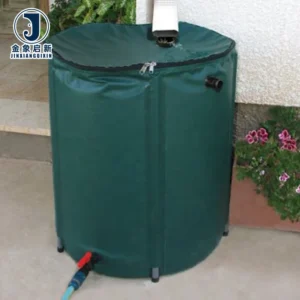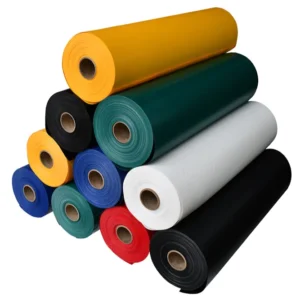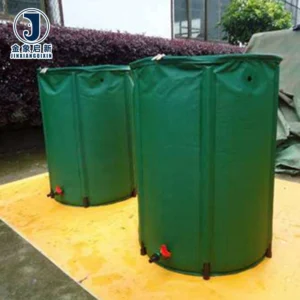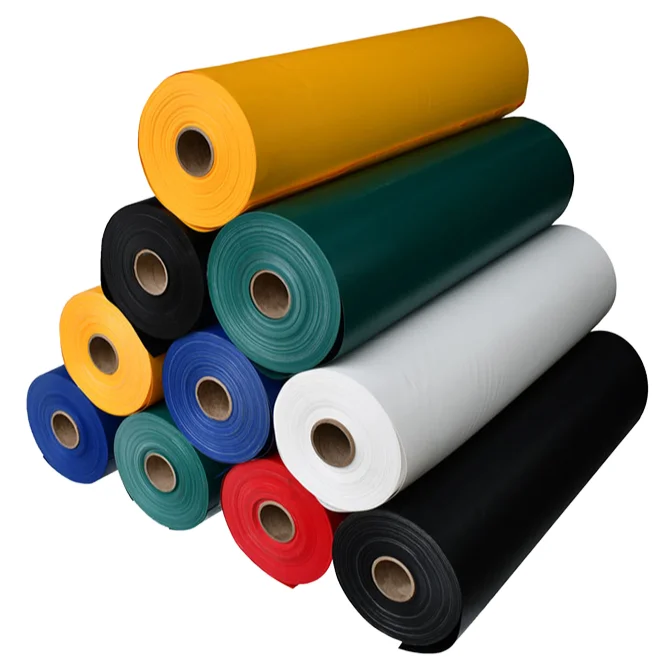
[Coating Process Control] — Nearly three decades of PVC coating expertise ensures consistent adhesion between fabric base and PVC layer across every roll, verified at every production stage.
Technical Specifications
| Parameter | Value |
|---|---|
| Product Type | PVC Coated Tarpaulin Fabric |
| Material Composition | PVC coating on high-strength polyester mesh fabric |
| Available Weight Grades | 350gsm, 420gsm, 500gsm, 550gsm, 600gsm, 750gsm |
| Available Thickness | 0.32mm, 0.35mm, 0.4mm, 0.45mm, 0.5mm, 0.65mm |
| Roll Dimensions | 2m × 75m or 2.1m × 50m |
| Coating Technology | Laminated technology and hot-melt coating technology |
| Available Colours | Blue, Red, Yellow, Light Blue, Grey (custom colours available) |
| Cold Crack Resistance | Yes (temperature threshold — confirm for your climate) |
| UV Treatment | Sunproof finish (test basis not stated in source — request report) |
| Anti-Static Treatment | Available (surface resistance standard — confirm for your market) |
| Flame Retardant Grade | Not stated in source — available in flame retardant grades on request |
| Key Features | Waterproof, anti-mildew, high tearing strength for welding, colour fastness |
| Certifications | ISO, CE |
Application Suitability
| Application | Exposure & Requirement |
|---|---|
| Truck side curtain fabric | Continuous flexing, road debris abrasion, slipstream uplift, daily UV exposure |
| Flatbed trailer top cover | Water ingress risk, tie-down strap abrasion, load shift friction at contact points |
| Tipper and bulk haulage cover | Particulate abrasion, hydraulic frame flex, exposure to industrial dust |
| Cargo ship deck cover | Saltwater spray, sustained wind load, long-duration UV and mildew risk |
| Truck awning and canopy | Passenger and cargo weather protection, repeated folding and deployment |
When "Heavy-Duty" on the Label Does Not Match the Truck Cover You Receive
Specifying by GSM alone leaves a gap between what you ordered and what arrives on the loading dock.
Fleet operators routinely receive PVC coated tarpaulin for truck and trailer covers that measures lighter than the quotation stated, particularly at the edges of the roll where coating weight tends to drop. This discrepancy often surfaces only after the cover has been fitted and exposed to weeks of road conditions, by which point the return window has closed. The problem is not the GSM number itself — it is that GSM without verified coating weight and base fabric denier tells you nothing about how the material behaves at the flex points where cargo movement concentrates stress [NEED_CITE: industry methods for coating weight verification per ISO standards].
Fitment That Follows the Trailer, Not the Catalogue
A generic-size truck cover leaves gaps at the corners and flaps in the slipstream, accelerating wear at every unfitted edge. This PVC coated tarpaulin for truck and trailer applications is supplied in roll form for fabricators who cut to specific vehicle dimensions, or as pre-cut finished sizes confirmed against the trailer model drawing before production begins.
Where Welded Seams Meet the Road
The most common failure point on a truck cover is not the fabric — it is the welded seam at the zone where the load flexes most during transit. The hot-melt coating process used here produces adhesion between the PVC layer and the polyester base that supports strong heat-welded joins, with tearing strength at the seam engineered to exceed typical road-induced stress cycles [NEED_CITE: tensile and tear test methods for coated fabrics per ISO 1421].
Reading the Specification Sheet Beyond the GSM Number
Coating weight and base fabric denier together determine how the material handles real-world loads. A 550gsm fabric with a dense polyester mesh may outperform a 600gsm fabric built on a looser weave, because the yarn count and weave density govern tear propagation resistance. The laminated and hot-melt coating technologies available here affect peel strength differently — hot-melt typically delivers higher adhesion at welded seams, while lamination can offer cost advantages on lighter-grade rolls. Selecting between 350gsm and 750gsm should therefore account for both the route conditions the vehicle operates under and the welding method the fabricator uses at tie-down and hem zones.
The Cost of Choosing the Wrong Grade for the Route
Specifying a lighter GSM grade for a long-haul curtain-side trailer often results in premature abrasion at the contact points where the cover rubs against the load during braking and cornering. Colour inconsistency between rolls in the same order becomes visible once fitted side by side on adjacent vehicles, requiring rework across the fleet. Anti-UV treatment claimed without a supporting test report may fail to protect during sustained highway exposure, leading to surface chalking and embrittlement well before the expected replacement interval [NEED_CITE: UV degradation patterns in PVC coated fabrics under sustained road exposure].
Why Fabricators and Fleet Operators Source This Material
Three full production lines and dedicated equipment sets support bulk roll orders with consistent output across the production run, reducing the risk of batch-to-batch variation. A ten-person R&D team handles pattern confirmation, custom width requests and colour matching before production begins, so the first roll matches the approved sample. Quality checks occur at each coating and finishing stage rather than only at the final inspection, catching GSM drift and colour shift before the roll is packed. Rolls are dispatched with a packing list that references each roll individually, allowing fabricators to trace any issue back to its production batch. Pre-shipment inspection covers the full order, not a statistical sample, so every roll is accounted for before it leaves the facility.
Documentation & Verification
- Material specification sheet stating exact GSM, base fabric denier and coating weight per roll
- Colour reference card matched to your fleet livery or RAL code before production
- UV and flame retardant test reports provided where applicable to the grade ordered
- Pre-shipment inspection record covering every roll in the dispatch
- Roll packing list with individual roll identification for traceability
- Certificate of origin and customs documentation for cross-border shipment
Fabrication, Handling & Storage
- Hot-melt coated rolls accept standard wedge and hot-air welding at seams — test parameters on a scrap piece before production runs
- Store rolls upright on pallets to prevent flat-spot creasing across the 2m or 2.1m width
- Allow cold-stored rolls to reach ambient temperature before unrolling to avoid coating micro-cracking
- Reinforce eyelet zones with additional fabric patches where tie-down straps apply concentrated load
- Cut patterns nested to maximise yield from each 50m or 75m roll length and reduce seam count
- Use PVC-compatible cleaners only — solvent-based products can attack the coating surface over time
What to Include in Your Specification Request
Provide the trailer model or exact dimensions so cut sizes can be confirmed against the vehicle profile. State the GSM grade and any treatment requirements such as flame retardant certification for your operating market. Indicate whether you need rolls for your own fabrication line or finished covers with eyelet placement and hem reinforcement specified to your tie-down system.
Frequently Asked Questions
Q: How is the truck cover sized to my specific trailer model rather than a generic cut?
A: The trailer model drawing or exact dimensions are confirmed before production begins. The pattern accounts for frame rails, hinge clearance and tie-down rail positions, so the finished cover fits without gaps at corners or excess fabric that flaps at speed.
Q: How do you verify GSM on arrival matches the quotation?
A: Each roll ships with a material specification sheet stating the coating weight and base fabric denier. The pre-shipment inspection record documents measured values, and individual roll identification on the packing list allows you to trace any discrepancy back to its production batch.
Q: What UV test evidence supports the sunproof claim for road exposure?
A: UV treatment is available on applicable grades — request the specific test report for the grade you are ordering. The report identifies the test standard used and the exposure duration achieved, so you can verify suitability for your route climate before committing to volume.
Q: How are welded seams reinforced at high-flex zones?
A: The hot-melt coating technology provides strong PVC-to-polyester adhesion that supports reliable heat-welded joins. At tie-down and eyelet zones, additional fabric patches can be specified during fabrication to distribute load across a wider area and reduce peel stress at the weld line.
Q: Can eyelet spacing and hem reinforcement match our tie-down system?
A: Yes — specify your tie-down hook or strap spacing, and the hem construction can be reinforced accordingly. Eyelet diameter, spacing and backing plate requirements are confirmed on the pattern drawing before any cutting or welding begins.