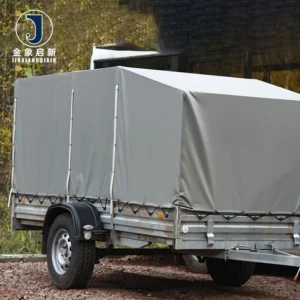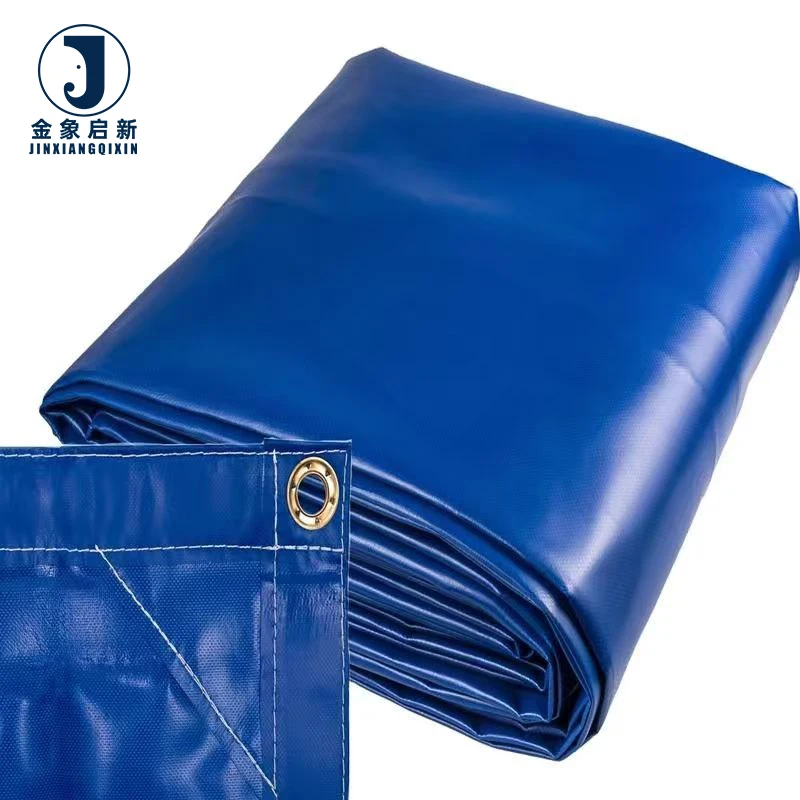
Custom Sizing to Fleet Dimensions — Every truck and trailer model demands its own cut profile; generic tarpaulin dimensions leave gaps at corners and excess material that flaps at highway speed. This PVC coated tarpaulin range is cut to your specific vehicle model, supported by in-house pattern development and a 10-person R&D team that validates fit before the production run begins.
Technical Specifications
| Parameter | Value |
|---|---|
| Product Type | PVC Coated Tarpaulin |
| Weight Range | 250gsm–1500gsm (confirm the grade for your application) |
| Base Fabric Denier | 200Dx300D, 500Dx500D, 840Dx840D, 1000Dx1000D |
| Coating Material | PVC |
| Coating Method | Coated and laminated |
| Available Widths | Up to 3m |
| Standard Sizes | 3x4m, 6x8m, 8x10m, 10x12m or custom made |
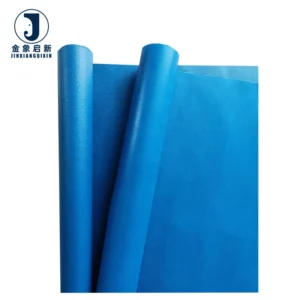
| Colour Options | Blue, yellow, black, green, white, and others |
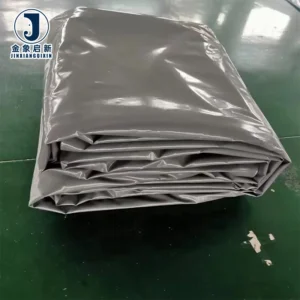
| Surface Finish | Available in glossy or matte finish |
| Temperature Range | -15ºC to 70ºC |
| UV Treatment | Customized (confirm test basis for your market) |
| Flame Retardant | FR treated (confirm the grade required for your market) |
| Anti-Fungal | Treated (confirm standard for your application) |
| Waterproof | Yes |
| Key Features | Tear-resistant, flexible, abrasion-resistant, eco-friendly formulation |
Application Suitability
| Application | Exposure & Requirement |
|---|---|
| Truck and trailer side curtains | Constant flexing at hinge points, road debris abrasion, UV and rain exposure |
| Flatbed top covers | Tension from tie-down straps, pooling water, wind uplift at speed |
| Articulated trailer enclosures | Repeated folding and unfolding, weld seam stress at load shift zones |
| Equipment and machinery covers | Outdoor storage, UV degradation, dust and moisture ingress |
Why a Generic Truck Cover Fails Where Your Load Flexes Most
A PVC coated tarpaulin for truck and trailer covers must survive the exact point where cargo shifts under braking — and that is where most generic-sized covers split first. The seam fails before the fabric does, almost every time, because the weld zone concentrates stress at the flex line.
Fleet operators who buy off-the-shelf sizes end up with excess material that bunches at corners, creating friction points that wear through the coating within months. Meanwhile, the eyelet line on a cover that does not match the trailer profile takes uneven strap loads, pulling the reinforcement away from the base fabric. I have watched transport companies replace covers twice a year because the cut was never matched to the trailer in the first place [NEED_CITE: tensile and tear test methods for coated fabrics per ISO 1421].
Model-Specific Cutting Eliminates the Gap Problem
Every trailer manufacturer uses different corner radii, header depths, and side curtain track profiles. A PVC coated tarpaulin for truck and trailer covers cut to those exact dimensions seats flush against the body, removing the bunching that causes abrasion at the rail. Custom cutting also means eyelets land precisely where the tie-down points sit on the chassis, distributing strap tension evenly across the hem.
Welded Seams Built for the Flex Zone
Side curtains hinge open and closed hundreds of times per week. The coating and lamination construction of this fabric supports heat-welded joins that bond at the molecular level, creating a seam that flexes with the material rather than cracking against it. Stitched hems, by contrast, introduce needle holes that become tear initiation points under repeated load cycling [NEED_CITE: DIN 4102 fire classification for building materials].
Surface Treatment Matched to Route Conditions
Fleet vehicles running long-haul routes face sustained UV exposure that degrades untreated PVC surfaces, causing chalking and loss of flexibility. This range offers UV treatment as a custom option — request the test basis documentation to confirm the treatment grade matches your fleet’s operational climate. Similarly, flame-retardant treatment is available in grades suited to depot and terminal compliance requirements; specify the standard your market demands before production.
How Denier, Coating Weight, and Base Weave Interact on the Road
Base fabric denier sets the skeleton of the material — a 1000Dx1000D weave provides substantially higher tear resistance than a 200Dx300D construction, which matters when a strap edge catches the fabric at an angle. However, denier alone does not determine field performance. Coating weight fills the weave and bonds to the yarns; a heavy base fabric with insufficient coating will delaminate at the weld line under flex stress. The laminated construction in this range bonds the PVC layers to the scrim under heat and pressure, producing peel strength that holds at side curtain hinge points where the material folds repeatedly. Surface finish — glossy or matte — affects more than appearance; a glossy surface sheds road grime more readily and accepts fleet branding print with sharper registration, while a matte finish reduces glare for depot workers inspecting loads at night.
What Happens When Colour Varies Between Rolls on the Same Fleet Order
A fleet operator ordering twenty side curtains expects every panel to match when installed side by side on identical trailers. When colour varies between rolls in the same batch, the mismatch is visible from the depot yard — and the entire order looks inconsistent. This problem traces back to pigment dosing during the coating stage, where even slight variation in mixing ratios produces a shift that shows up under daylight. Batch consistency requires controlled pigment formulation across the full production run, not just a colour swatch approval at the sample stage [NEED_CITE: colour consistency standards for coated textile batches].
Why Procure Your PVC Coated Tarpaulin Through This Production Line
Coating weight control. Three full production lines with 36 sets of professional equipment deliver consistent GSM across every roll in your order — verified through dedicated QA/QC at each production stage, not just a final spot check.
Custom sizing capability. The 10-person R&D team develops cut patterns matched to your specific truck and trailer models, producing samples within days so you can validate fit before committing to the full production run.
Documentation that travels with the shipment. Every dispatch includes a pre-shipment inspection record, material specification sheet, and roll packing list so your receiving team can verify the order against the quotation immediately on arrival.
Volume capacity with reliable scheduling. Bulk orders for fleet-wide replacements or new-build programmes are supported by the facility’s output capacity, reducing the risk of partial shipments that delay vehicle commissioning.
Documentation & Verification
- Material specification sheet stating GSM, base fabric denier, and coating type for each roll
- UV and flame-retardant test reports matching the treatment grade specified on your purchase order
- Pre-shipment inspection record confirming 100 percent inspection before dispatch
- Roll packing list with individual roll weights and dimensions for receiving verification
- Colour reference documentation tied to the production batch for fleet consistency checks
Fabrication, Handling & Storage
- Heat-weld side curtain seams at temperatures matched to the PVC coating formulation to avoid scorching or incomplete bond
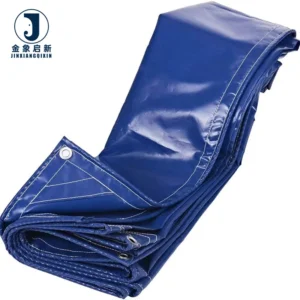
- Reinforce eyelet zones with welded patches to distribute tie-down strap loads across the base fabric denier
- Store rolls upright in their carton or bale packaging to prevent creasing that marks the glossy or matte finish
- Allow cold-stored rolls to reach ambient temperature before unrolling to prevent cracking at the coating surface
- Cut panels from the roll using a template matched to the trailer model to minimize offcut waste from the 3m width
What to Include in Your Enquiry
When requesting a quotation for PVC coated tarpaulin for truck and trailer covers, provide the vehicle make and model or the side curtain track profile drawing so the cut pattern matches your fleet. Specify the denier and GSM grade suited to your route conditions, and confirm whether your market requires a particular flame-retardant or UV treatment standard. Indicate whether you need finished panels with eyelets and reinforced hems, or roll stock for in-house fabrication, and state the quantity and colour reference for the order.
Frequently Asked Questions
Q: Can you cut the tarpaulin to fit my specific trailer model instead of a generic size?
A: Yes. The R&D team develops a cut pattern based on your trailer dimensions or track profile drawing, and produces a sample for fit validation before the production run begins. This eliminates the gaps and bunching that cause premature wear on off-the-shelf covers.
Q: Welded seam or stitched hem — which holds better at side curtain flex points?
A: Welded seams bond the PVC layers at the molecular level, flexing with the material through repeated opening and closing cycles. Stitched hems introduce needle holes that become tear initiation points under load, making welding the preferred join method for side curtain hinge zones.
Q: What test reports support the UV and flame-retardant claims?
A: Test reports are provided for the specific treatment grade applied to your order. Confirm the standard required by your market — such as a depot fire compliance code — at the enquiry stage so the correct grade is specified and documented.
Q: How do you ensure colour consistency across multiple rolls in one order?
A: Pigment dosing is controlled across the entire production batch, and colour reference documentation is tied to each roll. A pre-shipment inspection verifies that all rolls in the order match the approved colour reference before dispatch.
Q: How do I check the GSM on arrival matches the quotation?
A: Each shipment includes a material specification sheet stating the GSM for the ordered grade. Request a pre-shipment weight sample or use the roll packing list to verify individual roll weights against the specification on arrival.