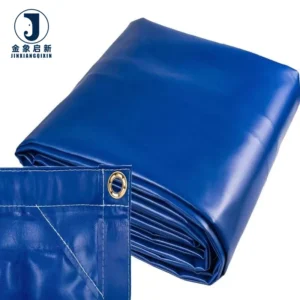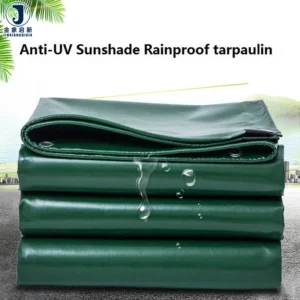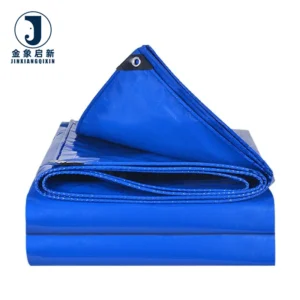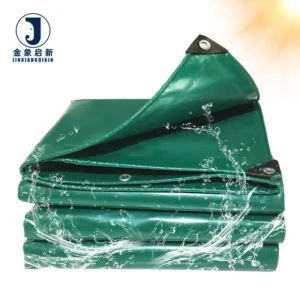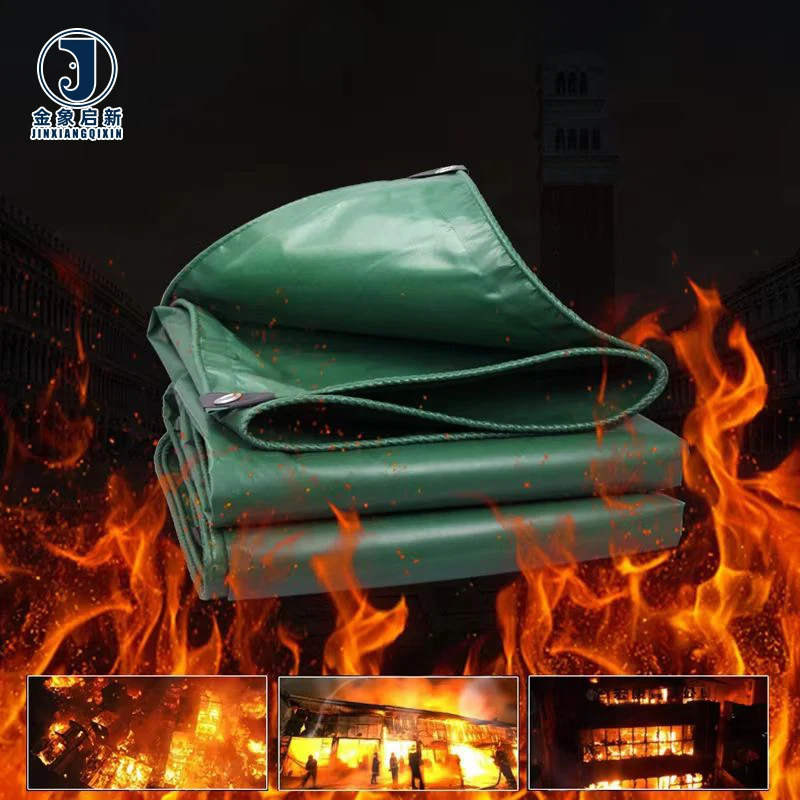
Precision Coating Control — Knife coated PVC tarpaulin with verified GSM weight and woven base fabric, built for fleet operators who cannot afford generic covers failing at stress points on the road.
Technical Specifications
| Parameter | Value |
|---|---|
| Product Type | PVC Coated Tarpaulin |
| Weight (GSM) | At least 450 g/m² (source value — verify against manufacturer catalog) |
| Coating Material | PVC |
| Coating Method | Knife Coated |
| Base Fabric | Woven Fabric |
| Waterproof | Yes |
| Surface Treatment | Anti-UV coated (test basis not stated — confirm grade required for your market) |
| Flame Retardant | Grade not stated — available in flame retardant grades, confirm the grade required for your market |
| Finish Options | Glossy or matte (confirm finish at inquiry) |
| Custom Size | Available |
Application Suitability
| Application | Exposure & Requirement |
|---|---|
| Truck side curtains | Constant flexing at load tie-down points, road abrasion, UV and weather exposure |
| Trailer load covers | Repeated removal and refitting, wind load stress, eyelet pull-through forces |
| Fleet vehicle protection | Long-haul road spray, diesel particulate contact, daily deployment wear |
| Transport equipment build | Panel fabrication for new trailer assemblies, welded seam integrity under tension |
Why Generic Tarps Fail on Moving Loads Before the Fabric Wears Out
PVC coated tarpaulin for truck and transport applications must be specified around the mechanical stresses of a moving load, not just the fabric weight on a label.
The cover fails at the seams and eyelets long before the body of the fabric reaches end of life.
When a tarp is cut to a generic dimension that does not match the trailer model, the fabric pulls unevenly across the load. Tie-down points concentrate force into small areas, and eyelets tear through when the spacing does not align with the fleet’s securing hardware. Welded seams open under flex load because the weld line sits exactly where the material bends most during transit. [NEED_CITE: failure modes of coated tarpaulin at welded seams and eyelet zones under dynamic load] These failures are specification errors, not material defects — the fabric itself may still have years of service potential when the cover is retired.
Engineering the Cover Around the Trailer, Not the Other Way Around
Every truck and trailer model has distinct body dimensions, load geometry, and tie-down hardware layouts. This PVC coated tarpaulin for truck and transport use supports custom sizing matched to specific vehicle models rather than generic cut sizes. When the cover is cut to the exact trailer profile, the fabric lies flat without tension concentrations at corners or edges. The result is a cover that secures quickly, stays in position during transit, and avoids the premature wear that generic tarps develop within the first season of fleet use.
Securing Methods That Match Fleet Hardware Standards
Tie-down systems vary across logistics operators — ratchet straps, elastic cords, hook-and-rail systems, and curtain-side tensioners all place different demands on the fabric edge. Eyelet spacing, reinforcement patches, and hem construction must align with the specific securing method the fleet deploys daily. A mismatch between eyelet placement and strap routing creates uneven load distribution and accelerates edge failure [NEED_CITE: eyelet pull-through forces in heavy-duty transport tarpaulin applications]. This PVC coated tarpaulin for truck and transport applications allows reinforcement configuration to match your fleet’s standard securing pattern.
What the GSM and Coating Method Actually Determine for Truck Covers
GSM weight alone does not predict how a tarpaulin performs under road conditions. The woven base fabric provides the structural skeleton — its denier and weave density govern tensile strength and how a tear propagates once initiated. The knife coated PVC layer bonds to this base, and the coating weight relative to the base determines stiffness, weldability, and surface durability. A heavier coating over a light base creates a stiff panel that cracks at flex points, while a thin coating over a heavy base may lack sufficient abrasion resistance against road debris. For truck and trailer side curtains that flex with every load shift, the balance between base fabric weight and coating thickness is more important than the total GSM figure. The anti-UV treatment must be verified by test documentation rather than assumed from the label, because UV degradation accelerates coating embrittlement on south-facing routes and high-altitude transport corridors. [NEED_CITE: relationship between base fabric denier, coating weight, and tensile performance in PVC coated fabrics per ISO 1421]
What Happens When the Specification Does Not Match the Route
A cover specified without accounting for the actual operating environment develops problems that are expensive to diagnose in the field. Insufficient coating weight shows up as surface wear along abrasion contact points within months, not years. Flame retardant fabric supplied without the certification grade required at the destination terminal results in rejected loads and contract penalties. Colour variation between rolls in the same fleet order becomes visible when panels are installed side by side on adjacent trailers, forcing operators to reorder entire sets rather than replace individual covers [NEED_CITE: batch colour consistency standards for fleet tarpaulin installations]. Welded seams that fail before the fabric does are typically the result of incorrect heat or pressure settings during fabrication, not a material defect — yet the cost of roadside cargo exposure falls on the fleet operator.
Procurement Advantages Specific to This Transport-Grade Fabric
Three full production lines with 36 sets of professional equipment support bulk roll output with consistent coating weight across the production run, so the GSM verified on the first roll matches the last roll in the container.
A 10-person R&D team handles pattern development, custom sizing, and sample fabrication within days — critical when a fleet operator needs to trial a new trailer cover profile before committing to a full order.
Dedicated QA/QC inspection at every production stage catches coating weight deviation and base fabric defects before the roll reaches the cutting table, not after it arrives at the destination port.
Pre-shipment inspection covers 100% of rolls against the stated specification, with documentation including the material specification sheet and roll packing list so the receiving warehouse can verify GSM without waiting for third-party testing.
Nearly 30 years of process control over coating adhesion means the knife coated PVC layer maintains bond integrity through the thermal cycling that transport covers experience between daytime road heat and overnight temperature drops.
Documentation & Verification
- Material specification sheet stating base fabric denier, coating method, and verified GSM per roll
- UV and flame retardant test reports provided where applicable to the specified grade
- Pre-shipment inspection record confirming coating weight against quoted GSM before dispatch
- Roll packing list with individual roll identification for warehouse receiving verification
- Certificate of origin and customs documentation for international transport shipments
Fabrication, Handling & Storage
- Heat weld temperature settings must account for the knife coated PVC thickness to achieve full bond without base fabric scorch
- Eyelet placement and reinforcement patches should be specified at inquiry to match fleet tie-down hardware spacing
- Rolls stored horizontally on pallets to prevent permanent creasing in the woven base fabric layer
- Allow cold-weather rolls to acclimatize before unrolling to avoid coating surface cracking at low temperature
- Clean with mild detergent only — solvent-based cleaners may degrade the PVC coating surface finish
What to Include in Your Inquiry
Specify the truck or trailer model dimensions, the securing method your fleet uses, and whether you need roll stock for your own fabrication or finished cut covers with eyelets and hems. Indicate the operating environment — coastal salt air, high-altitude UV exposure, or industrial particulate contact — and confirm whether your destination market requires flame retardant certification at a specific grade. Provide your annual volume estimate and colour requirements so we can confirm batch consistency and lead time for your procurement schedule.
Frequently Asked Questions
Q: How do I specify the correct size for my trailer model?
A: Provide the exact trailer body dimensions including length, width, height, and any protrusions such as lashing rails or door hinges. Generic cut sizes create tension points that accelerate wear. Custom sizing matched to the trailer model ensures the PVC coated tarpaulin lies flat across the load without stress concentrations at edges or corners.
Q: What GSM weight is recommended for heavy-duty truck side curtains?
A: The minimum weight for this product line is at least 450 g/m², but the correct specification depends on the balance between base fabric density and coating thickness. Heavier base fabric provides better tear resistance at flex points, while adequate coating weight ensures abrasion protection. Request a sample in the GSM grade suited to your route conditions.
Q: Can eyelet spacing be customized to match our fleet tie-down system?
A: Yes. Eyelet spacing, reinforcement patch size, and hem construction can be configured to align with your fleet’s securing hardware. Providing the tie-down system specifications at inquiry stage ensures the PVC coated tarpaulin for truck and transport use is fabricated to match your standard strap or cord routing pattern.
Q: What test documentation comes with flame retardant or anti-UV treated fabric?
A: Test reports are provided where applicable to the specified grade. Confirm the flame retardant classification required by your destination market and the UV treatment level needed for your operating environment. Documentation accompanies each shipment and should be verified against the material specification sheet.
Q: How are welded seams tested before shipment?
A: Welded seams are inspected during the pre-shipment quality check, with seam strength verified against the flex stress points typical of transport cover applications. Inspection records are included in the shipment documentation so you can confirm that weld integrity meets the mechanical demands of your trailer load covering operation.