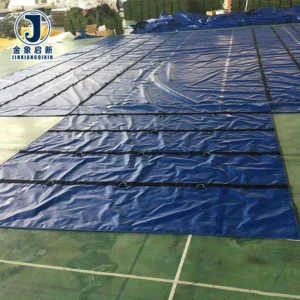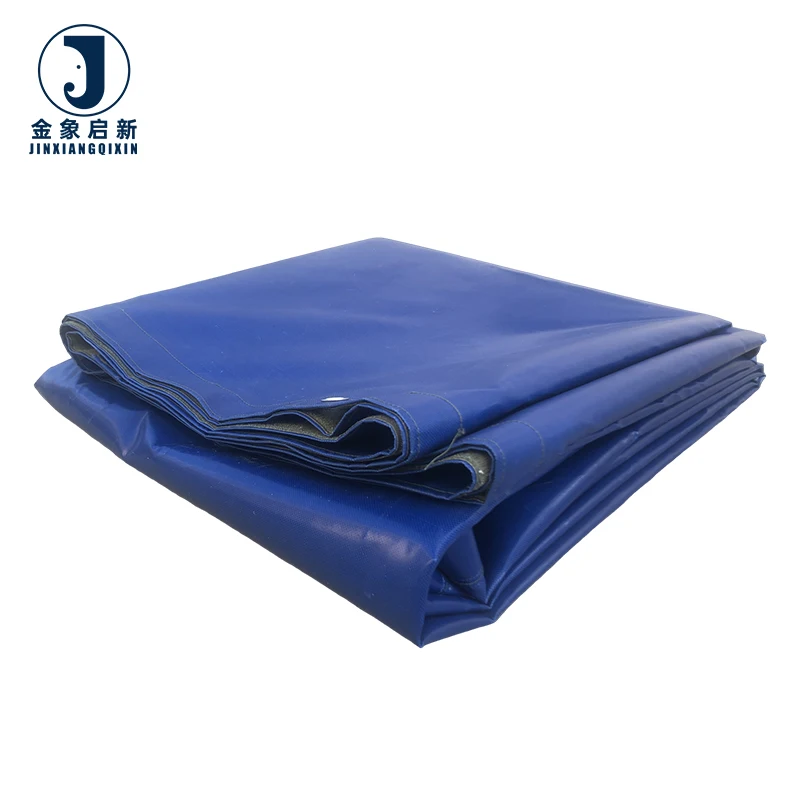
Proven Coating Expertise — Three production lines with hot melt and lamination coating deliver consistent PVC adhesion across every roll for truck and transport covers.
Technical Specifications
| Parameter | Value |
|---|---|
| Product Type | PVC Coated Tarpaulin |
| Base Material | High-tenacity polyester yarn (500D – 2000D) |
| Coating Technology | Hot melt coating and lamination |
| Weight Options | Medium-duty: 400-500 GSM / Heavy-duty: 700-1000 GSM / Super heavy: 1100-1500 GSM |
| Thickness | 0.35-0.45 mm (Medium) / 0.70-1.0 mm (Heavy) / 1.2-1.5 mm (Super heavy) |
| Tensile Strength | Warp 1500-3000 N/5cm, Weft 1200-2800 N/5cm (varies by weight grade) |
| Temperature Performance | Cold resistant cracking treatment |
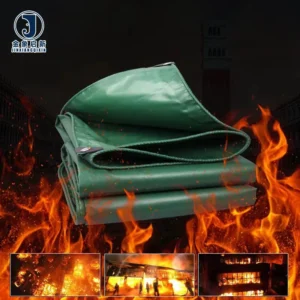
| Fire Safety | Available in flame retardant grades — confirm the grade required for your market |
| Surface Treatments | Anti-UV, anti-static, mildew resistant (test basis not stated in source) |
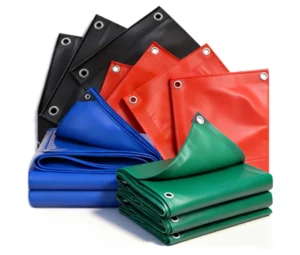
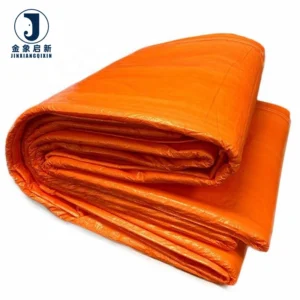
| Color Selection | Blue, Green, Grey, Black, Orange, Clear, or custom |
Application Suitability
| Application | Exposure & Requirement |
|---|---|
| Side Curtain Systems | Continuous flexing cycles, high-speed road abrasion, and constant UV exposure |
| Flatbed Trailer Covers | Heavy tie-down tension at reinforced points, wind flap fatigue, and weather ingress |
| Fleet Load Protection | Long-haul transit exposure requiring consistent colour matching across multiple vehicles |
Why Generic Sizing Fails the PVC Coated Tarpaulin for Truck and Transport
Exact model fitment is the difference between protected cargo and road-spray damage at the seams.
Many transport operators lose cargo to weather because their PVC coated tarpaulin for truck and transport is cut to a generic size that does not match the specific trailer model. The gaps left at exposed edges are where wind and rain enter first, and loose fabric flaps rapidly abrade at highway speeds [NEED_CITE: aerodynamic load stress on loose tarpaulin edges during transit]. When the fabric flexes under load, poorly matched dimensions concentrate stress at the tie-down points, leading to early failure at the seams.
Engineered for Moving Loads and Flex Fatigue
The primary failure point for any PVC coated tarpaulin for truck and transport is the weld line, where the fabric folds and flexes most. Our hot melt coating technology ensures the PVC penetrates the high-tenacity polyester base fabric, creating a bond that survives repeated tension cycles. By matching the base fabric denier (from 500D to 2000D) to the specific weight grade, the material maintains structural integrity when subjected to the dynamic loads of a moving fleet.
Matching Weight to Route Exposure
Fleet operators must balance fabric weight against fuel efficiency and handling. Medium-duty grades (400-500 GSM) suit lighter transit, while heavy-duty grades (700-1000 GSM) are specified for long-haul routes where road debris and wind flap fatigue are constant. For specialized bulk transport, the super heavy 1100-1500 GSM range provides the necessary mass to resist tearing under extreme tie-down pressure.
The Relationship Between Base Denier and Tear Propagation
Weight alone does not determine strength; the base fabric denier and weave density control how a puncture expands. A 1000D base in a heavy-duty roll resists tear propagation far better than a loosely woven alternative of the same weight. This is critical for side curtains that must withstand constant friction against cargo edges.
The Consequence of Inconsistent Roll Quality
When colour varies between rolls in the same order, the difference becomes visible once installed side by side on a fleet. Furthermore, if the stated GSM on the quotation is not verified upon arrival, the fabric may be lighter than agreed, resulting in premature wear at high-stress points [NEED_CITE: material degradation rates relative to actual vs. stated GSM].
Procurement Confidence for Fleet Operators
We support our transport partners with a dedicated QA/QC process at every stage. Our 10-person R&D team can develop samples within days for custom sizing and colour approval before bulk production. With nearly 30 years focused on coated fabric, we provide full documentation to ensure the material you specify is the material you receive.
Documentation & Verification
- Material specification sheet confirming the exact GSM and base denier for your specific rolls
- Pre-shipment inspection record verifying 100% QA check before dispatch
- Test reports for UV and flame-retardant treatments (grade confirmation required per market)
- Colour reference sheets to guarantee batch consistency across your entire fleet order
Fabrication, Handling & Storage
- Heat welding parameters must match the specific 700-1000 GSM heavy-duty coating for maximum bond strength
- Reinforced webbing is recommended at tie-down points for the 1000D base fabric to prevent eyelet pull-through
- Rolls should be stored horizontally to avoid permanent creasing in the 0.70-1.0 mm heavy-duty material
- Cold-resistant treatment allows for deployment in lower temperatures without cracking the PVC surface
- Custom cut-to-model sizing eliminates the need for on-site trimming and reduces installation time
Requesting a Technical Proposal
To specify the right PVC coated tarpaulin for your fleet, please provide the exact make and model of your trailers for precise sizing. Specify the required GSM based on your route exposure and any regional fire-safety compliance grades needed for your cargo type.
Frequently Asked Questions
Q: Can truck covers be cut to fit specific trailer models rather than generic sizes?
A: Yes. We provide cut-to-model fitment based on your specific vehicle dimensions. This eliminates the gaps found in generic-sized covers that leave cargo exposed to wind and road spray, ensuring a tight fit that reduces flex-fatigue at the edges.
Q: How is GSM verified on arrival to match the quotation specification?
A: Every roll is accompanied by a material specification sheet and a pre-shipment inspection record. We perform a 100% QA check to ensure the actual weight and base fabric denier match the agreed-upon values before the material is dispatched to your facility.
Q: How do welded seams perform at load flex points compared to stitched seams?
A: Welded seams using our hot melt coating technology create a continuous bond that matches the tear strength of the fabric itself. This prevents the seams from becoming the first failure point when the load flexes or shifts during highway transit.
Q: What test reports support flame-retardant or UV treatment claims?
A: We supply test reports that verify the specific grade of treatment applied to your order. Because safety standards vary by region, we require buyers to confirm the exact grade needed for their market to ensure compliance during technical audits.