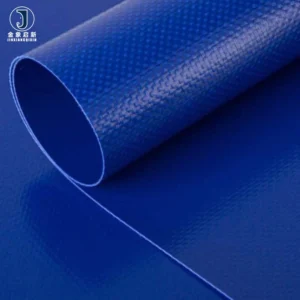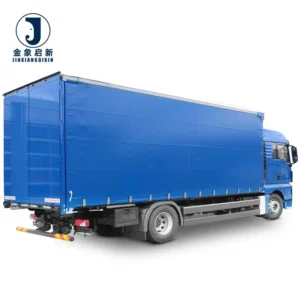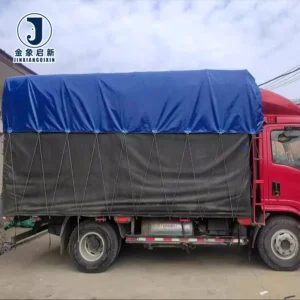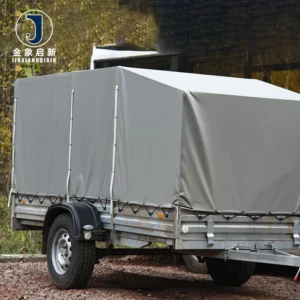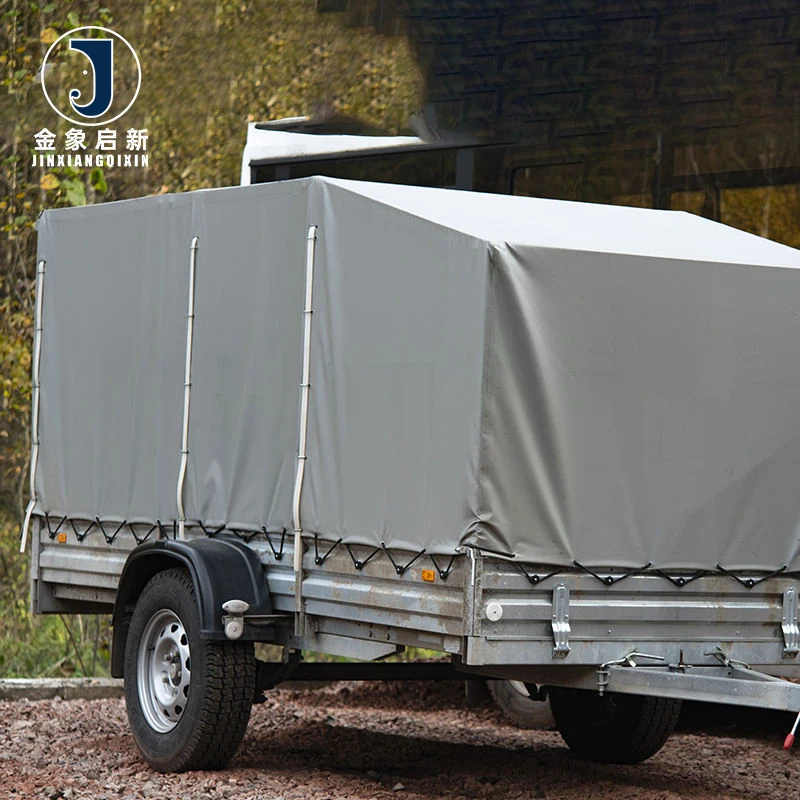
Model-Specific Fitment — Each PVC Coated Truck Tarpaulin cover is developed against verified trailer dimensions, with welded seams reinforced at high-flex load points where generic covers fail first.
Technical Specifications
| Parameter | Value |
|---|---|
| Product Type | PVC Coated Tarpaulin |
| Material | PVC + High-strength polyester mesh fabric |
| Weight (GSM) | 350gsm / 420gsm / 500gsm / 550gsm / 600gsm / 750gsm (confirm the grade for this item) |
| Total Thickness | 0.32mm / 0.35mm / 0.4mm / 0.45mm / 0.5mm / 0.65mm |
| Coating Method | Laminated technology & Hot-melt Coating technology |
| Roll Size | 2m × 75m / 2.1m × 50m |
| Finish Product Size | Custom items as per customer’s needs or sold by inventory |
| Color | Blue / Red / Yellow / Light blue / Grey (Customized) |
| Waterproof | Yes |
| Anti-Mildew | Yes |
| Anti-Static | Treatment available — confirm the grade required for your market |
| Flame Retardant | Special treatment available — confirm the grade required for your market |
| UV Treatment | Sunproof treatment available — confirm the grade and test basis for your market |
| Cold Crack Resistance | Yes |
| Color Fastness | Best color fastness (test basis not stated) |
| Key Features | High tenacity polyester yarns, good strength and flexibility, outstanding tearing strength for welding, anti-mildew, waterproof |
| Standards | ISO, CE |
Application Suitability
| Application | Exposure & Requirement |
|---|---|
| Truck and trailer covers | Constant flexing under road vibration, high-speed wind abrasion, repeated tie-down tension at hems |
| Side curtain fabric for transport equipment builds | Daily roll and fold cycles, welding seam integrity, model-specific panel dimensions |
| Long-haul cargo protection | Extended sun and weather exposure, temperature swings between regions, load shift stress |
| Construction and equipment covers | UV and rain exposure on stationary machinery, abrasion from scaffold and steel contact |
| Marine and offshore maintenance covers | Salt-laden moisture, wind-driven spray, mildew risk in humid port storage |
Why PVC Truck Tarpaulin for Fleet and Transport Fails at the Seams Before the Fabric Does
Welded seams on truck covers carry more dynamic stress than the fabric body, and most failures begin where the load flexes under braking and cornering.
A fleet operator orders covers quoted at a given GSM, only to find the material arriving lighter than agreed. The PVC truck tarpaulin for fleet and transport is then cut to a generic size that leaves gaps at trailer corners and excess fabric flapping at highway speed [NEED_CITE: pre-shipment GSM verification methods for coated tarpaulins]. When the loaded trailer flexes, stress concentrates at the welded intersections rather than distributing across the panel. The seam peels before the base fabric reaches its tear threshold, leaving cargo exposed mid-route. The cost is not just the replacement cover — it is the delayed load, the insurance claim, and the lost confidence from the freight customer.
Reinforcing the Stress Points Where Trailer Covers Actually Tear
Every trailer model has a distinct stress map. The corners of a flatbed, the rear bow of a curtain-sider, and the tie-down eyelet rows each concentrate load differently. Our PVC truck tarpaulin for fleet and transport is cut to the exact dimensions of your trailer model, not to a universal template. At weld intersections and hem folds, additional PVC strip reinforcement is applied before heat welding, so the joint carries the same tear rating as the surrounding panel.
How Hot-Melt Coating Keeps the Fabric Flexible at Flex Points
Laminated and hot-melt coating technologies bond the PVC layers to the polyester mesh at a molecular level, producing adhesion strength that resists delamination under repeated bending. When a side curtain rolls and unrolls dozens of times per day, a weaker bond would let the coating separate from the base fabric at the fold line. The hot-melt process maintains flexibility across the temperature range encountered in long-haul transport [NEED_CITE: hot-melt coating adhesion strength testing per ISO 2411]. Cold crack resistance ensures the material does not stiffen and fracture during winter dispatches to northern routes.
Reading the Specifications Beyond the GSM Number
GSM alone describes weight per square metre, but it does not tell you how that weight is distributed between the polyester base fabric and the PVC coating. A 550gsm material with a dense, high-tenacity yarn mesh will outperform a 550gsm material that achieves its weight through thick but brittle coating layers. The base fabric denier and weave density determine tensile and tear strength, while the coating method governs adhesion, flexibility, and weld behaviour. Laminated technology produces a strong bond suited to high-frequency flexing, while hot-melt coating delivers consistent thickness across the full roll width. Selecting between the 350gsm and 750gsm options depends on whether the cover is a lightweight temporary enclosure or a daily-use side curtain subject to constant mechanical cycling.
What Happens When Cover Sizing Ignores the Trailer Model
A cover cut three centimetres short on the drop length leaves the bottom rail of a curtain-sider exposed to road spray. A cover that is too wide creates fabric folds that catch wind at speed, accelerating abrasion against the load edge and burning through the PVC at the contact point. When multiple covers in a fleet order arrive in slightly different colours, the mismatch is visible once installed side by side on adjacent trailers [NEED_CITE: batch colour consistency standards for PVC coated fabrics]. These are not cosmetic complaints — they are the visible symptoms of a supplier who ships generic sizes without confirming fitment against your specific trailer configuration.
Why Fleet Operators Source PVC Truck Tarpaulin for Fleet and Transport Through This Process
Three full production lines with 36 sets of professional equipment handle bulk fleet orders while maintaining roll-to-roll consistency across colour and GSM. The 10-person R&D team develops custom cut patterns for specific truck and trailer models, producing samples within days for fitment approval before production begins. Dedicated QA/QC inspects every unit at each production stage, with 100% inspection before shipment — not a statistical sample, but every cover. Pre-shipment inspection records verify GSM and material weight against the quotation, so what arrives at your depot matches what was agreed.
Documentation & Verification
- Material specification sheet stating GSM, base fabric construction, and coating method for each roll
- Test reports for UV and flame-retardant grades where applicable, confirming the treatment level
- Pre-shipment inspection record verifying weight and dimensions against the purchase order
- Roll packing list with individual roll identification for traceability
- ISO and CE certificates confirming production management standards
- Certificate of origin and customs documentation for international dispatch
Fabrication, Handling & Storage
- Heat weld at temperatures matched to the chosen GSM grade to prevent coating burn-through or weak bonds
- Reinforce eyelet rows with additional PVC strip before punching, distributing tie-down load across the mesh
- Store rolls horizontally on pallets to prevent permanent creasing in the 2m or 2.1m width
- Allow cold-stored rolls to reach ambient temperature before unrolling to avoid coating crack damage
- Clean with mild detergent only; solvent-based cleaners may degrade the PVC surface coating layer
- Cut panels using a heated knife to seal edges and prevent fraying of the polyester mesh base
Specifying Your PVC Truck Cover Order
Provide the exact trailer make, model, and year, along with the number of units per configuration in your fleet. Specify the operating environment — long-haul highway, urban delivery, or stationary yard storage — so the correct GSM grade and treatment package can be recommended. Confirm whether you require finished covers with welded hems and eyelets, or roll stock for your own fabrication workshop.
Frequently Asked Questions
Q: How do you ensure the truck cover fits my specific trailer model?
A: We request the trailer make, model, and year, then develop a cut pattern against those dimensions. A sample cover is produced and sent for fitment approval before bulk production begins, ensuring every unit matches your trailer configuration precisely.
Q: How is the GSM verified to match the quotation upon arrival?
A: Every roll and finished cover undergoes weight verification during 100% pre-shipment inspection. The inspection record documents the measured GSM against the agreed specification, and this record is included with your shipping documentation.
Q: What reinforcement options are available at high-stress flex points?
A: We apply additional PVC strip reinforcement at weld intersections, hem folds, and eyelet rows. The reinforcement grade and placement are specified based on your trailer model and tie-down hardware configuration.
Q: How do you control color consistency across a fleet order?
A: All rolls in a single fleet order are produced from the same coating batch. Each roll is inspected side by side under standard lighting before dispatch to confirm uniform colour across the entire order quantity.
Q: What test reports are provided for anti-UV and weather resistance?
A: Where UV or flame-retardant treatment is specified, we supply the corresponding test report confirming the treatment grade. Confirm the specific standard required for your market so we can match the testing protocol accordingly.