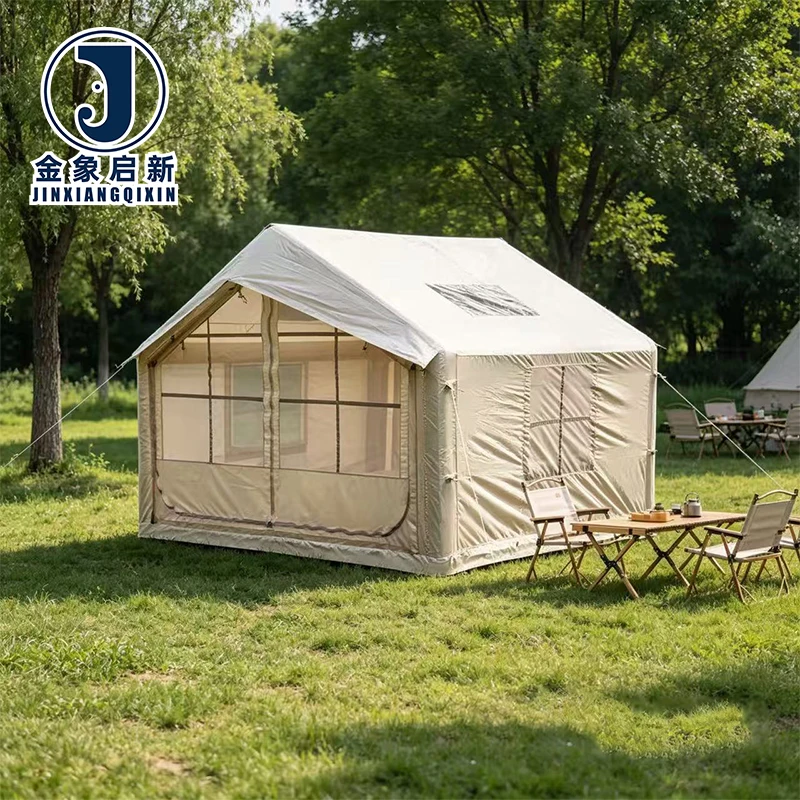
Proven Coated Fabric Expertise — nearly three decades of PVC tarpaulin production with full in-process QA and 100% pre-shipment inspection for every inflatable tent fabric order.
Technical Specifications
| Parameter | Value |
|---|---|
| Product Type | Inflatable Tent Fabric |
| Core Material | PVC tarpaulin |
| Waterproof | Fully waterproof coated construction |
| UV Treatment | UV-resistant (test basis not stated — confirm grade required for your market) |
| Flame Retardant | Fire-retardant (grade not stated — request batch-specific test report) |
| Anti-Static | Anti-static treatment (surface resistance or standard not stated) |
| Tear Resistance | Tear-resistant (test standard not stated) |
| Customization | OEM & ODM — material selection, pattern printing, product design, sample development |
| Standards | ISO 9001, ISO 14001, ISO 45001, CE |
Application Suitability
| Application | Exposure & Requirement |
|---|---|
| Fleet operator rest-stop shelters | Repeated inflation and deflation cycles, roadside UV exposure, tie-down abrasion at anchor points |
| Trailer-integrated inflatable modules | Confined storage, contact with metal frames, flex stress at welded seams during transport |
| Commercial event and exhibition canopies | High-visibility colour consistency across panels, rapid deployment, public safety compliance for flame retardancy |
| Industrial temporary worksite covers | Dust, moisture and chemical splash exposure, anti-static requirements in fuel or grain handling zones |
Why "Fire-Retardant" Without a Grade Is a Procurement Risk
A flame-retardant claim without a named standard leaves your inflatable shelter unprotected at the inspection stage.
When transport fleets and event operators source PVC inflatable tent fabric, the word "fire-retardant" on a quotation does not guarantee compliance with local fire codes or site safety regulations. I have seen inflatable structures rejected at the venue because the fabric certificate did not match the jurisdiction’s required classification. The gap between a generic claim and a verifiable grade is where project delays and rejections happen. [NEED_CITE: fire classification standards for temporary outdoor structures in major markets]
Requesting the specific test standard — whether it is a European, North American or regional building-material classification — before production begins avoids costly resubmission and replacement once the fabric is on site.
Fitment for Transport and Temporary Structure Use
PVC inflatable tent fabric built for transport and outdoor shelter must tolerate repeated inflation pressure, road vibration during transit, and prolonged sun exposure without losing structural integrity. The material is supplied to inflatable tent manufacturers and fleet operators who integrate quick-deployment shelters into their vehicle or event operations. Each roll is produced to support exact-fit cutting for specific trailer dimensions or shelter footprints, reducing waste and eliminating the mismatch problems common with generic-sized stock.
Colour Consistency Across Fleet and Event Deployments
When a transport company orders inflatable shelter modules for multiple depots, or an event operator commissions matching canopy panels, visible colour variation between rolls undermines the professional appearance of the final installation. Batch-to-batch colour consistency is controlled at the coating stage through standardised pigment dosing and in-line visual checks. This is critical for inflatable tent fabric destined for high-visibility branding or uniform fleet livery, where side-by-side panel differences are immediately noticeable once inflated. [NEED_CITE: colour measurement methods for coated PVC tarpaulin in batch production]
How Coating Construction Affects Inflation and Weld Performance
The PVC tarpaulin core provides the waterproof barrier and the mechanical strength that an inflatable structure relies on to hold shape under internal pressure. Base fabric denier and weave density determine how the material resists tear propagation — a critical factor at seam and valve cut-outs where stress concentrates during inflation. The coating method and adhesion quality directly influence heat-weld behaviour: poor coating-to-fabric bonding causes delamination at welded seams before the fabric body itself fails. Anti-static treatment is relevant for environments where dust or combustible particulates are present, and UV-resistant additives must be verified against the expected duration of outdoor deployment to prevent premature surface degradation. Flame-retardant performance depends on the specific chemical system used and the test method applied — buyers should confirm the grade required for their market before placing production orders.
The Hidden Cost of Specifying Without Verification
Accepting a quotation that lists GSM without a pre-shipment weight verification record means the material arriving on your dock may be lighter than what you paid for. In inflatable tent applications, lighter-than-specified fabric translates to lower burst pressure tolerance and reduced cycle life under repeated inflation. Similarly, UV-resistant or flame-retardant treatment claimed without supporting test documentation creates compliance exposure once the structure is deployed at a regulated site. Welded seams on inflatable structures endure cyclic flexing every time the unit is inflated and deflated — if the seam fails before the fabric, the root cause is often a material-to-coating mismatch that could have been caught during sample approval. [NEED_CITE: seam peel strength testing for PVC coated fabrics under cyclic flex conditions]
Why Procurement Teams Source This Fabric Here
Full in-process quality control runs from raw base fabric inspection through coating, finishing and final roll packing, with dedicated QA and QC staff at every stage rather than spot-check sampling. The 10-technician R&D team handles material selection, pattern printing and custom sizing, developing samples within days so you can validate colour, weld behaviour and inflation performance before committing to bulk. Three full production lines and 36 sets of professional processing equipment provide the capacity for volume orders while maintaining roll-to-roll consistency. Pre-shipment inspection covers 100% of rolls against the agreed specification, and every order ships with batch-specific documentation — not generic certificates. [NEED_CITE: tensile and tear test methods for coated fabrics per ISO 1421]
Documentation & Verification
- Material specification sheet confirming PVC coating type, base fabric construction and treatment parameters for each inflatable tent fabric batch
- UV and flame-retardant test reports matched to the specific production batch — request the standard applicable to your market
- Pre-shipment inspection record documenting weight, colour and coating adhesion results per roll
- ISO 9001, ISO 14001, ISO 45001 and CE certificates supporting compliance in North American, European and Asian markets
- Roll packing list with lot traceability for colour consistency verification across multiple inflatable shelter units
Fabrication, Handling & Storage
- Heat-weld temperature and dwell time must be calibrated to the specific PVC coating thickness to avoid delamination at inflatable seam joints
- Cut pattern layout should account for directional stretch of the base fabric weave to maintain inflation symmetry across panels
- Store rolls upright in a dry, shaded area to prevent pressure marks and surface adhesion between coating layers
- Use PVC-compatible cleaners only — solvents or alkaline agents may degrade the UV-resistant and anti-static surface treatment
- Field repairs on punctured inflatable panels require compatible PVC adhesive and patch material from the same coating family
- Avoid dragging rolls across abrasive surfaces during unloading to protect the coated face from scoring
Preparing Your Inquiry for Accurate Quotation
To move quickly from inquiry to sample, share your inflatable shelter dimensions, expected deployment environment and the fire-safety or anti-static standard your market requires. Specify whether you need rolls for in-house fabrication or finished cut-and-welded panels, along with target colour references and any pattern printing or branding requirements. If you are deploying across multiple sites or vehicles, indicate the total panel count so batch colour consistency can be planned at the production scheduling stage.
Frequently Asked Questions
Q: How do I confirm the fire-retardant grade matches my local safety regulations?
A: Provide the specific standard or classification your jurisdiction requires — such as a building material fire class or temporary structure code — and the manufacturer will supply a batch-specific test report mapped to that standard. Confirming this before production avoids rejection at the deployment site.
Q: What evidence supports the UV-resistant treatment claim?
A: UV resistance is achieved through additives incorporated during the coating process. Request a test report referencing the applicable exposure standard for your market. The R&D team can adjust the formulation based on your expected outdoor deployment duration and climate zone.
Q: How is colour consistency maintained when ordering multiple rolls?
A: Pigment dosing is standardised per production batch, and in-line visual checks run throughout the coating process. For large fleet or event orders spanning multiple batches, a master colour reference is established during sample approval to govern all subsequent production runs.
Q: Can custom widths and pattern printing be combined in one order?
A: Yes. The OEM and ODM service covers material selection, custom width, pattern printing and product design together. Samples are developed and approved before bulk production so you can verify print registration, colour accuracy and fabric hand feel on the actual inflatable tent fabric.
Q: What causes welded seams to fail on inflatable structures?
A: Seam failure typically results from coating-to-fabric adhesion weakness or incorrect weld temperature for the specific PVC formulation. Providing a sample for weld trial before bulk order allows your fabrication team to dial in the heat and pressure settings matched to this material.