Deep Coating Process Control — nearly three decades focused on coated and laminated fabrics, giving us repeatable adhesion and weight consistency across every PE tarpaulin roll we ship.
Technical Specifications
| Parameter | Value |
|---|---|
| Product Type | PVC Tarpaulin Roll |
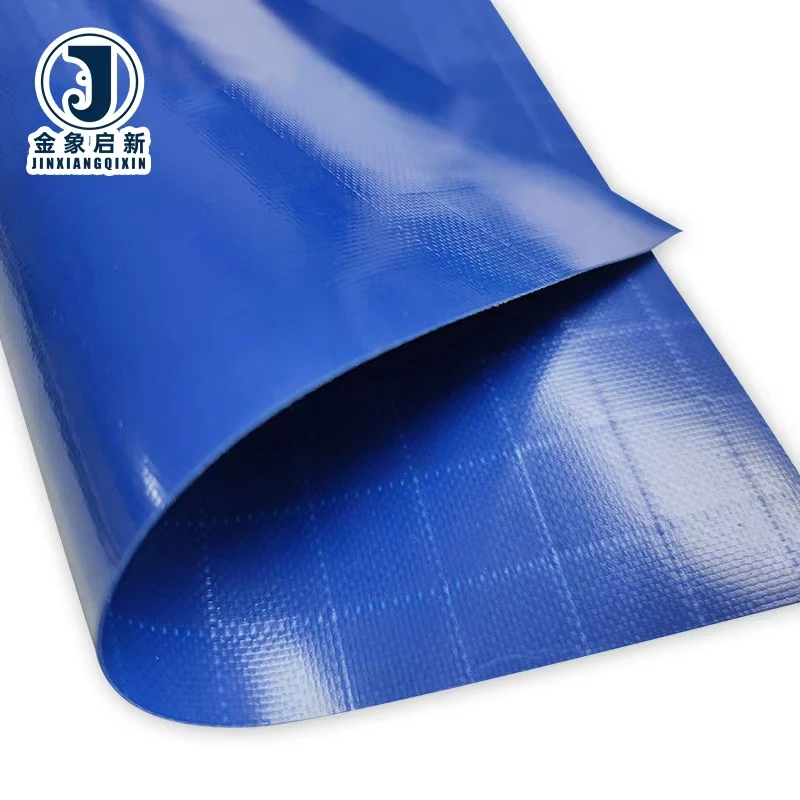
| Base Fabric | HDPE weaving with LDPE lamination on both sides |
| GSM Range | 50 g/m² – 220 g/m² (confirm exact grade per order) |
| Thickness | 0.2–0.4 mm (8 mil–16 mil) / Custom |
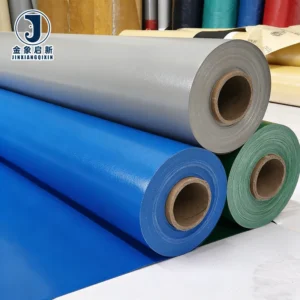
| Roll Width Options | 6 ft, 8 ft, 10 ft, 12 ft / 2 m, 4 m, 6 m |
| Roll Length Options | 100 yards, 100 meters, or custom |
| Weave Density Options | 6×6, 6×7, 7×7, 7×8, 8×8, 9×9, 8×10, 10×10, 12×12, 14×14, 14×16 |
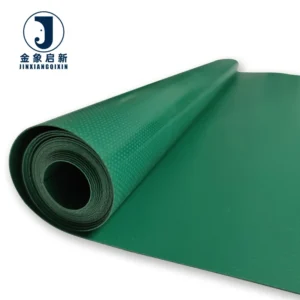
| Colour Options | Blue, Blue/Orange, Green, Grey, Black, Clear, Grey/Green, Orange, or custom |
| Waterproof | Yes |
| UV Treatment | Available (test basis not stated — request report) |
| Anti-Mildew | Yes |
| Anti-Static | Stated in product title (verify against certification) |
| Key Features | Tear resistant, washable, anti-aging, mildew proof |
Application Suitability
| Application | Exposure & Requirement |
|---|---|
| Flatbed and curtain-side truck covers | Constant flexing at load points, road debris abrasion, tie-down tension on eyelets |
| Trailer load protection | Weather exposure during long-haul transit, wind uplift stress on hems |
| Transport equipment OEM side curtains | Repeated roll-up and deployment cycles, UV exposure on parked vehicles |
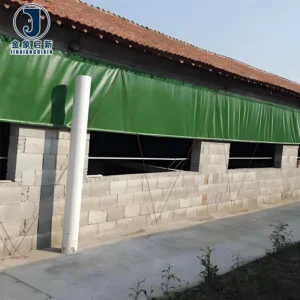
| Construction site equipment covers | Dust, rain, and mechanical contact from loading machinery |
| Scaffolding wrap on building facades | Wind loading, prolonged outdoor weathering, visibility requirements |
Why Generic-Size Truck Covers Fail on Real Trailers
A cover cut to a template instead of your trailer’s actual dimensions will split at the seams within the first few hauls.
Fleet operators routinely receive PE tarpaulin for truck and transport covers that are labelled to fit a standard trailer, yet the hem line sits too high or the eyelet spacing misses the tie-down rails entirely. The result is fabric that flaps under highway wind load, concentrating stress on the few eyelets that do align. [NEED_CITE: tie-down load distribution on curtain-side trailers per EN 12195] We see this most often when the cover is ordered by generic width rather than by measured trailer model, and the PE tarpaulin for truck and transport use fails not because the material is weak, but because the geometry was wrong from the start.
Matching the Weave Density to the Haul Profile
Not every load demands the same fabric density. A lightweight 6×6 weave at lower GSM suits short-distance agricultural transport where the cover is deployed and removed daily, while a 14×14 or 14×16 weave provides the tear resistance needed for long-haul curtain-side trailers exposed to sustained highway wind and road debris. Selecting the correct mesh count directly influences how the PE tarpaulin for truck and transport performs under repeated flex cycles at the load’s sharpest bend points.
Reinforced Edges That Survive Tie-Down Tension
The PP rope hem running through all four edges distributes tie-down strap pressure across a broader fabric area rather than concentrating it at individual eyelet holes. Galvanized eyelets spaced at 3 ft or 1 m intervals align with standard trailer tie-down rail patterns, and reinforced plastic corners add extra layers at the highest-stress points. [NEED_CITE: edge reinforcement methods for flexible transport covers per ISO 1421 tensile testing] This construction prevents the common failure mode where the eyelet pulls through the laminate before the fabric body shows any wear.
How GSM and Weave Density Interact to Define Real Strength
A frequent misconception is that GSM alone determines durability. In HDPE woven and LDPE laminated construction, the base fabric’s denier and mesh count carry the tensile and tear load, while the lamination weight adds waterproofing and surface protection. A 150 g/m² fabric at 10×10 weave will resist tearing differently than a 150 g/m² fabric at 7×7 weave, because the load-bearing yarn count per square inch is fundamentally different. Thickness, ranging from 0.2 mm to 0.4 mm, correlates with lamination build rather than base fabric strength. Buyers specifying PE tarpaulin for truck and transport should evaluate GSM alongside mesh count to select a grade that matches both the cargo weight and the expected road exposure.
The Cost of Overlooking Batch Consistency in Multi-Roll Orders
When a fleet operator orders twenty rolls to re-cover a mixed trailer fleet, even slight colour variation between rolls becomes visible once installed side by side on adjacent vehicles. Beyond aesthetics, inconsistent lamination weight across rolls can mean one cover flexes cleanly in cold weather while the next one cracks at the hem fold. [NEED_CITE: roll-to-roll consistency requirements for laminated transport fabrics] These discrepancies typically surface only after installation, when replacement cost includes labour, vehicle downtime, and freight on the substitute material.
Why Source PE Tarpaulin for Truck and Transport from Jinxiang
Three full production lines and 36 sets of professional equipment allow us to run dedicated batches for fleet-sized orders without blending production across unrelated product types. A 10-person R&D team develops samples within days when you need a specific width, colour, or eyelet layout matched to your trailer model. Dedicated QA/QC inspection at every production stage means each roll is checked for GSM, colour, and lamination adhesion before it reaches the packing area. Full pre-shipment inspection records accompany every dispatch, giving you documented verification rather than a verbal assurance. Custom widths and lengths are produced on the same lines as stock grades, so lead times remain predictable even for non-standard specifications.
Documentation & Verification
- Material specification sheet stating exact GSM, base fabric weave, and lamination type per roll grade
- Colour reference sample retained on file for batch-to-batch matching verification
- Pre-shipment inspection record covering weight, colour, and dimensions across all rolls in the order
- ISO and CE certificates confirming production management system compliance
- Roll packing list detailing tube core size, net weight, and roll count per shipment
- UV or anti-static test report supplied when the treatment grade has been confirmed at inquiry stage
Fabrication, Handling & Storage
- Heat-seal at moderate temperature settings to avoid melting through the LDPE lamination layer on this HDPE base
- Allow 0.2–0.4 mm thickness tolerance when setting welding jaw pressure for consistent seam adhesion
- Store rolls upright on hard paper tubes to prevent flat-spot creasing across the 6 ft to 12 ft width range
- Unroll in temperatures above freezing to avoid lamination micro-cracking at the fold lines
- Use mild detergent without solvents when cleaning, as aggressive chemicals can degrade the LDPE surface
- Plan cutting layout around the standard 100-yard or 100-meter roll length to minimise off-cuts and splice seams
What We Need to Quote Accurately
To specify the right PE tarpaulin for truck and transport, share your trailer make and model, the measured cover dimensions including drop length, and the tie-down rail spacing so we can align eyelet placement accordingly. Confirm whether you need roll stock for your own fabrication or finished covers with hems and eyelets already installed. If your fleet operates under specific UV exposure or anti-static requirements, tell us the target market and any applicable standards so we can match the treatment grade and provide the supporting test documentation.
Frequently Asked Questions
Q: How do I verify the GSM of PE tarpaulin for truck and transport once the rolls arrive?
A: Request the material specification sheet with your order, which states the exact GSM for each roll grade shipped. On arrival, cut a measured sample from the roll end, weigh it, and compare the result to the stated value. Any discrepancy beyond normal production tolerance should be flagged against the pre-shipment inspection record we provide.
Q: What evidence supports the anti-UV claim for outdoor fleet exposure?
A: UV treatment is available on this PE tarpaulin range, but the specific test basis must be confirmed at the inquiry stage. We supply a test report tied to the grade you select, so you can verify the treatment level matches the expected outdoor exposure duration for your fleet’s operating region and climate.
Q: How should I specify dimensions for a custom truck cover?
A: Provide the trailer manufacturer, model, and year along with measured cover length, width, and drop on each side. Include the tie-down rail spacing so we place galvanized eyelets at intervals that match your securement hardware, avoiding the misalignment that causes generic covers to fail.
Q: What controls ensure colour consistency across a multi-roll shipment?
A: Every production run references a retained colour sample from the approved batch. Pre-shipment inspection checks colour across all rolls in the order before packing. If side-by-side colour matching is critical for your fleet appearance, state this requirement at inquiry so we allocate rolls from a single continuous production batch.
Q: How are rolls packed and what is the container loading capacity?
A: Rolls are wound on hard paper tubes and wrapped in the same tarpaulin sheet material for transit protection. A 20-foot container accommodates approximately 17 tons by roll, while a 40-foot high-cube holds up to 28 tons by bale packing. Exact loading plans are confirmed at quotation based on your roll width and length combination.