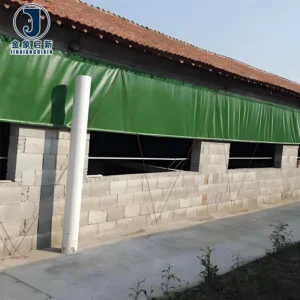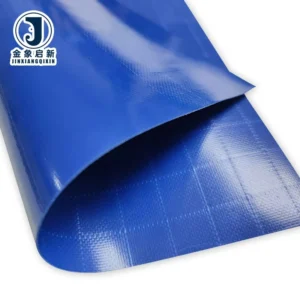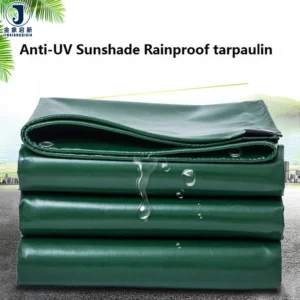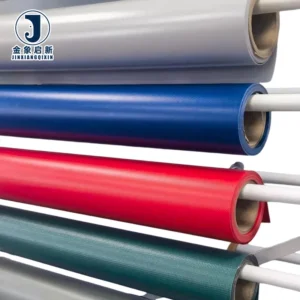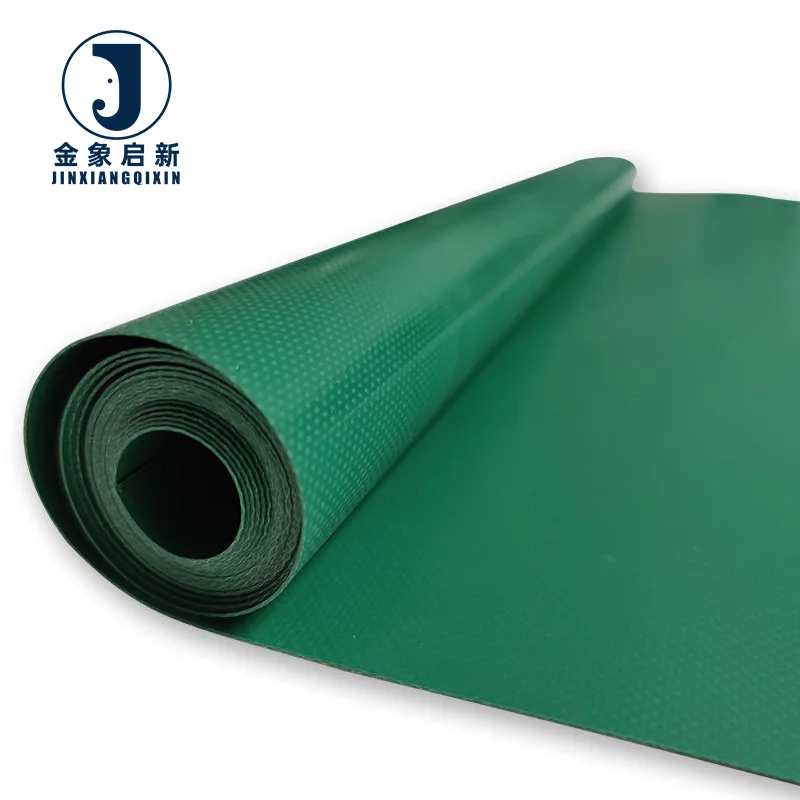
Precision-Coated for Heavy Transport — every roll produced on one of three dedicated lines with 100% pre-shipment inspection, ensuring GSM, seam integrity and colour match what you specified before your truck ever hits the road.
Technical Specifications
| Parameter | Value |
|---|---|
| Product Type | PVC Coated Tarpaulin |
| Material | PVC & Polyester |
| Yarn Count Options | 500D840D / 500D1000D / 1000D1000D / 1000D1300D / 1300D1300D / 1000D2000D |
| GSM Range | 350 / 400 / 420 / 500 / 600 / 650 / 750 / 900 g/m² |
| Thickness Range | 0.29mm – 0.65mm |
| Mesh Count | 3019 / 2020 / 30*15 (varies by grade) |
| Warp Tensile Strength | 1650N – 3900N (test standard not stated in source) |
| Weft Tensile Strength | 1600N – 3500N (test standard not stated in source) |
| Edge Treatment | High temperature heat sealed seamless edge wrapping |
| Eyelet | 3cm enlarged aluminum alloy buttonhole |
| Corner Reinforcement | Reinforced corners on all sides |
| Rope | 5mm thick, without splicing |
| Brittle Temperature | ≤ -50 to -60°C |
| Softening Temperature | ≥ 80°C |
| Melting Point | 212°C |
| Density Parameter | 1.15 – 2.00 g/cm³ |
| Tensile Strength (Material) | 50 – 80 MPa |
| Key Features | Water Resistant, Waterproof, Flame Retardant (grade not stated), Anti-UV (test basis not stated) |
Application Suitability
| Application | Exposure & Requirement |
|---|---|
| Truck side curtain | Constant flexing at load points, road debris abrasion, daily UV exposure, tie-down tension cycles |
| Flatbed trailer load cover | Direct weather impact, wind lift stress, ratchet strap compression at eyelet zones |
| Tipper and bulk transport | Material dust ingress, repeated unrolling and folding, abrasion from granular cargo |
| Machinery transport cover | High point-load stress from equipment edges, weather protection during transit |
| Container and rail freight | Salt-laden atmosphere in coastal routes, extended UV exposure during staging |
Why Generic Truck Covers Fail Where the Load Flexes Most
A PVC coated tarpaulin for truck and trailer that arrives cut to a generic size will always leave gaps at the corners or overstretch at the peak — and the seams split first at the exact point where the trailer bed flexes under load.
Covers built to trailer-specific dimensions with heat-sealed edge wrapping eliminate the two most common failure points in fleet tarpaulin replacement.
I have walked transport yards where side curtains failed within months, not because the fabric was undersized, but because the welded seam at the lower stress line cracked under repeated highway vibration. The fabric itself still had life left — it was the join that gave way [NEED_CITE: tensile and tear test methods for coated fabrics per ISO 1421]. When the truck cover is cut to a standard sheet rather than the actual trailer model, the tension loads distribute unevenly, concentrating at the shortest path between tie-down points. That is where eyelets pull out and where heat-sealed edges begin to delaminate. A fleet running mixed trailer sizes — flatbeds, curtainsiders, tippers — ends up paying twice when generic sizing forces premature replacement.
How Yarn Count Choices Map to Trailer Load Types
The base fabric in this PVC coated tarpaulin for truck and trailer range spans from 500D840D up to 1000D2000D, and each option carries a different tensile profile suited to distinct transport duties. A lighter yarn count like 500D840D works for car covers or machine wraps where flexing is minimal and the cover does not bear ratchet strap tension. Move to 1000D1000D or 1000D*1300D, and the warp and weft tensile strength rises substantially — necessary when the fabric must absorb the shock load of a curtain side catching crosswind on a motorway.
For heavy equipment transport and bulk haulage, grades using 1300D1300D or 1000D2000D base fabric deliver the tear propagation resistance needed where sharp cargo edges press against the inner surface. Matching yarn count to the mechanical reality of the route and cargo prevents the common mistake of overspecifying on a light-duty vehicle or underspecifying on a long-haul curtainsider.
Edge Wrapping and Eyelet Reinforcement Under Highway Stress
The high temperature heat sealed seamless edge wrapping on this PVC coated tarpaulin for truck and trailer uses thermal bonding rather than adhesive or stitched hems. On a moving load, stitched needle holes become water ingress points and adhesive seams soften under summer heat on dark-coloured fabric [NEED_CITE: thermal seam performance for PVC coated transport fabric]. Heat sealing fuses the coating layers directly, so the edge carries the same tensile rating as the body of the fabric.
The 3cm enlarged aluminum alloy buttonholes are paired with reinforced corners on all sides, spreading the tie-down load across a broader area of base fabric rather than concentrating it at a single puncture point. A 5mm rope runs through the hem without splicing, maintaining even tension distribution along the full perimeter. This combination matters most at the lower edge of a side curtain, where ratchet straps pull at acute angles and where most eyelet failures originate.
What GSM, Mesh Density and Coating Weight Actually Mean for Your Cover
GSM alone tells only part of the story when specifying PVC coated tarpaulin for truck and trailer applications. A 650 g/m² fabric with a 2020 mesh count distributes its weight differently from a 650 g/m² fabric with a 3019 count — the latter has more yarn per unit area in the warp direction, which increases tensile strength along the length of the roll but may reduce weft tear resistance. Total thickness (0.29mm to 0.65mm across the range) reflects coating weight on top of the base fabric, and a thicker coating does not automatically mean a stronger base cloth.
The polyester base fabric density of 1.15–2.00 g/cm³ determines how tightly packed the yarns sit before coating is applied, which in turn affects how well the PVC penetrates and bonds between yarns. A loosely woven base with heavy coating may show good initial waterproofing but risks delamination under flex fatigue. The brittle temperature of -50 to -60°C and softening point of 80°C set the operational boundaries — relevant when a cover must perform in winter overnight staging and summer highway surface heat without cracking or sagging.
The Hidden Cost of Specifying by Quotation Instead of by Test Report
When a fleet buyer orders PVC coated tarpaulin for truck and trailer covers based on a quotation stating a certain GSM, flame retardant grade, or anti-UV treatment — and the material arrives without supporting documentation — the consequences show up later. A cover that was supposed to resist UV degradation for the duration of a contract may chalk and embrittle at the surface well before the base fabric loses structural integrity. Flame retardant covers installed on trailers entering restricted sites may fail spot testing if the grade does not match the facility’s compliance standard [NEED_CITE: DIN 4102 fire classification for building materials and transport covers].
Colour variation between rolls in the same batch becomes visible only after fabrication and installation — when two panels sit side by side on a curtainsider and the difference is obvious to the client receiving the goods underneath. Welded seams that separate before the fabric itself fails leave the transport company paying for a full replacement rather than a simple repair, because the damage pattern spreads once one seam opens under load stress.
Why Fleet Operators Source PVC Coated Tarpaulin Here
Three full production lines with 36 sets of professional equipment support consistent roll-to-roll output — meaning the PVC coated tarpaulin for truck and trailer you receive in a second order matches the first in weight, colour and hand feel. A 10-person R&D team handles pattern printing, custom sizing and sample development, producing samples within days so you can verify fitment on your specific trailer model before committing to volume.
Dedicated QA/QC operates at every production stage, with 100% pre-shipment inspection covering seam integrity, eyelet pull-out strength and colour consistency across all rolls in your order. Nearly 30 years focused exclusively on coated fabric production gives the process control needed to maintain coating adhesion and weight accuracy at scale. Custom width, length, colour and branding requirements are handled within the same production system, avoiding the long lead times and high minimums typically associated with made-to-order specifications.
Documentation & Verification
- Material specification sheet stating confirmed GSM, base fabric denier, mesh count and coating type per roll
- Test report for UV and flame retardant grades where treatment is specified on the purchase order
- Pre-shipment inspection record documenting seam integrity, eyelet retention and colour match across the batch
- Certificate of origin and customs documentation package for cross-border fleet procurement
- Roll packing list with individual roll dimensions, weight and batch traceability
Fabrication, Handling & Storage
- Heat-seal at temperatures matched to the selected GSM grade — thicker 0.65mm coatings require adjusted dwell times
- Store rolls upright on pallets to prevent permanent creasing across the 0.44mm+ thickness grades
- Use ratchet straps with edge protectors to avoid cutting into the 3cm aluminum alloy eyelet zones
- Avoid drag-unfolding on abrasive ground surfaces to protect the PVC coating layer
- Clean with neutral pH detergent to preserve anti-UV and flame retardant surface treatments
- Allow rolls to acclimatise before fabrication in temperatures below 10°C to prevent brittle edge cracking
What to Provide with Your Enquiry
To ensure the PVC coated tarpaulin for truck and trailer you receive matches your operational reality, provide the exact trailer make and model or dimensional drawings for custom-fit covers. Specify the tie-down system type — ratchet strap, rope, or bungee — so eyelet spacing and reinforcement can be set accordingly. Confirm whether your destination markets or client sites require documented flame retardant or anti-UV grades, so the correct treatment and test reports ship with the order. Indicate the annual volume and required roll widths to optimise container loading and reduce fabrication waste.
Frequently Asked Questions
Q: How do you cut truck covers to fit specific trailer models rather than generic sizes?
A: We work from trailer model drawings or on-site measurements to produce covers that account for roof curvature, corner radius and door clearance on your specific vehicle. The PVC coated tarpaulin is cut and heat-sealed to those dimensions rather than a standard rectangle, eliminating the tension imbalance that causes generic covers to pull away from tie-down points or flap in crosswind.
Q: How is GSM verified on arrival to prevent material being lighter than agreed?
A: Every roll undergoes weight verification against the stated GSM on the material specification sheet before it leaves the production line. The pre-shipment inspection record includes this measurement so you can cross-reference it on receipt. We do not ship rolls that fall outside the agreed tolerance, which prevents the common problem of quoted weight not matching delivered weight.
Q: What eyelet spacing and reinforcement options are available for tie-down systems?
A: The standard configuration uses 3cm enlarged aluminum alloy buttonholes with reinforced corners on all sides, spaced to match your ratchet strap or rope pattern. For heavy flatbed loads, spacing can be tightened at high-stress zones. The 5mm rope runs without splicing through the hem, distributing tension evenly along the full edge rather than concentrating load at individual eyelet points.
Q: How do you control colour consistency across multiple rolls in a fleet order?
A: All rolls in a single fleet order are produced within the same batch run using matched pigment formulation and coating parameters. The pre-shipment inspection includes side-by-side colour comparison across the full order quantity. If your fleet requires panels that sit adjacent on curtainsiders, we flag any visible variation before dispatch rather than leaving it for you to discover during installation.
Q: What test documentation supports the anti-UV and flame retardant claims?
A: Where anti-UV or flame retardant treatment is specified on your order, the corresponding test report ships with the documentation package. The grade and test basis are stated on the material specification sheet so you can confirm it matches your site compliance requirements before the cover is fabricated or installed.