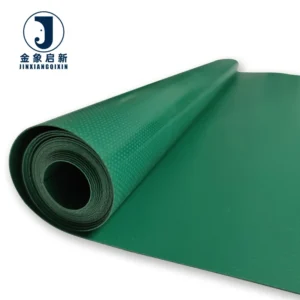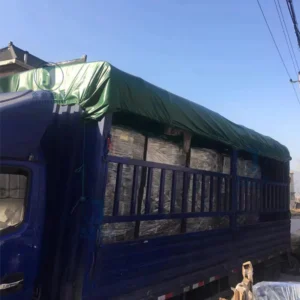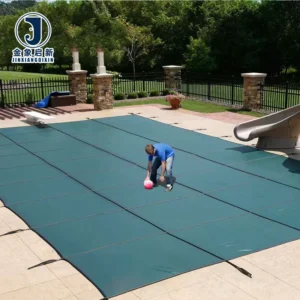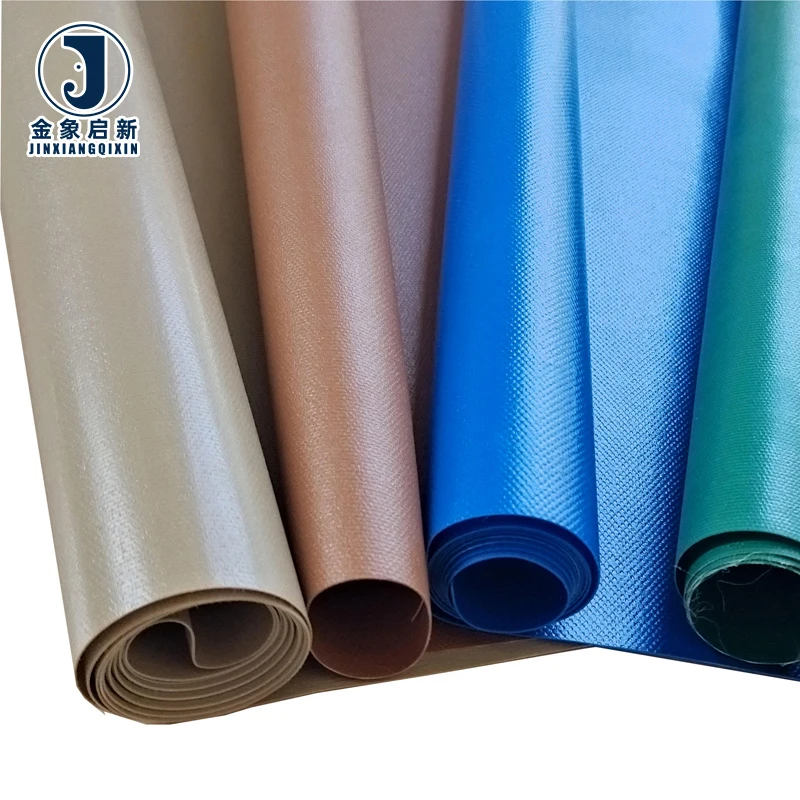
Verified Fabric Weight — Every roll of this PVC Coated Tarpaulin for Truck Cover is inspected against the 500gsm specification before dispatch, eliminating the arrival-weight discrepancy that disrupts fleet fitment schedules.
Technical Specifications
| Parameter | Value |
|---|---|
| Product Type | PVC Coated Tarpaulin |
| Weight | 500 gsm |
| Base Fabric Denier | 1000D |
| Coating Material | PVC |
| Coating Method | Laminated |
| Waterproof Rating | Anti-permeable ≥20KPa |
| Flame Retardant | ≤10 seconds (grade not stated — confirm required classification for your market) |
| Low-Temperature Flexibility | Not fractured at -30°C |
| Anti-Mildew | Mildew proofing treatment (test basis not stated) |
| Corrosion Resistance | Acid, alkali and brine resistant |
| Seam Construction | High-frequency heat combined, water-tight and crack-resistant |
| Format | Roll |
| Standards | ISO, CE |
Application Suitability
| Application | Exposure & Requirement |
|---|---|
| Truck side curtain | Constant flexing at load shift points, road spray, abrasion against cargo edges |
| Trailer top cover | Sustained rain pooling, UV exposure on long-haul routes, wind lift at high speed |
| Flatbed shipping cover | Tie-down strap friction, multi-point cargo contact, repeated installation and removal |
| Boat and marine cover | Salt spray corrosion, prolonged moisture contact, mildew in humid storage |
| Lumber tarpaulin | Rough timber surface abrasion, sap and resin contact, heavy tie-down tension |
Why Stated GSM Often Fails at the Loading Dock
A truck cover that arrives lighter than quoted compromises the entire fleet schedule and exposes cargo to weather damage.
Fleet operators routinely face a familiar problem: the quotation confirms 500gsm, but the rolls that arrive on the dock weigh noticeably less. This shortfall rarely shows up until the fabric is unrolled and tensioned across a trailer — at which point the material flexes too easily, the seams pull apart under tie-down load, and the cover fails within the first season [NEED_CITE: pre-shipment weight verification methods for coated fabric rolls]. When a PVC Coated Tarpaulin for Truck Cover does not meet its stated weight, every downstream decision — eyelet placement, hem reinforcement, weld temperature — is based on incorrect assumptions about material behaviour.
Custom Fitment Starts at the Fabric Level
A generic roll cut to a standard width leaves transport equipment builders guessing about seam placement and waste allowance. This PVC Coated Tarpaulin for Truck Cover is supplied with custom width and length options so that panels align with your specific trailer dimensions. The 1000D base fabric maintains dimensional stability during cutting and welding, reducing distortion at panel joins that commonly occurs with lighter denier constructions.
Seam Behaviour Under Road Load
The flex points on a moving truck load are where most cover failures originate. The high-frequency heat-bonded seam construction used with this fabric produces joins that remain water-tight and resist cracking even as cargo shifts under braking and cornering forces [NEED_CITE: coated fabric seam failure analysis for transport covers]. Because the laminate coating method bonds the PVC layers to the 1000D base, the seam zone retains flexibility at -30°C without becoming brittle at the exact point where cold-climate transport demands the most from the material.
Reading the Specification Sheet Beyond Weight
GSM alone does not predict how a tarpaulin will perform on a truck. The 500gsm weight combined with the 1000D denier base fabric indicates a balanced construction where the PVC coating provides waterproof protection while the woven polyester core handles tensile loads. Laminated coating, as opposed to knife-coated or calendered methods, delivers consistent adhesion between the coating and base fabric — this adhesion strength directly affects how well heat-welded seams hold under repeated flexing. The anti-permeable rating of ≥20KPa confirms that sustained rain and road spray will not penetrate the membrane, while the -30°C low-temperature flexibility means the fabric remains pliable during winter route operations without requiring heated storage before installation.
The Hidden Cost of Specification Mismatch
When a roll arrives below its quoted GSM, the consequences extend beyond the fabric itself. Eyelets punched into underweight material tear out under tie-down tension, hems fail at the reinforcement fold, and the entire cover must be replaced mid-contract [NEED_CITE: PVC tarpaulin weight tolerance standards in transport industry procurement]. Batch-to-batch colour inconsistency across multiple rolls in a single fleet order forces fabricators to either accept visible panel mismatches on installed covers or reject the entire shipment, delaying vehicle delivery. These are not cosmetic issues — they are procurement failures that originate at the point where coating weight and GSM verification are treated as optional rather than mandatory.
Why Source This Fabric Through Jinxiang
Three full production lines and 36 sets of professional equipment ensure that bulk orders of this PVC Coated Tarpaulin for Truck Cover maintain consistent coating weight across every roll in a shipment. The 10-person R&D team handles custom width, colour matching and sample development, with samples produced within days for transport-specific requirements. Dedicated QA/QC operates at every production stage, with 100% pre-shipment inspection confirming that the 500gsm weight and 1000D base fabric match the specification sheet exactly. Nearly 30 years of focus on coated fabric production provides the process control necessary to deliver laminated PVC rolls with reliable adhesion and seam performance. Roll packing lists include batch references for full traceability from production to dock.
Documentation & Verification
- Weight verification per roll against the stated 500gsm before dispatch
- Flame retardant test report supplied where applicable to transport compliance
- Material specification sheet confirming 1000D base fabric and laminated coating
- Pre-shipment inspection record documenting GSM, colour and dimensional accuracy
- Certificate of origin and customs support documentation for cross-border shipments
Fabrication, Handling & Storage
- Heat-weld at temperatures matched to the laminated PVC coating for clean seam adhesion
- Allow roll acclimatisation before unrolling in temperatures below 5°C to prevent surface stress
- Store 500gsm rolls upright on pallets to avoid flat-spot deformation of the 1000D base
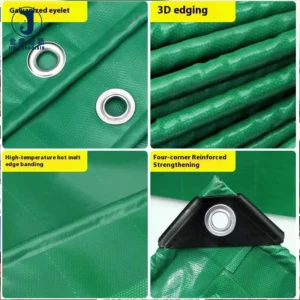
- Use wide-base eyelets at tie-down points to distribute load across the laminated surface
- Clean with mild detergent only; avoid solvents that degrade the PVC coating layer
- Plan panel cutting layout to minimise offcuts from the supplied roll width
Preparing Your Enquiry
To specify this fabric correctly for your fleet or transport equipment build, provide the trailer model and panel dimensions, the operating climate range, and any fire classification required by your destination market. Confirm whether you need rolls only or finished covers with hem and eyelet reinforcement, and specify colour requirements with Pantone or RAL references for batch consistency across the order.
Frequently Asked Questions
Q: How is GSM verified on arrival to match the quotation weight?
A: Every roll undergoes a pre-shipment inspection where the actual weight is measured against the quoted 500gsm specification. The inspection record accompanies the shipment so you can confirm the weight matches before the rolls leave the dock. Any deviation is flagged and resolved before dispatch.
Q: What eyelet spacing and hem reinforcement options suit heavy-duty truck covers?
A: The 1000D base fabric and 500gsm coating weight support standard heavy-duty eyelet spacing for transport tie-downs. Hem reinforcement is applied at edges subject to strap friction. The exact spacing depends on your trailer configuration and cargo type, which should be confirmed during the specification stage.
Q: How does the fabric perform at abrasion-prone flex points on moving loads?
A: The high-frequency heat-bonded seam construction is designed to resist cracking where the load flexes most during transit. The laminated coating maintains adhesion to the 1000D base under repeated bending, preventing the delamination that typically causes seam-zone failures on truck and trailer covers.
Q: What custom sizing and fitment process is used for specific trailer models?
A: Rolls are supplied in custom widths and lengths matched to your trailer panel dimensions, reducing on-site cutting and waste. The 10-person R&D team develops samples within days based on your vehicle specifications, allowing fitment verification before full production runs.
Q: How is batch colour consistency controlled across multiple rolls for one fleet order?
A: Each production batch is checked for colour uniformity before dispatch using the approved colour reference. The roll packing list includes batch identification for traceability, ensuring that all panels installed side by side on a single trailer or across an entire fleet present a consistent appearance.