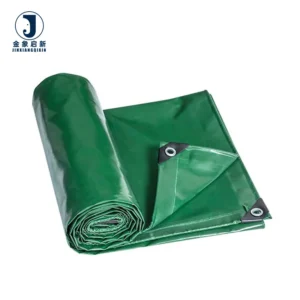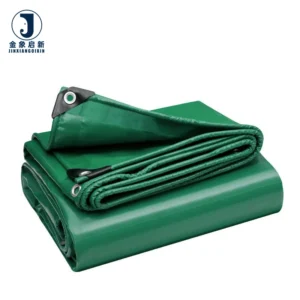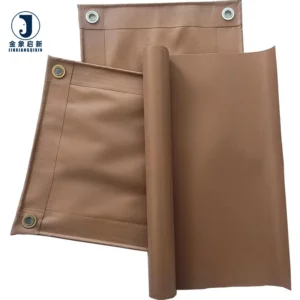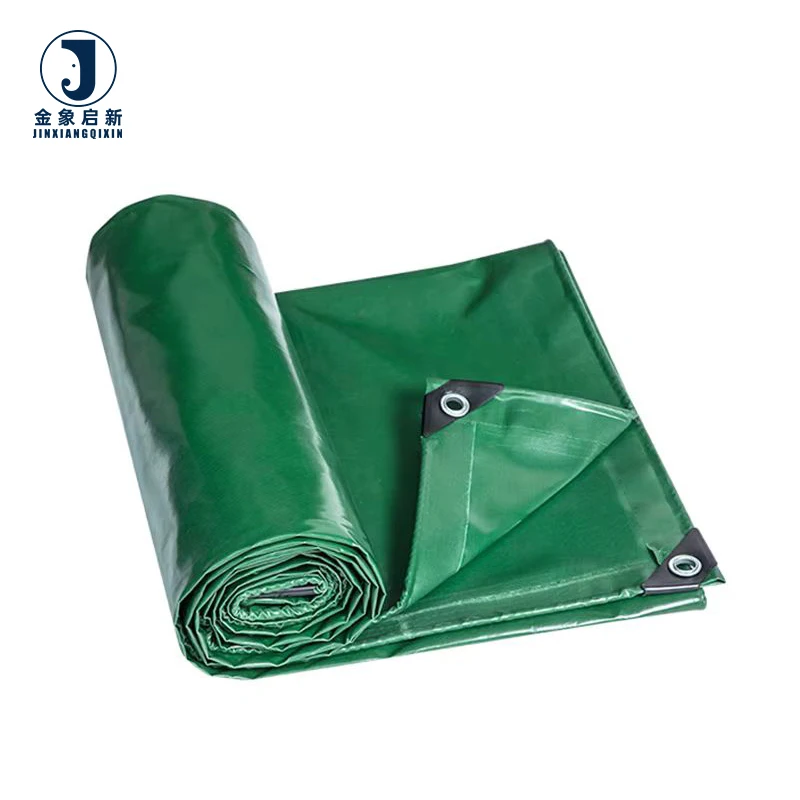
Process Control Over Coating Weight — every roll of PVC coated tarpaulin for truck and transport is verified against the stated GSM at each production stage before dispatch.
Technical Specifications
| Parameter | Value |
|---|---|
| Product Type | PVC Coated Tarpaulin |
| Material | PVC Vinyl |
| Fabric Structure | Woven Fabric |
| Weight | At least 450 g/m² |
| Waterproof | Yes |
| Surface Treatment | PVC Coated |
| Standards | ISO, CE |
Application Suitability
| Application | Exposure & Requirement |
|---|---|
| Truck and trailer side curtains | Constant flexing at load points, road abrasion, rain and wind pressure during transit |
| Vehicle and equipment covers | Prolonged outdoor weathering, UV exposure, dust ingress prevention |
| Industrial outdoor structures | Permanent weather contact, wind loading, waterproof barrier requirement |
| Logistics fleet tarpaulins | Daily tie-down tension, repeated folding and unfolding, mechanical abrasion |
Why Roll Consistency Matters More Than Stated GSM
A truck cover that varies in weight between rolls will show visible weakness at the panels that flex most under load.
Fleet operators ordering PVC coated tarpaulin for truck and transport often specify a GSM on paper, only to find the delivered material feels lighter at the edges or in certain rolls. This inconsistency does not just affect perceived quality — it concentrates stress at the thinnest sections, where the fabric meets welded seams and eyelet reinforcements. When one roll in a batch is marginally below the target weight, that panel becomes the first point of failure during highway transit [NEED_CITE: tensile and tear test methods for coated fabrics per ISO 1421]. Dedicated in-process QA at every coating and lamination stage ensures the GSM you approve on the sample is the GSM that ships.
Woven Base Fabric and Load Flex Behaviour
The woven base fabric in this PVC coated tarpaulin for truck and transport provides the structural backbone that determines how the material handles repeated bending at tie-down and corner points. Unlike non-woven substrates, the interlaced yarn structure distributes tension across multiple threads, slowing tear propagation when a single yarn is cut or abraded during loading and unloading cycles.
Waterproof Vinyl Coating for Road and Weather Exposure
The PVC vinyl coating applied to both sides of the woven base delivers a continuous waterproof barrier that prevents moisture from reaching the cargo beneath. On the road, truck covers face driven rain, road spray, and standing water pooled on horizontal surfaces. The coated surface sheds water without absorption, keeping the base fabric dry and preventing the mildew and rot that degrade uncoated textiles over repeated wet-dry cycles [NEED_CITE: coated fabric waterproof test standards for transport covers].
Understanding GSM in Context with Base Fabric Density
A weight of at least 450 g/m² places this PVC coated fabric in the medium-duty range, but GSM alone tells only part of the story. The ratio of coating weight to base fabric density determines whether the material flexes easily for side curtain use or stands stiff for flat sheet applications. A heavier coating adds waterproof depth but can reduce drape and increase the load on welded seams when the fabric folds. The woven structure’s denier and thread count govern tear resistance independently of the coating, meaning two fabrics at the same GSM can behave very differently under tie-down tension. Buyers specifying material for truck and trailer covers should request the base fabric specification alongside the total GSM to understand the balance between flexibility and structural strength.
The Hidden Cost of Welded Seam Failure at Flex Points
When a truck cover fails, the tear rarely starts in the middle of a panel — it begins at the welded seam where the load flexes most during braking and cornering. If the welding temperature or pressure does not match the coating thickness, the seam bond weakens while the surrounding fabric remains intact. This mismatch means the cover must be replaced entirely rather than patched locally. Roll-to-roll consistency in coating weight ensures that welding parameters set on the first panel hold for every subsequent joint across the entire fleet order [NEED_CITE: hot air welding parameters for PVC coated fabrics].
Why Procurement Teams Choose This Source
Three full production lines and 36 sets of professional equipment provide the capacity to fulfil fleet-scale roll orders without splitting batches across different machines, which is a common source of colour and thickness variation. The 10-person R&D team develops samples within days, allowing buyers to test weld compatibility and eyelet pull-out strength before committing to production volume. Every roll undergoes 100% pre-shipment inspection with documented GSM verification, so the material arriving at the fabrication shop matches the sample approved weeks earlier. Custom widths and colours are supported with defined lead times rather than open-ended estimates, giving transport equipment builders a reliable schedule for their own assembly lines.
Documentation & Verification
- Material specification sheet stating GSM, base fabric denier, and PVC coating weight per roll
- Pre-shipment inspection record confirming weight verification against the quoted GSM
- ISO and CE certificates accompanying each dispatch for compliance filing
- Roll packing list with net weight and roll count for container loading verification
- Certificate of origin prepared for customs clearance at destination port
Fabrication, Handling & Storage
- Hot air welding temperature must match the PVC vinyl coating thickness to prevent seam delamination at flex points
- Eyelet spacing should account for the woven fabric density to distribute tie-down load evenly
- Store rolls upright on pallets to avoid flat spots that cause creasing in the at least 450 g/m² material
- Avoid dragging cut panels across abrasive surfaces to protect the vinyl coating from scoring
- Clean with mild detergent only — solvents can soften the PVC coating and reduce waterproof integrity
What to Include in Your Enquiry
Provide the specific truck or trailer model dimensions so the PVC coated tarpaulin for truck and transport can be sized to fit without excess overlap or short coverage. Confirm the eyelet spacing and hem reinforcement requirements for your tie-down system. If ordering for a fleet, state the number of vehicles and preferred roll widths to allow production planning around batch consistency.
Frequently Asked Questions
Q: How is GSM verified on delivery and what documentation supports it?
A: Every roll is weighed and measured during pre-shipment inspection, with the actual GSM recorded against the quoted value. A signed inspection report accompanies the shipment, listing each roll’s verified weight alongside the material specification sheet so you can cross-check on arrival without independent lab testing.
Q: Can the tarpaulin be cut and finished to match specific truck and trailer models?
A: Yes. Provide the vehicle model and body dimensions, and the R&D team produces a sample cut to those measurements with the specified hem reinforcement and eyelet layout. Once the sample is approved, production follows the same pattern for the full order quantity.
Q: What eyelet spacing and reinforced hem options are available for tie-down use?
A: Eyelet spacing and hem reinforcement are set based on your tie-down system and load requirements. The woven base fabric supports various spacing intervals, and hems can be folded and welded or stitched with webbing reinforcement depending on the tension the cover must withstand.
Q: How are welded seams tested at flex points to prevent premature failure?
A: Welded seams at high-flex areas are checked during in-process QA by peel testing to confirm bond strength matches the coating adhesion specification. This catches temperature or pressure mismatches before the cover reaches the finishing stage where failure would mean scrapping the entire panel.
Q: Is colour consistent across rolls when ordering in bulk for fleet deployment?
A: All rolls in a single order run on matched production lines with controlled coating formulation. Pre-shipment inspection includes visual colour comparison across rolls, and any deviation outside tolerance is flagged before packing so the installed covers present a uniform appearance across the fleet.