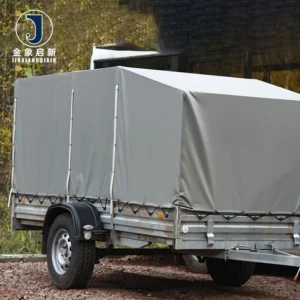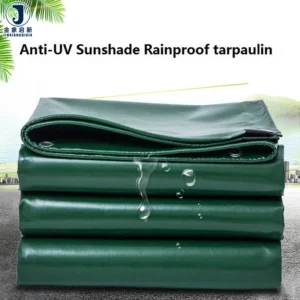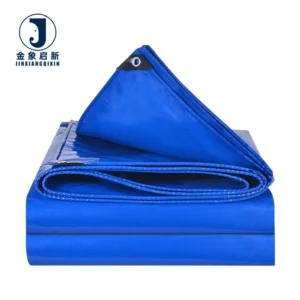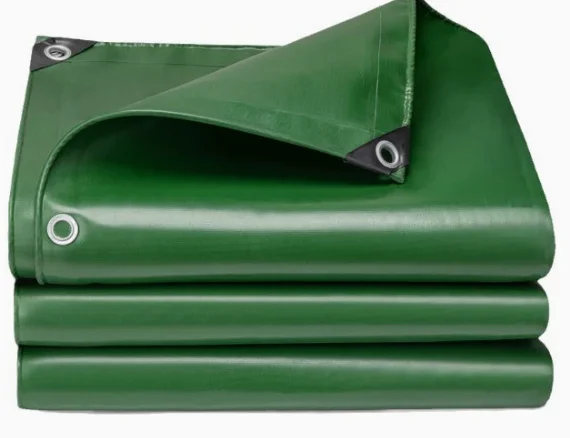
Deep Process Control Over Coating Weight and Adhesion — nearly three decades focused on coated fabric production ensures every roll of PVC coated truck tarpaulin meets stated GSM and waterproof performance at dispatch.
Technical Specifications
| Parameter | Value |
|---|---|
| Product Type | PVC Coated Tarpaulin |
| Base Fabric | Woven Fabric |
| Coating Material | PVC Vinyl |
| Weight | At least 450 grams |
| Waterproof Performance | Yes |
| Key Features | High-strength, wear and tear resistant, waterproof |
Application Suitability
| Application | Exposure & Requirement |
|---|---|
| Truck and trailer cargo covers | Constant road vibration, wind loading, rain and snow ingress at highway speed |
| Transport equipment side curtains | Repeated flexing at tie-down points, abrasion against cargo edges, UV from prolonged outdoor parking |
| Logistics fleet equipment protection | Frequent installation and removal cycles, folding and storage under varying temperatures |
| Construction site machinery covers | Dust, moisture, direct sunlight, contact with soil and alkaline surfaces |
Why Generic-Sized Truck Covers Fail Where Custom-Fit PVC Coated Truck Tarpaulin Succeeds
A cover cut to a generic size rarely matches the actual trailer profile, leaving gaps that let water and road debris reach the load.
Fleet operators who order off-the-shelf dimensions often discover during installation that the hemline sits too high on the trailer bed or the fabric pulls tight across protruding fixtures. This tension concentrates stress at the welded seams, and those seams start to separate long before the body of the fabric shows any wear. [NEED_CITE: welded seam failure rates in transport covers under cyclic loading] Custom-fit patterning eliminates the excess tension by accounting for the specific trailer model’s corner radii, side rail positions, and tie-down hardware placement. When the cover lies flat without pulling, the load-bearing forces distribute across the woven base fabric rather than concentrating at the weakest joints.
How Woven Base Fabric Handles Road-Induced Flex Cycles
The woven construction of the base fabric creates an interlocking yarn structure that resists tear propagation when the PVC coated truck tarpaulin flexes over uneven cargo. Non-woven alternatives lack this cross-directional yarn continuity, so a small puncture at a tie-down point can run into a full-length split under continued vibration. The woven grid also provides dimensional stability during heat welding, meaning the fabric does not stretch or distort while the seam is being formed, which keeps weld strength consistent across the entire joint length.
Waterproof Coating Behaviour Under Sustained Highway Exposure
The PVC vinyl coating forms a continuous film over both faces of the woven base, blocking water penetration even when the cover is tensioned across a load during rain at speed. Unlike spray-on water repellent treatments that degrade after repeated folding, the laminated PVC layer maintains its waterproof barrier through thousands of installation and removal cycles. [NEED_CITE: PVC coating adhesion test methods for transport tarpaulin applications] The coating also resists road salt and diesel splash that typically attack lower-grade cover materials on long-haul routes.
Reading the Specs That Actually Matter for Transport Covers
The stated weight of at least 450 grams reflects the combined mass of the woven base fabric and the PVC coating applied to it, not the coating alone. A heavier total GSM does not automatically mean better tear resistance if the base fabric uses low-denier yarns in a loose weave — the coating adds weight without adding structural strength. Buyers evaluating PVC coated truck tarpaulin for fleet use should request the base fabric denier and thread count alongside the total GSM to understand where the weight actually comes from. The woven fabric type listed in the specifications indicates cross-directional stability, which directly affects how well the cover handles the multi-axis forces generated when a truck corners or brakes. Coating adhesion to this woven substrate determines whether the PVC layer delaminates at fold lines after extended use.
The Hidden Cost of Specifying on Price Per Square Metre Alone
When procurement decisions rest solely on the lowest quoted GSM, the delivered covers often arrive lighter than the sample approved during the tender process. [NEED_CITE: GSM variance between sample and bulk delivery in coated fabric procurement] The weight shortfall may be invisible during a quick visual inspection, but it shows up within weeks on the road as premature seam failure, accelerated edge wear, and coating delamination at stress points. Fleet operators then face the compounded cost of replacement covers, load damage claims from weather exposure, and vehicle downtime while new covers are sourced and fitted — expenses that far exceed the initial per-metre saving.
What Consistent Supply Looks Like for Fleet Procurement
Three full production lines with 36 sets of professional equipment handle bulk PVC coated truck tarpaulin orders without shifting smaller jobs ahead of yours in the queue. A 10-person R&D team develops custom patterns matched to specific trailer models, providing dimensioned samples before bulk production begins. Dedicated QA and QC staff inspect every roll at each production stage, with 100% pre-shipment inspection verifying that actual GSM and waterproof performance match the purchase order. Custom sizing, colour matching, and eyelet placement are developed within days rather than weeks, keeping fleet rollout schedules on track. ISO and CE certified processes underpin every batch, so documentation is ready for compliance audits without delay.
Documentation & Verification
- Material specification sheet stating base fabric type, PVC coating composition, and verified GSM per roll
- Pre-shipment inspection record confirming weight and waterproof performance against agreed specification
- Batch consistency report documenting colour and coating uniformity across all rolls in the order
- Certificate of origin and customs documentation prepared for international freight forwarding
- Test reports for any specified treatments applicable to the delivered batch
Fabrication, Handling & Storage
- Heat welding parameters should match the PVC coating thickness to avoid burn-through on the at least 450 GSM construction
- Reinforce hem edges with webbing before installing eyelets to distribute tie-down load across the woven base fabric
- Store rolls upright in shaded conditions to prevent flat-spot deformation of the PVC coating surface
- Allow cold-stored rolls to reach ambient temperature before unrolling to prevent coating crack at fold lines
- Use mild detergent without solvents when cleaning to preserve PVC coating adhesion to the woven substrate
- Plan cutting layout to minimise cross-grain seams where tear resistance is lower than the machine direction
What to Include in Your PVC Coated Truck Tarpaulin Enquiry
Specify the exact trailer makes and models the covers must fit, including any side rail configurations or protruding fixtures that affect patterning. State the operating climate and whether the covers will encounter road salt, chemical splash, or extended UV exposure during parking. Confirm the required eyelet spacing, tie-down system type, and any colour or branding requirements for fleet identification. Indicate whether you need finished covers with welded hems and hardware, or roll stock for in-house fabrication.
Frequently Asked Questions
Q: How can I confirm the GSM weight of delivered truck covers matches the quoted specification?
A: We provide a pre-shipment inspection record that documents the measured weight per square metre for every roll or finished cover in your order. You can also request a certified cut sample from the production batch to weigh independently on your own scales upon receipt.
Q: Can you produce covers sized to our specific trailer models rather than generic dimensions?
A: Yes. Our R&D team develops patterns based on your trailer model drawings or photographs, accounting for corner radii, side rails, and tie-down positions. We produce a sample cover for fitment verification before proceeding with the full production run.
Q: What eyelet spacing and hem reinforcement options are available for tie-down systems?
A: Eyelet spacing is set to match your fleet’s tie-down hardware layout, typically placed along all four edges. Hems are heat-welded with reinforcing webbing inserted to spread the load across the woven base fabric and prevent pull-through under tension.
Q: How do you ensure welded seams hold up at the points where the load flexes most?
A: Weld parameters are calibrated to the PVC coating thickness and the woven base fabric construction. We test seam peel strength at high-flex zones during pre-shipment inspection to confirm the weld fails after the body fabric, not before it.
Q: Will colour remain consistent if we order multiple covers across several shipments?
A: We record the colour reference for each fleet order and retain it for future batches. A batch consistency report documents colour measurement across all rolls, and we flag any variance that falls outside the agreed tolerance before dispatch.