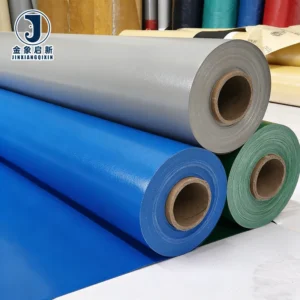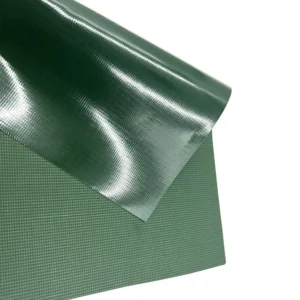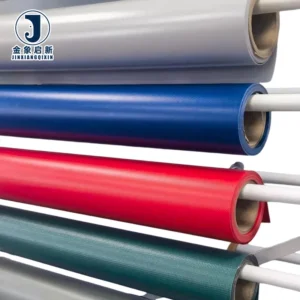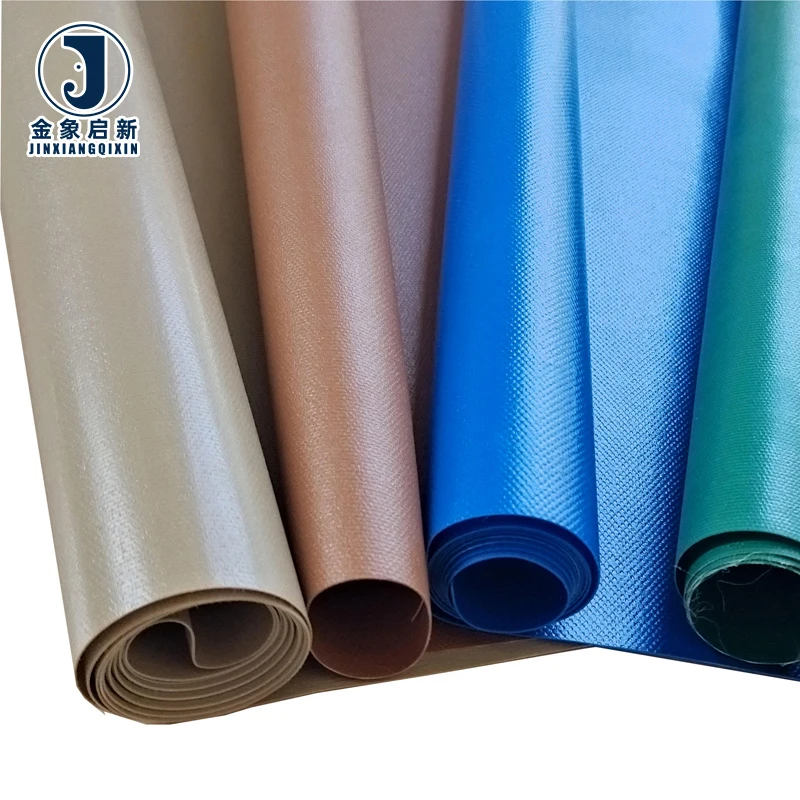
Deep Coating Process Control — maintaining consistent PVC adhesion across 500gsm rolls engineered for the dynamic flex, tie-down tension and road-weather exposure that truck and trailer covers endure daily.
Technical Specifications
| Parameter | Value |
|---|---|
| Product Type | PVC Coated Tarpaulin Roll |
| Weight | 500 GSM |
| Base Fabric Denier | 1000D |
| Coating Material | PVC |
| Coating Method | High-frequency heat combined |
| Waterproof Rating | Anti-permeable ≥20 KPa |
| Flame Retardant | ≤10 seconds (confirm grade required for your market) |
| Low-Temperature Flexibility | -30 °C (will not fracture) |
| Anti-Mildew | Mildew proofing stated (test basis not stated) |
| Anti-Corrosion | Acid, alkali and brine resistance stated |
| Color Options | Grey, Black (blackout) |
| Finish | Customizable |
| Standards | ISO, CE |
Application Suitability
| Application | Exposure & Requirement |
|---|---|
| Flatbed truck top cover | Continuous UV, rain and road debris impact; must resist pooling and flex cracking under tie-down straps |
| Side curtain for enclosed trailers | Repeated folding and unfolding at roller mechanism; abrasion against cargo edges and curtain track |
| Boat and marine shipping cover | Salt spray, brine corrosion and prolonged moisture contact; requires anti-corrosion coating integrity |
| Carport and outdoor equipment cover | Hail, wind-driven grit and temperature swings; low-temperature flexibility critical in cold-climate installations |
| Lumber and building material tarp | Heavy loads pressing fabric against sharp timber edges; tensile strength under ratchet strap tension |
Why Seam Integrity Decides Truck Cover Lifespan
A truck cover that fails at the welded seam before the fabric itself wears out was built from the wrong roll stock or processed with incorrect heat settings.
Fleet operators and transport equipment builders see this pattern repeatedly: the PVC coated tarpaulin for truck and trailer cover applications looks intact, but the high-frequency weld line cracks at the exact point where the load flexes most — typically around tie-down anchor points and curtain roller joints. Once that seam opens, water enters and the cargo is compromised mid-transit. The fabric panel may still have years of service left, but the cover is finished. [NEED_CITE: weld seam failure modes in PVC coated fabrics under cyclic flex loading]
High-Frequency Welding and Flex-Point Durability
The high-frequency heat-combined coating method used on this PVC coated tarpaulin for truck and trailer cover applications produces a bond between the PVC layer and the 1000D base fabric that resists delamination under repeated bending. Unlike adhesive-laminated constructions, the coating penetrates the yarn interstices during the heat process, creating a mechanical lock. For side curtain applications where the fabric folds and unfolds hundreds of times per trip, this bond integrity prevents the coating from peeling away at fold lines. Fleet operators specifying fabric for curtain-side trailers should request weld test samples to confirm seam strength matches the base fabric tensile value.
Low-Temperature Flexibility for Cold-Route Fleets
Transport fleets running northern routes face a specific failure mode: standard PVC compounds become brittle below freezing and crack when the cover is unfolded or struck by road debris. This material maintains flexibility down to -30 °C, meaning the coating will not fracture when a flatbed cover is removed in sub-zero yard conditions or when a side curtain is retracted at a cold-weather loading dock. [NEED_CITE: low-temperature impact testing standards for flexible PVC compounds] The blackout variant in black is particularly relevant for fleets operating in high-UV corridors where interior cargo must be shielded from solar heat gain as well as moisture.
Reading the Specification Sheet Beyond GSM
The 500 GSM weight and 1000D base fabric denier together define how this PVC coated tarpaulin for truck and trailer cover material behaves under real transport loads. Weight alone tells you the total mass per square metre — coating plus base fabric — but it is the denier of the yarns and the weave density that determine how the material resists tearing when a ratchet strap concentrates load on a single point. A 1000D polyester base provides the structural backbone; the PVC coating adds waterproofing, abrasion resistance and the surface that accepts high-frequency welding. The ≥20 KPa anti-permeability rating confirms the coating is continuous and pinhole-free, which matters for shipping covers where cargo cannot tolerate any moisture ingress. Coating method matters too: the high-frequency heat-combined process yields stronger peel adhesion than cold-roll lamination, reducing the risk of coating separation at hem folds and welded eyelet patches.
The Hidden Cost of Underspecified Transport Covers
When a transport equipment builder sources roll stock based on price per kilogram without verifying coating adhesion or low-temperature performance, the failures do not appear in the warehouse — they appear on the road. A side curtain that delaminates at the weld after a few winter cycles forces the fleet into an unplanned replacement, downtime at the depot, and a cargo claim. Batch colour inconsistency across rolls in a single order means one panel on a multi-panel trailer cover looks visibly different from its neighbour, triggering a rejection from the fleet’s branding team. [NEED_CITE: coating adhesion peel strength requirements for transport tarpaulin applications] These are not material defects in the conventional sense — they are specification mismatches that could have been caught at the sample stage.
Why Source This Roll Stock Here
Three full production lines and 36 sets of professional equipment support bulk roll output with consistent coating weight across the production run — critical when a fleet refurbishment requires multiple rolls of matched 500 GSM material.
A 10-person R&D team handles custom width, colour matching and sample development, so transport equipment builders can confirm fitment to a specific trailer model before committing to a production order.
Dedicated QA/QC runs at every production stage, with 100% pre-shipment inspection ensuring each roll of PVC coated tarpaulin for truck and trailer cover use meets the stated GSM and colour reference before dispatch.
Nearly 30 years of focused coated fabric production provides the process knowledge to maintain coating adhesion and surface consistency across large-volume transport cover orders.
Samples for custom sizing, colour and reinforcement detail are developed within days, allowing fleet operators to validate material performance against their specific route conditions before placing a full order.
Documentation & Verification
- Material specification sheet stating 500 GSM, 1000D base fabric, coating weight and waterproof rating
- Flame retardant test report confirming ≤10 second grade where required by transport regulations
- Pre-shipment inspection record with roll-by-roll weight verification against quoted GSM
- ISO and CE certificates covering production and material compliance
- Roll packing list with batch references for colour and production traceability
Fabrication, Handling & Storage
- Use high-frequency welding at manufacturer-recommended settings for 500 GSM PVC to achieve full seam penetration without scorching the 1000D base.
- Reinforce eyelet zones with additional PVC patches welded over the base fabric to distribute ratchet strap loads.
- Store rolls upright on pallets in a dry, shaded area to prevent flat-spotting and surface marking on the coating.
- Allow cold-stored rolls to acclimatise before unrolling to avoid crease fractures in the PVC layer at low temperatures.
- Clean with mild detergent and soft brush; avoid solvent-based cleaners that may degrade the PVC coating surface.
What to Include in Your Enquiry
Specify the trailer models or cover dimensions you need, the type of load exposure (side curtain flex, flatbed top-cover tension, marine salt spray), and whether you require roll stock or pre-cut covers with hem and eyelet reinforcement. Confirm the flame retardant or anti-UV grade your target market mandates so we can match the treatment to your compliance requirements. Provide your annual volume and colour preferences to receive an accurate lead time and minimum order assessment.
Frequently Asked Questions
Q: What GSM and denier should I specify for a side curtain versus a flatbed top cover?
A: Side curtains endure constant folding and track abrasion, so the 500 GSM / 1000D combination provides the flex endurance and weld integrity needed at roller joints. Flatbed top covers face more direct impact and tie-down point loading; some fleets go to a heavier grade for that application. Share your trailer model and route conditions so we can confirm whether this grade suits your specific use.
Q: Can I receive a flame retardant test report with my shipment?
A: Yes — where flame retardant treatment is specified, a test report confirming the ≤10 second result is included with the shipment documentation. Confirm the fire classification your target market requires at enquiry stage so the correct treatment is applied and documented for your batch.
Q: How do you ensure colour consistency across multiple rolls in one order?
A: All rolls in a single production run are matched to the same colour reference, and 100% pre-shipment inspection includes a visual comparison under controlled lighting. For multi-roll fleet cover orders, we recommend requesting a colour swatch at sample stage to approve before full production begins.
Q: Do you supply pre-cut truck covers sized to specific trailer models, or only roll stock?
A: Both options are available. Transport equipment builders typically order PVC coated tarpaulin roll stock in custom widths for their own fabrication, while fleet operators may request pre-cut covers with hem reinforcement and eyelet spacing matched to their trailer dimensions. Specify your requirement at enquiry.
Q: What is the maximum custom width and minimum order per colour?
A: Custom widths are available beyond standard roll sizes, and minimums vary by colour and treatment specification. Provide your required width, colour and any flame retardant or anti-UV treatment needs at enquiry stage so we can confirm the production minimum and lead time for your order.