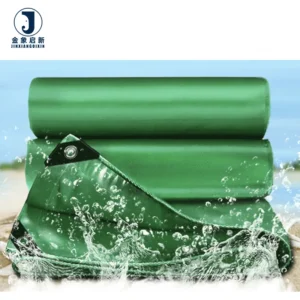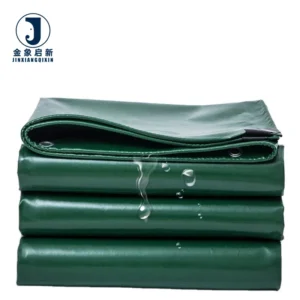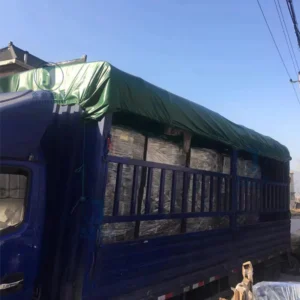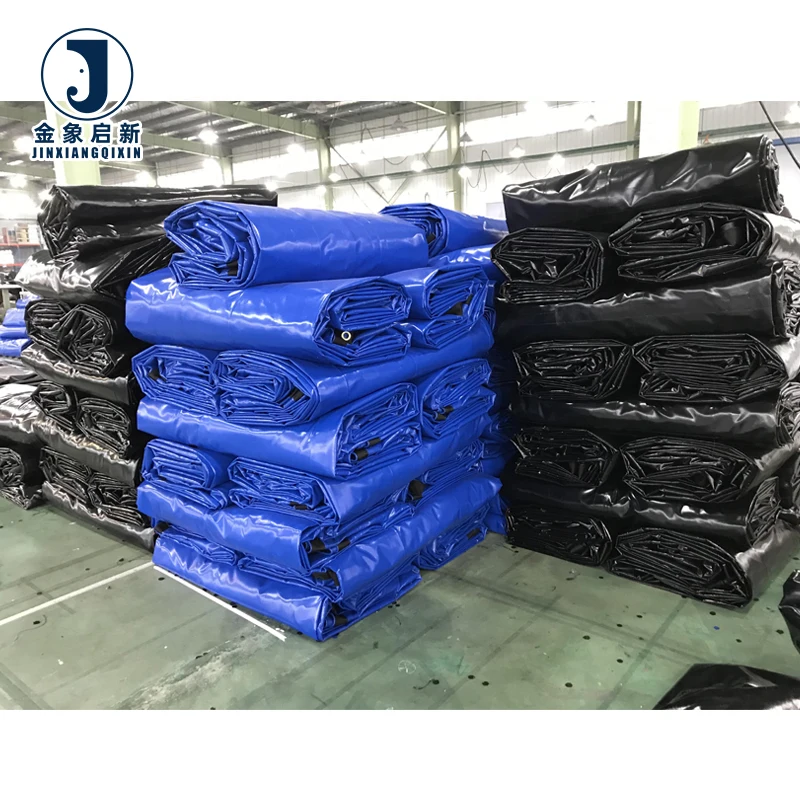
Batch-Verified GSM & Coating Weight — every roll of PVC Coated Tarpaulin Roll is weighed and inspected against the quoted specification before dispatch, eliminating the gap between quotation and arrival.
Technical Specifications
| Parameter | Value |
|---|---|
| Product Type | PVC Coated Tarpaulin Roll |
| Weight (GSM) | 650 GSM |
| Base Fabric | PVC Coated Polyester |
| Waterproof | Yes |
| Fire Retardant | Yes (grade not stated — confirm the grade required for your market) |
| UV Resistance | Yes (test basis not stated — request batch-specific report) |
| Antibacterial & Mildew Proof | Yes (standard not stated — confirm with your local compliance body) |
| Oil and Stain Resistance | Yes |
| Acid and Alkali Resistance | Yes |
| Temperature Resistance | High temperature and cold resistance |
| Anti-oxidation | Yes |
| Weather Resistance | Yes |
| Flexibility | Highly flexible, crack resistant |
| Self-Cleaning | Yes |
| Welding Options | HF, Hot Air, Sewing |
| Certifications | ISO, CE |
Application Suitability
| Application | Exposure & Requirement |
|---|---|
| Tent and Awning Fabrication | Permanent UV exposure, wind loading, repeated folding and packing, waterproof integrity at seams |
| Tensile and Architectural Structures | Long-term static tension, ponding water on low-slope membranes, UV degradation resistance, weld seam durability |
| Portable Storage Structures | Impact from handling and forklifts, abrasion at frame contact points, weather and moisture exposure |
| Airport Hangars and Stadium Roofs | Large span wind uplift, fire code compliance, thermal expansion and contraction cycling |
| Shade Systems and Shadings | Continuous solar exposure, heat build-up, colour fastness, mildew resistance in humid climates |
Why Stated GSM Without Verification Invites Costly Failure
A quoted 650 GSM means nothing if the roll arriving at your factory weighs less.
Fleet operators and tent fabricators regularly face the situation where the material specification sheet states one weight, but the incoming roll tells a different story once it hits the scale. This discrepancy is not a rounding error — it shows up as thinner coating, a lighter base fabric, or both. The result is a side curtain that flexes and abrades through before its expected service window, or a tensile membrane that tears under wind load because the tensile strength was never actually tied to the weight you paid for. When you are cutting and welding dozens of panels from a single batch, a shortfall in coating weight compounds across every seam and every tie-down point [NEED_CITE: incoming material verification practices for coated technical textiles].
Roll-to-Roll Consistency Across Tent and Awning Production Runs
When a tent manufacturer buys fabric by the roll, colour and weight must hold steady from the first roll to the last in the same order. PVC coated tarpaulin roll batches are produced under continuous coating weight monitoring, so the 650 GSM specification holds across the full shipment. This consistency matters most when panels from different rolls are sewn or welded side by side on a large marquee or tensile canopy — any drift in coating thickness becomes visible under tension and direct sunlight.
Welding Compatibility for Downstream Fabricators
The three fabrication paths — high-frequency welding, hot air welding, and sewing — each place different demands on the PVC coating formulation. HF welding requires a coating that melts and bonds cleanly without blistering, while hot air welding depends on consistent coating thickness to maintain an even weld temperature across long seam runs. This PVC coated tarpaulin roll supports all three methods, giving fabricators the flexibility to reinforce high-stress areas such as tie-down patches and corner gussets without switching to a different material grade.
Coating, Base Fabric and Weight: What Actually Determines Performance
The 650 GSM figure combines the weight of the polyester base fabric and the PVC coating applied to both sides. Tensile and tear strength depend heavily on the denier of the polyester yarns and the density of the warp and weft weave — a heavier coating alone does not make the fabric stronger if the base cloth is undersized. The PVC coating method, whether knife-over-roll, laminating, or calendering, determines how well the coating penetrates the weave and how strongly it adheres under peel stress. For tent and tensile structure panels that are folded, transported and re-erected repeatedly, adhesion between coating and base fabric prevents delamination at fold lines. The surface finish also governs self-cleaning behaviour: a smoother top coat sheds dirt and water more readily, reducing staining on light-coloured tent roofs and shade sails over extended outdoor exposure. Temperature resistance and anti-oxidation additives protect the coating from becoming brittle in cold storage or softening under peak summer heat [NEED_CITE: relationship between coating method and peel strength in PVC-coated polyester fabrics].
The Hidden Cost of Skipping Batch Documentation
Accepting rolls without matching them to a pre-shipment inspection record creates downstream liability. If a tent roof panel fails at a welded seam in the field and the fabricator cannot produce the original batch test report for UV or fire-retardant performance, responsibility falls on the fabricator rather than the mill. Colour variation between rolls that were not checked side by side at the factory forces costly re-cuts and re-welds once the panels are already on the installation frame [NEED_CITE: batch traceability requirements for coated fabric in tensile architecture projects].
Why Fabricators Source This Grade Here
Three full production lines with 36 sets of professional equipment maintain the coating weight tolerance that 650 GSM demands across large-volume roll orders. A dedicated 10-person R&D team develops samples within days when a tent or inflatable manufacturer needs to validate a custom width or colour before committing to a full container load. QA/QC checkpoints at every production stage, culminating in 100 percent pre-shipment inspection, mean the roll packing list you receive reflects what was actually measured, not what was planned. Nearly 30 years of focused coated fabric production translates into process control over coating adhesion, which directly affects how cleanly the material welds on your HF or hot air equipment.
Documentation & Verification
- Material specification sheet stating 650 GSM, base fabric denier and coating weight per roll
- Weight verification per roll against the stated 650 GSM before dispatch
- UV and fire-retardant test reports matched to the specific batch number shipped
- Roll packing list detailing roll count, individual weights and container loading plan
- Certificate of origin and customs documentation for cross-border shipment
Fabrication, Handling & Storage
- HF welding on 650 GSM PVC coating requires matched frequency and dwell time to avoid blistering at seams
- Hot air weld speed must remain constant to maintain even bond strength along long tent panel joins
- Store rolls horizontally on pallets to prevent permanent creasing in the polyester base fabric
- Allow cold-stored rolls to reach ambient temperature before unrolling to prevent coating crack damage
- Use mild detergent for cleaning — solvent-based cleaners may degrade the self-cleaning top coat layer
- Plan panel nesting on standard roll widths to minimise offcuts and reduce weld seam count on large roofs
Requesting a Specification Match for Your Project
Provide the intended application, the environmental exposure conditions at the installation site, and any fire classification or building code your local authority requires. Specify the roll widths you need for your cutting table and whether the order will be a one-time project or a recurring annual volume. If your application involves custom colour or printed branding, request a sample roll section to confirm shade match and print adhesion before placing the bulk order.
Frequently Asked Questions
Q: What GSM grades and widths are available on stock rolls?
A: The standard offering includes 650 GSM PVC coated tarpaulin roll stock. Available widths and stock lengths vary by production schedule. Custom widths and alternative GSM grades can be developed for recurring orders — request a sample to confirm the specification matches your cutting table and welding equipment before committing to a full production run.
Q: How is batch colour consistency controlled across a multi-roll order?
A: Each production batch of this PVC coated tarpaulin roll is monitored for colour consistency during the coating process. Rolls destined for the same order are grouped and checked side by side before packing. For large tent or shade structure projects where panels from multiple rolls are visible, request a pre-shipment colour comparison record with your order.
Q: Are UV and fire-retardant test reports provided per batch?
A: Yes. UV and fire-retardant test reports are supplied and matched to the batch number on your roll packing list. Because fire classification requirements differ between markets — confirm the specific grade your project needs so the correct formulation is selected and tested before your rolls enter production.
Q: What are the lead times and minimums on custom width or colour?
A: Lead times depend on the width, colour and volume required. Custom runs carry minimum quantities that cover the coating line setup and colour-matching process. Request a quotation with your target roll width, colour reference and estimated annual volume to receive a confirmed schedule and minimum order level.
Q: How are rolls packed for container shipment?
A: Rolls are packed horizontally on pallets with protective wrapping to prevent transit damage and moisture ingress. The roll packing list specifies individual roll weights, dimensions and container loading configuration. Share your container type preference at the quotation stage so the loading plan can be optimised for your roll count.