Technical Specifications
| Parameter | Value |
|---|---|
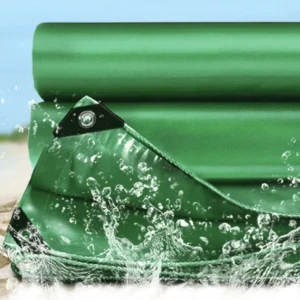
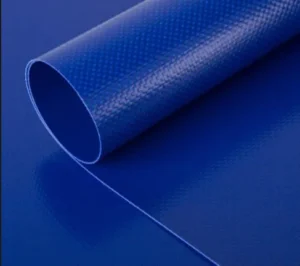
| Product Type | PVC Coated Tarpaulin Roll |
| Material | High-strength polyester mesh fabric with PVC coating |
| Coating Method | Laminated technology & Hot-melt Coating technology |
| Weight Grades Available | 350gsm / 420gsm / 500gsm / 550gsm / 600gsm / 750gsm |
| Total Thickness Range | 0.32mm / 0.35mm / 0.4mm / 0.45mm / 0.5mm / 0.65mm |
| Roll Dimensions | 2m width × 75m length / 2.1m width × 50m length |
| Surface Finish | Glossy or Matte |
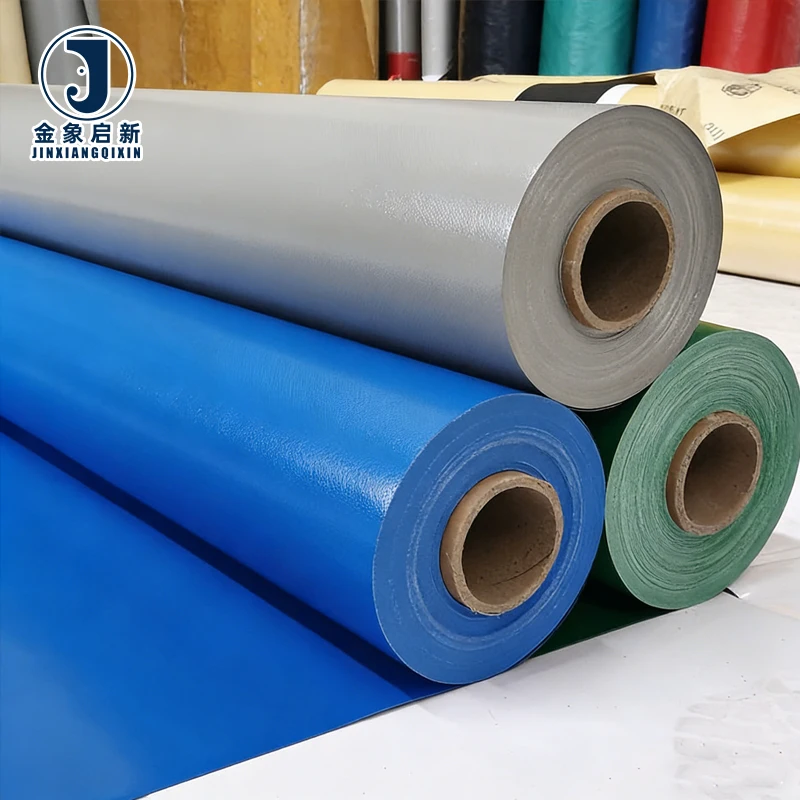
| Standard Colors | Blue, Red, Yellow, Light Blue, Grey (Customizable) |
| Key Features | Cold Crack Resistance, Anti-Mildew, Double-sided Waterproof, Color Fastness |
| Optional Treatments | Flame retardant, Anti-static, Anti-UV (grades available — confirm requirements for your market) |
Application Suitability
| Application | Exposure & Requirement |
|---|---|
| Truck Side Curtains | Constant flexing at load points, road debris abrasion, UV exposure, frequent manual operation |
| Flatbed Trailer Covers | High tension during tie-down, wind flap fatigue, weather protection for sensitive cargo |
| Lorry Tarpaulin Awnings | Repeated deployment and stowage, sun and rain exposure, color consistency for fleet branding |
| Cargo Ship Covers | Salt air corrosion, heavy wind loads, long-term water contact, mildew risk |
Why Generic Sizing Fails on the Road
A truck cover that does not fit the trailer model exactly wastes material and leaves loads insecure at the most vulnerable points.
Fleet operators and transport equipment builders often specify a generic roll width, then cut and weld panels to fit. When the final cover is installed, the seams land where the load flexes most. Under highway speeds and crosswinds, those welds carry cyclic stress that the base fabric does not. The result is a cover that fails at the seam long before the PVC itself degrades. [NEED_CITE: tensile and tear test methods for coated fabrics per ISO 1421]
A PVC Coated Tarpaulin Roll for Truck and Transport ordered to the exact vehicle width eliminates the longitudinal weld entirely. The fabric runs selvedge to selvedge across the trailer, and the only joins are at the ends, where stress is minimal. This approach also reduces offcut waste, which matters when you are producing covers for a fleet of identical trailers.
Fitment by Vehicle Model, Not by Generic Roll Width
When sourcing a PVC Coated Tarpaulin Roll for truck and transport use, the first decision is whether to buy standard roll stock and fabricate in-house, or to order cut-to-size panels with hemming and reinforcement already applied. Roll stock gives flexibility for mixed fleets with different trailer dimensions, but it shifts the fabrication burden and quality risk to your workshop.
Cut-to-size panels, produced to the exact make and model of the trailer, arrive with hems welded and eyelets placed at the tie-down points specified by the vehicle manufacturer. This is critical for curtain-side trucks, where the curtain must slide smoothly on the track without binding or excess drag. The R&D team can develop a sample panel within days, allowing you to verify fitment before committing to a production run.
Seam Integrity Under Cyclic Load
The adhesion between the PVC coating and the polyester mesh base fabric determines how well a welded seam holds under repeated flexing. Laminated and hot-melt coating technologies produce a bond that resists delamination at the weld line, which is the primary failure mode for truck covers in long-haul service.
When a load shifts during braking or cornering, the cover flexes and the welded seam absorbs the peak stress. If the coating adhesion is weak, the seam peels apart layer by layer. Hot-melt coating penetrates the mesh structure more deeply than simple lamination, creating a mechanical lock that supplements the chemical bond. [NEED_CITE: peel adhesion test methods for coated fabrics per ISO 2411] This is why specifying the coating method matters as much as specifying the GSM.
Reading the Spec Sheet Beyond GSM
GSM is the most quoted number on any PVC tarpaulin data sheet, but it tells you only the weight per square metre, not how that weight is distributed between base fabric and coating. A 550gsm fabric with a heavy coating and a light mesh will be stiff and may crack in cold weather, while a 550gsm fabric with a lighter coating and a denser mesh will be more flexible and more resistant to tear propagation.
The base fabric denier and weave density control the tensile and tear strength. The coating weight controls abrasion resistance, waterproofing, and UV protection. Total thickness is a function of both. When comparing grades from 350gsm to 750gsm, ask for the base fabric specification alongside the GSM to understand what you are actually buying. Glossy and matte surface finishes also affect performance: glossy surfaces shed dirt and water more easily, while matte surfaces reduce glare and are preferred for certain fleet branding applications.
The Hidden Cost of Specifying by Price Per Kilogram
When buyers focus on the lowest price per kilogram of PVC tarpaulin, they often end up with a lighter coating and a thinner base fabric than the application requires. The cover goes into service looking identical to a heavier grade, but within months the coating wears through at high-abrasion points like the trailer edges and tie-down contact areas.
Batch-to-batch color variation is another risk when sourcing from suppliers without tight process control. If you order ten rolls for a fleet of trucks and the color shifts between rolls, the mismatch is visible the moment two panels are installed side by side on the same vehicle. This forces a reorder, delays the fleet livery, and damages the operator’s brand image. [NEED_CITE: color fastness testing standards for coated textiles]
Weld failures are the most expensive outcome of underspecification. A seam that fails on the highway can expose the load to weather and theft, resulting in cargo claims that dwarf the cost difference between a light and a heavy grade.
Why Fabricators Source Here
Three full production lines and 36 sets of professional equipment support bulk roll orders with consistent on-time delivery, so your fabrication schedule is not waiting on material. The dedicated QA/QC process inspects every roll before shipment, catching GSM deviations and coating defects before they reach your workshop.
A 10-person R&D team handles custom width, color matching, and vehicle-specific cut sizes, developing samples within days rather than weeks. This is essential for transport equipment builders who need to prototype a new curtain-side design or match an existing fleet color exactly.
Deep process control over coating weight and adhesion, built over nearly 30 years of focused production, means the welded seams you produce in your workshop will perform as expected in the field. The material specification sheet you receive states the exact GSM, base fabric, and coating weight, so there are no surprises at the receiving dock. ISO and CE certified production gives you the documentation your end customers require.
Documentation & Verification
- Material specification sheet stating exact GSM, base fabric denier, and coating weight per roll
- Pre-shipment inspection record confirming weight and thickness against the quoted specification
- Color reference sample retained for batch-to-batch consistency verification on repeat orders
- Test reports for flame retardant, anti-UV, or anti-static grades where applicable to your market
- Roll packing list with individual roll numbers for traceability through your fabrication process
- Certificate of origin and customs documentation for international shipments
Fabrication, Handling & Storage
- Hot-melt coated rolls weld cleanly at standard RF or hot-air temperatures; adjust dwell time for heavier GSM grades
- Glossy surface finish requires solvent-free cleaners to avoid dulling; matte finish tolerates mild detergents
- Store rolls horizontally on racking to prevent flat spots that can telegraph through the coating during fabrication
- Allow cold-stored rolls to reach workshop temperature before unrolling to avoid cracking the PVC layer
- Reinforce eyelet positions with extra PVC patches; the high-strength mesh base carries the load, but the coating needs support
- Nest cut panels to minimize offcut waste, especially on 2.1m wide rolls used for standard trailer widths
What to Include in Your Enquiry
To receive an accurate quotation and sample, specify the truck or trailer make and model, the required cover dimensions, and the GSM grade you are targeting. If you are replacing existing curtains, provide the current fabric weight and any performance issues you have experienced, such as seam failure or color fading.
State your target market so that the correct flame retardant, anti-UV, or anti-static grade can be confirmed against local regulations. Indicate whether you need roll stock for in-house fabrication or cut-to-size panels with hems and eyelets already applied. If fleet branding is required, provide the Pantone or RAL color reference for color matching.
Frequently Asked Questions
Q: How do I determine the correct roll width for my trailer fleet?
A: Provide the trailer make, model, and the track width between the curtain runners. The R&D team will recommend a roll width that minimizes longitudinal welds. For curtain-side trucks, the fabric must be wide enough to drop from the top rail to the bottom rail with sufficient overlap for the hem and eyelet line, typically requiring a 2m or 2.1m roll width.
Q: What is the difference between laminated and hot-melt coating for truck covers?
A: Laminated coating bonds a pre-formed PVC film to the mesh, offering good surface quality. Hot-melt coating applies liquid PVC that penetrates the mesh structure, creating a stronger mechanical bond. For truck side curtains that flex constantly, hot-melt coating provides better weld integrity and longer service life at the seam.
Q: How is color consistency controlled across multiple rolls?
A: Each production batch is mixed to a single master formula, and a retained sample is kept on file for future orders. Pre-shipment inspection includes a visual color check against the approved reference under standard lighting. For fleet orders, all rolls are produced in a single batch run to eliminate inter-batch variation.
Q: Can I order custom widths for non-standard trailer sizes?
A: Custom widths are available, subject to the production line capability. The 10-person R&D team will confirm the feasible width range for your selected GSM grade and provide a sample for fitment approval before bulk production. This avoids the cost and waste of trimming standard-width rolls to fit oversized or specialized trailers.
Q: What reinforcement options are available for high-stress tie-down points?
A: Eyelet positions can be reinforced with additional PVC patches welded to both sides of the fabric, distributing the tie-down load across a larger area of the polyester mesh base. Hemming can be doubled or tripled at the top and bottom edges where the curtain track hardware applies concentrated stress. Specify the tie-down spacing and hardware type in your enquiry.