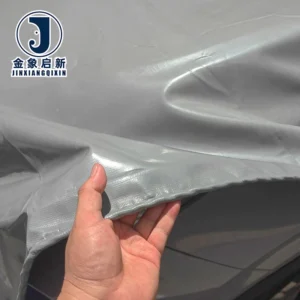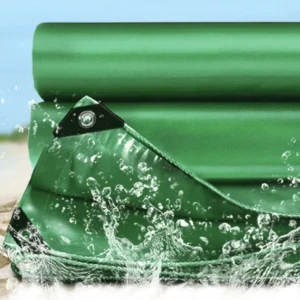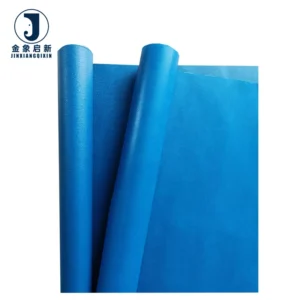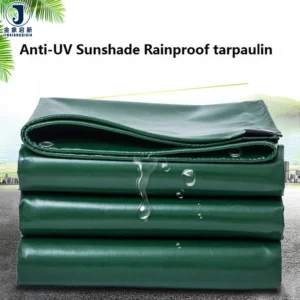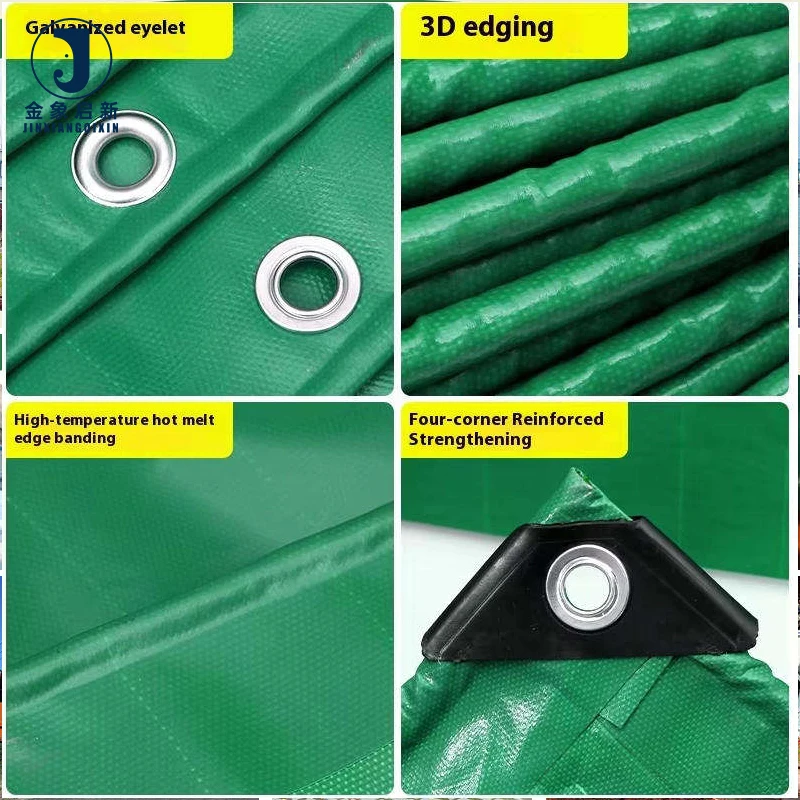
Roll-to-Roll Coating Consistency — Three dedicated production lines with in-process QA ensure that PVC coated tarpaulin for truck and transport arrives with uniform weight, colour, and adhesion across every roll in a bulk shipment.
Technical Specifications
| Parameter | Value |
|---|---|
| Product Type | PVC Coated Tarpaulin Roll |
| Coating Material | PVC |
| Weight Range | 500 to 800 g/m² (confirm grade for your application) |
| Waterproof Rating | Anti-permeable ≥20KPa |
| Flame Retardant Grade | ≤10 seconds (grade not stated — confirm compliance for your market) |
| Low-Temperature Flexibility | Not fractured at -30°C |
| Coating Method | Heat combined with high-frequency |
| Corrosion Resistance | Acid, alkali, and brine |
| Anti-Mildew | Mildew-proof treated |
| Water Absorption | Almost none, quick-drying surface |
| Standards | ISO, CE (manufacturer certified) |
Application Suitability
| Application | Exposure & Requirement |
|---|---|
| Flatbed truck and trailer cargo covers | Sustained highway wind load, rain splash, road debris impact, tie-down point stress |
| Curtain-sided trailer side curtains | Repeated flexing at folds, abrasion against trailer frame, UV exposure on vertical panels |
| Open-air construction equipment covers | Standing water, dust ingress, chemical residue from site runoff, handling abrasion |
| Agricultural stockpile covers | Ammonia and organic acid exposure, wind-driven rain, seasonal temperature swings |
Why Generic Truck Cover Fabric Fails at the Weld Line
PVC coated tarpaulin for truck and transport is specified by GSM, yet the first failure on a loaded trailer almost always appears at the welded seam — not the fabric body. The reason lies in coating adhesion behaviour under flex stress.
The seam is only as strong as the bond between coating and base fabric at the weld zone.
When a truck cover flexes under load at highway speed, the welded joint cycles through thousands of stress reversals per trip. If the heat bonding process pushes coating material away from the yarn intersection rather than fusing through it, the resulting seam carries a fraction of the base fabric tensile capacity. I have reviewed returned covers where the weld line separated cleanly while the surrounding material remained intact [NEED_CITE: heat-sealed seam peel strength testing for PVC coated fabrics]. The consequence for fleet operators is premature cover replacement and potential cargo water damage mid-route.
Seaming Performance Under Transport Load Cycles
High-frequency heat bonding addresses the core failure mechanism at flex points on trailer covers. The process drives energy directly into the coating layer at the interface, fusing PVC into the base fabric weave rather than sitting on top of it. For PVC coated tarpaulin for truck and transport, this means the welded seam retains pliability at low temperature and resists the crack propagation that conventional hot-air welding can leave at fold lines. Fleet operators replacing covers seasonally will notice the difference at tie-down edges and corner patches where load movement concentrates stress.
Waterproof Integrity Across Road Exposure Conditions
An anti-permeable rating of ≥20KPa means the coated surface resists water penetration under sustained hydrostatic pressure, not just surface splash. On a flatbed trailer running through heavy rain at speed, water impacts the cover surface with significant dynamic force, particularly along the leading edge and any unsupported spans between tie-down points. The PVC coating formulation combined with high-frequency seaming ensures that water ingress does not occur at the most vulnerable junctions — the seams, hems, and patch attachment points. Transport operators covering sensitive cargo such as paper, electronics, or dry bulk can rely on continuous waterproof performance without secondary lamination.
Reading Beyond the GSM Figure on the Quotation
GSM alone does not predict how a truck cover fabric will perform under load. A 650 g/m² roll with open-weave base fabric and heavy coating may show the right weight on a scale yet tear easily along the warp direction when a tie-down strap pulls at the eyelet. The base fabric denier and thread count determine the structural skeleton; the coating weight determines surface protection and weld performance. [NEED_CITE: tensile and tear test methods for coated fabrics per ISO 1421] For fleet specifiers, requesting the base fabric specification alongside GSM allows a meaningful comparison between suppliers. A tighter weave at slightly lower GSM often outperforms a heavier open-weave construction in real-world tear resistance and seam-holding strength.
The Hidden Cost of Specifying on Weight Alone
When procurement decisions rest on GSM without verifying base fabric construction or coating adhesion, the results surface within the first season. A cover that matches the quoted weight but uses underspecified yarn will show cracking at fold lines, weld separation at stress patches, and accelerated UV degradation where the coating is thinnest. Fleet operators then face mid-contract replacement costs and cargo damage claims that far outweigh the per-metre savings achieved at purchase. [NEED_CITE: coated fabric failure analysis for transport and logistics covers] Batch colour variation between rolls compounds the problem when multiple covers are installed across a fleet, creating a visibly inconsistent appearance that reflects poorly on the operator’s brand.
Production Control That Travels With Every Roll
Jinan Jinxiang operates three full production lines with 36 sets of professional coating equipment, allowing bulk roll orders to run on dedicated lines without queue delays. Each roll of PVC coated tarpaulin for truck and transport passes through in-process quality checks at every stage — base fabric inspection, coating weight verification, surface finish evaluation, and final dimensional measurement. The 10-person R&D team supports custom width, colour matching, and treatment specification, developing samples within days rather than weeks. Pre-shipment inspection covers 100% of rolls before container loading, with documented results per roll provided in the packing list.
Documentation & Verification
- Material specification sheet confirming GSM, base fabric denier, and coating weight per roll
- Pre-shipment inspection record with weight and dimensional check for every roll
- Flame retardant test report supplied where applicable to the specified grade
- Roll packing list with batch reference numbers for full traceability
- Certificate of origin and customs documentation for cross-border shipment
Fabrication, Handling & Storage
- High-frequency welding recommended for seams on 500–800 g/m² rolls to maximise peel strength at flex points
- Reinforce eyelet zones with additional PVC patches to distribute tie-down strap loads across the base fabric
- Store rolls upright on pallets to prevent permanent creasing of the coated surface under self-weight
- Allow cold-stored rolls to reach ambient temperature before unrolling to avoid coating fracture below -30°C
- Cut patterns should account for the roll width to minimise cross-grain welds in high-stress cover panels
What to Include in Your Enquiry
To match the correct PVC coated tarpaulin for truck and transport to your fleet, provide the trailer model or cover dimensions, the operating climate range, and any fire-safety classification required at your destination market. If you need a specific colour for fleet branding, include a RAL or Pantone reference. Specify whether you require rolls at standard width or custom slit widths, and indicate your annual volume so production scheduling can be planned accordingly.
Frequently Asked Questions
Q: How is actual GSM verified against the quotation before shipment?
A: Every roll is weighed and measured during pre-shipment inspection. The documented weight per square metre is recorded on the packing list alongside the batch reference, so you can cross-check arrival weight against the quoted specification without relying on supplier claims alone.
Q: Can flame-retardant treatment be confirmed with a test report?
A: Where a flame-retardant grade is specified, a test report is supplied showing the measured extinguish time. Confirm the classification required by your market — different regions reference different standards — so the correct treatment level is applied during production.
Q: What custom widths and colours are available for bulk orders?
A: Rolls can be slit to custom widths and coloured to RAL or Pantone references. The R&D team develops samples within days for approval before bulk production. Lead time depends on volume and treatment requirements, so early specification allows scheduling without delay.
Q: How is colour consistency maintained across rolls in the same order?
A: All rolls in a single order are produced from the same coating batch under controlled mixing conditions. Pre-shipment inspection includes visual colour comparison between rolls to catch any variation before loading, ensuring uniform appearance when installed side by side on a fleet.
Q: What documentation accompanies the rolls for customs clearance?
A: Each shipment includes a material specification sheet, roll packing list with batch numbers, certificate of origin, and any applicable test reports. This documentation set supports customs clearance at destination and provides traceability for quality verification on arrival.