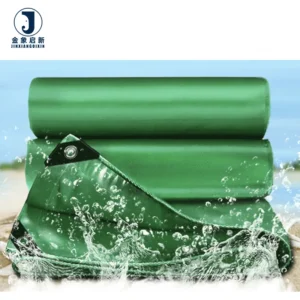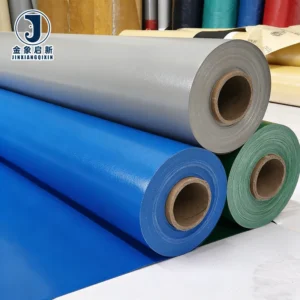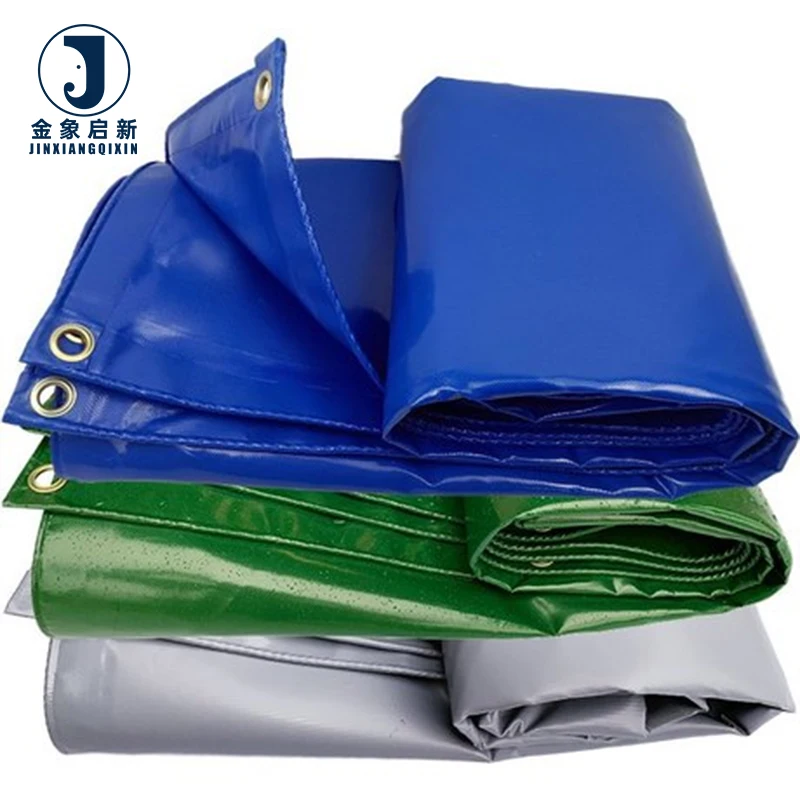
Process Control Over Coating Weight — Three full production lines and 36 sets of professional equipment ensure batch consistency across every roll, verified by dedicated QA at every stage before dispatch.
Technical Specifications
| Parameter | Value |
|---|---|
| Product Type | PVC Tarpaulin Roll |
| Weight | 650 GSM |
| Base Fabric | 100% high tenacity polyester yarns |
| Coating Material | PVC |
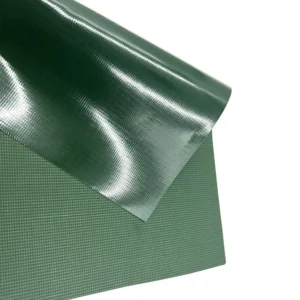
| Coating Technology | Laminated technology & Hot-melt Coating technology |
| Waterproof Construction | Yes |
| Cold Crack Resistance | Yes |
| Anti-Mildew Treatment | Yes |
| Anti-Static Treatment | Available (grade not stated in source) |
| Flame Retardant Treatment | Available (grade not stated in source) |
| UV Treatment | Available (test basis not stated in source) |
| Color Fastness | Best color fastness (source claim — verify against manufacturer catalog) |
| Outdoor Life Assurance | 3-5 years (source claim — verify against manufacturer catalog) |
| Tearing Strength | Outstanding tearing strength for welding (source claim — verify against test report) |
| Special Treatments | Flame Retardant; Anti-Static; Anti-cold; Anti-mildew; 3P |
Application Suitability
| Application | Exposure & Requirement |
|---|---|
| Truck and trailer side curtains | Constant flexing at fold lines, road debris abrasion, UV and weather exposure |
| Curtain-sider top covers | Direct sunlight, pooling water, wind-driven tension at tie-down points |
| Transport fleet load protection | Multi-drop handling, strap friction, temperature variation across routes |
| OEM trailer curtain fabrication | Roll-to-roll colour consistency, weld seam integrity, pattern cutting accuracy |
| Replacement covers for specific trailer models | Model-specific fitment, reinforced hems at high-stress zones |
Why Generic-Size Truck Covers Fail Fleet Operations
Exact-pattern cutting from 650gsm PVC coated tarpaulin for truck and transport eliminates the fitment gap that generic covers leave wide open.
A trailer side curtain that does not match the specific model dimensions creates tension concentrations at the edges, accelerating wear at the very points where the load flexes most. Fleet operators routinely replace covers that were cut to a standard size rather than the actual trailer profile, losing cargo protection and increasing replacement frequency. When the 650gsm PVC coated tarpaulin for truck and transport is supplied as roll stock with verified dimensions, fabricators can produce model-specific panels that seat correctly against the trailer frame without pulling at the welds [NEED_CITE: tensile and tear test methods for coated fabrics per ISO 1421].
Coating Adhesion That Survives Trailer Flex
The laminated and hot-melt dual coating technology bonds the PVC layer to the high tenacity polyester base at a molecular level, creating adhesion strength that withstands repeated bending at curtain fold lines. When a trailer curtain flexes through thousands of articulation cycles, the coating-to-fabric bond determines whether delamination appears before the base fabric itself shows wear. This 650gsm PVC coated tarpaulin for truck and transport uses both technologies to address different stress zones across the panel surface.
Cold Crack Resistance for Year-Round Fleet Routes
Transport fleets operating across seasonal temperature swings face a specific failure mode: the PVC coating stiffens in cold conditions and cracks at fold points when the curtain is opened or closed. The cold crack resistance built into this material keeps the coating pliable at lower temperatures, reducing the risk of brittle fracture during winter operations. Anti-mildew treatment further protects rolls stored in moisture-prone depots or vehicles operating in humid climates [NEED_CITE: cold crack testing standards for flexible PVC coated fabrics].
Reading the Specification Sheet Beyond GSM
The 650 GSM weight tells you how much material is present per square metre, but the tensile and tear performance depends equally on the base fabric construction. High tenacity polyester yarns provide the structural backbone; the denier and weave density determine how load distributes across the fabric when a strap presses into the curtain or a corner catches during loading. The dual coating technology — laminated and hot-melt — contributes to peel strength, which directly affects how the fabric behaves during heat welding. A coating that bonds poorly will separate at the weld seam before the base fabric reaches its tear limit, making the coating method as critical as the weight specification itself. Surface finish, whether glossy or matte, influences cleaning behaviour and how printed fleet branding adheres over time.
The Hidden Cost of Skipping Pre-Shipment Weight Verification
When roll stock arrives lighter than the quoted 650 GSM, the fabric carries less coating material than specified, reducing both waterproof integrity and abrasion resistance at contact points. Fleet operators who skip incoming inspection often discover the shortfall only after curtains fail prematurely at high-wear zones, triggering unplanned replacement costs and cargo exposure claims. Batch colour variation across rolls in the same order creates visible panel mismatches once installed side by side on a trailer, forcing entire re-cuts to maintain fleet appearance standards [NEED_CITE: GSM verification and tolerance standards in coated fabric procurement].
Why Fabricators Source This Roll Stock Here
Nearly 30 years of focused coated fabric production means process control over coating weight and adhesion is built into every production run, not added as an inspection afterthought. Three full production lines and 36 sets of professional equipment provide the capacity to fulfil bulk roll orders with consistent on-time delivery for fleet-scale projects. The 10-person R&D team handles pattern cutting matched to specific trailer models, sample development for colour and treatment confirmation, and custom sizing that minimises cutting waste. Dedicated QA/QC runs at every production stage, with 100% pre-shipment inspection verifying roll weight, colour consistency, and surface quality before any order leaves the facility.
Documentation & Verification
- Material specification sheet stating verified 650 GSM, base fabric denier, and coating method for incoming inspection
- Pre-shipment inspection record with roll-by-roll weight verification against quoted specification
- Test report for UV and flame-retardant treatments where transport regulations require certified grades
- Roll packing list with individual roll dimensions, weight, and batch reference for traceability
- Certificate of origin and customs documentation supporting international freight clearance
Fabrication, Handling & Storage
- Heat weld parameters should be calibrated to the laminated and hot-melt dual coating for optimal seam peel strength
- Store 650 GSM rolls upright on pallets to prevent flat-spot deformation that affects unrolling and cutting accuracy
- Allow cold-stored rolls to acclimatise before unrolling to avoid coating stress cracks at the core edge
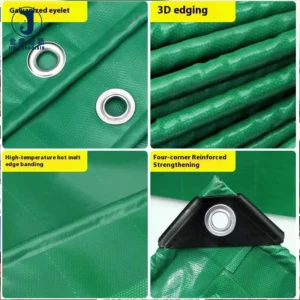
- Reinforce eyelet zones with additional PVC patches where the 650gsm base fabric meets concentrated tie-down loads
- Use compatible PVC cleaners only; solvent-based products may degrade the hot-melt coating bond over time
- Plan panel cutting layouts across roll width to minimise offcuts and maintain colour consistency within each trailer
What to Include in Your Roll Stock Enquiry
Specify the trailer models and panel dimensions you need covered, along with the operating environment — whether your fleet encounters extreme cold, high UV exposure, or moisture-heavy conditions. Confirm whether your market requires fire-retardant or anti-static certification and which grade applies. Indicate your required roll widths, annual volume, and whether you need pattern-cut panels or full roll stock for in-house fabrication. Request a sample roll to verify colour, coating adhesion, and welding behaviour before committing to bulk production.
Frequently Asked Questions
Q: How do I verify the 650 GSM weight matches what was quoted when the rolls arrive?
A: Request the pre-shipment inspection record that documents roll-by-roll weight measurement. On receipt, conduct a sample cut test — weigh a measured square of fabric and compare against the specification sheet. Our QA process verifies every roll against the stated 650 GSM before dispatch, and discrepancies are flagged before the order ships.
Q: What roll width and length options reduce waste when cutting truck cover panels?
A: Standard and custom widths are available to match your trailer panel dimensions. Providing your cutting layout allows us to recommend the roll width that minimises offcuts. Wider rolls may suit full side curtain panels while narrower widths work for top sections and replacement patches, improving material utilisation across the order.
Q: How do welded seams perform at flex points on moving trailer loads?
A: The laminated and hot-melt dual coating technology provides the peel strength needed for weld integrity under repeated flexing. Seam performance depends on correct welding temperature and pressure settings matched to this coating type. We supply sample material for weld parameter calibration before full production begins.
Q: What certifications support the anti-UV and flame-retardant treatment claims?
A: Flame retardant and anti-static treatments are available in various grades. Confirm the specific grade or test standard your market or transport regulator requires, and we will supply the matching test report. Treatment claims without supporting documentation are a known industry concern, so every certified grade ships with its test basis.
Q: Will colour remain consistent across multiple rolls in a single fleet order?
A: Roll-to-roll colour consistency is verified during pre-shipment inspection. Panels installed side by side on a trailer must match visually, and any batch variation is identified before dispatch. For fleet-wide uniformity, ordering the full requirement in a single production run provides the highest colour consistency across all rolls.