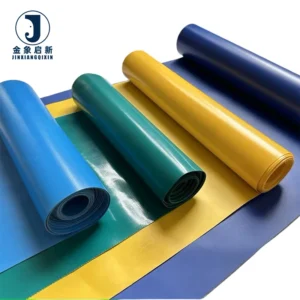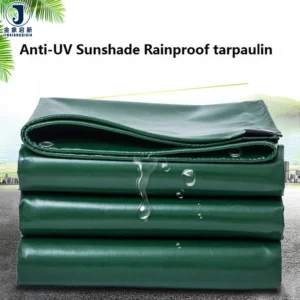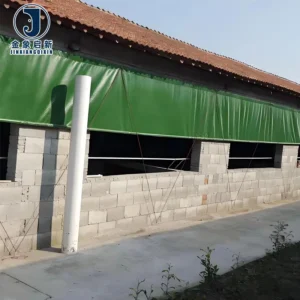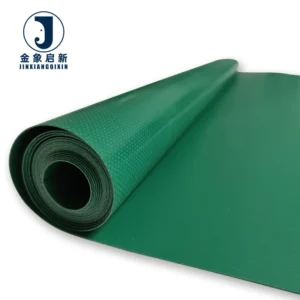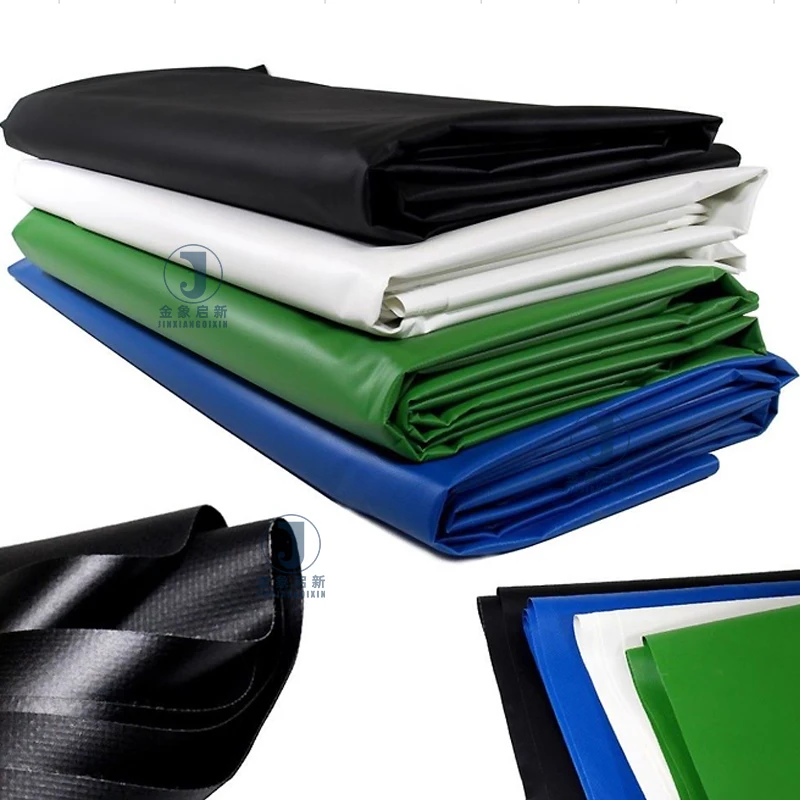
Welded seam durability — Hot-melt coated construction where the PVC bonds into the polyester base, producing seams that flex with the fabric instead of cracking at the weld line under transport loads.
Technical Specifications
| Parameter | Value |
|---|---|
| Product Type | PVC Coated Tarpaulin |
| Material | 100% high tenacity polyester yarns with PVC coating |
| Weight | 650 GSM |
| Coating Technology | Hot-melt / Laminated coating |
| Waterproof | Fully waterproof coated construction |
| Cold Crack Resistance | Yes |
| Anti-Mildew | Yes |
| Anti-Static | Available as special treatment (grade not stated) |
| Flame Retardant | Available as special treatment (grade not stated) |
| Anti-Cold | Available as special treatment (grade not stated) |
| Color Fastness | High |
| Outdoor Life Expectancy | Suited to extended outdoor exposure |
| Tearing Strength | High — optimized for welding at flex points |
Application Suitability
| Application | Exposure & Requirement |
|---|---|
| Truck bed tarp cover | Constant tie-down tension, road debris abrasion, weather cycling |
| Trailer side curtain | Repeated flexing during transit, batch-consistent colour across curtain panels |
| Pick-up truck cover | Cut-to-model fitment, UV and rain exposure, frequent handling |
| Caravan tent and awning | Wind load stress, fold creasing, seasonal UV exposure |
| Waterproof equipment cover | Standing water runoff, dust ingress prevention, abrasion from contact |
| Digital printing vinyl | Surface ink adhesion, flat lay without curl, colour vibrancy |
Why the Weld Line Fails Before the Fabric Does on Most PVC Tarpaulin Roll Orders
The coating bond to the base fabric determines whether a welded seam holds under flex, not the fabric weight alone.
I spent years watching fleet operators replace side curtains and truck covers because the seam cracked open at the point where the load flexes most. The fabric itself still looked intact, but the weld had separated [NEED_CITE: common failure mode in laminated tarpaulin at stress concentration points]. When the coating method does not produce a deep bond with the polyester yarns, the heat from welding disturbs that shallow layer and the seam becomes the weakest link. This product uses hot-melt lamination so the PVC penetrates the weave, meaning the welded joint retains strength comparable to the body of the fabric.
How Hot-Melt Coating Changes the Way the Fabric Handles Transport Stress
Hot-melt lamination forces the PVC compound into the polyester base under heat and pressure rather than simply sitting on top as a film. This gives the PVC tarpaulin Roll a bond strength that resists delamination when the material flexes around a load or flaps in highway wind. For fleet operators running side curtains, the coating stays locked to the yarns through thousands of articulation cycles.
What Batch Colour Consistency Means for a Fleet Livery
When you hang six curtain panels side by side on a trailer, even a slight shade shift between rolls becomes visible in daylight. Roll-to-roll colour matching within the same production batch is controlled at the compounding stage so that panels cut from different rolls present a uniform appearance once installed [NEED_CITE: colour fastness and batch variation standards for coated fabrics]. This matters for fleets that treat their vehicles as moving brand assets.
Reading the Weight and Base Fabric Together
The 650 GSM figure combines the polyester base fabric weight and the PVC coating weight together. A heavier coating on a lighter base can reach the same GSM but will not deliver the same tear propagation resistance as a denser weave carrying less coating. High tenacity polyester yarns in this construction contribute the structural tensile strength, while the hot-melt PVC coating provides waterproofing, abrasion resistance, and the surface that accepts a welded seam.
What Happens When the Spec Looks Right on Paper but Fails at the Dock
I once saw a batch rejected at the receiving dock because the rolls arrived lighter than quoted, and the buyer measured every single one before signing. The supplier had treated GSM as a target rather than a minimum. Inconsistent weight across a delivery means some panels will be thinner, wear faster, and force an early replacement that costs more than getting the PVC tarpaulin Roll specification right from the start [NEED_CITE: incoming material weight verification practices in coated fabric procurement].
Why Sourcing Here Reduces Specification Risk
Three full production lines and 36 sets of professional equipment allow this PVC coated fabric to run in volume without shifting between subcontractors mid-order. The 10-person R&D team handles custom sizing, pattern printing, and sample development in-house so a sample roll confirms the specification before bulk production begins. QA/QC checkpoints at every stage mean weight and coating adhesion are verified before dispatch, not after a dispute.
Documentation & Verification
- Weight verification per roll against the stated 650 GSM before dispatch
- Material specification sheet stating base fabric, coating type, and colour reference
- Test report for flame retardant or anti-static grades where applicable
- Pre-shipment inspection record covering coating adhesion and visual consistency
- Roll packing list with roll count, dimensions, and gross weight per unit
Fabrication, Handling & Storage
- Hot-melt coated surface accepts high-frequency and hot-air welding; set temperature to match the PVC compound for a bond that matches the base fabric strength
- Reinforce eyelet zones and tie-down hems with additional PVC patches to distribute load across the polyester weave
- Store rolls upright on a flat surface to prevent flat-spot creases that show through after unrolling
- Allow cold-stored rolls to reach ambient temperature before unrolling to avoid cracking the PVC coating at low temperature
- Clean with mild detergent only; solvents can soften the hot-melt PVC layer and reduce surface colour fastness
What We Need to Quote Your Order Accurately
Share the vehicle models or curtain dimensions you are covering so we can confirm whether standard roll widths will yield an efficient cut plan. Let us know if your market requires flame retardant or anti-static compliance so we can include the correct test documentation with the shipment. Advise whether you need full roll stock or pre-cut panels with welded hems.
Frequently Asked Questions
Q: How do you guarantee GSM matches what is stated on the quotation?
A: Every roll is weighed during pre-shipment inspection and compared against the quoted 650 GSM. Rolls that fall outside tolerance are pulled before packing. We supply the weight verification record with your shipment so the numbers are documented before the goods leave our facility.
Q: Can the tarpaulin be cut to fit my specific trailer model?
A: Yes. Provide the trailer make, model, and year, or share the panel dimensions directly. Our R&D team develops a cut pattern and produces a sample for your approval before bulk production, so the panels arrive ready to install without on-site trimming.
Q: Will colour be consistent if I order multiple rolls in one batch?
A: Rolls within the same production order are compounded from a single colour batch, ensuring shade consistency across panels hung side by side. If your order is large enough to span multiple batches, we flag this before production so you can approve the shade range.
Q: What test reports come with flame retardant or anti-static grades?
A: When you specify flame retardant or anti-static treatment, we supply the corresponding test report confirming the grade achieved. Confirm the standard your market requires at the inquiry stage so we produce and test to that specification from the outset.