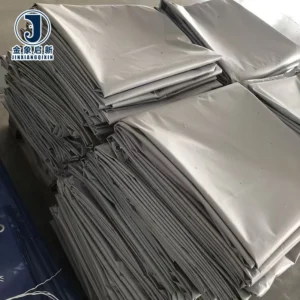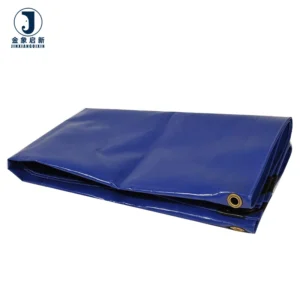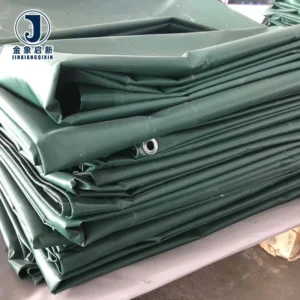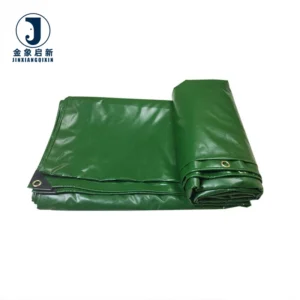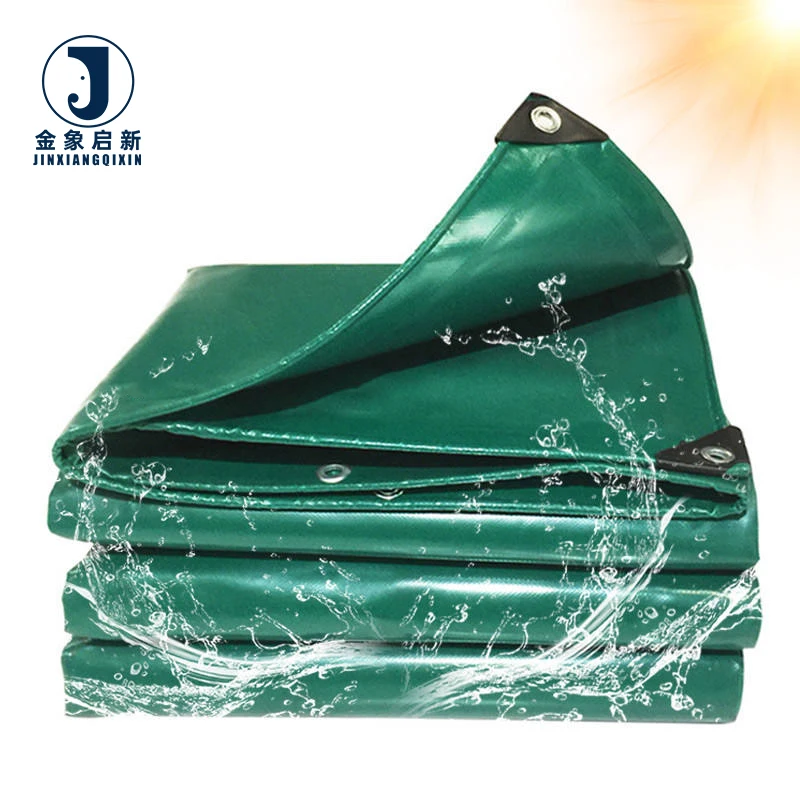
Deep Process Control — Nearly three decades focused on coated fabric production ensures consistent PVC coating weight and adhesion across every roll of truck and trailer cover material.
Technical Specifications
| Parameter | Value |
|---|---|
| Product Type | PVC Coated Tarpaulin Roll |
| Material | PVC Vinyl |
| Fabric Construction | Woven Fabric |
| Weight | At least 450 grams |
| Waterproof Rating | Waterproof |
| Durability | High-strength, resistant to wear and tear |
| Tearing Resistance | Durable and resistant to tearing |
| Flame Retardant Grade | (grade not stated in source — confirm grade required for your market) |
| UV Treatment | (test basis not stated in source — request test report if required) |
| Finish | Not stated |
| Tensile Strength | Not stated |
| Tear Strength | Not stated |
| Width | Not stated |
| Roll Length | Not stated |
| Color | Not stated |
| Coating Method | Not stated |
| Certification | Not stated |
| MOQ | Not stated |
Application Suitability
| Application | Exposure & Requirement |
|---|---|
| Truck and trailer load covers | Constant road vibration, wind flex, rain and snow ingress, tie-down point stress |
| Side curtain fabric for transport equipment builders | Repeated opening and closing cycles, abrasion against trailer frame, weather sealing |
| Equipment and machinery covers | Outdoor static exposure, dust and moisture protection, handling during placement and removal |
Why Generic-Size Covers Fail on the Road
A truck cover that does not match the trailer dimension leaves gaps and wastes material at the same time.
Fleet operators often receive tarps cut to a standard rectangle that does not account for the specific trailer model, resulting in loose fabric that flaps at highway speed or tight fabric that strains at the eyelets. The PVC coated tarpaulin for truck and trailer covers supplied here is cut to exact vehicle dimensions, eliminating both the waste and the gap. When a cover fits properly, the reinforcement at flex points actually aligns with where the load moves most, rather than sitting somewhere irrelevant on the fabric surface [NEED_CITE: common causes of premature tarpaulin failure in fleet operations].
Covering a Moving Load Requires More Than Waterproof Fabric
A truck traveling at highway speed subjects its cover to continuous flexing, wind pressure and road spray that static covers never experience. The PVC coated tarpaulin for truck and trailer covers uses a woven base fabric construction that resists tearing when the load shifts or the fabric flexes around corners. The PVC coating provides the waterproof barrier, but it is the woven structure underneath that carries the mechanical load at every tie-down point and hem line.
Reinforcement Where the Load Flexes Most
The areas around eyelets, hems and welded seams see the highest concentrated stress during transit. This PVC coated tarpaulin for truck and trailer covers is supplied with reinforced edge treatment options that distribute tie-down forces across a wider fabric area, reducing the chance of the eyelet pulling through under tension. The welded seams are inspected at every production stage to confirm adhesion before the cover leaves the facility, addressing one of the most common failure points fleet operators report [NEED_CITE: welded seam performance testing methods for PVC coated fabrics per ISO 1421].
What GSM Tells You — and What It Does Not
The weight stated as at least 450 grams reflects the total mass of base fabric plus coating per square meter. GSM alone does not define tear resistance or tensile strength; those depend on the denier of the yarn, the weave density and the coating adhesion. A lighter fabric with a tight weave can outperform a heavier fabric with a loose construction when it comes to resisting tear propagation at a puncture point. The woven base fabric here provides the structural backbone, while the PVC coating weight contributes to waterproof integrity and surface durability. Specifying on GSM without considering the base fabric construction leads to covers that feel heavy but fail at the seams.
The Cost of Colour Variance Across a Fleet Order
When covers for a fleet of twenty trailers arrive with visible shade differences between rolls, the operator faces a choice between accepting an inconsistent appearance or rejecting the entire shipment. Colour variance occurs when pigment batches are not matched under controlled conditions or when coating thickness fluctuates across the production run. For fleet operators who brand their vehicles, this inconsistency undermines the professional image the covers are meant to project. Pre-shipment inspection confirms colour consistency across all rolls in a single order before dispatch [NEED_CITE: colour consistency standards for coated fabrics in fleet applications].
Why Source PVC Coated Fabric for Fleet Use Here
Three full production lines and 36 sets of professional equipment support bulk orders with on-time delivery, meaning a fleet renewal program does not stall waiting for fabric. The 10-person R&D team handles custom sizing, pattern printing and sample development, so a cover for a specific trailer model can be developed and approved before full production begins. Dedicated QA/QC at every production stage with 100% pre-shipment inspection catches GSM deviations, seam defects and colour shifts before they reach the loading dock. The sales process moves from inquiry through sample approval to production with in-process checks, giving fleet buyers visibility at each gate. Samples for custom requirements are developed within days, shortening the evaluation cycle.
Documentation & Verification
- Material specification sheet stating GSM, base fabric construction and coating weight for each roll
- Pre-shipment inspection record confirming 100% check of weight, seams and colour
- Test report for UV and flame-retardant grades supplied where applicable
- Roll packing list detailing roll count, dimensions and net weight per container
- Certificate of origin and customs documentation for international shipment
Fabrication, Handling & Storage
- Heat-weld seams using temperature and dwell time settings matched to the PVC coating weight for proper adhesion
- Space eyelets to distribute tie-down loads across the woven base fabric without concentrating stress at single points
- Store rolls horizontally on pallets in a dry environment to prevent permanent creasing of the PVC coating surface
- Allow fabric to reach ambient temperature before unrolling in cold conditions to avoid coating crack at the fold line
- Use mild detergent and soft brush for cleaning to preserve the PVC coating integrity over repeated wash cycles
What to Include in Your Inquiry
Provide the specific trailer model or equipment dimensions so the cover can be cut to exact fit rather than a generic rectangle. State the tie-down method and eyelet spacing preference to ensure reinforcement is placed where the load transfers to the fabric. Confirm whether flame retardant or UV treatment certification is required for your market or operating environment. Indicate the number of units and whether colour matching across the full order is needed for fleet branding consistency.
Frequently Asked Questions
Q: How can I verify that the GSM on delivery matches the quoted weight?
A: Every roll undergoes weight inspection during production, and a pre-shipment inspection record confirms the GSM against the quotation before dispatch. You can also conduct your own cut-and-weigh test on a sample square from any roll upon arrival to independently verify the stated weight.
Q: How are truck covers cut to fit specific trailer models rather than generic sizes?
A: Provide the trailer make, model and body dimensions during inquiry. The R&D team develops a cutting pattern matched to those measurements, and a sample is produced for fitment approval before full production begins, ensuring the finished cover aligns with the actual vehicle geometry.
Q: What eyelet spacing and hem reinforcement options are available for tie-down loads?
A: Eyelet spacing is set according to your tie-down method and load type. Reinforced hems distribute tension across a wider fabric area, and the placement is confirmed during the sample stage so that reinforcement aligns with actual stress points during transit.
Q: How is colour variance controlled between rolls in the same fleet order?
A: Pigment batches are matched under controlled conditions, and colour consistency across all rolls in a single order is confirmed during the pre-shipment inspection. If a specific Pantone or RAL reference is required, a sample swatch is approved before full production proceeds.
Q: What is the minimum order and lead time for custom-sized truck covers?
A: Minimum order quantities and lead times depend on the level of customization — standard sizes carry lower minimums, while custom dimensions and printed branding require a sample approval step. Request a quotation with your specific trailer dimensions and quantity for an accurate timeline.