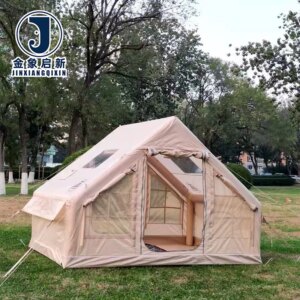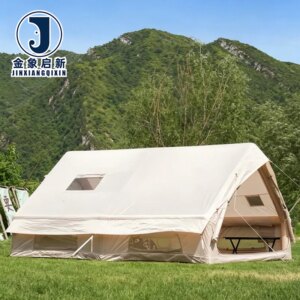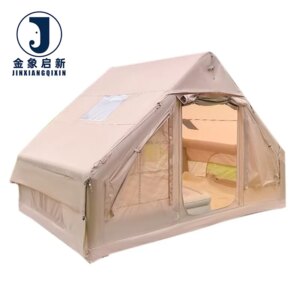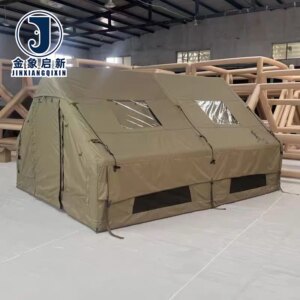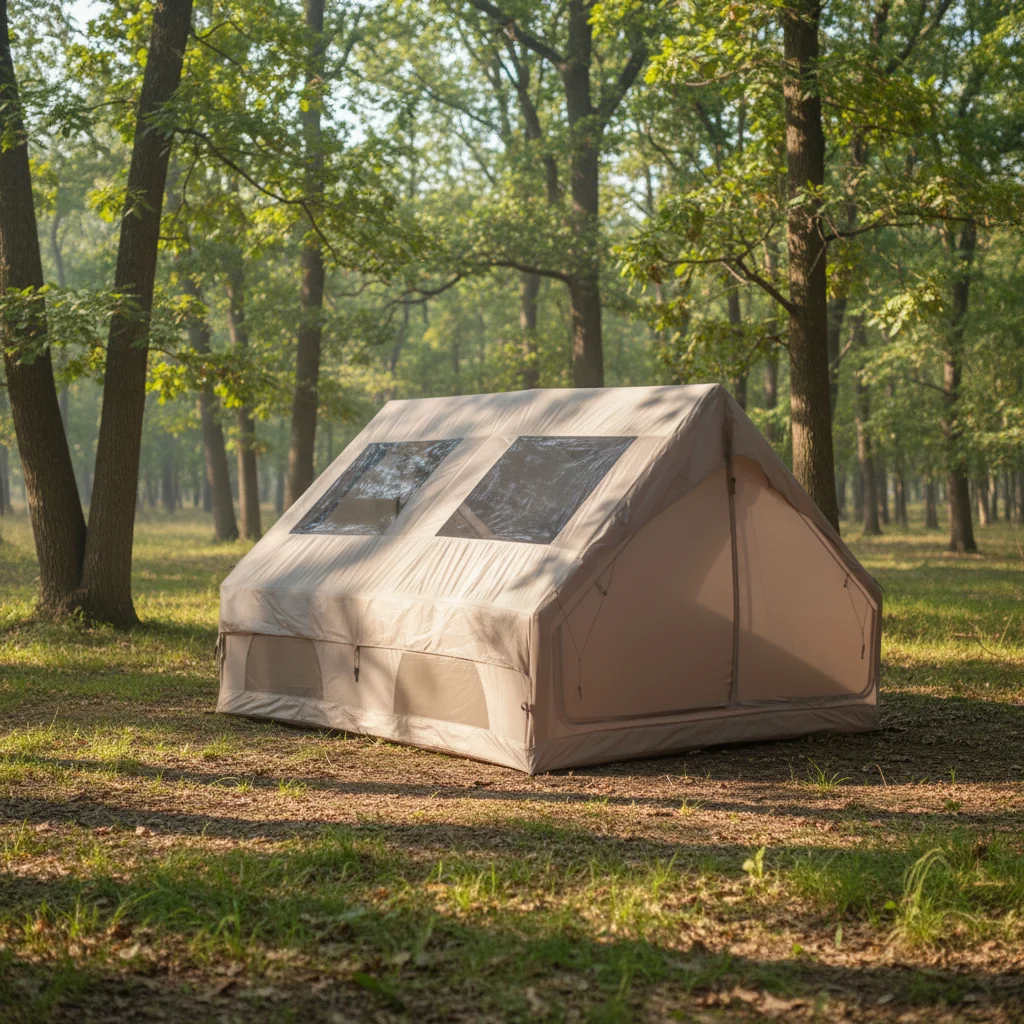
Deep Process Control on Coated Fabric — verified through 100% pre-shipment inspection and inflation testing on every inflatable disaster relief tent before dispatch, ensuring seam weld integrity under transport flex cycles.
Technical Specifications
| Parameter | Value |
|---|---|
| Product Type | Inflatable Tent |
| Core Material | PVC Tarpaulin |
| Waterproof Rating | 3000mm |
| Season Design | 4-Season |
| Opening Mechanism | Quick Automatic Opening |
| Capacity | 2-8 Person |
| Structure Type | Extended Type, Single Layer |
| UV Treatment | UV-resistant (test basis not stated in source) |
| Flame Retardant | Available in flame retardant grades — confirm the grade required for your market |
| Customization | OEM & ODM, size adjustments, pattern printing, material thickness modifications |
| Standards | ISO9001, ISO14001, ISO45001, CE |
Application Suitability
| Application | Exposure & Requirement |
|---|---|
| Emergency response logistics hubs | Constant deployment and teardown along transport corridors, abrasion from ground contact, heavy rainfall exposure |
| Mobile command centers for construction sites | Dust and debris ingress, wind loading on extended structure, UV exposure during prolonged stationary use |
| Equipment sheltering in remote work locations | Temperature extremes across seasons, uneven ground stressing inflation chambers, limited maintenance access |
| Temporary storage during infrastructure projects | Forklift and personnel traffic at entry points, prolonged weather exposure, load-bearing on floor sections |
| Disaster response operations | Rapid inflation and deflation cycles, multi-site redeployment, unpredictable environmental conditions |
Why Generic Tents Fail at the Seams During Fleet Deployments
Welded seam integrity matters more than fabric weight when a shelter inflates and deflates dozens of times across a transport season.
Fleet operators and emergency logistics coordinators often discover that inflatable disaster relief tent units fail not because the fabric tears, but because stitched or poorly welded seams separate under repeated inflation pressure and road vibration. A shelter that performs well in a static warehouse test can split at the panel junction after three deployments on a gravel staging area. The inflation chamber puts sustained outward force on every seam, and transport flex cycles add dynamic loading that static tests do not capture [NEED_CITE: tensile and tear test methods for coated fabrics per ISO 1421].
Rapid Deployment Without Compromising Structural Integrity
Quick automatic opening reduces the labour required at roadside staging areas and remote depot sites where crew availability is limited. The inflatable disaster relief tent design channels inflation pressure evenly through the extended-type single-layer structure, maintaining shape stability once pressurised. This matters for fleet operators who need a command post or crew rest shelter operational within minutes, not hours, during time-critical logistics operations along transport corridors.
PVC Tarpaulin Built for Road and Site Exposure
The PVC tarpaulin core material is produced on industrial coating lines with process control over coating weight and adhesion, which directly affects how the fabric handles abrasion from gravel, concrete, and compacted soil at depot and job sites. The 3000mm waterproof rating addresses heavy rainfall events common at open staging areas where natural shelter is unavailable. A 4-season design maintains flexibility and structural behaviour across the temperature range that fleet operators encounter when moving between climatic zones [NEED_CITE: coating adhesion and peel strength testing for PVC tarpaulin per DIN 53357].
How Coating Weight and Base Fabric Interact Under Inflation Pressure
The waterproof rating of an inflatable structure depends on both the coating integrity and the base fabric density beneath it. A PVC tarpaulin with adequate coating weight but insufficient base fabric denier will stretch unevenly under inflation pressure, creating thin spots at panel centres and excess stress at welded junctions. Conversely, a dense base fabric with light coating may resist tearing but allow water penetration through micro-gaps in the coating layer. The 3000mm rating on this inflatable disaster relief tent reflects the combined performance of coating and substrate working together. Surface finish — available in glossy or matte options — affects how the fabric sheds water and resists dirt accumulation during extended outdoor deployments, which influences cleaning frequency and long-term coating preservation.
The Hidden Cost of Underspecifying Inflatable Shelter Fabric
When procurement decisions focus on initial unit cost rather than material construction, inflatable shelters often require replacement after far fewer deployment cycles than anticipated. Coating delamination at high-flex zones — particularly where inflation tubes meet end panels — is a frequent failure mode when the PVC tarpaulin coating adhesion was not matched to the inflation pressure specification [NEED_CITE: coating adhesion failure modes in inflatable structures under cyclic loading]. Welded seams that were not tested under full inflation pressure can develop pinhole leaks that are invisible during pre-deployment inspection but become apparent during the first rainstorm at the staging site. Batch colour variation across multi-unit orders can also create a visibly inconsistent appearance when several shelters are deployed side by side at a logistics hub or command centre.
Why Procurement Teams Source Inflatable Shelter Fabric Here
Dedicated QA/QC inspection covers seam weld integrity and inflation test data before every shipment, reducing the risk of field failures during emergency deployments. The 10-person R&D team handles custom sizing, pattern printing, and material thickness modifications specific to fleet-branded or application-specific inflatable disaster relief tent requirements. Three full production lines and 36 sets of processing equipment support bulk order volumes with consistent coating weight and colour across rolls. Samples are developed within days for custom requirements, allowing procurement teams to verify material and construction before committing to full production. ISO and CE certified manufacturing processes ensure documentation traceability from raw material to finished product.
Documentation & Verification
- Material specification sheet confirming PVC tarpaulin grade, waterproof rating, and coating details for each inflatable disaster relief tent order
- Pre-shipment inspection record covering seam weld integrity and inflation test data
- Test reports for UV and flame-retardant performance where applicable to the deployment jurisdiction
- Roll packing list with batch references for traceability across multi-unit fleet orders
- Certificate of origin and customs documentation supporting international transport logistics
Fabrication, Handling & Storage
- Heat welding parameters must match PVC tarpaulin coating thickness to achieve full adhesion without scorching the surface layer
- Inflation tube junctions require reinforced welding overlap to withstand repeated pressurisation cycles at transport staging sites
- Store rolled tent fabric vertically on pallets to prevent permanent creasing in the PVC tarpaulin coating layer
- Allow fabric to reach ambient temperature before inflation in cold conditions to prevent coating embrittlement at fold lines
- Clean with mild detergent only; solvent-based cleaners degrade the PVC coating and compromise waterproof performance
- Field repairs on punctures require compatible PVC tarpaulin patches with heat-activated adhesive matching the base coating chemistry
Preparing Your Inflatable Shelter Specification
Provide the deployment environment details including typical ground conditions, wind exposure, and temperature range at your transport staging sites. Specify whether you require finished tent units with inflation systems or fabric panels for your own assembly operations. Indicate any fleet branding, colour matching, or pattern printing requirements so that sample development can proceed before production commitment.
Frequently Asked Questions
Q: How can I verify the PVC tarpaulin weight and coating quality matches the quotation on arrival?
A: Each shipment includes a material specification sheet documenting the PVC tarpaulin grade and coating details. We conduct 100% pre-shipment inspection on every inflatable disaster relief tent, and buyers may request weight verification records per batch. Independent third-party inspection can also be arranged before dispatch from the facility.
Q: Are welded seams more reliable than stitched construction for repeated inflation and transport cycles?
A: Welded seams create a continuous bond across the PVC tarpaulin overlap, distributing inflation pressure evenly without needle holes that can propagate tears. Stitched seams introduce perforations that become failure points under cyclic loading during transport. Our pre-shipment inspection includes seam weld integrity testing under full inflation pressure.
Q: What UV treatment verification is available for shelters deployed under prolonged sun exposure?
A: UV-resistant treatment is available, though the specific test basis should be confirmed against your deployment jurisdiction requirements. We can provide test reports where applicable and recommend requesting sample panels for independent weathering evaluation at your typical exposure conditions before placing a full inflatable disaster relief tent order.
Q: What customisation options exist for size, branding, and reinforcement on fleet-specific orders?
A: OEM and ODM options include size adjustments, pattern printing for fleet identification, and material thickness modifications. Eyelet placement, hem reinforcement, and inflation port positioning can all be specified to match your deployment procedures. Sample development proceeds within days for approval before production.
Q: How is batch colour consistency maintained across multi-unit inflatable shelter orders?
A: Colour matching is controlled through reference standards verified during the coating process. For multi-unit inflatable disaster relief tent orders, we maintain consistent pigment ratios across production batches and conduct visual comparison checks. Buyers requesting multiple units deployed side by side should specify a single production batch to minimise any visible variation.