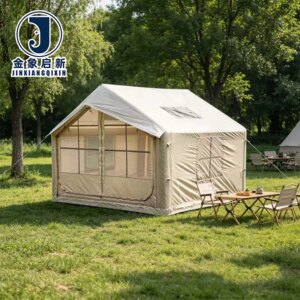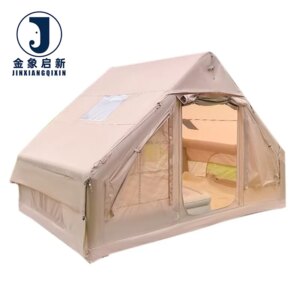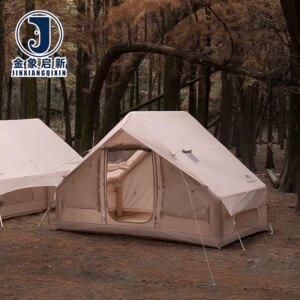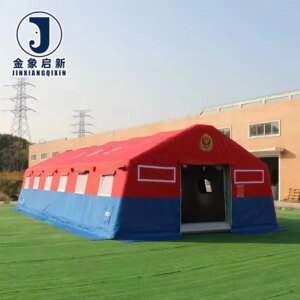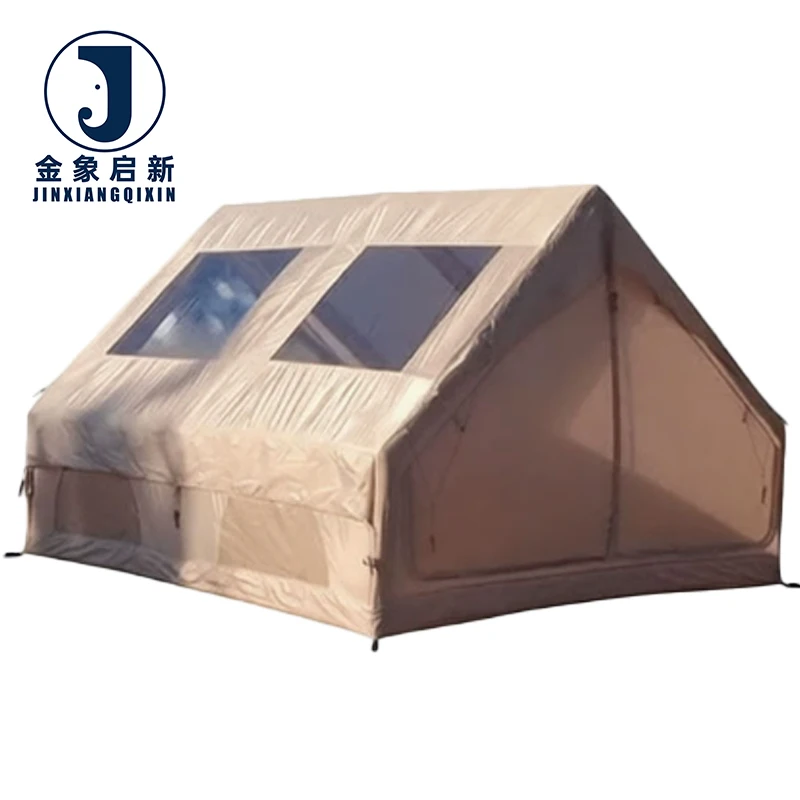
Coated Fabric Process Control — nearly 30 years of PVC coating expertise applied to inflatable tent structures, ensuring consistent adhesion and seam integrity across every production run.
Technical Specifications
| Parameter | Value |
|---|---|
| Product Type | Inflatable Tent |
| Core Material | PVC tarpaulin |
| Capacity | 6-8 Person |
| Key Features | Waterproof, UV-resistant, tear-resistant, fire-retardant, anti-static, skylight, quick automatic opening, single-layer PVC construction |
| Fire-Retardant Treatment | fire-retardant (grade not stated — confirm the grade required for your market) |
| UV Resistance | UV-resistant (test basis not stated — request test report for your climate zone) |
| Anti-Static | anti-static (standard or surface resistance not stated — verify against site requirements) |
| Tear Resistance | tear-resistant (test standard not stated) |
| Leak Test Protocol | 150% of rated pressure for 24 hours |
| Customization | OEM & ODM, sample customization, pattern printing, material selection, product design |
| Standards | ISO 9001, ISO 14001, ISO 45001, CE |
Application Suitability
| Application | Exposure & Requirement |
|---|---|
| Outdoor event management | Repeated inflation and deflation cycles, public safety compliance, rapid automatic opening under time pressure |
| Temporary storage facilities | Dust-sensitive inventory, weather exposure, fire-retardant requirements for enclosed spaces |
| Mobile marketing installations | Road transport vibration, UV exposure during prolonged outdoor display, branded surface integrity |
| Emergency response command centers | Rapid deployment in adverse weather, reliable waterproof enclosure, structural stability under wind load |
| Outdoor glamping | Extended guest occupancy, skylight natural lighting, tear resistance from frequent setup and breakdown |
Why Inflatable Tent Seams Fail Before the Fabric Does
Seam integrity determines whether an Inflatable Tent manufacturer custom order survives its first deployment cycle.
When PVC-coated air beams are inflated, the welded joints experience concentrated stress at every flex point. I have reviewed field returns where the base fabric showed no damage while the heat-welded seams had already begun to delaminate. The failure is rarely the material itself — it is the thermal bonding parameters applied during fabrication. Welding temperature, dwell time and pressure must match the specific PVC coating formulation. A mismatch means the seam peels apart under repeated inflation cycles, often within the first few setup and teardown events. [NEED_CITE: tensile and tear test methods for coated fabrics per ISO 1421] This is the single most common reason commercial inflatable structures are returned or replaced mid-season.
Heat-Welded Air Beam Construction for Repeated Inflation Cycles
The inflatable tent for truck and transport logistics relies on airtight beam channels that hold pressure continuously during use. Each seam is heat-welded rather than stitched, eliminating needle holes that would otherwise serve as leak paths. The PVC tarpaulin coating must bond at a molecular level across the weld zone. Our 10-person R&D team develops welding profiles matched to the exact coating weight and formulation, ensuring the seam strength tracks with the base fabric rather than becoming the weak link in the assembly.
Leak Testing at 150% Rated Pressure Before Dispatch
Every unit undergoes inflation at 150% of its rated operating pressure and is held for 24 hours before packing. This over-pressure test exposes micro-leaks at beam junctions, valve seats and corner welds that would not surface during normal use. Units that lose pressure during this window are stripped, re-welded and re-tested. [NEED_CITE: inflatable structure pressure testing standards for temporary commercial shelters] The protocol adds lead time but prevents the far greater cost of a failed installation at a client event site.
How PVC Coating Weight and Base Fabric Interact in Inflatable Structures
The structural rigidity of an inflatable tent depends on the relationship between coating weight and base fabric denier. A heavier coating adds stiffness to the air beam, helping it resist deformation under wind load, but if the base fabric weave is too open, the coating can crack at flex points during repeated inflation. Conversely, a tightly woven base fabric with insufficient coating weight may hold air pressure initially but lacks the abrasion resistance needed where beams contact the ground or anchoring hardware. The tear-resistant specification on this Inflatable Tent addresses both layers working as a composite system. Surface finish — whether glossy or matte — also affects how easily dust and dirt release during cleaning between deployments, which matters for units rented out across multiple events. Fire-retardant grades available must be confirmed against the specific safety code enforced at the installation venue, as requirements vary between temporary event permits and semi-permanent site structures.
The Hidden Cost of Specifying Inflatable Tent Fabric Without Test Reports
I have seen project specifications call for "fire-retardant" inflatable structures without stating the target classification. When the tent arrives on site, the venue inspector asks for documentation aligned with local fire codes, and the supplier’s generic claim does not satisfy the requirement. The event is delayed or relocated while alternative shelter is sourced. The same pattern repeats with UV resistance: a claimed treatment without a documented test basis means the buyer cannot predict how the material will perform after a full season of outdoor exposure. [NEED_CITE: fire classification standards for temporary event structures in international markets] Colour consistency between production batches is another frequent gap — rolls produced weeks apart can show visible shade variation once erected side by side at a single installation. These are all specification failures, not material failures, and they are preventable with the right documentation at the quotation stage.
What Our Production Capability Delivers for This Product Line
Three full production lines and 36 sets of professional processing equipment give us the capacity to fulfil bulk inflatable tent orders with reliable on-time delivery, even when custom sizing or colour is involved. The 10-person R&D team handles material selection, pattern printing layout and sample development, producing prototypes within days so buyers can validate dimensions and branding before committing to a full production run. Dedicated QA/QC inspection at every production stage, with 100% pre-shipment inspection, catches seam defects and coating inconsistencies before they leave the facility. Our 9,180 m² manufacturing site supports the complete workflow from raw PVC tarpaulin coating through to finished, packed inflatable units. ISO 9001, ISO 14001, ISO 45001 and CE certifications underpin every process step with audited documentation trails.
Documentation & Verification
- Material specification sheet confirming PVC coating weight, base fabric denier and treatment claims for each batch
- Fire-retardant test report aligned with the classification required by the installation venue
- Pre-shipment inspection record with unique batch-traceable certificate for every inflatable unit
- UV resistance test documentation supporting the stated outdoor exposure performance
- ISO 9001, ISO 14001, ISO 45001 and CE certificate copies for regulatory and customs compliance
- Roll packing list with net and gross weights for container loading planning
Fabrication, Handling & Storage
- Heat-weld all PVC tarpaulin seams using temperature and dwell time profiles matched to the coating formulation to prevent delamination
- Store rolled inflatable tent components flat or on large-diameter cores to avoid permanent creasing in the PVC coating layer
- Deploy cleaning agents compatible with PVC surfaces to preserve the anti-static and UV-resistant treatment integrity
- Inspect valve seats and beam junctions after transport, as vibration can stress welds in the single-layer PVC construction
- Repair minor punctures using PVC-compatible adhesive patches that match the coating weight of the base inflatable tent fabric
Share Your Deployment Requirements
Tell us the intended application, typical deployment duration per cycle, and the fire safety classification enforced at your target venues. Specify whether you need finished units with branded pattern printing or plain stock for your own fabrication. Include the required capacity, colour references and annual volume so we can align production scheduling and provide an accurate Inflatable Tent manufacturer custom quotation with realistic lead times.
Frequently Asked Questions
Q: How is the fire-retardant grade verified against my market’s safety requirements for temporary structures?
A: We supply fire-retardant treatment and can provide test reports aligned with specific classifications. Confirm the standard required by your local fire authority or venue permit — such as NFPA 701, DIN 4102 B1 or M2 — at the inquiry stage so we match the correct formulation and include the corresponding documentation with your shipment.
Q: What UV test basis supports the claimed outdoor lifespan of the PVC tarpaulin?
A: UV resistance is achieved through additive formulation during the PVC coating process. Request our UV test report at the quotation stage, which documents the exposure method and results. For installations in high-irradiance regions, share your climate zone so we can confirm suitability and recommend any additional surface treatment.
Q: How are welded seams tested to prevent air leakage under repeated inflation cycles?
A: Every inflatable unit is pressurised to 150% of its rated operating pressure and held for 24 hours before dispatch. This over-pressure test exposes leaks at beam junctions, valve seats and corner welds. Units that do not hold pressure are re-welded and re-tested, ensuring seam integrity survives repeated setup and breakdown cycles.
Q: What custom sizing, pattern printing and branding options are available for event branding?
A: Our R&D team handles custom dimensions, corporate colour matching and pattern printing directly onto the PVC tarpaulin surface. We develop samples within days for buyer approval before full production. Provide your artwork files, Pantone references and dimensional requirements at the inquiry stage for a tailored sample and quotation.
Q: How is batch-to-batch colour and coating consistency controlled across large orders?
A: Each production run follows controlled coating weight and pigment formulation parameters with in-process QA checks. A pre-shipment inspection record with batch-traceable certification accompanies every unit. For multi-batch orders, request our colour consistency protocol at quotation to ensure all units match when installed side by side at a single site.