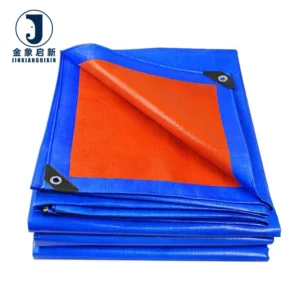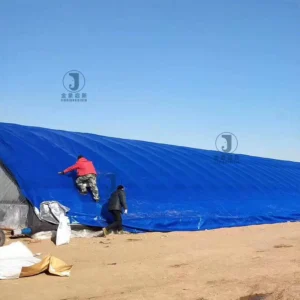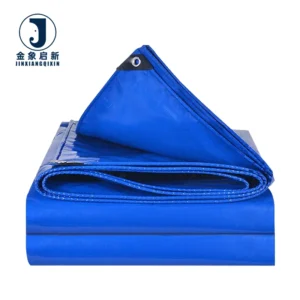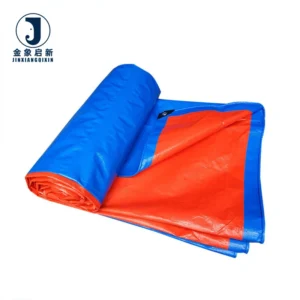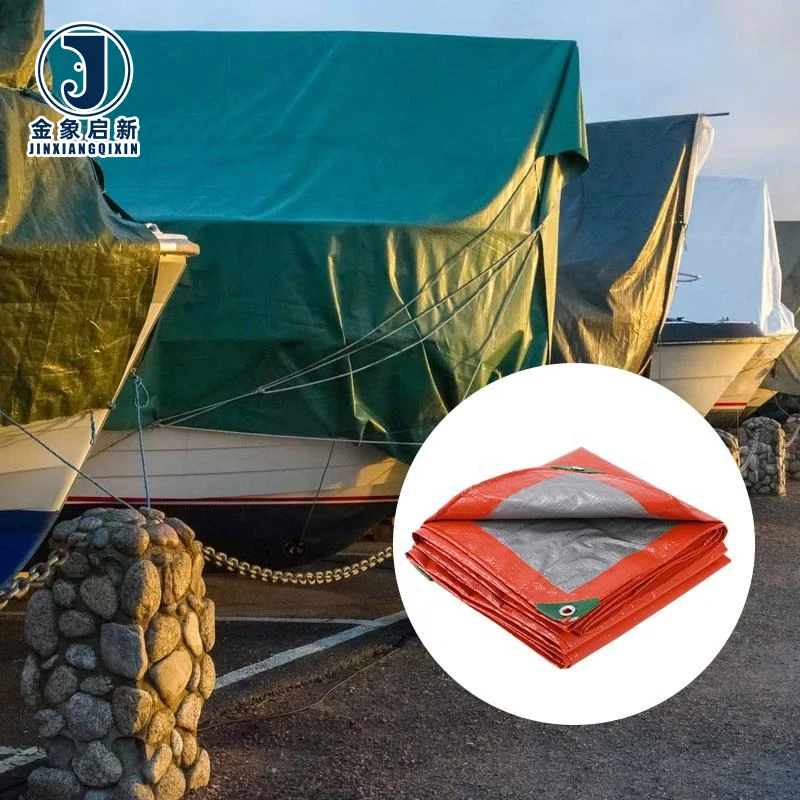
Precision Fitment Engineering — Generic truck covers leave gaps at the tailgate and stress concentration at the tie-down points; every sheet is cut to the exact trailer profile with reinforced zones mapped to the vehicle’s load-bearing geometry.
Technical Specifications
| Parameter | Value |
|---|---|
| Product Type | PE Tarpaulin |
| Material | HDPE fabric cross weaving, LDPE plastic lamination both sides |
| Layer Options | 3 layers (one fabric, two coating) / 5 layers (two fabric, three coating) |
| Weight Range | 40g~500g/m² (range covers product family — confirm the grade for this item) |
| Total Thickness (Lightweight) | 0.18–0.22 mm |
| Total Thickness (Medium) | 0.22–0.28 mm |
| Total Thickness (Heavy-duty) | 0.30–0.35 mm |
| Knitting Density (Lightweight) | 8×8 |
| Knitting Density (Medium) | 10×10 |
| Knitting Density (Heavy-duty) | 12×12 |
| Tensile Strength (Lightweight) | Meridian 300–500 / Latitude 250–450 N/5cm (test basis not stated in source) |
| Tensile Strength (Medium) | Meridian 500–800 / Latitude 400–700 N/5cm (test basis not stated in source) |
| Tensile Strength (Heavy-duty) | Meridian 900–1200 / Latitude 700–1000 N/5cm (test basis not stated in source) |
| Grommet Spacing | 39.4 inches center to center |
| Mesh Count Range | 5×5 ~ 20×20 |
| Surface | Double waterproof surfaces |
| Edge & Corner | Reinforced rustproof grommets, reinforced corners |
| Treatment Options | UV treatment available (test basis not stated in source), mildew proof, anti-aging, blackout capability |
| Size | Custom size available |
| Color | Custom color available |
| Certification | ISO, CE |
Application Suitability
| Application | Exposure & Requirement |
|---|---|
| Flatbed truck top cover | Continuous UV and rain exposure, wind lift at highway speed, abrasion against cargo edges |
| Trailer side curtain | Repeated flexing at fold lines, road spray, tie-down tension at grommet points |
| Tipper load containment | High mechanical stress during loading, dust and water ingress prevention, heavy-duty tie-down |
| Agricultural transport cover | Prolonged sun exposure in open fields, moisture contact, lightweight handling requirement |
| Equipment cover on transit | Vibration during transport, corner abrasion against metal frames, weather protection in storage yards |
Why the Right PE Tarpaulin for Truck and Transport Fitment Beats a Thicker Generic Sheet
A cover that matches the exact trailer profile outperforms a heavier sheet cut to a standard size.
Fleet operators routinely order truck covers by thickness alone, assuming a higher GSM solves every problem on the road. What actually happens is that a generic-sized cover bunches at the rear, flaps in crosswinds, and concentrates stress at two or three grommets while the rest of the hem hangs loose [NEED_CITE: tensile and tear test methods for coated fabrics per ISO 1421]. The material may be heavy enough, but the fitment failure exposes cargo to road spray just as effectively as a thin sheet would. When the cover is cut to the specific trailer dimensions and the grommets align with the vehicle’s actual tie-down points, the load is distributed across the entire hem, and the PE tarpaulin for truck and transport use performs as engineered.
Covering a Moving Load: Where Flex Points Decide Service Life
A truck in motion subjects its cover to a cycle of tension, release, and abrasion that a stationary warehouse sheet never encounters. Every time the suspension compresses over a bump, the fabric flexes at the tie-down line and the cargo contact zone. PE tarpaulin grades in the heavy-duty range with 12×12 knitting density and tensile strength reaching Meridian 1200 N/5cm are specified for these stress cycles because the tighter weave distributes point loads across a wider area of the base fabric. The 5-layer construction option adds a second fabric layer and an intermediate coating, providing additional resistance to the crumble and delamination that appears at fold lines after sustained road use.
Model-Specific Fitment and Reinforcement Mapping
Transport equipment builders and fleet operators each run distinct trailer profiles — curtain-siders, flatbeds, tippers — and each profile creates its own pattern of wear. A cover designed for a specific model places reinforced corners and rustproof grommets at the exact tie-down locations, preventing the tear propagation that starts when a grommet pulls through an unsupported hem [NEED_CITE: grommet pull-through failure patterns in transport tarpaulins]. Custom sizing also eliminates the excess fabric that catches wind on curtain-sider trailers, reducing the flutter that accelerates fatigue at welded seams. When the PE tarpaulin for truck and transport application is ordered with the trailer model and tie-down layout specified, the supplier maps reinforcement zones to the vehicle’s geometry rather than applying a uniform edge treatment.
Reading the Specifications Beyond the GSM Number
GSM is the most quoted figure on a tarpaulin specification sheet, yet it tells only part of the story for transport covers. The knitting density — whether 8×8 for lightweight agricultural sheets or 12×12 for heavy-duty transport grades — determines how the load spreads through the woven HDPE base. A 240 g/m² sheet with a loose 8×8 weave may weigh the same as a 240 g/m² sheet with a tight 12×12 weave, but the latter has more yarn intersections per square centimetre, giving it higher resistance to tear propagation when a sharp cargo edge presses against the fabric. Layer construction compounds this effect: the 5-layer option sandwiches two woven layers with three coating layers, increasing peel strength between coating and fabric compared to the 3-layer alternative, which matters when the cover is folded and unfolded daily on a curtain-sider trailer. Grommet spacing at 39.4 inches center to center is calibrated to distribute tie-down tension without leaving unsupported spans that can lift in crosswinds.
The Hidden Cost of Specifying on Weight Alone
When a procurement decision rests on GSM without verifying knitting density, layer construction, or grommet reinforcement, the cover often fails at the points where the load flexes most. A lightweight 3-layer sheet specified for a tipper fleet may delaminate at the hem within the first season because the single fabric layer cannot absorb the repeated shock of loading and unloading [NEED_CITE: coating adhesion failure under cyclic mechanical stress in transport covers]. Colour inconsistency between rolls in a multi-vehicle fleet order becomes visible once the covers are installed side by side on parked trailers, prompting replacement before the material itself has worn out. Covers ordered without confirming UV treatment documentation may show surface chalking and tensile loss after sustained highway exposure, even though the base fabric remains intact. Each of these outcomes traces back to a specification that omitted one or two critical parameters beyond weight.
Why Source This PE Tarpaulin for Truck and Transport Here
Deep process control over coating weight and adhesion means the LDPE lamination on each side of the HDPE base is monitored throughout the production run, maintaining consistent peel strength from the first roll to the last. Three full production lines and 36 sets of professional equipment support bulk capacity for fleet-scale orders while maintaining on-time delivery schedules [NEED_CITE: production capacity and quality control in coated fabric manufacturing]. A 10-person R&D team handles the pattern from trailer model dimensions to grommet placement, developing samples within days so the fitment is confirmed before the production run begins. Dedicated QA and QC at every stage, with 100 percent inspection before shipment, catches coating weight deviation, grommet alignment errors, and colour drift before the rolls leave the facility. Custom width, colour, and sizing are available without the long lead times and high minimums that often constrain transport fleet orders.
Documentation & Verification
- Material specification sheet stating HDPE base fabric denier, LDPE coating weight, and confirmed GSM per roll
- UV treatment and anti-aging test report where extended road exposure is specified
- Pre-shipment inspection record verifying grommet spacing at 39.4 inches and corner reinforcement
- Roll packing list with roll count, weight, and dimensions for container loading planning
- Certificate of origin and customs documentation for cross-border fleet supply
- ISO and CE certificates covering the production facility and quality management system
Fabrication, Handling & Storage
- Heat-weld seams using temperature settings matched to the LDPE lamination layer thickness to avoid burning through the HDPE base
- Reinforce grommet zones with additional LDPE patches at tie-down points before pressing rustproof grommets through the 3-layer or 5-layer construction
- Store rolls upright on pallets to prevent permanent crease lines in the heavy-duty grades above 0.30 mm thickness
- Allow cold-stored sheets to reach ambient temperature before unfolding to avoid cracking the LDPE coating at fold lines
- Use mild detergent and soft brush for cleaning; avoid solvents that degrade the LDPE lamination surface
- Cut with hot-knife tools to seal edges and prevent fraying of the HDPE woven base at custom trim lines
Before You Specify: What We Need to Quote Accurately
Provide the trailer model designation, overall cover dimensions, and the location of existing tie-down points so the grommet layout matches the vehicle. Confirm whether the application demands 3-layer or 5-layer construction based on the flex cycle frequency and weather exposure on your routes. State the required GSM grade, colour reference, and whether UV treatment documentation is needed for your market compliance. Let us know if finished cut-and-hemmed covers or roll stock is preferred, and the expected annual volume so lead time and batch consistency can be planned.
Frequently Asked Questions
Q: How do I specify a tarpaulin that fits my exact trailer model rather than a generic size?
A: Provide the trailer make, model, and year along with measured cover dimensions and tie-down point locations. The cover is then cut to match the vehicle profile, with grommets placed at your existing anchor points. A pre-production sample confirms fitment before the full order runs, eliminating the gaps and stress concentrations that generic sizes create on specific trailer geometries.
Q: What is the difference between 3-layer and 5-layer PE tarpaulin for transport use?
A: The 3-layer version has one HDPE fabric layer with LDPE coating on both sides, suitable for moderate flex cycles. The 5-layer option adds a second fabric layer and an intermediate coating, delivering higher peel strength and crumble resistance at fold lines. Fleet operators running curtain-sider trailers with daily folding typically specify the 5-layer construction for extended service under repeated mechanical stress.
Q: Can the grommet spacing and corner reinforcement be customised for my tie-down system?
A: Yes. Standard spacing is 39.4 inches center to center, but this can be adjusted to match your trailer’s tie-down rail or anchor layout. Corner reinforcements are added as additional LDPE patches before grommet pressing, distributing the tie-down load across a wider area of the base fabric to prevent pull-through under highway wind tension.
Q: How is colour consistency maintained across multiple rolls for a fleet order?
A: All rolls in a single fleet order are produced from the same LDPE coating batch with colour reference verified at the coating stage. A pre-shipment inspection record documents the colour check across rolls. This prevents the visible variation that appears when covers from different production batches are installed side by side on parked trailers.
Q: What UV or weathering test documentation is supplied with the shipment?
A: Where UV treatment is specified, the material specification sheet references the treatment applied, and a test report is available upon request. Fleet operators running long-haul routes with continuous sun exposure should request this documentation during the quotation stage to confirm the treatment matches the expected service conditions on their routes.