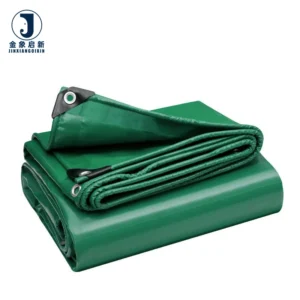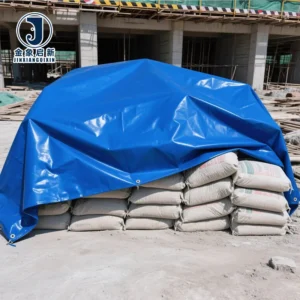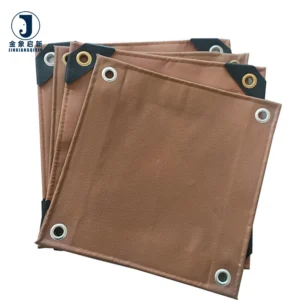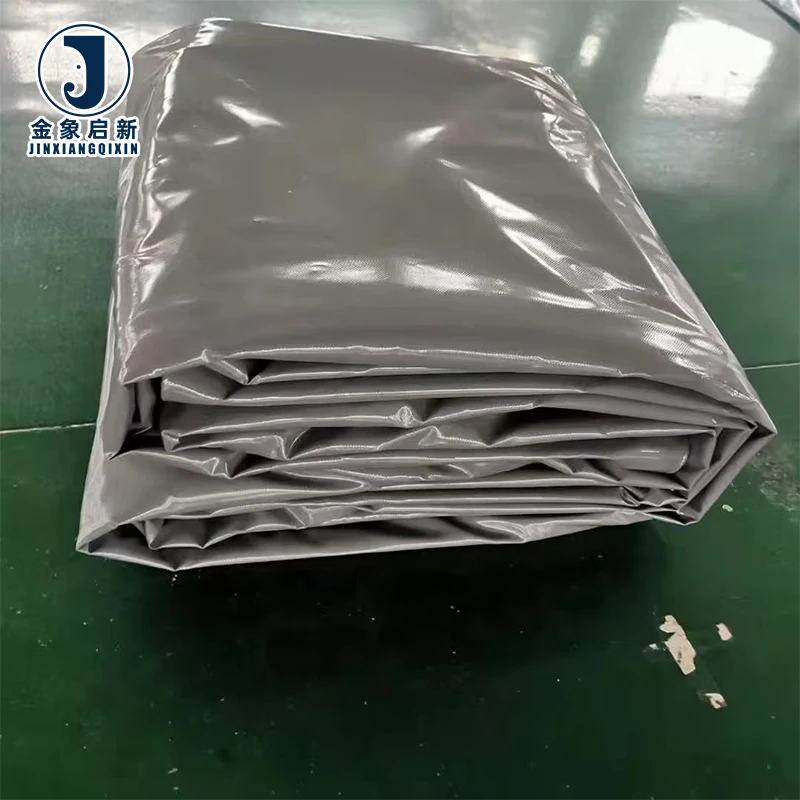
Deep Coating Control — Our 630 Gsm PVC coated tarpaulin for truck and transport uses precisely metered coating weight to ensure consistent adhesion and flex durability across every roll produced.
Technical Specifications
| Parameter | Value |
|---|---|
| Product Type | PVC Coated Tarpaulin |
| Weight | 630 Gsm |
| Base Fabric Denier Options | 200D×300D, 500D×500D, 840D×840D, 1000D×1000D |
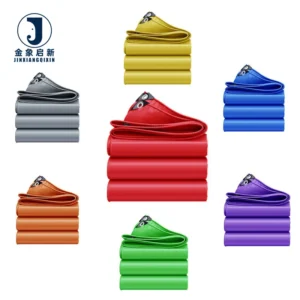
| Color Options | Blue, Grey, Orange (additional colors available on request) |
| Surface Finish | Available in glossy or matte finish |
| Temperature Range | -15°C to 70°C |
| Treatment | Waterproof, anti-fungal treated; UV and FR grades available — confirm the grade required for your market |
| Key Features | Fully waterproof, tear-resistant, abrasion-resistant, good flexibility and adhesion strength |
| Size Options | 3×4 m, 6×8 m, 8×10 m, 10×12 m, or custom cut to trailer dimensions |
Application Suitability
| Application | Exposure & Requirement |
|---|---|
| Flatbed truck load covering | Highway wind load, rain ingress, tie-down abrasion at flex points, repeated folding and unfolding |
| Curtain-side trailer fabric | Constant vertical flex cycling, road debris impact, UV exposure on south-facing routes |
| Tipper trailer top cover | Heavy material contact, puncture risk from aggregate, tension at hem and eyelet zones |
| Intermodal container cover | Multi-day exposure without shelter, condensation buildup, handling crane contact |
Why Generic-Size Covers Fail Where Fleet Operators Need Them Most
A truck tarpaulin that does not match your trailer model creates failure points that no material grade can compensate for.
Fleet operators regularly replace covers that were ordered in standard cut sizes but installed on trailers with non-standard bed lengths or side curtain track profiles. The excess fabric flaps under highway speed, generating friction heat at contact edges. At tie-down zones, the hem sits away from the load surface, concentrating the strap load on a single eyelet instead of distributing it across reinforced webbing. [NEED_CITE: fabric fatigue failure modes in tensioned tarpaulin installations] Over a typical long-haul cycle, this localized stress produces seam separation well before the PVC coated tarpaulin for truck and transport reaches its material fatigue limit.
Cut-to-Model Sizing Eliminates the Loose-Fabric Failure Loop
Every trailer model carries specific bed dimensions, curtain track geometry, and tie-down rail positions. Our PVC coated tarpaulin for truck and transport is cut and finished to these exact measurements rather than a generic rectangle with standard eyelet spacing. This approach keeps the fabric under even tension across the load surface, preventing the flapping and chafing that degrade covers prematurely on intermodal and highway routes.
Reinforcement Placed at Actual Stress Points, Not Arbitrary Intervals
High-stress zones on a truck cover are determined by the load profile and the strap routing of the specific trailer. We position eyelets, reinforcement patches, and welded hem overlaps at these mapped points rather than at equal intervals. The result is a PVC coated tarpaulin for truck and transport that handles tie-down tension where it actually concentrates, reducing warranty claims tied to eyelet pull-through and hem tearing.
Understanding What 630 Gsm Means in a Truck Cover Context
Coating weight alone does not define how a truck tarpaulin performs under road conditions. The 630 Gsm figure represents the combined mass of base fabric and PVC coating per square meter, but the base denier selection — whether 500D×500D or 1000D×1000D — determines how that weight translates into tensile and tear resistance. A 630 Gsm fabric on a lighter base will feel stiffer but tear more easily along the warp line; on a heavier base it drapes with more flexibility while maintaining puncture resistance. [NEED_CITE: relationship between base fabric denier and coating adhesion per ISO 1421] The surface finish also plays a role: glossy finishes shed road grime and allow easier wash-down between routes, while matte finishes reduce glare for fleet operators who prioritize visual consistency across vehicles. Temperature range matters for fleets running cross-climate routes — the -15°C to 70°C operating window means the PVC remains flexible in winter dispatch yards without becoming tacky in midday sun on exposed tarmac.
The Cost of Overlooking Seam Integrity in Truck Tarpaulin Procurement
When welded seams are set with incorrect heat or dwell time for the specific coating weight, the bond fails before the fabric body does. This is particularly common at corners and tie-down patches on truck covers, where the load flexes most during transit. Fleet operators then face full cover replacement rather than a localized repair, because the delamination spreads along the weld line under continued tension. [NEED_CITE: thermal welding parameters for PVC coated fabrics at varying GSM grades] Batch colour inconsistency across rolls in the same fleet order compounds this problem — when panels are replaced at different times, visible colour mismatch across adjacent covers triggers cosmetic rejection even though the material itself remains serviceable.
Why Transport Procurement Teams Source This PVC Coated Tarpaulin Here
Nearly 30 years of focused coated fabric production means the coating weight and adhesion parameters for truck-grade PVC are controlled through established process recipes rather than trial adjustments. Three full production lines with 36 sets of professional equipment support fleet-scale roll output with consistent delivery timing across repeat orders. The 10-person R&D team develops model-specific cut patterns and reinforcement layouts, producing samples within days so fleet operators can verify fit before committing to bulk production. Dedicated quality inspection at every production stage, with 100% pre-shipment checking, catches seam integrity and colour drift issues before the rolls leave the facility.
Documentation & Verification
- Material specification sheet listing 630 Gsm weight, base fabric denier, and colour reference for each roll
- Pre-shipment weight verification sample confirming GSM against the quotation value
- UV and flame-retardant test reports supplied where the corresponding treatment grade is specified
- Roll packing list with individual roll dimensions and batch traceability codes
- ISO and CE certificates included with every export shipment
- Certificate of origin and customs documentation prepared per destination market requirements
Fabrication, Handling & Storage
- Heat-weld seams at parameters matched to 630 Gsm coating weight to ensure bond strength exceeds fabric tear strength
- Reinforce eyelet zones with additional PVC patches at mapped tie-down stress points before punching
- Store rolls vertically on pallets to prevent flat-spot creasing across the coated surface
- Allow cold-stored rolls to reach ambient temperature before unrolling to avoid coating micro-cracking
- Use mild detergent for cleaning glossy or matte surfaces — avoid solvent-based agents that soften the PVC coating
- Cut panels with allowance for thermal expansion within the -15°C to 70°C operating range
Preparing Your Enquiry for a Fleet-Grade Cover
Provide your exact trailer model designation, bed length, side curtain track profile, and tie-down rail positions so we can develop a cut pattern matched to your vehicles. Specify whether you need rolls for your own fabrication or finished covers with eyelets and welded hems, and confirm the target market for any fire-safety or UV compliance requirements. If fleet colour matching across multiple orders is important, include your RAL or Pantone reference and annual volume estimate so we can plan batch consistency accordingly.
Frequently Asked Questions
Q: How is GSM verified on arrival and what is the tolerance on a 630 Gsm truck tarpaulin?
A: Each roll is weighed per square meter sample before dispatch, and a pre-shipment inspection record accompanies the shipment. Upon arrival, you can cut a measured sample from the roll edge and weigh it on a calibrated scale to confirm consistency. Minor variation within industry tolerance is normal, but any deviation beyond that triggers investigation against the production batch record.
Q: Can the tarpaulin be cut and finished to fit a specific trailer model rather than a generic size?
A: Yes. We cut and finish PVC coated tarpaulin to the exact dimensions and track geometry of your trailer model, including eyelet placement at actual tie-down positions rather than standard intervals. Provide the trailer make, model, and year so we can develop a pattern that eliminates the loose-fabric flapping that causes premature wear.
Q: How do you control colour consistency across multiple rolls for a fleet order?
A: All rolls for a single fleet order are produced from the same coating batch with matched pigment formulation. Before dispatch, rolls are laid side by-side under standard lighting for visual comparison. Any roll showing visible drift from the batch reference is pulled and replaced before the shipment leaves our inspection area.
Q: What eyelet spacing and hem reinforcement options are available for high-flex tie-down areas?
A: Eyelet spacing is set according to your trailer’s strap routing rather than a fixed interval. At high-stress zones such as corners and mid-span tie-down points, we apply additional PVC reinforcement patches and, where specified, woven webbing inserts within the hem fold to distribute load across a wider area and prevent pull-through.
Q: What UV or flame-retardant test reports are supplied with the truck tarpaulin shipment?
A: Where UV or flame-retardant treatment is specified in the order, the corresponding test report is included with the shipment documentation. Confirm the grade required for your market or application at the enquiry stage so we can apply the correct treatment and provide the matching certification with your delivery.