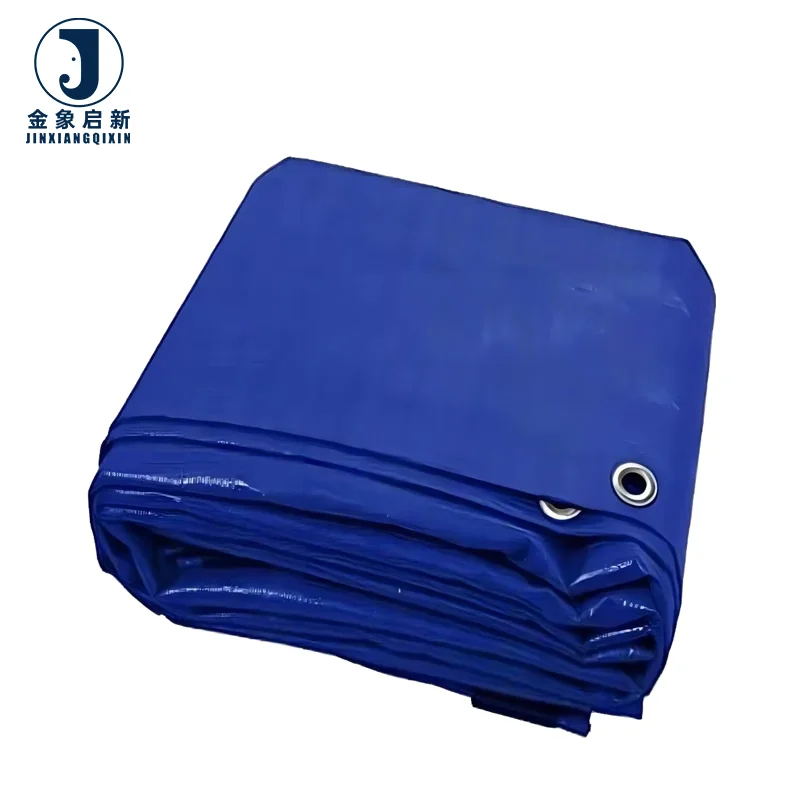
Model-Specific Fitment Engineering — Custom cut-to-trailer sizing with reinforced tie-down points ensures every PVC truck tarpaulin cover matches your fleet dimensions precisely, eliminating gaps and excess material that generic covers leave behind.
Technical Specifications
Product Type | PVC Coated Truck Tarpaulin / Truck Cover
| Parameter | Value |
|---|---|
| Material | PVC + High-strength polyester mesh fabric |
| Coating Method | Laminated technology & Hot-melt coating technology |
| Weight (GSM) | 350gsm / 420gsm / 500gsm / 550gsm / 600gsm / 750gsm |
| Total Thickness | 0.32mm / 0.35mm / 0.4mm / 0.45mm / 0.5mm / 0.65mm |
| Roll Width | 2m / 2.1m |
| Roll Length | 75m (for 2m width) / 50m (for 2.1m width) |
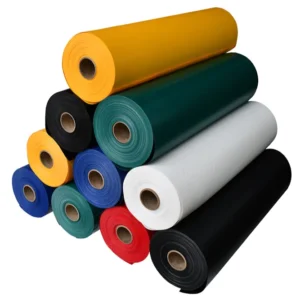
| Color | Blue / Red / Yellow / Light blue / Grey (Customized) |
| Key Features | High tenacity polyester yarns, good strength and flexibility, outstanding tearing strength for welding, cold crack resistance, anti-mildew, anti-static treatment (grade not stated), waterproof, sunproof (test basis not stated), best color fastness |
| Finish Product Size | Custom items as per customer’s needs or sold by inventory |
| Service Life | 3-7 years under normal circumstances (source value — verify against manufacturer catalog) |
| Standards | ISO, CE |
Application Suitability
| Application | Exposure & Requirement |
|---|---|
| Truck awning and flatbed cover | Constant road vibration, load flex at tie-down points, UV exposure, rain and temperature fluctuation |
| Side curtain fabric for curtain-sider trailers | Repeated folding and unfolding, abrasion against trailer frame, wind load during transit |
| Cargo ship cover | Salt spray exposure, prolonged water contact, mechanical stress from cargo movement |
| Lorry and tipper truck weather protection | Abrasion from aggregate loads, thermal cycling, exposure to diesel and hydraulic fluids |
| Tent and awning cover | Extended outdoor deployment, UV degradation risk, wind uplift forces |
When a Generic Truck Cover Fails Where the Load Flexes Most
Welded seams on mass-produced PVC truck tarpaulin covers often fail before the fabric itself — right at the point where road vibration concentrates stress.
Fleet operators regularly report covers splitting along heat-welded joints within months, not because the base fabric degraded, but because the seam was not engineered for the specific flex pattern of their trailer model [NEED_CITE: weld seam failure modes in flexible industrial fabrics under cyclic loading]. Generic-size covers also leave excess material that flaps in transit, accelerating abrasion at fold lines and pulling eyelets out of alignment with tie-down points. The result is premature replacement, cargo exposure risk, and unplanned downtime across the fleet.
Trailer Model Fitment Eliminates Gaps and Excess Material
Every PVC truck tarpaulin cover is cut to the specific dimensions of your trailer model, with tie-down eyelet placement matched to your existing anchor configuration. This eliminates the excess fabric that generic covers leave behind — material that flaps, abrades, and accelerates seam failure. The hot-melt coating technology ensures strong adhesion between the PVC layer and high-tenacity polyester mesh, so welded seams hold under the cyclic loading that road transport imposes [NEED_CITE: tensile and tear test methods for coated fabrics per ISO 1421].
Reinforcement at High-Flex Points Extends Service Life
Covers for curtain-sider trailers and flatbed loads experience repeated folding at the same locations. Reinforced hems and additional PVC layers at eyelet zones distribute tie-down loads across a wider area, preventing pull-through. The laminated and hot-melt coating process produces consistent coating weight across the roll, so seam welds maintain uniform strength even after thousands of flex cycles. Anti-mildew and cold-crack resistant formulations ensure the cover performs across seasonal temperature ranges without becoming brittle in winter or softening excessively in summer heat.
Understanding GSM in Relation to Base Fabric Density
GSM alone does not determine fabric strength — the relationship between coating weight and base fabric denier defines tensile and tear resistance. A 600gsm cover with a high-denier polyester mesh will outperform a 750gsm cover with a lighter base fabric in tear propagation resistance. The coating method matters equally: hot-melt coating penetrates the mesh weave more thoroughly than calendering, producing higher peel strength at weld lines [NEED_CITE: coating penetration and adhesion mechanics in PVC laminated fabrics]. Multiple GSM grades from 350gsm to 750gsm allow matching cover weight to load type and route severity — lighter grades for protected urban delivery, heavier grades for long-haul aggregate transport.
The Hidden Cost of Selecting the Wrong Weight Grade
Choosing a cover weight based solely on price rather than operating conditions leads to predictable failures. A 420gsm cover specified for heavy aggregate transport will tear at weld lines within months, while a 750gsm cover used for light parcel delivery adds unnecessary weight and fuel cost. Colour inconsistency across rolls in the same fleet order creates visible mismatch when covers are installed side by side — a cosmetic issue that signals poor batch control to your customers [NEED_CITE: batch colour consistency standards in industrial coated fabrics]. GSM verification on arrival is essential: material lighter than quoted means reduced coating thickness, lower tear strength, and shortened service life.
Why Fleet Operators Source PVC Truck Tarpaulin Covers Here
Three full production lines and 36 sets of professional equipment support bulk capacity with reliable on-time delivery for fleet-scale orders. A 10-person R&D team handles material selection, custom sizing, and sample development — so you receive a prototype cut to your trailer model before production begins. Dedicated QA/QC at every production stage with 100% inspection before shipment ensures GSM, colour, and seam quality match the approved sample. Nearly 30 years focused on coated fabric means deep process control over coating weight and adhesion — the factors that determine whether welded seams survive road vibration.
Documentation & Verification
- Material specification sheet stating GSM, base fabric denier, and coating weight for each roll
- Pre-shipment inspection record confirming actual weight matches quoted grade
- Colour reference sample and batch consistency check across multiple covers
- Weld seam and eyelet reinforcement detail drawing per trailer model
- ISO and CE certificates available for compliance documentation
- Roll packing list with individual roll weight and dimensions
Fabrication, Handling & Storage
- Hot-melt coating requires specific temperature settings during field welding — confirm parameters with technical data sheet before seam repair
- Reinforced eyelet zones should align with trailer tie-down points — verify placement drawing before installation
- Store rolls upright on pallets to prevent flat-spot deformation in the 0.32mm to 0.65mm thickness range
- Clean with mild detergent only — abrasive cleaners damage the PVC surface and reduce UV protection effectiveness
- In cold weather below 5°C, allow rolls to acclimatise before unfolding to prevent cold-crack damage at fold lines
- Custom width rolls (2m or 2.1m) reduce on-site拼接 seams — plan layout to minimise waste and weld lines
Specifying Your PVC Truck Tarpaulin Cover Correctly
Provide your trailer model, exact dimensions, and tie-down anchor configuration so covers can be cut to match. Specify the operating environment — urban delivery, long-haul transport, or aggregate hauling — to select the appropriate GSM grade from 350gsm to 750gsm. Indicate colour requirements and whether multiple covers in the same order must maintain batch consistency. Request a sample cut to your specifications before approving production, especially for custom sizes or reinforced eyelet configurations.
Frequently Asked Questions
Q: How do you cut covers to fit our specific trailer model and dimensions?
A: Provide your trailer make, model, and exact measurements including tie-down anchor positions. Our R&D team develops a cutting pattern and reinforcement layout specific to your configuration, producing a sample for approval before bulk production begins. This ensures eyelet placement matches your anchor points and eliminates excess material that causes flapping and premature wear.
Q: How is GSM verified on arrival to ensure the cover matches the quotation?
A: Every roll undergoes weight verification against the stated GSM before dispatch, with results recorded in the pre-shipment inspection report. You receive documentation confirming actual weight per roll. If material arrives lighter than specified, this indicates reduced coating thickness and lower tear strength — grounds for rejection under standard procurement terms.
Q: What reinforcement options are available at eyelets, hems, and high-flex seam areas?
A: Reinforcement includes additional PVC layers at eyelet zones, double-folded hems with heat-welded seams, and strategic placement of high-tenacity polyester tape at stress points. The specific reinforcement layout depends on your trailer model and tie-down configuration. We provide a detail drawing showing reinforcement placement for your approval before production.
Q: How do you control colour consistency across a multi-cover fleet order?
A: All covers in a single order are produced from the same colour batch, with reference samples checked against the approved standard before cutting. Batch consistency records accompany your shipment. If visual mismatch occurs between covers installed side by side, this indicates poor batch control — a quality issue we address through in-process colour verification at every production stage.
Q: What is the typical lead time and sample process for a custom truck cover?
A: Sample development takes several days once we receive your trailer dimensions and specifications. After sample approval, production lead time depends on order volume and GSM grade selected. Multi-cover fleet orders typically require multiple weeks for production, inspection, and dispatch. We provide a detailed timeline with your quotation so you can plan fleet replacement schedules accordingly.