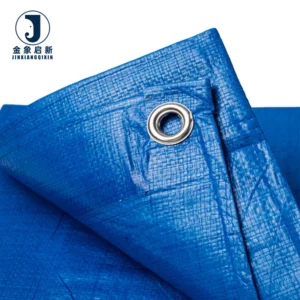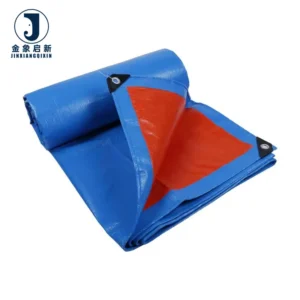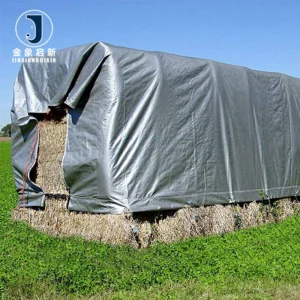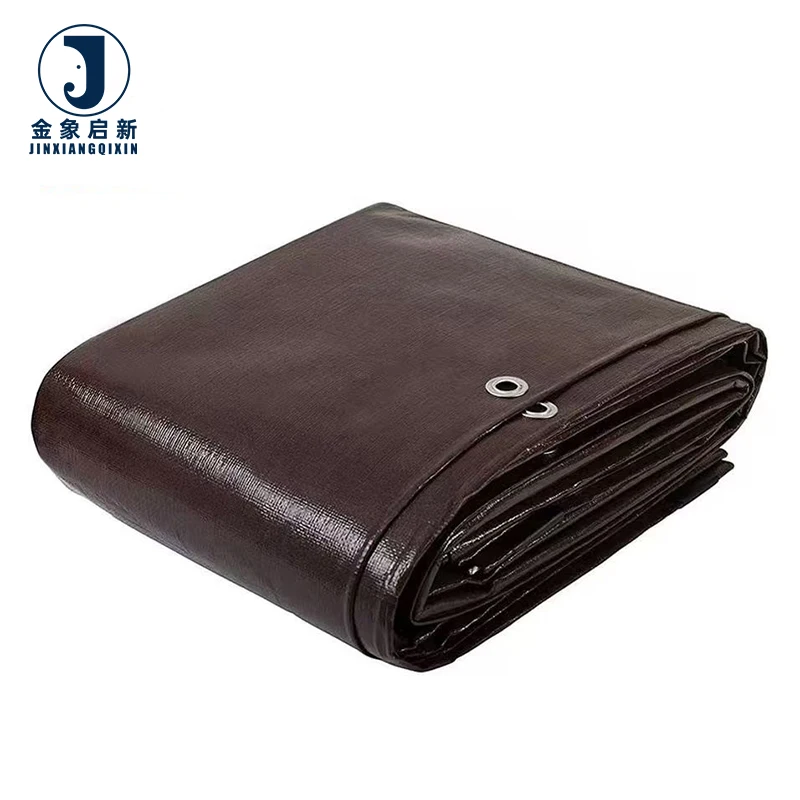
Precision-Cut PE Tarpaulin — Each cover is patterned to your specific truck or trailer model, with reinforced hems and eyelet spacing engineered to withstand tie-down stress at highway flex points.
Technical Specifications
Product Type | PE Tarpaulin
| Parameter | Value |
|---|---|
| Material | Polyethylene (PE) |
| Weight Range | 40g~500g/m² |
| Thickness | 0.18–0.35 mm (varies by grade) |
| Knitting Density | 8×8 / 10×10 / 12×12 (varies by grade) |
| Tensile Strength | Meridian 300–1200 N/5cm / Latitude 250–1000 N/5cm (varies by grade) |
| Size | Custom cut to vehicle model |
| Color | Custom color available |
| Water Resistance | Double waterproof surfaces |
| Eyelet Spacing | 39.4 inches center to center |
| UV Treatment | UV treatment available (test basis not stated in source) |
| Anti-Mildew | Mildew proof (test basis not stated in source) |
| Brand | Roc Tarp |
| Standards | ISO, CE |
Application Suitability
| Application | Exposure & Requirement |
|---|---|
| Truck and trailer load cover | Constant road vibration, tie-down strap friction, UV and rain exposure on open-deck transport |
| Side curtain fabric | Repeated flexing at fold lines, abrasion against cargo edges, weather sealing |
| Warehouse and yard stock cover | Long-term outdoor storage, pooling water risk, wind uplift at edges |
| Agricultural haul cover | Moisture ingress prevention, dust and debris protection during transit |
| Industrial equipment transport cover | Puncture risk from sharp edges, chemical splash resistance, repeated folding |
Why a Generic-Size PE Tarpaulin Fails at the Tie-Down Point
A truck cover cut to a standard dimension never sits flush on a specific trailer — the loose fabric flaps, the eyelets tear, and the load is exposed within the first highway run.
Fleet operators routinely receive PE tarpaulin quoted at a certain GSM but find the material lighter on arrival, or discover that eyelets pull through at the corners where tie-down tension concentrates. The failure is not the fabric itself but the mismatch between cut size, hem reinforcement and the actual flex geometry of the trailer. When a PE Tarpaulin for truck and transport is patterned without reference to the vehicle drawing, the cover shifts under load, water channels into the cargo area, and replacement cycles shorten significantly. [NEED_CITE: field failure analysis of tie-down points on transport tarpaulins]
Model-Specific Pattern Cutting for Fleet Fitment
Every PE Tarpaulin for truck and transport is cut against the dimensional drawing of your specific truck or trailer model, not a generic rectangle. This means the finished cover sits flush across the load deck, the hem aligns with the tie-down rail, and the eyelet positions match the existing anchor points on the chassis. For fleet operators running mixed vehicle types, each cover is labelled by vehicle ID so maintenance teams can deploy the correct size without trial fitting on the yard.
Reinforced Hems and Eyelet Engineering at Flex Points
The hem and eyelet zone is where a transport cover experiences the highest mechanical stress — strap tension, road vibration and repeated folding all concentrate at these points. Reinforced hems are folded and welded to distribute load across a wider fabric area, while eyelets are set at 39.4-inch center-to-center spacing to align with standard trailer tie-down rails. [NEED_CITE: tie-down load distribution on reinforced tarpaulin hems] For PE Tarpaulin used on side curtains, the fold lines receive additional treatment to resist crack propagation from repeated flexing.
Reading the Specification Beyond GSM
GSM alone does not determine whether a PE Tarpaulin will survive a long-haul route. The knitting density — whether 8×8, 10×10 or 12×12 — controls how the woven base fabric distributes tensile and tear loads across the panel. A heavier GSM with a loose weave may feel substantial but will tear more readily at a puncture point than a lighter grade with tight mesh. The tensile strength range of Meridian 300–1200 N/5cm and Latitude 250–1000 N/5cm reflects this interaction between base fabric density and coating adhesion. Double waterproof surfaces add moisture protection without adding stiffness that would resist folding in cold conditions.
The Hidden Cost of Incorrect Grade Selection
Selecting a lightweight PE Tarpaulin for a heavy-duty transport route leads to premature tearing at the hem, while specifying a heavy grade for seasonal agricultural cover wastes material cost and adds unnecessary weight to the vehicle. Colour inconsistency between rolls in the same fleet order becomes visible once covers are installed side by side on parked trucks, creating a mismatched appearance that undermines fleet branding. UV treatment claimed without supporting test data leaves the fleet operator unable to prove coverage validity during cargo inspection. [NEED_CITE: batch colour consistency standards for fleet tarpaulin procurement]
Why Fleet Operators Specify Here
Three full production lines and 36 sets of professional equipment support bulk fleet orders with consistent roll-to-roll output, so every cover in a 200-unit dispatch matches the approved sample. A dedicated 10-person R&D team develops vehicle-specific patterns and samples within days, allowing fleet maintenance teams to test fit before committing to full production. Every roll undergoes 100% pre-shipment inspection, with eyelet spacing, hem width and finished dimensions checked against the vehicle drawing. Material specification sheets state the exact GSM, base fabric weave and coating weight for the grade supplied, giving procurement teams traceable documentation for each dispatch.
Documentation & Verification
- Material specification sheet stating GSM, base fabric weave and coating weight per grade
- Pre-shipment inspection record confirming eyelet spacing and finished dimensions against vehicle drawing
- Test report for UV treatment grade where applicable to the specified product
- Roll packing list with batch traceability for fleet-wide dispatch
- ISO and CE certificates supporting quality system compliance
- Certificate of origin and customs documentation for international shipment
Fabrication, Handling & Storage
- Reinforced hems are heat-welded to match the PE coating melt temperature — avoid mechanical fasteners in high-stress zones
- Store rolls upright on pallets to prevent flat-spot deformation of the woven base fabric across the 0.18–0.35 mm thickness range
- Unroll at ambient temperature above 5°C to prevent coating micro-cracking along fold lines during deployment
- Clean with mild detergent only — solvent-based cleaners degrade the double waterproof surface treatment
- Patch repairs use PE-compatible heat-weld tape applied to the coated side for permanent seal restoration
Starting Your PE Tarpaulin Enquiry
To receive an accurate specification recommendation and sample, provide the truck or trailer model dimensions, the tie-down rail layout and the typical route exposure conditions. Indicate whether you require finished covers with reinforced hems and eyelets, or roll stock for in-house fabrication. If your fleet operates across multiple climate zones, note the temperature range so the appropriate GSM and knitting density grade can be matched.
Frequently Asked Questions
Q: How do you match PE tarpaulin size to a specific truck or trailer model?
A: We pattern each cover against the dimensional drawing of your vehicle, including the load deck length, width and the position of tie-down anchor points. The finished cover is cut so the hem aligns with the rail and the eyelets at 39.4-inch spacing match the chassis anchors, eliminating loose fabric that flaps at highway speed.
Q: How is eyelet spacing and hem reinforcement specified for tie-down loads?
A: Eyelet spacing is set at 39.4 inches center to center as standard, aligned with typical trailer tie-down rail pitch. Hems are folded and heat-welded with reinforced tape to distribute strap tension across a wider fabric zone, reducing pull-through risk at corners where load flex concentrates.
Q: What GSM and mesh count grades are available for transport-grade PE tarpaulin?
A: The PE Tarpaulin range covers 40g~500g/m² with knitting densities of 8×8, 10×10 and 12×12. Lightweight grades suit seasonal agricultural cover, medium grades handle general truck and warehouse use, and heavy-duty grades with tight mesh are specified for long-haul industrial transport where tear resistance is critical.
Q: How do you control colour consistency across multiple covers in a fleet order?
A: All rolls within a fleet order are produced from the same colour batch, and pre-shipment inspection includes visual comparison against the approved master sample. Each roll is labelled with batch reference so fleet managers can reorder matching covers months later without visible shade difference between vehicles.
Q: What abrasion and weather exposure can PE tarpaulin withstand on open-road transport?
A: The double waterproof PE coating resists rain, road splash and dust ingress, while UV treatment is available for extended outdoor exposure. The woven base fabric provides tear resistance against cargo edge abrasion, and reinforced hems protect the tie-down zones from strap friction during long-haul vibration.