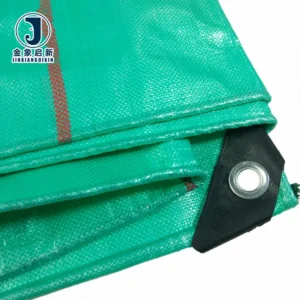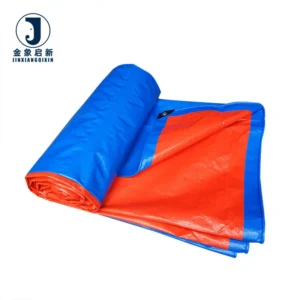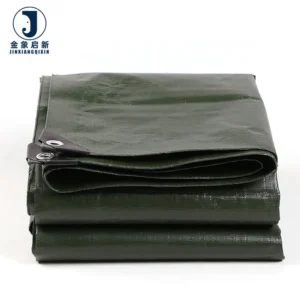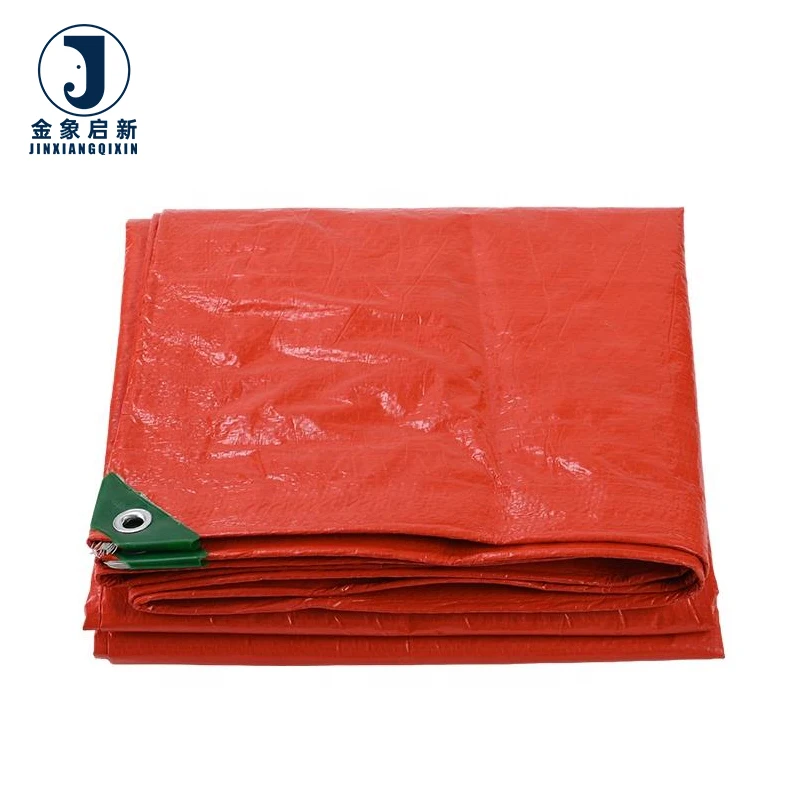
Truck-Specific Fitment — PE tarpaulin covers cut to exact trailer dimensions eliminate edge gaps and flapping fabric that accelerates abrasion at highway speeds.
Technical Specifications
| Parameter | Value |
|---|---|
| Product Type | PE Tarpaulin |
| Material | Polyethylene |
| Coating Material | PE |
| Weight Range | 40g~500g/m² |
| Lightweight Weight | 80-110 g/m² |
| Medium Weight | 120-150 g/m² |
| Heavy-Duty Weight | 160-240 g/m² |
| Lightweight Thickness | 0.18-0.22 mm |
| Medium Thickness | 0.22-0.28 mm |
| Heavy-Duty Thickness | 0.30-0.35 mm |
| Lightweight Mesh Count | 8×8 |
| Medium Mesh Count | 10×10 |
| Heavy-Duty Mesh Count | 12×12 |
| Knitting Density Range | 5×5~20×20 |
| Tensile Strength (Lightweight) | Meridian 300-500 / Latitude 250-450 N/5cm |
| Tensile Strength (Medium) | Meridian 500-800 / Latitude 400-700 N/5cm |
| Tensile Strength (Heavy-Duty) | Meridian 900-1200 / Latitude 700-1000 N/5cm |
| Eyelet Center Spacing | 39.4 Inches |
| Water Resistance | Double waterproof surfaces, reinforced corners |
| UV Treatment | Available (test basis not stated in source) |
| Surface Characteristics | Tear-resistant, washable, mildew proof, anti-aging |
| Color | Custom color |
| Size | Custom size |
| Printing Option | Custom printing available |
| Standards | ISO 14001, ISO 45001, CE |
Application Suitability
| Application | Exposure & Requirement |
|---|---|
| Truck and trailer load covering | Highway wind load, constant tie-down tension, UV and rain exposure, flexing at load shift points |
| Fleet side curtain replacement | Repeated curtain sliding abrasion, road debris impact, colour match to existing fleet livery |
| Transport equipment new builds | Model-specific panel dimensions, eyelet alignment with chassis tie-down rails, warranty-grade finish |
| Warehouse and yard cargo cover | Stacking abrasion, forklift contact, standing water pooling on flat loads |
Why a Generic-Size PE Tarpaulin for Truck and Trailer Cover Costs More Than You Think
A cover that does not match your trailer model creates two failure points before the first kilometre is logged.
Generic-size covers leave loose fabric that flaps under highway wind load, concentrating abrasion at the hem and eyelet rows. Excess material also folds under tie-down straps, creating hard crease lines that fatigue the PE coating faster than flat tension ever would. Fleet operators replacing covers mid-contract because of edge tearing are often chasing a sizing problem, not a material problem [NEED_CITE: tarpaulin failure analysis methods for transport covers]. Specifying the exact PE tarpaulin for truck and trailer cover dimensions matched to your vehicle model removes both failure points at the source.
Cutting Covers to the Vehicle, Not to the Roll
Every trailer model has distinct deck width, side height and rear door clearance that dictate cover panel geometry. We develop a cutting template from the vehicle model data you supply, so each PE tarpaulin for truck and trailer cover ships with panels that align to the chassis rails and tie-down points without field trimming.
Reinforcement Where the Load Actually Flexes
Corner gussets and hem doubling are placed at the stress concentrations identified in your trailer geometry, not at uniform intervals. This approach directs reinforcement material to the zones where cargo shift and road vibration concentrate force on the PE coated fabric, reducing premature eyelet pull-out.
Colour and Batch Control Across a Fleet Order
When a transport company orders replacement covers for mixed-model fleets, roll-to-roll colour consistency determines whether the fleet looks uniform on the yard. Each production batch runs from a single compound mix, and pre-shipment inspection compares panels side by side under controlled lighting before packing [NEED_CITE: visual colour assessment standards for coated fabrics].
Reading the Specification Sheet Beyond GSM
Weight per square metre is only one variable in how a PE tarpaulin performs under road conditions. The knitting density — ranging from 8×8 in lightweight grades to 12×12 in heavy-duty grades — determines the base fabric structure that the PE coating locks onto. A 160 g/m² cover with 12×12 mesh will resist tear propagation differently than the same weight with a looser weave, because the yarn intersections distribute puncture load across more cross-threads. Tensile strength figures in the meridian and latitude directions tell you how the fabric handles the directional pull of tie-down straps versus the longitudinal drag of highway wind. Selecting the right grade means matching these structural properties to the load weight and route exposure your fleet encounters, rather than choosing on GSM alone.
The Cost of Skipping Pre-Shipment Verification
Fleet operators who accept delivery without checking GSM against the quotation sometimes discover the cover material is lighter than the grade specified, particularly when sourcing across multiple suppliers for different trailer types. A lighter cover flexes more under wind load, accelerating fatigue at the eyelet row and hem weld. Separately, UV treatment claimed without a supporting test report leaves the buyer exposed when covers chalk and embrittle earlier than the procurement cycle expected [NEED_CITE: accelerated weathering test standards for polyethylene tarpaulin]. These gaps are preventable with documentation that ties each roll to its stated specification.
Why Transport Fleets Source PE Covers Here
Three full production lines and 36 sets of professional equipment handle fleet-scale orders with delivery schedules that match your maintenance rotation. The 10-person R&D team develops cutting templates and reinforcement layouts from your vehicle model drawings, producing finished samples for fitment trials before bulk runs commence.
QA inspection covers every production stage, with 100% pre-shipment checking that compares panel dimensions and eyelet placement against the approved template. Custom width, colour and print orders carry practical minimums and lead times, so replacing a small batch of covers for newly acquired trailers does not require a full-container commitment.
Deep process control over PE coating weight and base fabric adhesion, built across nearly 30 years of coated fabric production, means the coating does not delaminate from the weave under the flex cycling that highway transport imposes.
Documentation & Verification
- Material specification sheet confirming GSM grade, knitting density and coating weight for each roll in the order
- Dimensional inspection record showing panel measurements against the approved trailer model template
- UV treatment test report supplied where UV-stabilised grade is specified for the order
- Roll packing list with batch reference for colour traceability across fleet deployments
- Pre-shipment inspection photographs documenting hem reinforcement and eyelet spacing before dispatch
Fabrication, Handling & Storage
- Heat-weld seam parameters must match the PE coating thickness — lightweight 0.18-0.22 mm grades need lower platen temperatures than heavy-duty 0.30-0.35 mm grades
- Reinforced corner patches should extend beyond the eyelet centre spacing of 39.4 inches to distribute tie-down load across multiple mesh intersections
- Store rolls horizontally on pallets to prevent permanent creasing in the 12×12 heavy-duty mesh, which resists flattening once deformed
- Unfold covers at ambient temperature; PE coating stiffens in cold conditions and may crack if forced open below freezing
- Clean with mild detergent and soft brush — abrasive pads will score the double waterproof surface and reduce water shedding
- Field repairs on minor punctures use PE-compatible tape applied to a clean, dry surface with firm pressure over the 8×8 or denser mesh
What to Include in Your Enquiry
Provide the truck or trailer make, model and year, along with the deck dimensions and tie-down rail configuration so we can develop the cutting template. Specify the GSM grade range your fleet operates — lightweight for temporary yard covers through heavy-duty for long-haul highway exposure — and indicate whether UV treatment documentation is required for your compliance records. Confirm the quantity per vehicle model, colour reference if matching an existing fleet livery, and whether you need finished covers with eyelets installed or roll stock for your own fabrication.
Frequently Asked Questions
Q: How do you cut PE tarpaulin covers to fit specific truck and trailer models?
A: We develop a cutting template from the vehicle model dimensions and tie-down rail layout you supply. Each panel is cut and finished with eyelets positioned to align with your chassis anchor points, eliminating field trimming and ensuring the PE tarpaulin for truck and trailer cover fits without gaps or excess material.
Q: How is GSM verified on arrival to match the quoted weight grade?
A: Every roll undergoes weight verification during pre-shipment inspection, with results recorded against the quoted GSM grade. The inspection record accompanies your documentation package, so you can confirm the lightweight, medium or heavy-duty grade received matches the specification on your purchase order.
Q: What reinforcement options are available at tie-down and corner stress points?
A: Corner gussets, hem doubling and additional eyelet patches are applied based on the stress profile of your trailer geometry. Reinforcement placement targets the zones where cargo shift and tie-down tension concentrate force, rather than applying uniform edging that adds weight without addressing actual failure points.
Q: How do you control colour consistency across multiple covers in one fleet order?
A: Each batch is produced from a single compound mix, and pre-shipment inspection includes side-by-side colour comparison under controlled lighting. The roll packing list provides batch traceability, ensuring covers deployed across different vehicles in your fleet present a uniform appearance.
Q: What is the lead time for custom-sized truck and trailer covers?
A: Lead times depend on the number of distinct vehicle models, colour requirements and order volume. Sample development for new cutting templates is completed within days, and bulk production scheduling follows sample approval. Confirm your required delivery date at enquiry stage for a production timeline matched to your fleet maintenance schedule.