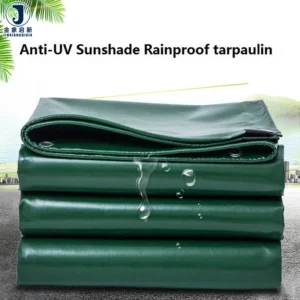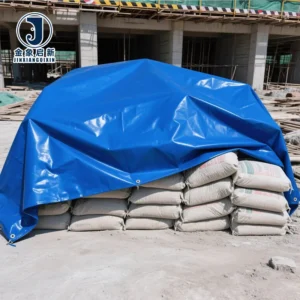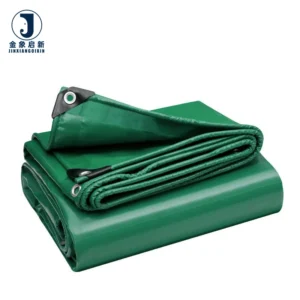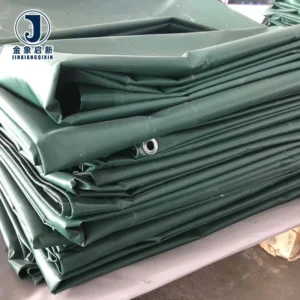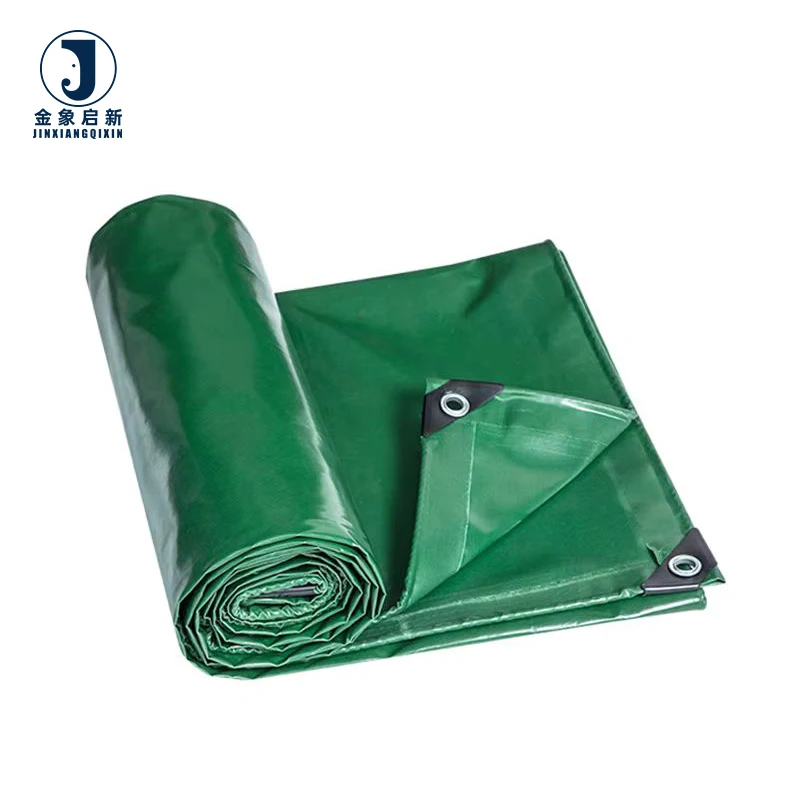
Deep Process Control — nearly three decades of coating weight and adhesion management ensures each roll leaves the line with consistent PVC thickness and base fabric bonding across the entire width.
Technical Specifications
| Parameter | Value |
|---|---|
| Product Type | PVC Coated Tarpaulin |
| Weight (GSM) | 500gsm / 600gsm |
| Coating Material | PVC |
| Waterproof Rating | Waterproof (rating not stated in source) |
| Flame Retardant Grade | Available in flame retardant grades — confirm the grade required for your market |
| Anti-Static | Available in anti-static grades — confirm the standard required for your application |
| Anti-Mildew | Available (test basis not stated in source) |
| Anti-Cold Treatment | Available (specific temperature range not stated in source) |
| Outdoor Life Assurance | 1-3 years (source value — verify against manufacturer catalog) |
| Certifications | ISO, CE |
Application Suitability
| Application | Exposure & Requirement |
|---|---|
| Truck cargo cover | Constant road vibration, wind flap, UV and rain exposure, flex at load points |
| Trailer side curtain | Repeated opening and closing, abrasion against cargo and frame, tie-down stress |
| Fleet top cover | Ponding water, snow load, thermal cycling across seasons |
| Transport equipment cover | Outdoor storage exposure, dust and moisture ingress prevention |
Why a Generic-Size PVC Coated Tarpaulin for Truck Cargo Cover Fails on Real Trailers
A cover that does not match your trailer dimensions wastes material, leaves edges exposed, and concentrates stress at the wrong points.
Fleet operators frequently order truck covers based on nominal trailer length without accounting for the exact body shape, rear door hardware protrusion, or side curtain rail profile. The result is a PVC coated tarpaulin for truck cargo cover that bunches at the corners, flaps in crosswind, and wears through at contact points within the first season. Generic sizing also means eyelets land in positions that do not align with the vehicle’s tie-down anchors, forcing operators to improvise with rope or bungee — which shifts the load path into the fabric itself rather than the reinforced hem [NEED_CITE: common failure modes in generic-fit truck covers].
Model-Specific Fitment and Reinforcement Layout
Every trailer model has a distinct profile: the radius of the front bulkhead, the height of the side coaming, the position of lashing rings along the chassis rail. Our PVC coated tarpaulin for truck cargo cover is cut to the exact dimensions of your vehicle, with reinforcement patches placed where the cover contacts the load or the trailer structure during transit. This approach eliminates the loose fabric that catches wind on motorways and the tight spots that tear at the eyelet line when the cover is pulled down.
Welded Seam Integrity Under Dynamic Load
A moving load flexes. The seams on a truck cover experience repeated stress every time the vehicle brakes, corners, or travels over uneven road surfaces. High-frequency welding creates a bond between PVC layers that is continuous along the seam line, removing the needle holes that stitched construction introduces. Where the cover wraps around corners or meets at ridge lines, the weld must carry the same tensile load as the base fabric — a requirement that depends on coating adhesion strength and consistent heat application during fabrication [NEED_CITE: high-frequency weld strength requirements for PVC coated fabrics per ISO 1421].
Reading the Specification Sheet Beyond GSM
Weight per square metre is the most quoted figure in coated fabric sourcing, yet it tells only part of the story. Two PVC coated tarpaulins at 500gsm can perform very differently depending on the base fabric denier and weave density. A heavier yarn in a looser weave will resist tearing differently from a lighter yarn in a tighter construction, even at identical total weight. The PVC coating method — whether knife-over-edge, dip, or calender — determines how deeply the polymer penetrates the base fabric, which directly affects peel strength at welded seams and long-term adhesion under thermal cycling. For truck and trailer applications, the balance between base fabric tensile strength and coating flexibility matters more than GSM alone, because the cover must absorb dynamic loads without cracking the PVC layer at low temperatures or softening it in direct summer sun.
The Hidden Cost of Getting the Specification Wrong
When a fleet orders covers without confirming the flame retardant grade required by the transport regulations in their operating region, the entire batch can be rejected at the depot inspection — a delay that leaves vehicles uncovered and cargo exposed while replacement material is sourced. Similarly, colour variation between rolls in a single order becomes visible once covers are installed side by side on parked trailers, undermining the professional appearance that logistics companies present to their clients. Welded seams that fail before the fabric does point to incorrect heat or pressure settings during fabrication, and the repair cost in the field far exceeds the cost of correct process control at the factory [NEED_CITE: cost impact of seam failure versus fabric failure in transport covers].
Why Source This PVC Coated Tarpaulin for Truck Cargo Cover Here
Three full production lines and 36 sets of professional equipment provide the capacity to fulfil fleet-size orders without splitting production across multiple batches, which is where roll-to-roll colour drift typically originates. A 10-person R&D team handles the pattern development and custom sizing that generic suppliers outsource or decline at low volumes. Dedicated quality control runs at every production stage — coating weight check, adhesion peel test, visual inspection — with 100% pre-shipment inspection recorded before any roll is packed. Custom widths and colours carry realistic minimums because the coating lines are configured for changeover rather than dedicated to a single stock grade. Samples for new vehicle model templates are developed within days, allowing fleet managers to verify fit before the full order enters production.
Documentation & Verification
- Material specification sheet stating GSM, base fabric denier, and coating weight per roll
- UV and flame retardant test reports provided where treatment is specified
- Pre-shipment inspection record confirming 100% QC before dispatch
- Roll packing list with individual roll weights and dimensions for customs
- Certificate of origin and customs documentation for export shipments
Fabrication, Handling & Storage
- High-frequency welding parameters must match the 500gsm or 600gsm grade to ensure full PVC fusion at seams
- Reinforced hem tape should be applied before eyelet insertion to distribute tie-down load across the PVC coated tarpaulin
- Rolls should be stored upright on pallets to prevent flat spots that become visible after unrolling
- Unroll covers at ambient temperature; cold PVC coating may crack if flexed below its anti-cold treatment threshold
- Clean with mild detergent and soft brush; solvent-based cleaners can degrade the PVC surface finish
Before You Request a Quote
Provide the exact trailer make, model, and body dimensions including any protruding hardware such as rear hinges or side lashing rails. Specify whether the cover must meet a particular flame retardant or anti-static standard for your operating region. Confirm the quantity of covers needed and whether you require finished, eyeletted units or roll stock for your own workshop to fabricate. If colour matching to an existing fleet livery is required, a physical sample or RAL reference will accelerate the approval process.
Frequently Asked Questions
Q: How is GSM verified on arrival against the quoted specification?
A: Each roll is weighed during pre-shipment inspection and the result recorded on the inspection report that accompanies your shipment. You can conduct a simple cut-and-weigh test on a known area sample upon receipt to confirm the stated GSM matches the material delivered. Discrepancies are resolved against the documented inspection record.
Q: What flame retardant grades are available and which markets do they satisfy?
A: Flame retardant treatment is available in grades suited to different regional transport and building regulations. The specific grade required depends on your operating market and the standards enforced by your local transport authority. Confirm the required standard at inquiry stage so the correct treatment and test report can be included with your order.
Q: How are welded seams reinforced at the flex points of a moving load?
A: High-frequency welding fuses PVC layers continuously along the seam, eliminating stitch holes. At high-flex zones such as corners and ridge lines, additional PVC patches are welded over the primary seam to spread the stress across a wider area and prevent peel-back under repeated load movement.
Q: What eyelet spacing and hem reinforcement options suit heavy tie-down use?
A: Eyelet spacing is set to match the tie-down anchor positions on your specific trailer model. Hems are folded and welded with reinforcement tape before eyelet insertion, distributing the pull force across the PVC coated tarpaulin rather than concentrating it at a single point.
Q: How do you ensure colour consistency across multiple truck covers in one fleet order?
A: Fleet orders are produced in a single batch run where possible, using the same coating compound mix. Roll-to-roll colour is checked under standardised lighting during the pre-shipment inspection. If the order volume exceeds a single batch, inter-batch colour matching is confirmed before the second run proceeds.