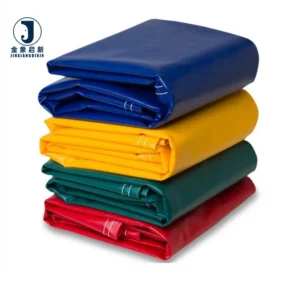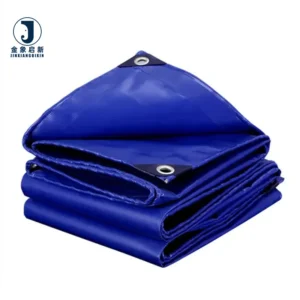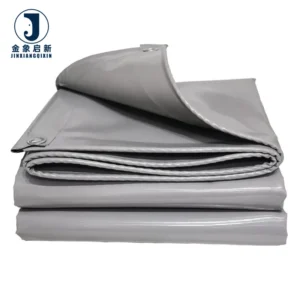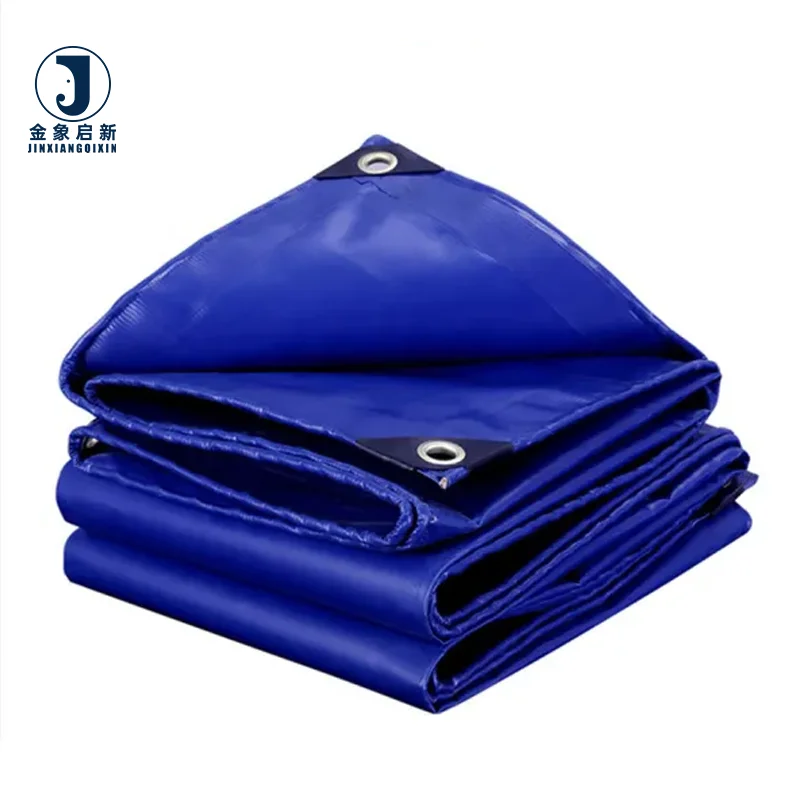
Coating Weight Control — Every roll of PVC Knife-Coated Fabric is verified against the quoted GSM before dispatch, ensuring fleet covers match the material specification you approved.
Technical Specifications
| Parameter | Value |
|---|---|
| Product Type | PVC Coated Tarpaulin Fabric |
| Base Fabric | High-strength polyester mesh fabric |
| Coating Material | PVC |
| Coating Method | Laminated technology & Hot-melt coating technology |
| Weight Options | 350gsm / 420gsm / 500gsm / 550gsm / 600gsm / 750gsm |
| Thickness Options | 0.32mm / 0.35mm / 0.4mm / 0.45mm / 0.5mm / 0.65mm |
| Roll Width Options | 2m / 2.1m |
| Roll Length Options | 50m / 75m |
| Colour Options | Blue / Red / Yellow / Light Blue / Grey (custom colours available) |
| Key Features | Cold crack resistance, anti-mildew, waterproof, sunproof, colour fastness, anti-static treatment |
| Service Life | 3–7 years under normal circumstances |
| Standards | ISO, CE |
Application Suitability
| Application | Exposure & Requirement |
|---|---|
| Truck awning and canopy covers | Constant road vibration, wind flap, weather exposure, tie-down tension at hems |
| Side curtain fabric for curtain-siders | Repeated flexing and folding, abrasion against load edges, UV and rain exposure |
| Cargo ship covers | Salt spray, sustained wind load, prolonged moisture contact, handling abrasion |
| Tent and temporary structure covers | Wind uplift, pooling water, assembly and teardown wear, sun exposure |
| Fish tank and pool liners | Permanent water immersion, chemical treatment contact, puncture risk from substrate |
Why Seam Failure on Truck Covers Starts Before the Fabric Fails
Seam integrity depends on coating adhesion to the base fabric, not on the GSM alone.
Fleet operators regularly see PVC truck tarpaulin for transport and fleet covers split at welded joints while the main fabric panel remains intact. The failure point is where the load flexes most — at the hem, around eyelets, and along side curtain folds. Hot-melt coating technology bonds the PVC directly into the polyester mesh, which changes how the material behaves under heat welding compared to laminated-only constructions. [NEED_CITE: tensile and tear test methods for coated fabrics per ISO 1421]
Coating Adhesion and Weld Behaviour on the Road
The hot-melt coating method forces PVC into the interstices of the high-strength polyester mesh rather than sitting on the surface as a separate layer. For PVC Truck Tarpaulin for transport and fleet applications, this means the weld zone draws strength from the coating locked inside the yarn structure, not from a surface bond that can peel away under repeated flexing. Laminated sections of the same roll serve different performance needs, giving fabricators the option to specify based on how the finished cover will be assembled.
Fleet Fitment Without the Generic-Size Problem
Transport fleets running mixed trailer models face a recurring problem: off-the-shelf covers cut to a standard rectangle leave excess fabric that flaps in the wind or falls short at the corners. This PVC coated tarpaulin fabric is available in widths up to 2.1m and multiple GSM grades, and it is sold by the roll or cut to customer dimensions. Fleet operators and equipment builders can specify the exact panel size, hem configuration, and reinforcement layout needed for each vehicle type in the fleet, reducing waste and eliminating the loose-fabric abrasion that destroys covers from the inside. [NEED_CITE: DIN 4102 fire classification for building materials]
Reading the Specification Sheet Beyond the GSM Number
GSM tells you the total weight per square metre but nothing about how that weight is distributed between base fabric and coating. A 550gsm roll with a heavier coating and lighter base will tear more easily at a puncture point than a 550gsm roll with denser polyester yarns and a thinner coat. The high-strength polyester mesh used here provides the structural backbone, while the PVC coating — applied via hot-melt or laminated technology — seals the weave and determines weldability. Thickness options from 0.32mm to 0.65mm correspond to the GSM range, and both figures together give a clearer picture of how the fabric will handle abrasion on a flatbed or flexing on a curtain-sider. Cold crack resistance ensures the PVC layer does not become brittle during winter transport, while anti-mildew treatment prevents biological breakdown when moisture is trapped under a loaded trailer. Sunproof treatment is applied to resist UV degradation, though the specific test basis should be confirmed for your market requirements.
What Happens When Colour Consistency Is Not Managed Across a Fleet Order
Ordering ten truck covers from the same production run and finding three slightly different shades once they are installed side by side on the fleet is more common than buyers expect. For PVC Truck Tarpaulin for transport and fleet applications, colour variation between rolls becomes a visible problem the moment vehicles are parked together at a depot or a client site. Beyond appearance, inconsistent coating weight across rolls can mean one cover stiffens in cold weather while the next one on the same order remains flexible — a sign that the PVC formulation or coating thickness drifted during production. [NEED_CITE: colour fastness testing standards for coated textile products]
Why Fabricators Specify Hot-Melt Coating for Welded Covers
Coating adhesion directly controls how a seam holds up when a loaded trailer hits a bump or a side curtain flexes in crosswind. Hot-melt coating penetrates the polyester mesh structure, creating a mechanical lock that resists delamination during high-frequency welding. For transport equipment builders fabricating custom covers, this translates to wider welding parameter windows and more consistent seam strength across long production runs. The availability of both laminated and hot-melt coated grades within the same product range lets buyers select the construction method that matches their assembly process, whether that involves RF welding, hot air, or solvent-based joining.
What You Can Verify Before the Rolls Leave the Factory
Every order is supported by a documentation package built around the specific product you are buying, not a generic brochure. The PVC coated tarpaulin fabric ships with the following verification records:
- Material specification sheet confirming GSM, base fabric construction, coating method, and colour reference per roll
- Weight verification record comparing measured GSM against the quoted grade before dispatch
- Pre-shipment inspection report covering visual defects, dimensional checks, and coating adhesion
- Test documentation for sunproof and anti-static treatments where applicable to the ordered grade
- ISO and CE certificates alongside the certificate of origin for customs clearance
- Roll packing list with individual roll identifiers matching the specification sheet
Fabrication, Handling & Storage
- Hot-air welding parameters should be adjusted to the selected GSM grade and coating method for consistent seam adhesion
- Store rolls horizontally on a flat surface to prevent permanent creasing in the 2m or 2.1m wide PVC coating layer
- Cold crack resistant formulation allows winter transport, but rolls should acclimatise before unrolling at the fabrication site
- Clean finished covers with mild detergent to preserve the anti-mildew treatment and surface colour fastness
- Lay out panels considering the roll width to minimise off-cuts and reduce the number of welded seams in the finished cover
- Repair minor field damage with PVC-compatible adhesive patches matched to the hot-melt or laminated coating type
What to Include in Your Enquiry
To provide an accurate specification recommendation, share the trailer models or cover dimensions you need, the operating environment including temperature range and chemical exposure, and your annual volume by GSM grade. If your market requires specific fire-retardant or anti-static certification, state the standard your end user mandates. Let us know whether you need rolls only or finished cut-to-size panels, and whether colour matching across multiple orders is critical for fleet uniformity.
Frequently Asked Questions
Q: What GSM and thickness is right for my truck cover or transport application?
A: Lighter grades around 350gsm at 0.32mm suit temporary covers and light-duty applications, while 600gsm to 750gsm grades at 0.5mm to 0.65mm handle long-haul transport with constant road debris exposure and heavy tie-down loads. The correct choice depends on the flexing frequency and abrasion level your specific trailer type encounters.
Q: Can you match a specific colour reference across multiple rolls in one order?
A: Yes. Each production batch is monitored for colour consistency roll-to-roll. We confirm your colour reference before production begins and include a colour consistency record with the shipment documentation so you can verify the match when rolls arrive at your facility.
Q: Do you supply cut-to-size truck covers fitted to specific trailer models?
A: We supply both full rolls and custom-cut panels sized to your trailer specifications. You provide the model dimensions, eyelet spacing, and hem reinforcement requirements, and we deliver panels ready for final assembly or complete finished covers depending on your order.
Q: What treatment certifications come with anti-UV or flame-retardant fabric?
A: Sunproof treatment is applied across the range, and anti-static treatment is available. Specific flame-retardant grades are produced on request. Confirm the standard required for your market — such as DIN 4102 or NFPA 701 — and we will supply the corresponding test report with your order documentation.
Q: What is the lead time and minimum order for custom width or colour?
A: Custom widths, lengths, and colours carry production schedules that vary by specification complexity and order volume. We confirm lead time and minimum quantity during the quotation stage once your exact GSM, colour, and dimensional requirements are established.