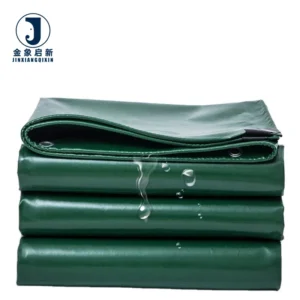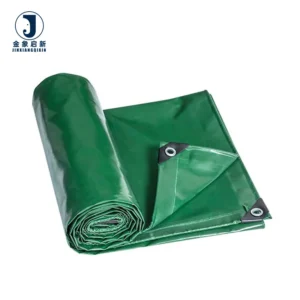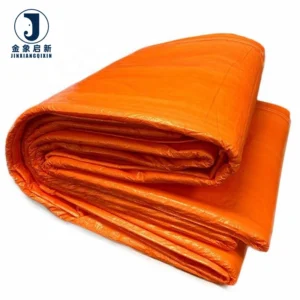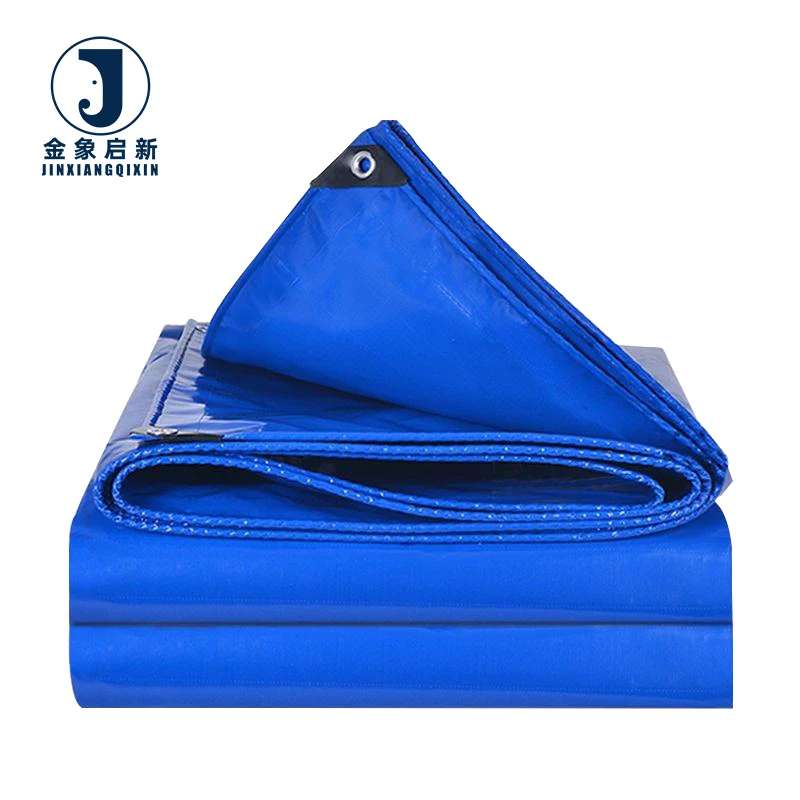
Custom Cut-to-Model — Every PVC coated tarpaulin truck cargo cover is patterned to the exact trailer dimensions you supply, eliminating the edge flap and load exposure that generic-sized tarps create on long-haul routes.
Technical Specifications
| Parameter | Value |
|---|---|
| Product Type | PVC Coated Tarpaulin Truck Cover |
| Coating Material | PVC |
| Weight Options | 700gsm / 850gsm / 900gsm |
| Waterproof | Yes |
| Weather Resistance | Good weather resistance (1-3 years) |
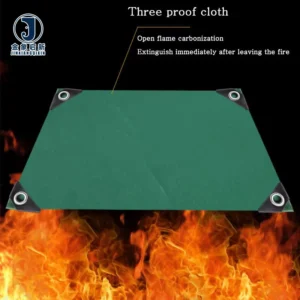
| Flame Retardant | Available (grade not stated — confirm the grade required for your market) |
| Anti-Static | Available (standard not stated — confirm the standard required for your site) |
| Anti-Mildew | Available |
| Anti-Cold | Available |
| Customization | Size, colour, and treatment options |
| Certification | ISO 9001, CE |
Application Suitability
| Application | Exposure & Requirement |
|---|---|
| Long-haul truck and trailer load covering | Constant road vibration, wind uplift, UV exposure, rain and road spray ingress |
| Fleet side curtain and top cover replacement | Repeated flexing at load points, abrasion against cargo edges, tie-down stress |
| Transport equipment builder new trailer fitment | Model-specific patterning, consistent colour across a production batch, weld seam durability |
| Construction and agricultural equipment transit | Puncture risk from sharp load edges, extended outdoor staging before delivery |
Why a Generic-Size PVC Coated Tarpaulin for Truck Cargo Cover Fails on the Road
A cover that does not match the exact trailer model leaves edges loose, and loose edges are where road spray, wind, and abrasion destroy the fabric first.
Most off-the-shelf truck covers are cut to a generic rectangle that roughly fits a range of trailer sizes. In practice, this means excess material flaps at the rear and sides, catching wind at highway speed and wearing through at the grommet line within months. A PVC coated tarpaulin for truck cargo cover that is patterned to the specific vehicle model sits flush against the load, keeping tie-down points aligned and reducing the flex fatigue that causes welded seams to split. [NEED_CITE: relationship between cover fitment accuracy and seam fatigue life in transport applications]
Fleet operators who have replaced generic covers with model-specific units report fewer mid-route cargo exposure incidents and longer intervals between cover replacements. The difference is not in the material alone — it is in how the material is cut, welded, and reinforced for the exact geometry of the trailer it protects.
Patterned to the Exact Trailer Model
Every PVC coated tarpaulin truck cargo cover produced here starts with the specific trailer dimensions you provide — length, width, height, and any protrusions such as tail lifts or refrigeration units. The pattern is drafted to wrap the load with minimal excess, so tie-down straps sit where the reinforcement patches are placed rather than pulling on unsupported fabric. This approach removes the flapping and edge wear that shortens the life of a generic-size cover on a moving vehicle.
Welded Seams Reinforced at High-Stress Flex Points
The seams on a truck cover fail where the load flexes most — typically at the rear corners and along the roof bow lines. Our production process positions additional PVC-coated reinforcement patches at these stress concentrations before hot-air welding, so the weld line carries the same load rating as the parent fabric. This addresses the common failure mode where a cover tears along the seam while the body of the fabric remains intact. [NEED_CITE: weld seam strength relative to parent fabric tensile value in coated tarpaulins]
Treatment Options Matched to Your Route and Cargo
The base PVC coated construction is fully waterproof and carries good weather resistance for outdoor transport duty. Beyond that, flame retardant treatment is available for operations where regulated transport environments demand it — confirm the grade required for your market before ordering. Anti-static treatment is available for specialised cargo such as powders or electronics, and anti-mildew treatment suits humid-climate routes where covers are stored folded and damp. Anti-cold formulation keeps the fabric flexible in sub-zero transit conditions rather than stiffening and cracking at the fold lines.
How GSM and Base Fabric Work Together on a Truck Cover
The weight of a PVC coated fabric — whether 700gsm, 850gsm, or 900gsm — is the combined mass of the polyester base fabric and the PVC coating applied to both sides. A higher GSM does not automatically mean a stronger cover. Tensile and tear resistance depend on the denier of the yarns in the base fabric and the density of the weave, not just the coating weight. A 700gsm fabric woven from high-denier yarns in a tight weave can outperform a 900gsm fabric built on a loose, low-denier base when it comes to resisting tear propagation from a puncture. The coating weight primarily governs abrasion resistance, weld-ability, and waterproofing durability. When specifying a PVC coated tarpaulin for truck cargo cover duty, requesting the base fabric specification alongside the GSM gives a far more complete picture of how the cover will perform under road vibration and tie-down tension. [NEED_CITE: tensile and tear test methods for coated fabrics per ISO 1421]
What Happens When the Wrong Specification Reaches Your Fleet
A cover specified at 850gsm on paper that arrives at 780gsm in hand is thinner at the coating layer, meaning reduced abrasion resistance at the points where the cover rubs against cargo edges during transit. A flame retardant cover supplied without a matching test report may pass visual inspection but fail at a roadside compliance check, leaving the fleet operator with a load that cannot legally continue its journey. Colour variation between covers in the same fleet order becomes visible once installed side by side on adjacent trailers, undermining the professional appearance the fleet invested in. [NEED_CITE: pre-shipment GSM verification and colour consistency inspection in coated fabric manufacturing] These are not theoretical risks — they are recurring pain points in transport tarpaulin procurement that a disciplined pre-shipment inspection process is designed to catch.
Why Transport Fleets Source This PVC Coated Tarpaulin Truck Cargo Cover Here
Nearly 30 years of focused coated fabric production means the coating weight and adhesion process is controlled from the base fabric inwards, not adjusted at the finishing stage. Three full production lines and 36 sets of professional equipment support the volume a fleet operator needs when replacing covers across an entire route network, with on-time delivery maintained through dedicated production scheduling. A 10-person R&D team handles the pattern development for each trailer model, so a new trailer type in your fleet can be sampled and confirmed before the bulk order runs. Dedicated QA/QC at every production stage includes 100% inspection before dispatch, catching GSM deviation, colour drift, and weld integrity issues before the covers leave the facility. Samples for custom sizing and treatment combinations are developed within days, not weeks, keeping fleet replacement programmes on schedule.
Documentation & Verification
- Material specification sheet stating GSM, base fabric denier, coating type, and colour reference for each cover
- Weight verification per cover against the quoted GSM before dispatch with inspection record
- Test reports for flame retardant or anti-static grades where applicable, matched to the target market regulation cited on the order
- Pre-shipment inspection record covering dimensions, weld seam integrity, colour consistency, and eyelet placement
- Roll or piece packing list with certificate of origin and customs documentation for export shipment
Fabrication, Handling & Storage
- Hot-air weld temperature and speed must be matched to the specific GSM grade — 700gsm, 850gsm, and 900gsm each require different settings for full seam adhesion
- Store folded PVC coated covers in a dry, shaded area; prolonged compression under heavy items causes permanent crease marks on the coating surface
- Reinforce all tie-down eyelet positions with welded PVC patches before punching to prevent the fabric tearing out under strap tension
- In cold-weather deployment, allow anti-cold treated covers to acclimatise before unfolding to avoid stress cracking at fold lines
- Clean with mild detergent and soft brush; solvent-based cleaners will degrade the PVC coating and strip anti-mildew treatment
Requesting a Quotation for Your Fleet
To specify the right PVC coated tarpaulin truck cargo cover for your operation, provide the exact trailer make and model or the full dimensional drawing, the route climate and exposure conditions, and any flame retardant or anti-static grade your market requires. If you are ordering for a fleet, include the number of vehicles and whether colour matching across the entire batch is needed. State whether you need finished covers with eyelets and reinforced hems or cut panels for your own workshop to fabricate.
Frequently Asked Questions
Q: How is the truck cover sized to match a specific trailer model and what measurements are needed?
A: Provide the trailer make, model, and year, or a dimensional drawing showing overall length, width, height, and any protrusions such as tail lifts or cooling units. We draft a cutting pattern from these dimensions and produce a sample for fitment confirmation before the full order runs, ensuring the PVC coated tarpaulin truck cargo cover sits flush without excess material that flaps in transit.
Q: How is GSM verified on delivery to ensure the cover matches the quoted weight?
A: Every cover is weighed during the 100% pre-shipment inspection, and the measured GSM is recorded against the value stated on your quotation. The inspection record accompanies the shipment so you can cross-check on arrival. If the measured weight falls outside the agreed tolerance, the batch is held before dispatch rather than shipped and disputed after delivery.
Q: What flame retardant grade is available and does it meet target market transport regulations?
A: Flame retardant treatment is available for this PVC coated tarpaulin truck cargo cover range. The specific grade must be confirmed against your local transport or site regulations before production. Provide the standard or classification your market requires, and we will match the treatment and supply the corresponding test report with your shipment documentation.
Q: How is colour consistency maintained across multiple covers in a single fleet order?
A: All covers in a fleet batch are produced from the same coating run using a single colour reference, and each piece is checked against the master swatch during pre-shipment inspection. This prevents the visible variation that occurs when covers from different production runs are installed side by side on adjacent trailers in the same fleet.
Q: What reinforcement options are available for high-wind and long-haul tie-down conditions?
A: Eyelet spacing is set to your specification, and every eyelet position receives a welded PVC reinforcement patch on both sides of the fabric before punching. Hem edges are folded and welded rather than stitched, eliminating needle holes that become tear initiation points under sustained wind load and strap tension on long-haul routes.