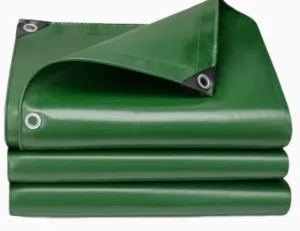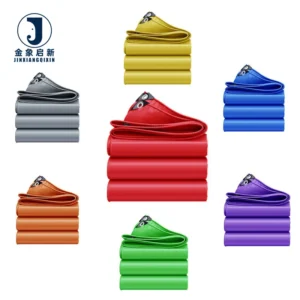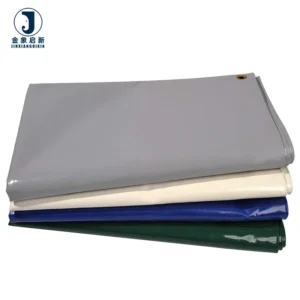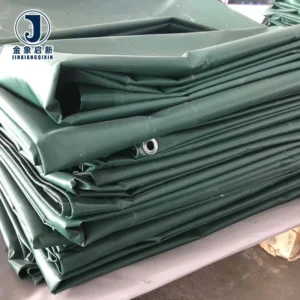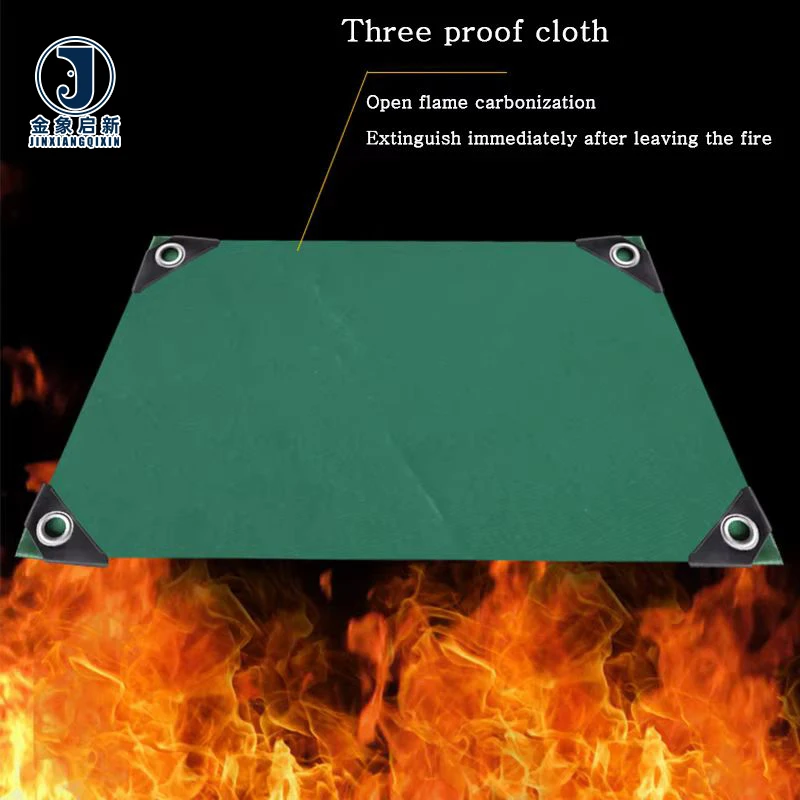
Proven Coating Control — nearly 30 years focused on PVC coated fabric means consistent coating weight, reliable adhesion, and predictable weld behaviour across every roll dispatched.
Technical Specifications
| Parameter | Value |
|---|---|
| Product Type | PVC Coated Tarpaulin |
| Material | PVC Coated Polyester Fabric |
| Weight Grades | 700gsm, 850gsm, 900 gsm |
| Coating Material | PVC |
| Waterproof | Yes |
| Flame Retardant | Available (grade not stated — confirm the grade required for your market) |
| Anti-Static | Available (standard not stated — request applicable certification) |
| Anti-Cold Treatment | Available |
| Anti-Mildew Treatment | Available |
| Weather Resistance | Outdoor rated (1–3 years service life) |
| High Strength | Stated (test basis not stated in source) |
| Certifications | ISO, CE (company level) |
Application Suitability
| Application | Exposure & Requirement |
|---|---|
| Long-haul truck cargo cover | Continuous road vibration, UV exposure, wind loading, rain ingress at seams |
| Trailer side curtain | Repeated flex cycles at load points, abrasion against cargo edges, tie-down stress |
| Construction equipment transport cover | Job-site dirt and moisture, loading and unloading abrasion, overnight UV exposure |
| Flatbed load protection | Direct weather contact, high-speed wind flap, strap friction at tie-down rings |
Why a Generic PVC Tarpaulin Truck Cargo Cover Fails on Long-Haul Routes
Model-specific fitment prevents the seam failures that generic covers suffer within months.
Fleet operators routinely receive covers cut to approximate dimensions. The result is excess fabric that flaps at highway speed, concentrating stress at eyelet rows and welded seams until the material tears through. A PVC tarpaulin truck cargo cover built to exact trailer dimensions eliminates that slack, keeping load on the fabric face rather than the seams [NEED_CITE: tensile and tear test methods for coated fabrics per ISO 1421]. Generic covers also tend to arrive with grommet spacing that does not align with the trailer’s rope rail or tie-down track, forcing installers to improvise — which accelerates wear at mismatched stress points.
Model-Matched Sizing for Trailer Fitment
Every PVC tarpaulin truck cargo cover is cut and welded to match the specific truck or trailer model in your fleet. Side curtain panels align with existing roller tracks and tie-down rails, while top covers are dimensioned to drape without excess material that catches wind. This approach removes the two most common causes of early cover failure: flapping-induced seam fatigue and grommet-to-rail misalignment.
Reinforcement Strategy at High-Flex Zones
The areas that fail first — eyelet rows, welded corner panels, and tie-down contact strips — receive additional reinforcement layers bonded during fabrication. Rather than adding reinforcement after the cover is assembled, these layers are integrated into the weld pattern so load transfers through the coating into the base fabric rather than concentrating at a single stitch line. This matters most on side curtains that flex every time the trailer is loaded and unloaded [NEED_CITE: coated fabric peel adhesion and weld strength testing].
Reading the Specification Sheet Before You Buy
GSM weight alone does not determine how a PVC tarpaulin truck cargo cover will perform in service. The base fabric denier and weave density govern tensile and tear strength, while the coating weight affects waterproofing and weld integrity. A heavier coating on a light base fabric adds weight without proportional strength gain. Similarly, the PVC formulation determines low-temperature flexibility — a cover that stiffens in cold weather will crack at fold points before the coating itself degrades. When comparing grades in the 700gsm to 900 gsm range, request the base fabric specification and coating weight breakdown to understand what proportion of the total weight contributes to structural performance.
What Happens When Specification Is Ignored
Covers ordered on GSM alone frequently disappoint at delivery. A roll that meets the quoted weight but uses a lighter base fabric with heavier coating will weld easily yet tear at lower loads. Flame retardant treatments claimed without a supporting test report lead to rejected loads at regulated sites. Anti-static covers supplied without the certification your market demands cannot clear compliance inspections. These specification gaps surface only after the cover is installed and the fleet is already committed to the material [NEED_CITE: flame retardant classification requirements for transport covers].
Why This Source Supports Fleet Procurement
Deep process control over coating weight and adhesion comes from nearly 30 years of continuous production in coated fabric, not from a recent product line expansion. Three full production lines and 36 sets of equipment provide the capacity to run multi-trailer fleet orders with consistent colour and weight roll-to-roll. A dedicated 10-person R&D team develops samples within days when your fleet requires a non-standard size or treatment combination. QA and QC checks at every production stage — including 100 percent inspection before shipment — mean each cover is verified against your specification before it leaves the facility. Pre-shipment inspection records document the actual GSM, colour reference, and treatment confirmation for every roll in your order.
Documentation & Verification
- Material specification sheet confirming base fabric denier, coating weight, and colour reference per roll
- Weight verification record showing measured GSM against the quoted 700gsm, 850gsm, or 900 gsm grade before dispatch
- Flame retardant and anti-static test reports provided with the specific grade and standard applied
- Pre-shipment inspection record documenting seam integrity and dimensional accuracy for each cover
- Roll packing list with individual roll identification for traceability across your fleet
Fabrication, Handling & Storage
- Hot-air weld temperature should match the PVC formulation used on the 700gsm to 900 gsm grade — request the recommended weld parameters before shop fabrication
- Reinforce eyelet rows with a bonded PVC strip that matches the cover’s GSM grade to distribute tie-down strap load
- Store rolls upright on pallets in a shaded, ventilated area to prevent compression marks on the coated surface
- Allow cold-stored PVC tarpaulin rolls to reach ambient temperature before unrolling to avoid coating crease damage
- Clean with mild detergent and soft brush; avoid solvent-based cleaners that can soften the PVC coating layer
What to Include in Your Enquiry
Provide the truck or trailer model number and year, along with the number of covers needed per model. Specify the operating climate range if your fleet runs cross-regional routes, as this determines whether anti-cold or anti-mildew treatment is necessary. Confirm the flame retardant or anti-static standard your market requires so the correct grade is applied and documented. Indicate whether you need finished covers with eyelets and reinforcement, or roll stock for in-house fabrication.
Frequently Asked Questions
Q: How is GSM verified on arrival to match the quoted specification?
A: Each roll is inspected before shipment and the measured weight is recorded on the pre-shipment inspection document included with your dispatch. On receipt, you can cross-check by cutting a known-area sample from the roll edge and weighing it on a calibrated scale. Any discrepancy between the delivered GSM and the quotation should be raised with the documented inspection record as reference.
Q: What flame retardant grade applies to my transport market’s regulations?
A: The applicable grade depends on your operating jurisdiction and cargo type. Available flame retardant options carry grade certifications that differ by region — confirm the specific standard your market enforces before placing the order. The correct test report will then accompany your shipment to support compliance verification at the site or border.
Q: Can the cover be cut to fit my specific trailer model rather than a generic size?
A: Yes. Each PVC tarpaulin truck cargo cover is produced to match the dimensions of the trailer model you specify. Provide the make, model, and year along with any tie-down rail or roller track configuration details. This ensures the cover aligns with your existing hardware without the excess fabric that causes wind flap and premature seam failure.
Q: How are welded seams reinforced at high-flex tie-down and eyelet points?
A: Reinforcement layers are bonded into the weld pattern during fabrication rather than applied afterward. At eyelet rows and tie-down contact strips, additional PVC strips are heat-welded to distribute strap load across a wider base fabric area. This prevents the concentrated stress that causes generic covers to tear at the eyelet within the first months of service.
Q: What anti-static certification is available for regulated transport environments?
A: Anti-static treatment is available for this PVC tarpaulin range. The specific certification standard depends on your market’s regulatory requirements. Request the applicable test standard during the enquiry stage so the correct treatment and documentation are included with your order, ensuring the cover passes compliance inspection at regulated facilities.