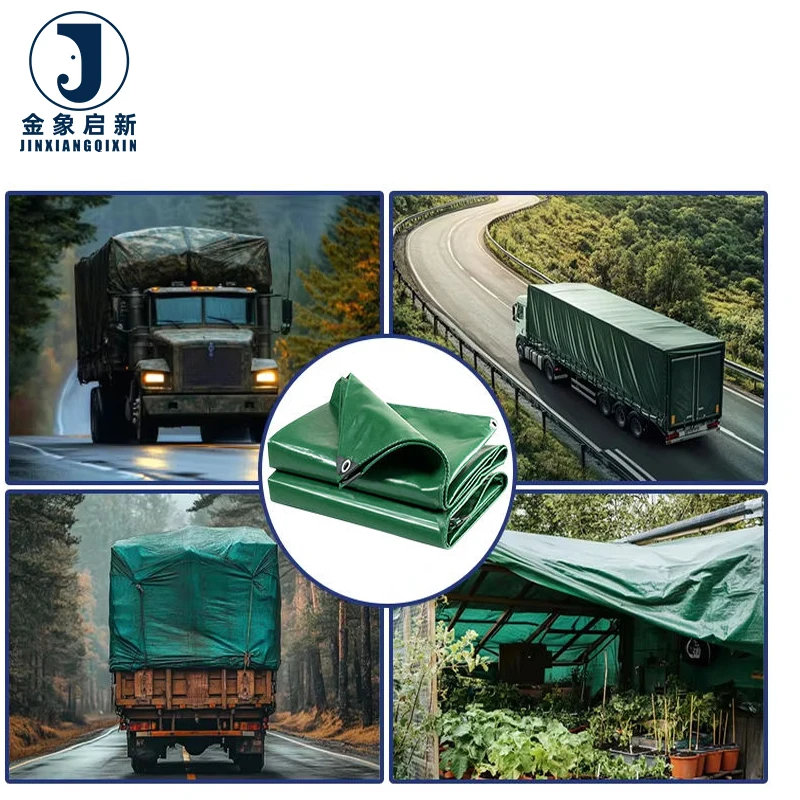
Process-Controlled Coating for Moving Loads — nearly 30 years focused on coated fabric with deep control over adhesion weight and seam integrity at high-flex abrasion points on flatbed and trailer covers.
Technical Specifications
| Parameter | Value |
|---|---|
| Product Type | PVC Tarpaulin Truck Cover |
| Coating Material | Vinyl-coated polyester mesh (PVC) |
| Construction | Knitting and plain weave |
| Weight (GSM) | 50gr/m2 ~ 220gr/m2 (range covers product family — confirm the grade for your application) |
| Total Thickness | 0.2-0.4mm / 8 mil-16 mil / Custom |
| Available Widths | 6ft, 8ft, 10ft, 12ft, 2m, 4m, 6m |
| Roll Length Options | 100 yards, 100 meters, or custom |
| Available Colors | Blue, Blue/Orange, Green, Grey, Black, Clear, Grey/Green, Orange, or custom |
| Waterproof | Yes |
| Mildew Resistant | Yes |
| Anti-UV Treatment | Available (test basis not stated — request documentation) |
| Edge Reinforcement | PP rope reinforced hem on all four edges |
| Eyelets | Galvanized, every 3ft or 1 meter interval |
| Corner Reinforcement | Reinforced plastic corners |
| Certifications | ISO 9001, CE |
Application Suitability
| Application | Exposure & Requirement |
|---|---|
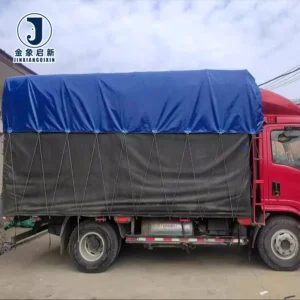
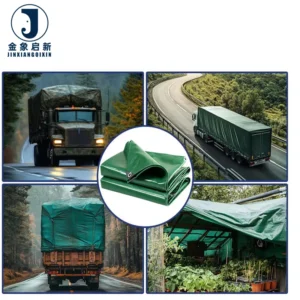
| Flatbed lumber transport | Road vibration, tie-down abrasion at edges, UV and rain exposure requiring tear-resistant PVC mesh and PP rope hems |
| Steel coil and heavy freight | High point-load stress at contact areas, frequent loading and unloading cycles demanding reinforced flex-point seams |
| Dump truck load cover | Continuous folding and unfolding, particulate abrasion, mildew risk from trapped moisture under sun exposure |
| Long-haul trailer top cover | Sustained highway wind flap, thermal cycling from direct sun to night chill, galvanized eyelet pull-out resistance |
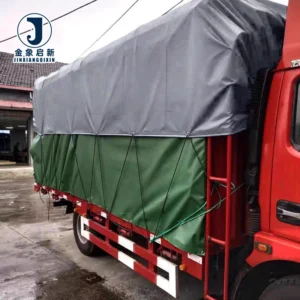
| Side curtain fabric for new trailers | Constant flexing against the frame, road spray, requirement for colour consistency across multiple curtain panels |
Why a Generic-Size PVC Truck Cover for Fleet and Trailer Loads Fails Before the Fabric Does
The cover fails at the seam, not the fabric, because generic patterns ignore where your specific load actually flexes.
I have seen transport operators replace tarps every few months while the fabric itself still looks intact. The breakdown happens at the tie-down points and the hem where the load shifts most during braking and cornering. Generic cut sizes leave excess material that flaps at highway speed, accelerating wear at the eyelets and along the welded or sewn join lines [NEED_CITE: common failure modes in heavy-duty truck tarpaulin applications]. When a PVC truck cover for fleet and trailer use is not matched to the actual trailer dimensions, the stress concentrates on unreinforced zones.
Cut to Your Trailer Model, Not a Chart
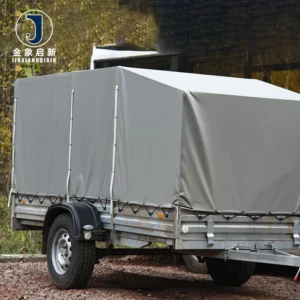
A PVC truck cover for fleet and trailer operations must account for the exact deck length, side rail height, and overhang needed for tie-down access. We work from your vehicle model or dimensional drawing rather than a generic size table. This eliminates the excess fabric that causes wind flap on highways and the short falls that leave cargo corners exposed to road spray and rain ingress.
Seams Reinforced Where Your Load Actually Moves
The highest stress on a truck cover is not in the centre of the panel — it is at the hem near the eyelets and at any internal weld or sewn join that crosses a flex point. Our industrial sewing service covers lumber tarps, steel tarps, coil tarps, snow tarps, and mesh tarps, with reinforcement placed at the specific abrasion zones your load type generates. PP rope is inserted into the hem on all four edges before eyelets are pressed, distributing tie-down load across the full rope diameter rather than a single fabric layer [NEED_CITE: tie-down load distribution in reinforced tarpaulin hems per transport industry practice].
Decoding Weight, Weave and Treatment for Road Use
The stated GSM range of 50gr/m2 ~ 220gr/m2 covers the broader product family, and the correct grade for your fleet depends on load type and route conditions. A heavier GSM does not automatically mean higher tear resistance — the base fabric denier and the knitting density of the polyester mesh determine how a puncture or cut propagates under road vibration. The vinyl-coated polyester mesh construction provides the substrate, while the coating weight controls waterproofing and surface abrasion tolerance. Mildew resistance is built into the coating formulation, which matters for operators running humid routes or covering moisture-sensitive loads like lumber. Anti-UV treatment is available — confirm the specific grade required for your market and request the supporting test documentation before approving production.
What Happens When the Specification Does Not Match the Route
Ordering a lighter GSM grade for a long-haul highway route leads to premature edge fraying and eyelet pull-through, often within the first season of use. Conversely, specifying an overly heavy grade for a short-distance dump truck adds unnecessary weight that increases fuel consumption and makes manual handling harder for drivers folding the cover daily. Colour inconsistency across multiple covers in a fleet order becomes visible once installed side by side on parked trailers, which affects brand presentation for branded logistics companies [NEED_CITE: batch colour consistency standards in coated fabric production]. A PVC truck cover for fleet and trailer use must be specified as a system — weight, weave, treatment, and finished dimensions together — not as isolated line items.
Why Operators Source This Cover Through Jinxiang
Three full production lines and 36 sets of professional equipment support bulk fleet orders with reliable on-time delivery, so you are not waiting on a single-line bottleneck when replacing covers across multiple vehicles. The 10-person R&D team handles material selection, custom sizing against your trailer model, and sample development within days — not weeks. Dedicated QA/QC runs at every production stage with 100% inspection before shipment, meaning GSM, eyelet spacing, and hem reinforcement are checked against the agreed specification on every cover. ISO and CE certified processes underpin the production, and full documentation travels with each dispatch.
Documentation & Verification
- Material specification sheet stating base fabric denier, coating type, and verified GSM for your specific order
- Pre-shipment inspection record confirming eyelet count, spacing interval, and hem reinforcement against the agreed drawing
- Mildew and anti-UV treatment test documentation where applicable to your route conditions
- Custom size confirmation signed off against your specific trailer model before production begins
- Roll packing list and certificate of origin included with each dispatch for customs clearance
Fabrication, Handling & Storage
- Heat welding parameters must match the PVC coating thickness of 0.2-0.4mm to achieve full adhesion without burn-through
- Galvanized eyelets at 3ft or 1m intervals require backing plates on heavy tie-down applications to prevent pull-through
- Store rolls upright on pallets to prevent flat-spot creases that become permanent in vinyl-coated polyester mesh
- Clean with mild detergent only — solvents degrade the mildew-resistant treatment in the PVC coating layer
- Field repairs on minor cuts can be heat-patched with matching PVC material from the same coating batch
Before You Request a Quote
Provide your trailer make and model, or exact deck and overhang dimensions, along with the primary cargo type you cover. Let us know the climate zones your fleet operates in so we can recommend the appropriate anti-UV and mildew treatment grade. Specify whether you need finished tarps with sewn reinforcement or roll stock for your own fabrication, and confirm colour and branding requirements if fleet livery is involved.
Frequently Asked Questions
Q: How do I measure my trailer to get the right PVC truck cover size?
A: Measure the deck length, deck width, and side rail height on your specific trailer model. Add the overhang needed for tie-down strap access on each side. Send us these dimensions or the trailer model number, and we confirm the cut pattern before production to ensure the PVC truck cover for fleet and trailer use fits without excess flap or short corners.
Q: What GSM grade is recommended for long-haul highway use?
A: Long-haul routes with sustained wind exposure and frequent tie-down cycles typically require a mid-to-upper range grade from the available 50gr/m2 ~ 220gr/m2 family. The correct weight depends on your cargo type and how often the cover is removed and refitted. We recommend a sample in the proposed GSM so you can assess handling weight and tie-down behaviour before committing to a fleet order.
Q: Can the cover be custom-printed with fleet branding?
A: Custom brand printing is available across the PVC truck cover range. We need your artwork in vector format, the Pantone colour references, and the print position on the cover panel. Print durability depends on the surface finish selected, so we provide a printed sample for approval before the full production run begins.
Q: How are seams reinforced at high-abrasion flex points?
A: At high-flex zones — typically near eyelets and along internal joins that cross load shift paths — we use PP rope reinforced hems and additional fabric layers or welded patches. Galvanized eyelets are pressed through both the rope and the doubled fabric, distributing the tie-down load across a wider area to prevent pull-through during transit.