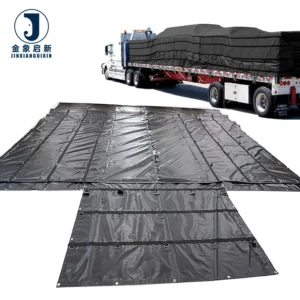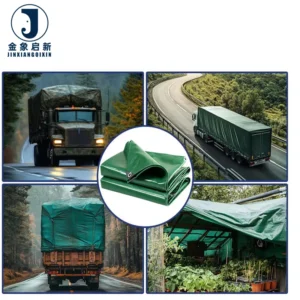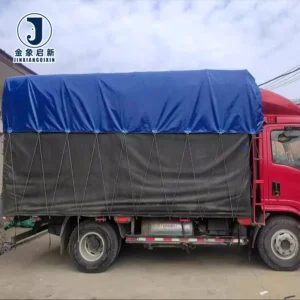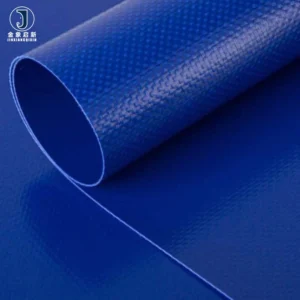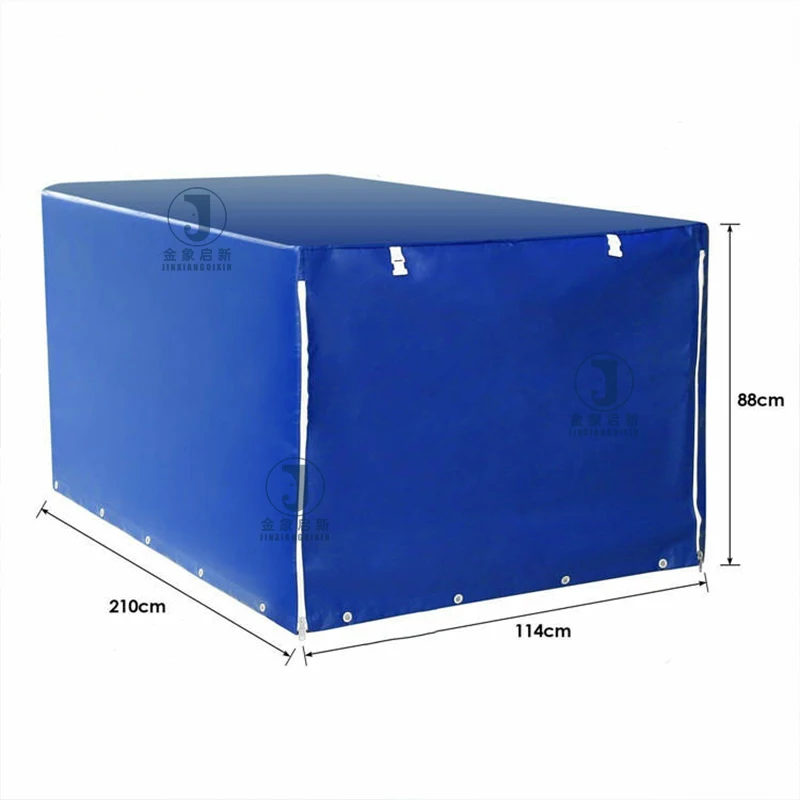
Deep Process Control Over Coating — Nearly 30 years focused on coated fabric delivers reliable PVC adhesion and consistent coating weight across every PVC truck cover for fleet and trailer produced on our lines.
Technical Specifications
| Parameter | Value |
|---|---|
| Product Type | PVC Truck Cover |
| Material | PVC + High-strength polyester mesh fabric |
| Coating Method | Laminated technology & Hot-melt Coating technology |
| Weight Options | 350gsm / 420gsm / 500gsm / 550gsm / 600gsm / 750gsm |
| Thickness Options | 0.32mm / 0.35mm / 0.4mm / 0.45mm / 0.5mm / 0.65mm |
| Finish | Double-sided coating |
| Color Options | Blue / Red / Yellow / Light Blue / Grey (Customized) |
| Tarpaulin Features | High tenacity polyester yarns, cold crack resistance, anti-mildew, anti-static treatment (surface resistance not confirmed), waterproof, sunproof |
| Trailer Cover Features | UV treated material (test basis not stated), hot welded hem at the bottom, eyelets, zipper, velcro as option |
| Service Life | 5-10 years under normal circumstances (source value — verify against manufacturer catalog) |
| Standards | ISO, CE |
Application Suitability
| Application | Exposure & Requirement |
|---|---|
| Long-haul flatbed trailer | Continuous highway wind load, road debris abrasion, prolonged UV exposure, rain ingress prevention at high speed |
| Curtain-side trailer fabric | Repeated lateral flexing at roller track, friction against cargo edges, daily retraction and deployment cycles |
| Regional multi-drop delivery | Frequent tie-down and release, zipper or velcro access points, rapid folding and stowage between stops |
| Transport equipment new build | Side curtain integration with aluminium extrusion, keder beading compatibility, model-specific panel dimensions |
Why Generic Sizing Fails on Moving Loads
A PVC truck cover for fleet and trailer must match the exact vehicle dimensions, not a catalogue standard size.
Fleet operators who order generic-size covers routinely discover gaps at the corners and excess fabric that flaps at highway speed. This flapping accelerates wear at the hem and creates fatigue cracks near the eyelets. The result is premature cover replacement and cargo exposed to rain on the first long-haul run. [NEED_CITE: aerodynamic drag and fabric fatigue on loose-fitting truck tarps]
Model-Specific Fitment Eliminates Edge Gaps
Every trailer model — whether a standard flatbed, a curtain-side unit or a refrigerated box — carries distinct frame geometry and tie-down rail positions. Our PVC truck cover for fleet and trailer production starts with your exact vehicle make, model and year so the finished cover seats flush against the load bed without tension gaps or bunched corners that collect standing water.
Hot-Welded Hems Where the Load Flexes Most
The bottom hem and panel joints on a moving trailer endure constant flexing as cargo shifts under braking and cornering. Hot-welded seam construction fuses the PVC coating layers together so the joint behaves as a single material, resisting delamination at the exact stress points where stitched seams typically separate after repeated road vibration. [NEED_CITE: weld strength retention on PVC coated polyester under cyclic flex load]
Weight Grades Matched to Route Severity
Choosing between 350gsm and 750gsm is not about picking the heaviest option available. A regional delivery truck making short stops on paved roads may perform well with a lighter grade, while a long-haul operation crossing high-altitude passes needs the tear resistance and cold crack performance of a heavier construction to survive temperature swings and sustained wind loading.
Reinforced Tie-Down Points for Secure Lashing
Eyelets, zippers and velcro closures are specified based on how the fleet operates. Reinforced eyelets with webbing backing distribute strap load across a wider fabric area, preventing tear-out at anchor points where the cover meets the tie-down rail. Zipper and velcro options give multi-drop operators rapid access without fully removing the cover between deliveries.
Specification Decisions That Affect On-Road Durability
The high-strength polyester mesh base fabric provides the structural backbone — its yarn denier and weave density determine how far a puncture or tear will propagate before the coating arrests it. The laminated and hot-melt coating technologies create a bond between the PVC and the mesh that governs peel strength at welded joints. When a weld is subjected to repeated flexing, poor adhesion between coating and base fabric causes the PVC to delaminate from the mesh, leaving a bare spot that absorbs moisture and accelerates yarn degradation. Double-sided coating ensures both faces resist abrasion, which matters when the inner surface rubs against cargo edges during transit. Cold crack resistance keeps the material pliable in sub-zero conditions, preventing the stiffening that leads to brittle fractures at fold lines. Anti-static treatment is applied during production, though surface resistance values and specific test standards should be confirmed for your operating environment.
The Hidden Cost of Incorrect Specification Choices
Ordering a PVC truck cover for fleet and trailer without verifying GSM on arrival means the material may be lighter than agreed, reducing tear strength below what the route demands. Covers supplied with UV treatment claimed but without a supporting test report may degrade faster than expected on high-exposure routes, showing colour fade and surface embrittlement within the first season. [NEED_CITE: accelerated UV degradation on PVC tarpaulin without verified stabiliser content] Welded seams that fail before the fabric itself does concentrate replacement cost — the cover body remains serviceable but the joint splits at the hem, forcing a full panel replacement rather than a localised repair. Colour variation between covers in the same fleet order becomes visible when vehicles are parked side by side at the depot, undermining brand presentation for liveried fleets.
Why Fleet Operators Source Covers Through This Process
Dedicated QA/QC inspection at every production stage catches dimensional deviation before the cover leaves the facility, with 100% pre-shipment inspection confirming each PVC truck cover for fleet and trailer matches the trailer model specification on your order. A 10-person R&D team handles pattern development and sample production so you can validate fitment on a single unit before committing to a full fleet order. Three full production lines and 36 sets of professional equipment support bulk orders with consistent on-time delivery across multiple vehicle types. Material specification documentation accompanies each shipment, stating the exact GSM, base fabric construction and coating method so you can verify on receipt that what arrives matches what was quoted. Nearly 30 years of specialised coated fabric production means the welding parameters and coating adhesion processes are refined through decades of fleet cover manufacturing rather than adapted from general-purpose tarpaulin work.
Documentation & Verification
- Material specification sheet stating exact GSM, base fabric denier and coating weight for cross-checking on arrival
- Pre-shipment inspection record confirming cover dimensions match the trailer model drawing submitted at order
- Test report for UV treatment where applicable, tied to the specific batch dispatched
- Roll packing list and certificate of origin supporting cross-border fleet procurement clearance
- ISO and CE certificates on file for compliance documentation in regulated transport markets
Fabrication, Handling & Storage
- Hot-melt coated construction allows heat welding at standard PVC temperatures — verify weld settings against the specific GSM grade ordered
- Reinforced eyelet placement should align with the high tenacity polyester yarn direction to maximise pull-out resistance
- Store folded covers flat and avoid stacking heavy items on top to prevent permanent crease marks in the double-sided coating
- Allow cold-stored covers to reach ambient temperature before unfolding to protect the cold crack resistant PVC surface
- Clean with mild detergent only — solvent-based cleaners may degrade the anti-static treatment applied to the coating surface
What to Include With Your Enquiry
Provide the exact trailer make, model and year along with the type of tie-down system in use so we can specify eyelet spacing and hem reinforcement accordingly. Indicate your primary route climate and daily exposure conditions so we can recommend the appropriate GSM grade and confirm UV treatment suitability. If you require fleet branding or a specific colour match across multiple units, supply your Pantone reference and annual volume estimate to confirm production feasibility and batch colour consistency.
Frequently Asked Questions
Q: How do you ensure the truck cover fits my specific trailer model?
A: We request the exact trailer make, model and year along with photographs or drawings of the frame and tie-down rail positions. The cover is then cut and welded to those dimensions. A sample or first-article unit can be produced for fitment validation before the full fleet order enters production, eliminating dimensional surprises on delivery.
Q: How are welded seams tested to resist failure at flex points?
A: Welded seams undergo peel strength testing to confirm the PVC coating layers have fused correctly. The hot-welded hem at the bottom is specifically constructed to withstand repeated flexing caused by cargo movement and road vibration. We can provide weld strength data from the production batch on request.
Q: What GSM grade should I specify for my route and load type?
A: The choice depends on route severity, wind exposure and cargo type. Heavier grades such as 600gsm or 750gsm suit long-haul highway operations with high wind load and temperature variation. Lighter grades such as 350gsm or 420gsm may be adequate for regional paved-road delivery. Provide your route details for a grade recommendation.
Q: What eyelet spacing and reinforcement options are available?
A: Eyelet spacing is configured to match your trailer tie-down rail system. Options include reinforced webbing backing behind each eyelet to distribute strap load and prevent tear-out. Zipper and velcro closure alternatives are available for multi-drop operators requiring rapid access without full cover removal between delivery points.
Q: How do you control colour consistency across a fleet order?
A: All covers in a single fleet order are produced from the same coating batch to maintain colour uniformity. We use your specified Pantone or RAL reference and conduct visual inspection against the standard before dispatch. For repeat orders, we retain the colour formula to match previous batches.