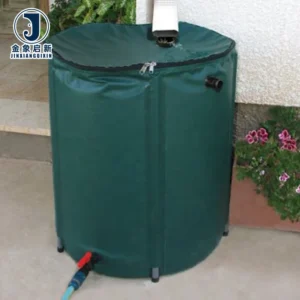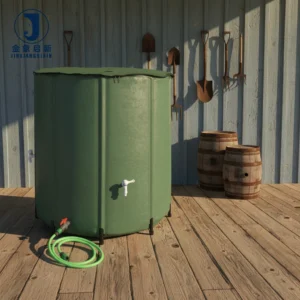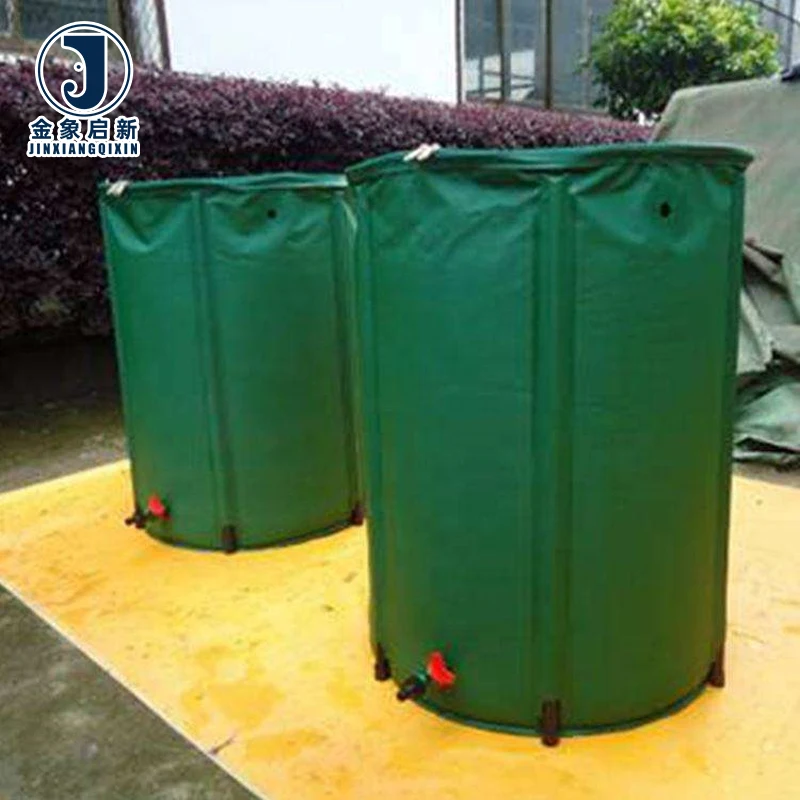
Precision Welded Seams — heat-welded construction tested for peel strength to prevent seam failure at hydrostatic stress points, purpose-built for collapsible PVC tarpaulin water storage tanks in rainwater harvesting and irrigation deployment.
Technical Specifications
| Parameter | Value |
|---|---|
| Product Type | PVC Tarpaulin Water Tank |
| Capacity Options | 100L / 225L / 250L / 750L / 1000L |
| Base Fabric | PVC Tarpaulin |
| Coating Material | PVC |
| Waterproof | Yes |
| UV-Resistant | Yes (test basis not stated) |
| Mildew-Proof | Yes |
| Collapsible | Yes |
| Shape | Barrel / Tank |
| Use Environment | Outdoor / Garden / Industrial |
Application Suitability
| Application | Exposure & Requirement |
|---|---|
| Garden rainwater harvesting | Seasonal outdoor exposure, intermittent fill-drain cycles, UV and temperature fluctuation |
| Hydroponic reservoir | Continuous water contact, nutrient solution exposure, mildew and algae resistance required |
| Agricultural water collection | Large-volume static storage, ground contact, puncture and abrasion from debris |
| Construction site water containment | Temporary deployment,搬运 and repositioning, UV and mechanical stress during handling |
| Industrial liquid containment | Chemical compatibility considerations, extended stationary use, fitting integrity under load |
Why Seam Integrity Matters More Than Fabric Weight in a Water Tank
A PVC tarpaulin water storage tank fails at the weld line before the fabric itself gives way.
Hydrostatic pressure concentrates stress along every welded joint, particularly where inlet and outlet fittings penetrate the tank wall. Field observations across collapsible tank deployments show that seam peel — not fabric rupture — accounts for the majority of early-life leaks [NEED_CITE: weld seam failure modes in flexible liquid containment bladders]. When a generic pond liner is repurposed into a tank shape without recalculating seam load direction, the welded joints separate within a single fill-drain season. Coating adhesion control and heat-weld parameter tuning are what determine whether a PVC tarpaulin water tank holds through repeated seasonal use.
Fitment and Structural Design for Liquid Containment
A PVC tarpaulin water storage tank must be engineered around the hydrostatic forces it will encounter, not simply cut and welded from flat roll stock. The tank shape concentrates load at the base-to-wall transition and around every fitting penetration point. Reinforced inlet and outlet connections need to be integrated into the fabric structure during the welding process — surface bonding alone will not resist the pull-through force generated when a 750L or 1000L tank reaches full capacity. Collapsible construction adds another variable: repeated folding and unfolding cycles stress the same weld lines, making coating adhesion and heat-seal consistency critical across every production run.
Deployment Flexibility Across Seasonal and Stationary Use
The collapsible design of this PVC tarpaulin water storage tank allows operators to deploy, drain and relocate without specialised tools. Garden and greenhouse irrigation systems benefit from seasonal setup and winter storage without permanent infrastructure. Hydroponic operators can reposition reservoirs as layout requirements change. Construction and remote industrial sites use these tanks for temporary large-volume containment, then collapse and move them when the project phase shifts. UV-resistant treatment and mildew-proof fabric surface support extended outdoor exposure, though the specific UV test basis should be confirmed per order to match your deployment latitude and exposure duration [NEED_CITE: UV degradation test methods for PVC coated fabrics].
Reading the Specification: What Determines Tank Performance
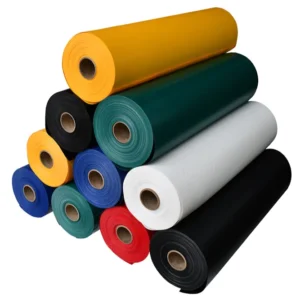
Base fabric denier and weave density establish the tensile skeleton that resists hydrostatic expansion. The PVC coating weight and application method — knife-over-roll or calender — determine peel strength at welded joints and long-term flexibility under repeated fold cycles. A higher GSM does not automatically translate to a better tank; the coating-to-fabric adhesion ratio matters more than total weight when seams are under constant stress. UV-resistant and mildew-proof treatments applied during the coating stage provide whole-fabric protection rather than a topical finish that wears away with handling. Capacity selection from 100L to 1000L should align with both your volume requirement and the structural reinforcement appropriate for that hydrostatic load class.
The Hidden Cost of Choosing the Wrong Tank Construction
Generic pond liner material cut and welded into a tank shape without seam engineering produces predictable failures: fittings pull through the fabric under hydrostatic load, weld lines split at the base-to-wall flex point, and UV-degraded fabric becomes brittle at fold creases within one season. Buyers who specify a PVC tarpaulin water storage tank based on price alone — without verifying coating adhesion, weld peel strength and fitting reinforcement — face field replacement costs that far exceed the initial material saving. Batch-to-batch inconsistency in coating weight compounds the problem, as adjacent panels in the same tank may exhibit different elongation behaviour under load [NEED_CITE: coated fabric quality consistency across production batches].
Manufacturing Capability Behind Every Tank
Three full production lines and 36 sets of specialised equipment support consistent output across the 100L to 1000L capacity range, with process control over coating weight and adhesion at every stage. A dedicated 10-person R&D team handles custom capacity sizing, fitting placement and sample development — critical when your application requires a non-standard footprint or specific inlet-outlet configuration. Every PVC tarpaulin water storage tank undergoes 100% pre-shipment inspection covering weld seam integrity and leak testing before dispatch. Sample development within days allows buyers to validate fabric hand, seam quality and fitting reinforcement before committing to production volume.
Documentation & Verification
- Material specification sheet stating base fabric, coating weight and total GSM for tank fabric
- UV and mildew treatment test reports available on request to verify performance claims
- Pre-shipment inspection record covering weld seam integrity and leak test results
- Certificate of origin and full customs documentation for international shipment
- Roll packing list with capacity and dimension confirmation per unit
Fabrication, Handling & Storage
- Heat-welding parameters must match the specific PVC coating weight to ensure seam peel strength
- Inlet and outlet fittings require reinforced fabric integration, not surface adhesive bonding
- Store collapsed tanks flat in a cool, dry environment to avoid permanent crease lines in the coating
- Clean with mild non-solvent detergent; avoid abrasive tools that compromise the PVC coating surface
- Deploy on a smooth, debris-free base to prevent puncture from sharp objects under hydrostatic load
Specifying Your PVC Tarpaulin Water Storage Tank
Provide your target capacity, intended application environment and expected exposure conditions — including whether the tank will remain stationary seasonally or be repositioned frequently. Specify any fitting configuration requirements, custom dimensions or branding needs. Indicate whether UV and mildew treatment test reports are required for your market compliance. Sample approval is available before production commitment.
Frequently Asked Questions
Q: What GSM is recommended for 750L versus 1000L capacity?
A: The appropriate GSM depends on base fabric denier, coating weight and the specific hydrostatic load profile of your deployment. Larger capacities require higher tensile strength at the base-to-wall weld transition and reinforced fitting integration. We provide material specification sheets per capacity class — confirm your exact requirement during inquiry so we can recommend the appropriate fabric construction.
Q: Can the tank be custom-sized for a specific footprint or frame?
A: Yes. The R&D team handles custom capacity and dimension development, including non-standard footprints and specific fitting placement. Samples are developed within days for validation before production. Provide your target dimensions and frame constraints during inquiry.
Q: What certifications support the UV and mildew claims?
A: UV-resistant and mildew-proof treatments are applied during the coating stage. Test reports are available on request to verify performance claims for your specific deployment conditions. Confirm your market requirements during inquiry so we can supply the relevant documentation.
Q: How are inlet and outlet fittings reinforced to prevent pull-through?
A: Fittings are integrated into the fabric structure during the heat-welding process, with reinforced fabric patches bonded around the penetration point. Surface adhesive bonding alone is not used. Pre-shipment inspection includes leak testing at all fitting connections to verify integrity under hydrostatic load.
Q: What is the lead time and minimum for custom colour or printed branding?
A: Custom colour and branding requirements are handled through the sample development process before production commitment. Typical multi-week lead times apply for custom specifications. Provide your colour reference and branding artwork during inquiry for a detailed timeline.